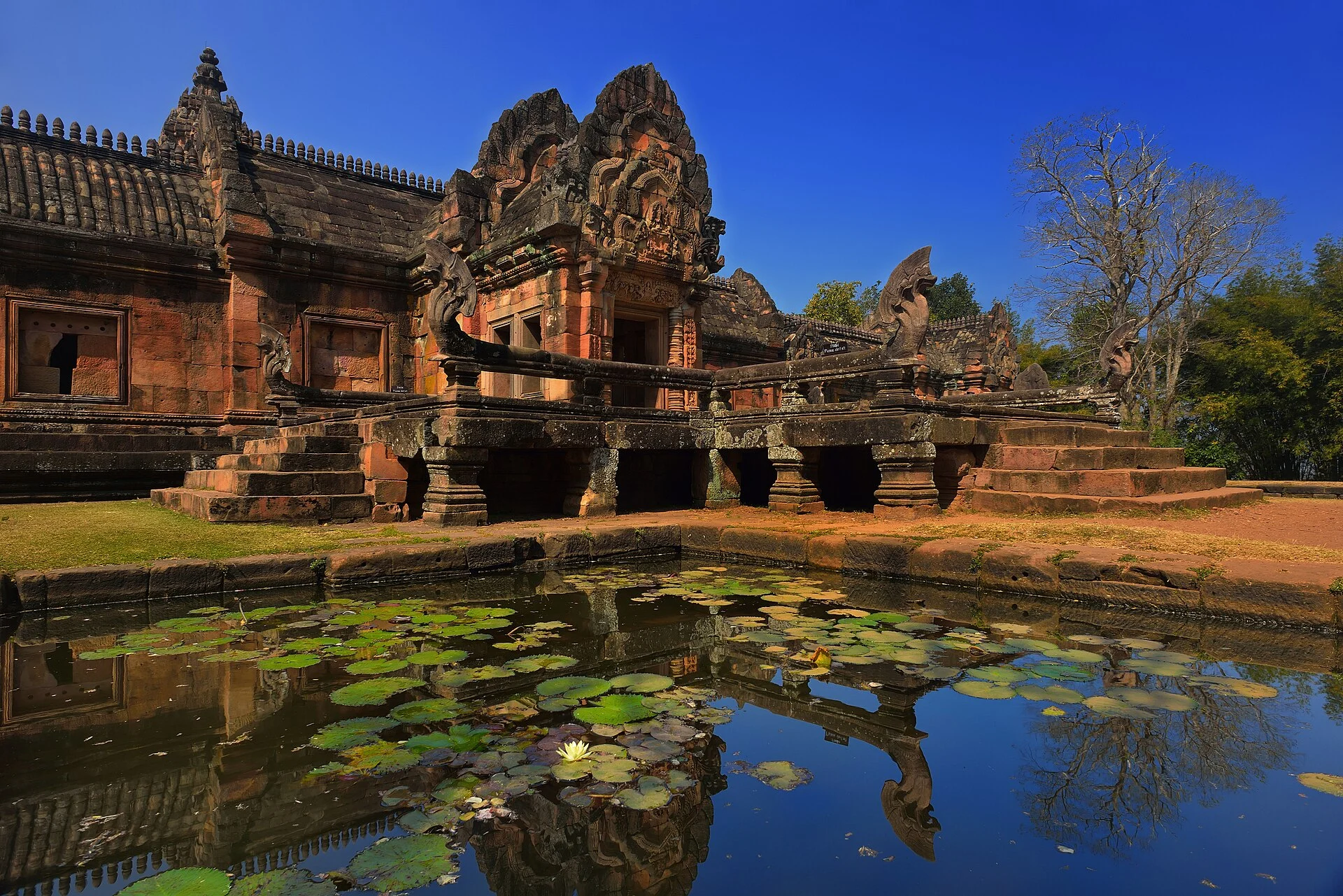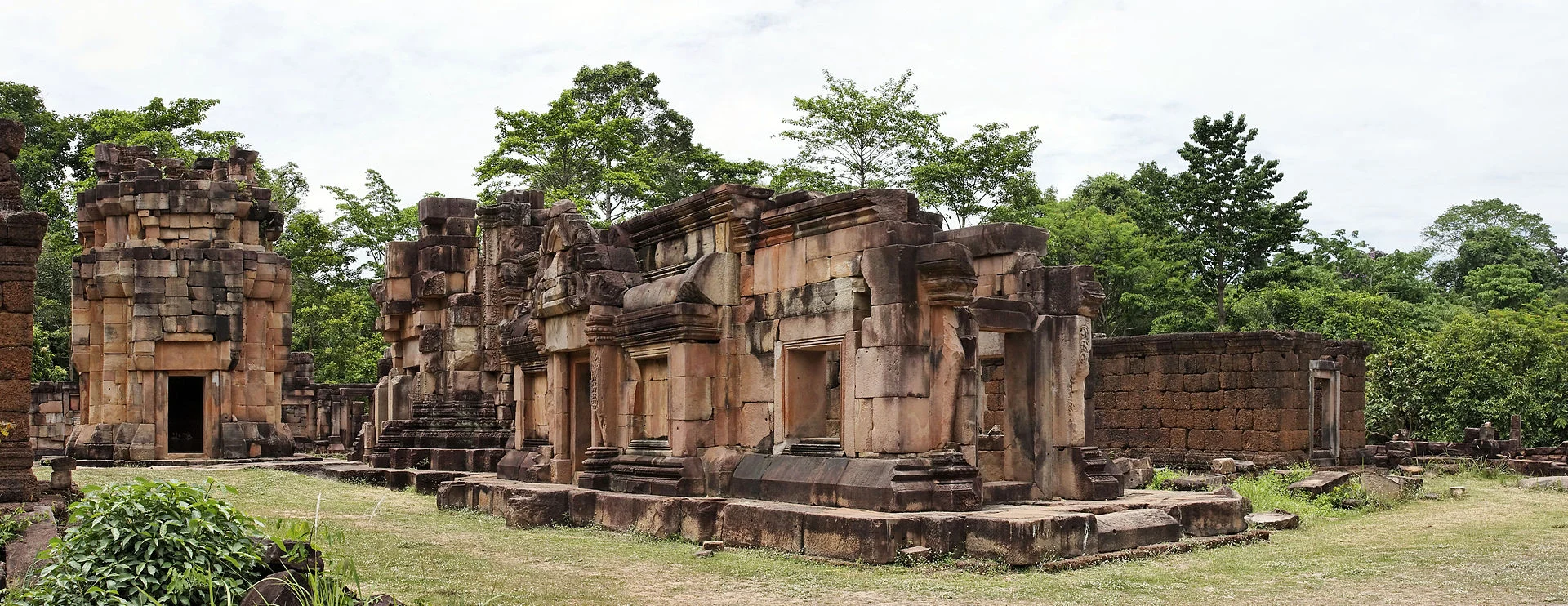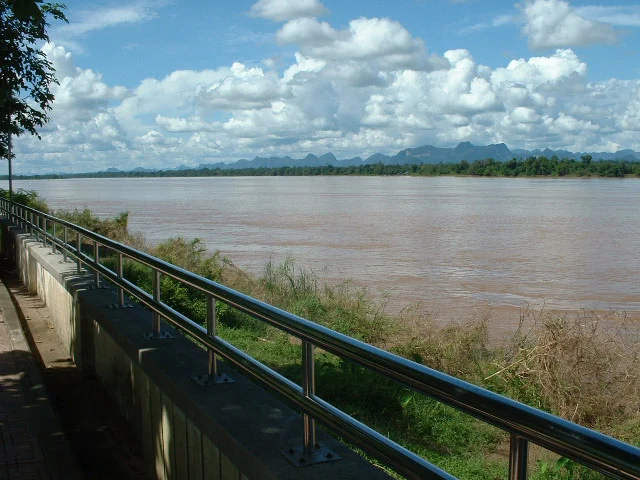
Every province along the Thai side of the Mekong claims to have the best river views. Nakhon Phanom actually does. Across the water, the limestone peaks of Laos rise straight off the far bank like stage scenery, and the town has had the good sense to build a long, clean promenade from which to stare at them. This is, by a comfortable margin, the prettiest stretch of the Mekong in Thailand, and on any given evening you will share it with joggers, cyclists and aerobics grandmothers rather than tour groups.
That is the whole pitch. Nakhon Phanom is a quiet, oddly tidy river town about 740 km northeast of Bangkok, with Isaan’s holiest stupa an hour down the road, Ho Chi Minh’s old house outside town, and a bridge into Laos that almost no Western tourist uses. Our Nakhon Phanom province profile has the raw statistics; this guide is the honest version.
If you need beaches, bars or anything resembling nightlife, this is not your province. If you want the Mekong at its most photogenic, keep reading.
What Nakhon Phanom really is
A small provincial capital on the west bank of the Mekong, directly opposite the Lao town of Thakhek and the karst mountains of Khammouane province. Those mountains do most of the scenery’s heavy lifting: at dawn they turn pink, and in the rainy season they trail cloud.
The town itself has an unusual, appealing neatness — proper pavements, cycle lanes people actually use. History left three fingerprints here: Lao Buddhism, whose holiest expression is Phra That Phanom to the south; the Phu Thai people, who weave some of Isaan’s best cloth around Renu Nakhon; and a Vietnamese community that arrived in waves of exile and changed the food. The clock tower on the riverfront was their farewell gift, built in 1960 as thousands prepared to return home.
Why go to Nakhon Phanom
Because the river here is at its absolute best and hardly anyone has noticed. Nong Khai gets the backpackers, Mukdahan gets the border traders, and Nakhon Phanom gets sunrise over Lao mountains and hotel prices that have never heard of a tourist premium.
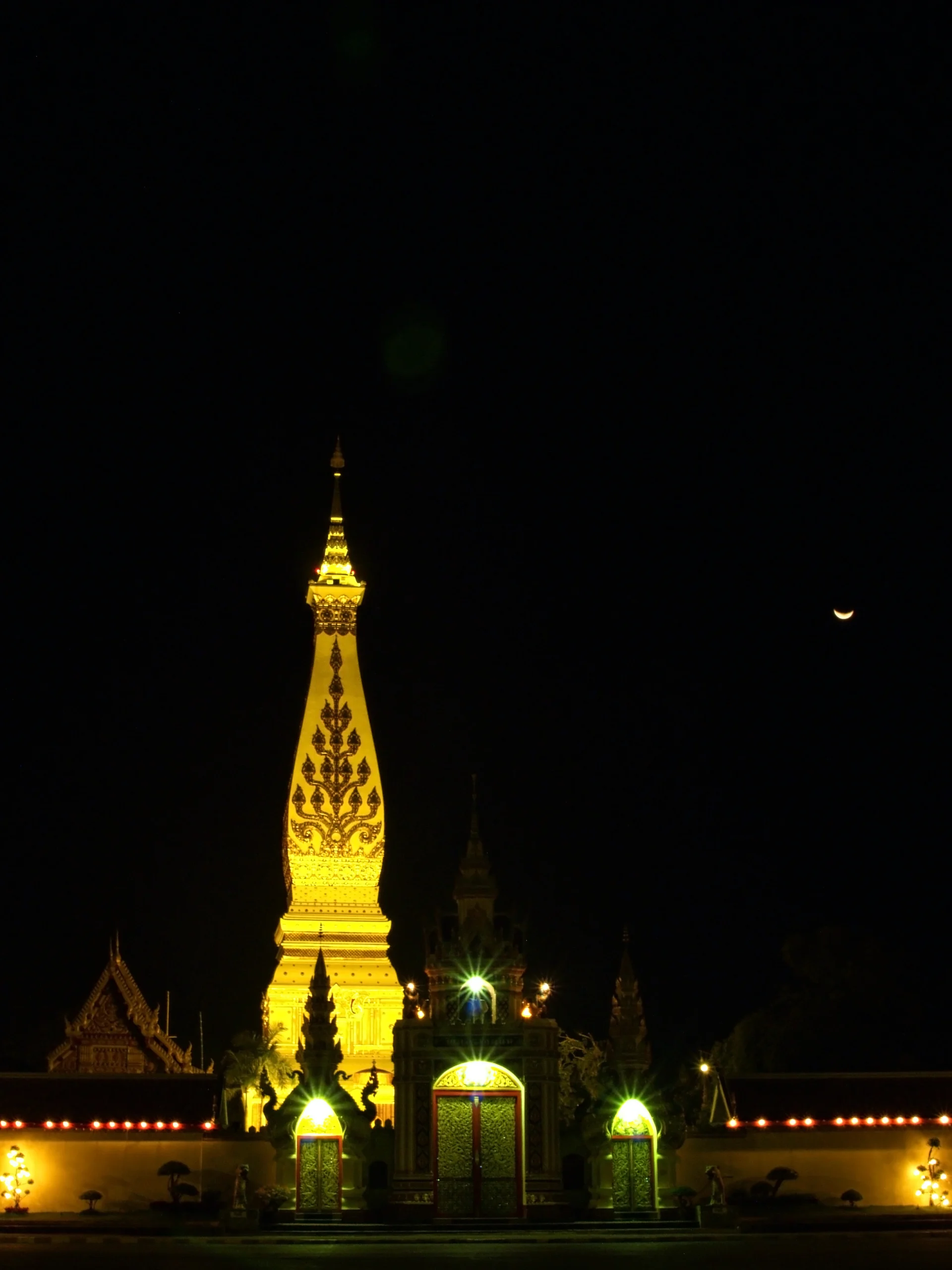
You also get pilgrimage energy that is entirely real rather than staged: Phra That Phanom pulls Buddhists from both sides of the river all year, and its February festival is one of the great religious gatherings of the Mekong. Add a fire boat festival in October and the best Vietnamese food in Thailand, and the case rather makes itself.
Getting to Nakhon Phanom
Flying is the sensible option. Thai AirAsia and Nok Air fly from Bangkok Don Mueang to Nakhon Phanom airport in about an hour and 15 minutes, and fares booked a few weeks out usually land between ฿1,000 and ฿2,000 one way. The airport sits about 15 km west of town; shuttle vans meet flights for around ฿100, and a taxi runs ฿200-300.
The bus is the endurance option: departures from Bangkok’s Mo Chit terminal take 11-12 hours, mostly overnight, at ฿600-900 depending on how flat your seat goes. There is no railway — the nearest useful station is Udon Thani, still about 250 km and a four-to-five-hour bus ride away.
Within the region, buses run south to Mukdahan in about two hours for around ฿100, west to Sakon Nakhon in an hour and a half, and north along the river road towards Bueng Kan and Nong Khai.
For live timetables and tickets on these routes, compare your options on 12Go before you commit to a departure time.
Where to stay
Stay on or near the riverfront in town. A clean fan or budget air-con guesthouse a street or two back runs ฿400-700; mid-range river-view hotels sit around ฿800-1,500, and the smartest properties in town top out near ฿2,000-2,500, which elsewhere in Thailand would barely buy you a view of a car park. Insist on a Mekong-facing room; the view is the entire point.
For Phra That Phanom, consider a night in That Phanom town itself. Guesthouses there are simple, ฿300-600, and being at the stupa for the dawn alms round beats any amount of hotel breakfast.
What to eat in Nakhon Phanom
This is the best Vietnamese food town in Thailand. The community that settled here brought naem neuang — grilled pork balls you wrap in rice paper with green banana, starfruit and herbs — and a proper set costs ฿100-150 and comfortably feeds two. For breakfast, hunt down khao piak sen, the silky Vietnamese-Lao rice noodle soup, at ฿40-60 a bowl from morning shophouses around the centre.
The other pillar is the river. This is sticky-rice-and-river-fish country: grilled or steamed Mekong fish with jaew dipping sauce at the casual riverside places costs ฿150-300 a fish, and som tam and kai yang run at honest local prices, ฿40-80 a dish. The night market near the clock tower covers everything else, almost nothing over ฿100.
Top things to do in Nakhon Phanom
1. Phra That Phanom, Isaan’s holiest stupa
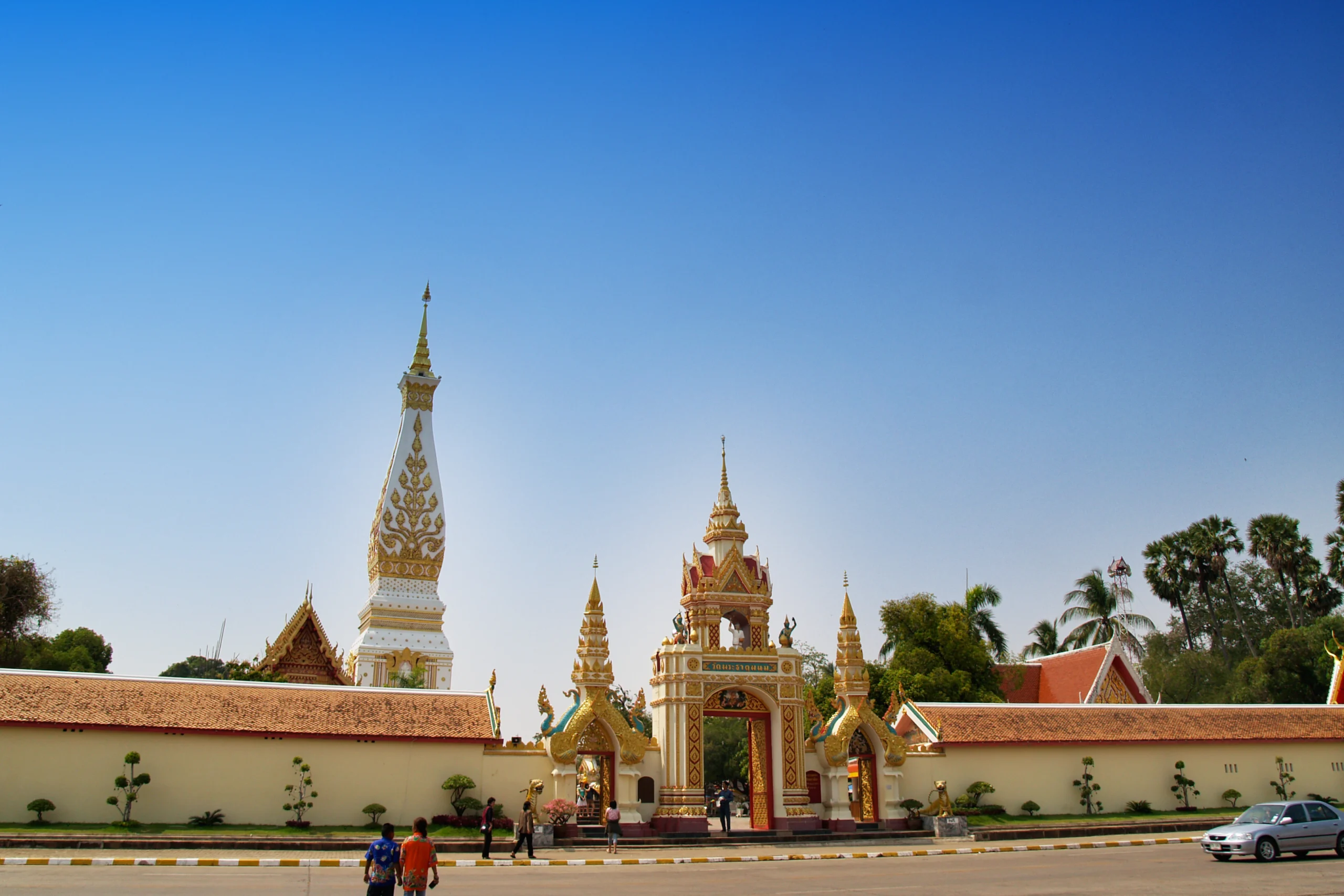
About 50 km south of the city in That Phanom town stands the most sacred stupa in northeast Thailand, said to enshrine the Buddha’s breastbone. The Lao-style spire, white and gold, collapsed in 1975 after days of rain and was rebuilt within a few years on donations from both sides of the river — which tells you what it means to people here. Entry is free, mornings are calmest, and dress properly: this is a working pilgrimage site, not a photo prop. Buses and songthaews from the city take about an hour for ฿50-80. Time it for the Boun Phra That Phanom festival in February if you can — tens of thousands of pilgrims, many crossing from Laos, and the town barely sleeps for a week.
2. The Mekong promenade at dawn
The best river-and-mountains view in Thailand, and it is not close. Several kilometres of clean riverfront path face the Khammouane karsts directly, and sunrise turns the whole scene an absurd shade of rose. Hire a bicycle, start at the giant naga statue of Phaya Si Sattanakharat at the northern end, and ride south past the clock tower as the monks come out for alms. Costs nothing, beats everything.
3. Ho Chi Minh’s house at Ban Na Chok
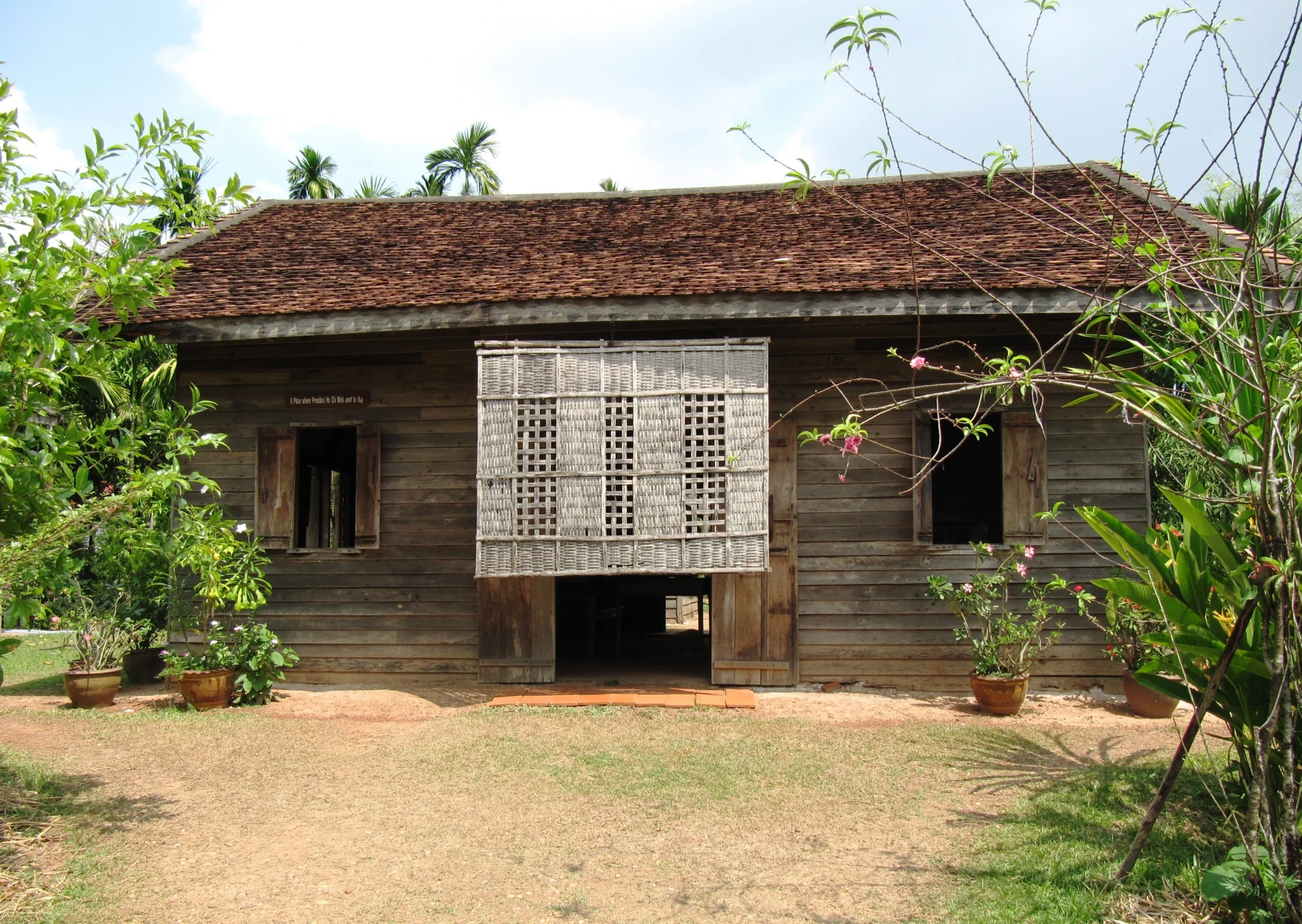
In the late 1920s, a Vietnamese revolutionary living under the name Thau Chin spent part of his exile in Ban Na Chok, a village a few kilometres west of town, quietly organising the movement that would remake Southeast Asia. The village keeps a replica of his simple wooden house and a Thai-Vietnamese friendship memorial hall. It is modest, oddly moving, and one of the few places in Thailand where twentieth-century history gets a look-in over temples. Entry is by small donation; combine it with a naem neuang lunch back in town.
4. Lai Reua Fai, the illuminated boat procession
At the end of Buddhist Lent, usually October, Nakhon Phanom stages the finest version of Isaan’s fire boat festival: enormous bamboo barges rigged with thousands of lamps — arranged into nagas, temples, portraits — floated down the Mekong after dark, trailing flame. It is genuinely spectacular, a week of processions and river events, and the one time of year the town fills up. Book a room well ahead or you will be sleeping in Sakon Nakhon.
5. Renu Nakhon and Phu Thai weaving
A short detour west of That Phanom, Renu Nakhon is the cultural capital of the Phu Thai people and one of the best places in Isaan to buy cloth straight from the people who weave it. Stalls and shops around Wat Phra That Renu Nakhon sell indigo cotton and mudmee silk — scarves from a couple of hundred baht, serious silk pieces into the thousands, all of it cheaper and better than anything in a Bangkok mall.
6. Cross the Third Friendship Bridge to Thakhek
The Third Thai-Lao Friendship Bridge arcs over the Mekong just north of town, and an international bus runs from the main terminal to Thakhek several times a day for around ฿70-80. Most nationalities get a Lao visa on arrival at the bridge. Thakhek is the launch pad for the famous motorbike loop through the karst country you have been staring at all week, so this works as a day trip or the start of something bigger.
What to skip
The Indochina Market on the riverfront. The name promises French-colonial romance, silk and mystery; the reality is polyester shirts, plastic kitchenware and the same made-in-anywhere goods you will find at every border crossing between here and Yunnan. It exists for Thai and Lao traders, which is fine — it just is not for you. Spend the money on Phu Thai cloth in Renu Nakhon instead, where at least the person selling it made it.
And temper expectations of Thakhek town: a dusty transit stop, not a destination. The karsts are the show, and the best view of them is from the Thai side, free, with a ฿60 bowl of noodles in hand.
Nakhon Phanom travel: practical info
November to February is the sweet spot — cool air, clear skies, the Lao mountains pin-sharp across the water. October means Lai Reua Fai, February means the Phra That Phanom festival; both worth planning around. March to May is ferociously hot and the burning-season haze can smudge the views. June to September is green, with cloud snagging on the karsts and the town at its emptiest.
Wikipedia’s Nakhon Phanom entry goes deeper on the Sri Kotrabun story.
TAT’s official Nakhon Phanom page carries Lai Reua Fai dates each year.
Two to three nights is right: one for the town and promenade, one for That Phanom and Renu Nakhon, one spare for Ban Na Chok or a hop over the bridge. Moving on, buses run south to Mukdahan, west to Sakon Nakhon, and north along the river to Bueng Kan and Nong Khai, so Nakhon Phanom slots neatly into any Mekong-hugging Isaan route.
FAQ
Is Nakhon Phanom worth visiting?
Yes, if you value scenery, food and atmosphere over nightlife. It has arguably the best Mekong views in Thailand, Isaan’s most important stupa and almost no foreign tourists. If your idea of travel needs a beach club, stay away and leave it as it is.
How do I get to Nakhon Phanom from Bangkok?
Fly from Don Mueang with AirAsia or Nok Air in about 75 minutes, typically ฿1,000-2,000 booked ahead. The overnight bus from Mo Chit takes 11-12 hours and costs ฿600-900. There is no train line to the province.
What is Nakhon Phanom famous for?
Phra That Phanom, the holiest stupa in northeast Thailand; the illuminated fire boat procession each October; the riverfront view of the Lao mountains; and Ho Chi Minh’s exile house at Ban Na Chok. Thais also know it for Vietnamese food and Phu Thai weaving.
Can you cross into Laos from Nakhon Phanom?
Yes. The Third Thai-Lao Friendship Bridge connects the province to Thakhek, with international buses from the main terminal several times daily for around ฿70-80. Most passports qualify for a Lao visa on arrival at the bridge — carry US dollars and a spare photo.
When is the fire boat festival in Nakhon Phanom?
Lai Reua Fai happens at the end of Buddhist Lent, usually October — exact dates shift with the lunar calendar. The main procession night coincides with Ok Phansa, with a week of events around it. Book accommodation a month or more ahead.
Related guides
- Sala Keoku: Nong Khai’s surreal concrete sculpture park
- Amnat Charoen: Thailand’s least-visited province
- The ethnic groups of Thailand