Mukdahan does not perform for tourists, because tourists almost never turn up. It sits on the west bank of the Mekong in Thailand’s far east, staring across the brown water at Savannakhet in Laos, and it has spent centuries doing what border towns do: trading, eating well, and not caring what anyone else thinks. There is no airport, no railway station and no banana-pancake trail. That is precisely the point.
What Mukdahan offers instead is one of the most quietly likeable riverfronts in Isaan, a market where three countries’ goods pile up on one pavement, a rock plateau that looks carved by a committee of drunk sculptors, and the easiest legitimate day trip into Laos anywhere on the border. Our Mukdahan province profile gives the overview; this is the case for a proper stop — two nights, done properly.
What Mukdahan really is
A trading post first and a tourist destination roughly never. The town grew up moving goods across the Mekong long before anyone built a bridge, and the population shows it: Thai, Lao, Vietnamese and Chinese families layered over eight recognised ethnic groups — the Phu Thai, Saek, Kaleung and Kula among them. The second Thai-Lao Friendship Bridge, opened in 2007, turned informal boat trade into formal logistics, and the town has been quietly prosperous and indifferent to tourism ever since.
The town itself is a compact grid pressed against the river: one long promenade, a fresh market that starts before dawn, a skyline of exactly one tower. Nobody hassles you. Nothing is priced in dollars. If your idea of Thailand was formed in Phuket, this will feel like a different country — which, given that half the food and a fair chunk of the conversation is Vietnamese or Lao, it partly is.
Why go to Mukdahan
Three reasons. First, the river. This is one of the best-kept Mekong promenades in the northeast, and evenings here — aunties power-walking, kids fishing, Savannakhet switching its lights on across the water — justify the bus ride on their own. Second, the food — the cheapest genuinely multicultural eating in Thailand. Third, position: the most painless spot on the border to nip into Laos for a day, with Phu Pha Thoep’s mushroom rocks and the Kaeng Kabao rapids within about half an hour.
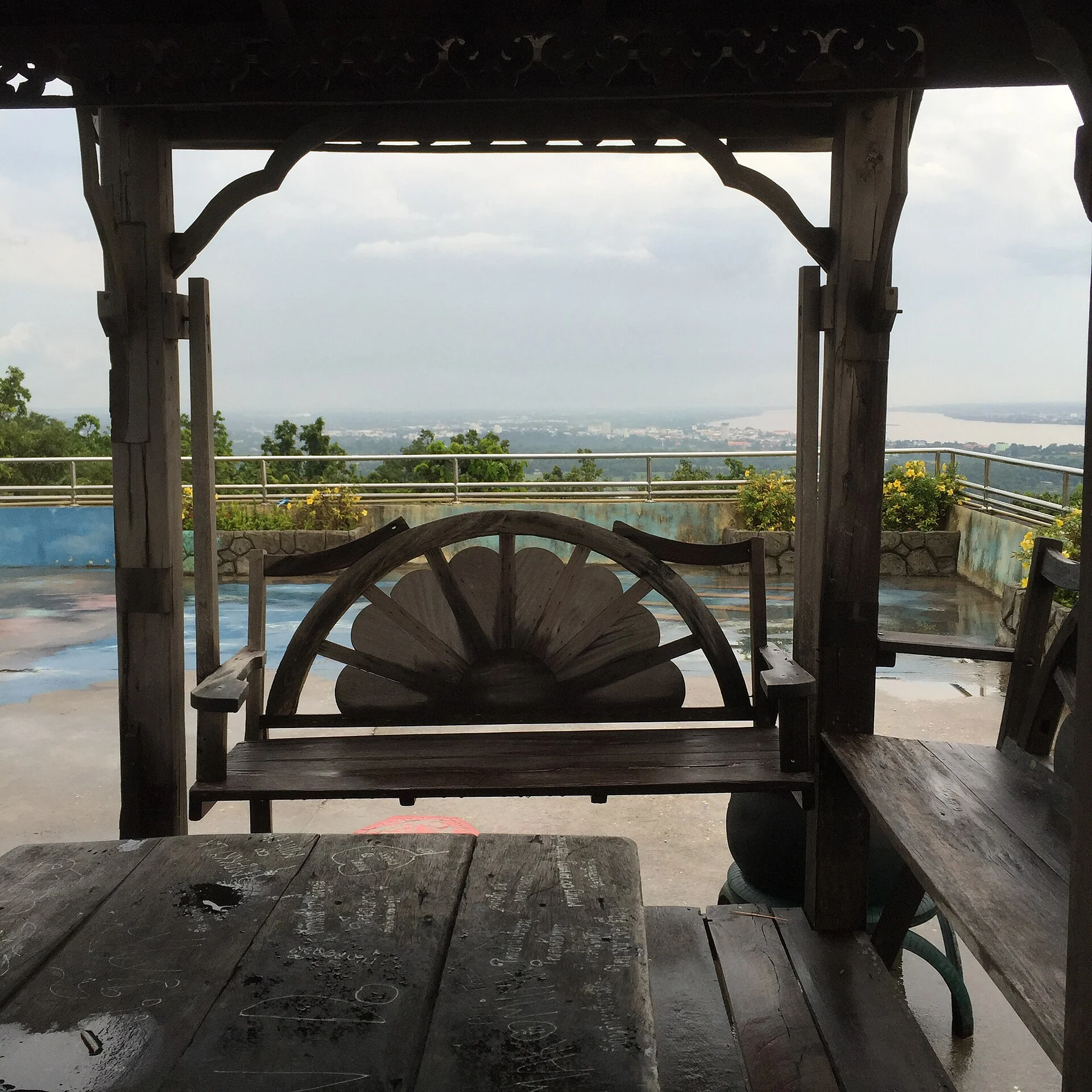
It is not a party town or a beach substitute. Come for two or three days of river, rocks and rice-paper rolls; stay longer and you have effectively moved here.
Getting to Mukdahan
No airport, no trains — this is bus country, and the buses are honestly fine.
- Bus from Bangkok: departures from Mo Chit, mostly late afternoon and evening, about 10-11 hours, ฿500-900 depending on class. Take the overnight VIP; you arrive at dawn as the fresh market opens, which is the correct way to meet this town.
- Fly to Nakhon Phanom: about 100 kilometres north. Flights from Don Mueang take just over an hour, roughly ฿900-1,800 booked ahead; the bus down the river road takes about two hours, around ฿100.
- Fly to Ubon Ratchathani: more flight choice, about 170 kilometres south. Minivans north take around three hours, ฿150-200.
- From elsewhere in Isaan: regular buses connect to Nakhon Phanom, Sakon Nakhon, Ubon, Yasothon and Amnat Charoen, all around three hours or less, most fares under ฿200.
For live timetables and tickets on these routes, compare your options on 12Go before you commit to a departure time.
Where to stay
Two sensible zones. The riverfront around the Indochina Market puts the promenade and the evening food stalls on foot; mid-range rooms with an actual Mekong view run about ฿800-1,500 and are worth every satang — but confirm the room actually faces the river, because half of them face the car park. Inland, near the bus station, clean and unremarkable guesthouses at ฿350-600 do the job if you are just overnighting before Laos.
Do not overthink it: here a ฿1,200 hotel is the top of the market, and the difference between it and the ฿500 place is a bathtub and a buffet of questionable sausages.
What to eat in Mukdahan
This is the real reason to stop. Mukdahan’s Vietnamese community has been here for generations, and it shows up on every table.
- Moo yor — the province’s signature Vietnamese-style pork sausage, steamed in banana leaf. A decent log costs ฿100-150 in the fresh market; take one home.
- Naem nueang — grilled pork balls wrapped at the table in rice paper with a small hedge of fresh herbs. A set for two runs ฿120-180 at the Vietnamese places scattered through the town centre.
- Mekong fish — grilled river fish stuffed with lemongrass, at the row of riverside restaurants near the pier and up at Kaeng Kabao. Expect ฿150-300 a fish depending on size and season.
- Isaan standards — som tam, grilled chicken and sticky rice at ฿40-80 a dish, best at the food stalls that set up near the riverfront each evening.
Breakfast is khao piak sen, the silky Lao-Vietnamese rice noodle soup, at morning stalls near the fresh market — expect ฿40-60 a bowl. Skip the hotel buffet for it.
Top things to do in Mukdahan
1. Walk the Mekong promenade and the Indochina Market
The promenade runs along Samran Chai Khong Road for a couple of kilometres, and the Indochina Market occupies a long ribbon of it: Vietnamese dried goods, Lao fabrics and Chinese everything on one long stretch of pavement, as it has been for a century. The market runs roughly 8am to 6pm; the promenade peaks after 5pm. Buy a bag of fruit, find a bench and watch Laos light up across the water. It costs nothing and it is the single best thing in town.
2. Go up Ho Kaeo Mukdahan tower
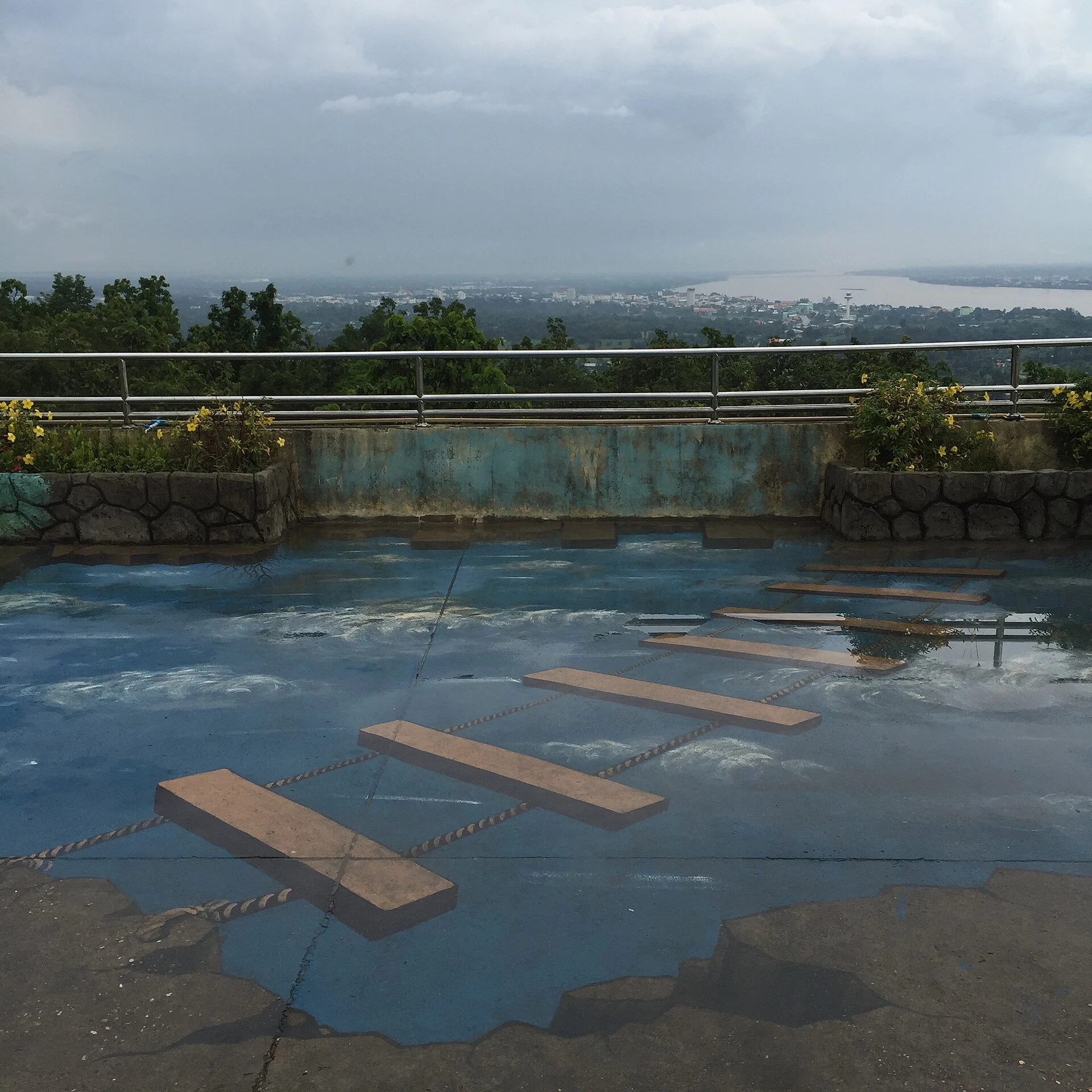
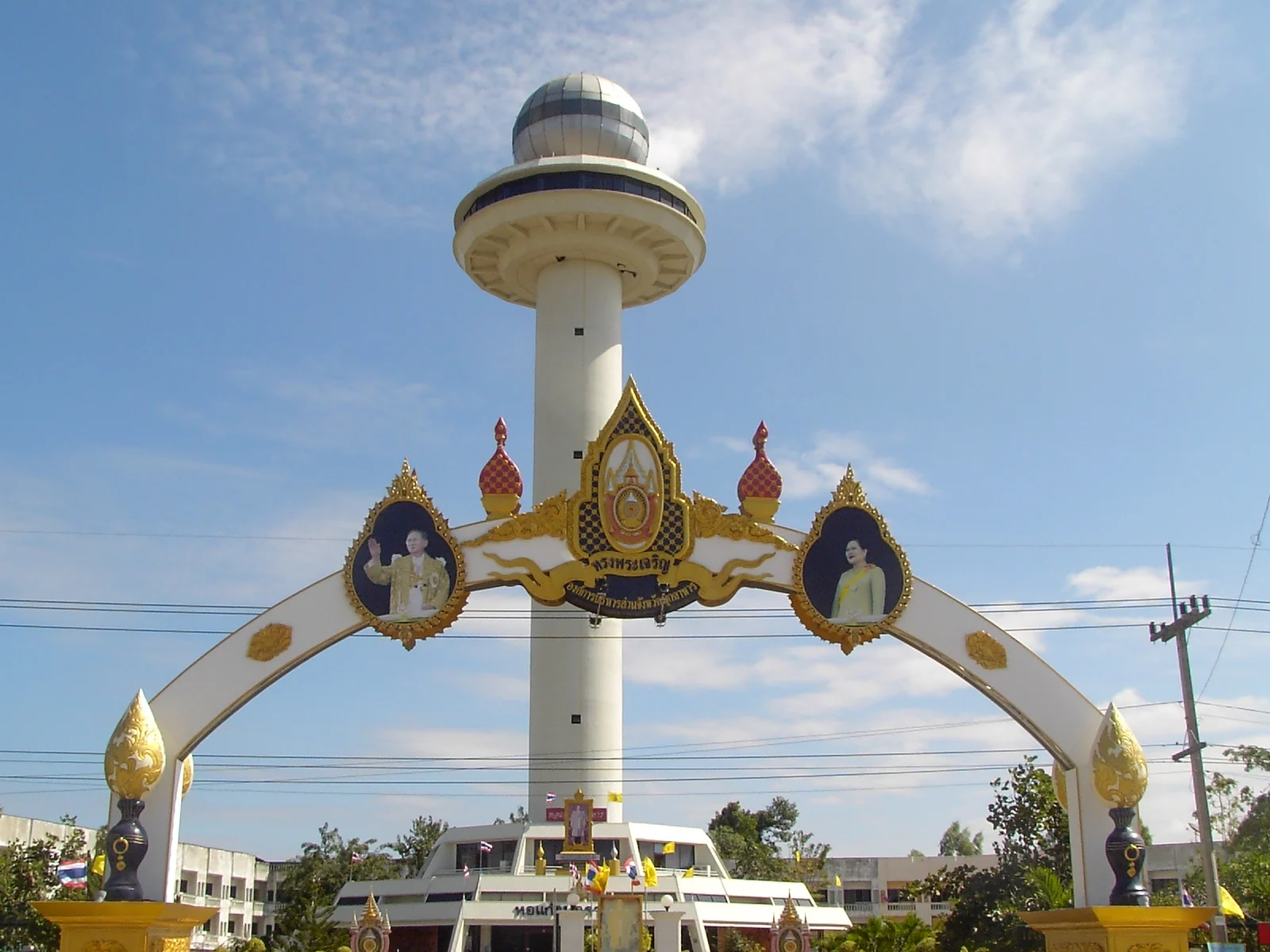
A 65-metre observation tower built in 1996 for the fiftieth anniversary of King Rama IX’s accession, and the only building in the province with any interest in the sky. The lower floors hold a genuinely decent museum on the eight tribes; the deck gives you the town, the bridge and a healthy slab of Laos in one slow circle. Entry is about ฿50. Twenty minutes, ideally late afternoon, and a better view than any ฿400 rooftop bar in Bangkok.
3. Phu Pha Thoep National Park and the mushroom rocks
Fifteen-odd kilometres south of town, this is the province’s headline landscape: a sandstone plateau eroded into giant mushrooms, anvils and shapes that look like rejected pottery. In October and early November the rock terraces bloom with carpets of tiny wildflowers — the park’s six weeks of fame. The main loop takes about an hour, and the cliff-edge viewpoint over the forest deserves to be better known. Foreigner entry is in the ฿100-200 range. Go early morning — the rock gets hot enough to fry eggs by noon.
4. Day trip to Savannakhet over Friendship Bridge 2
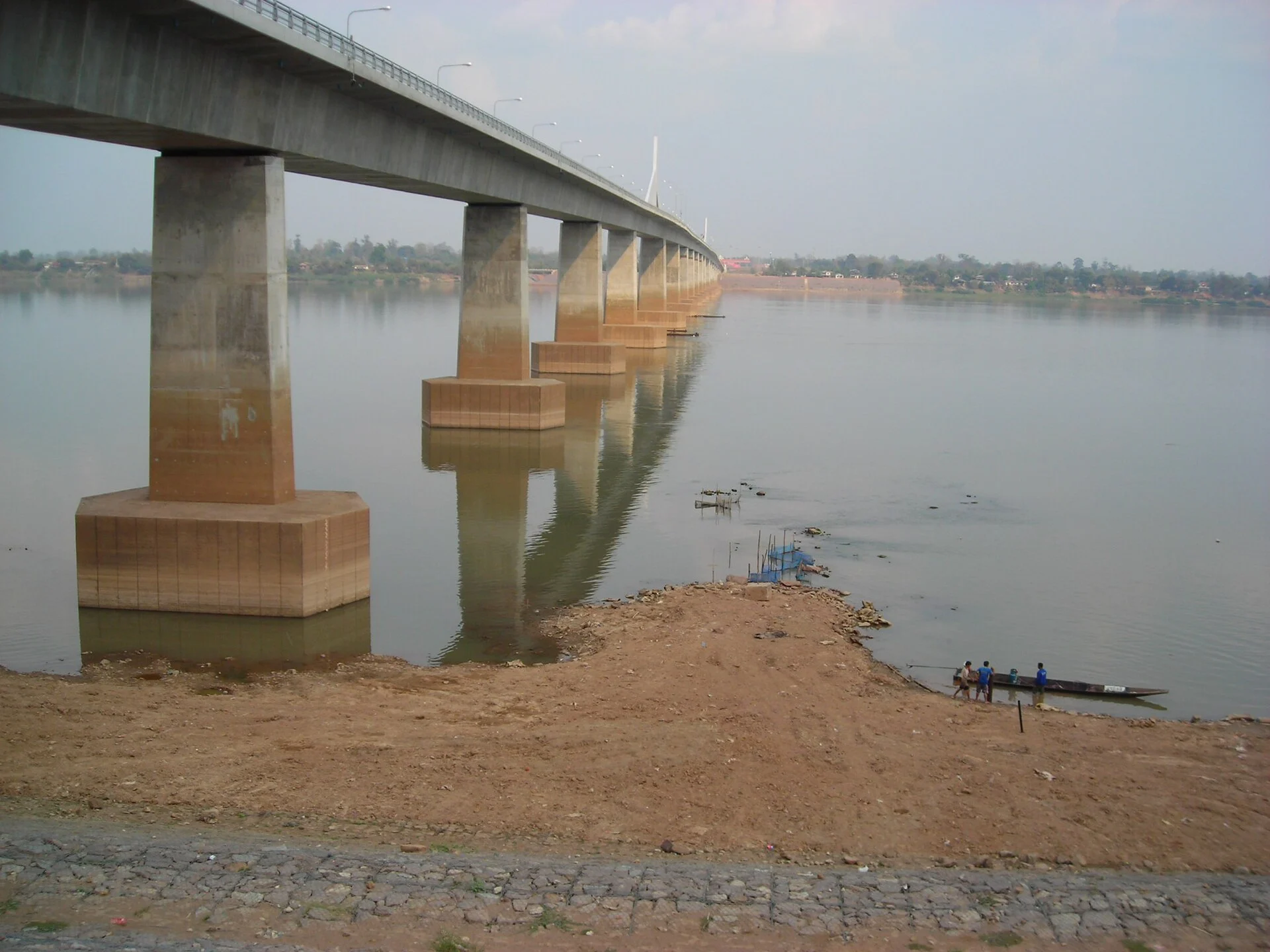
Friendship Bridge 2 crosses the Mekong just north of town, and an international bus shuttles between the two bus stations roughly hourly for around ฿50. Most nationalities can get a Lao visa on arrival at the bridge — bring a passport photo and cash, and check your own country’s rules first. Savannakhet rewards a lazy day: peeling French colonial shophouses, the That Ing Hang stupa, strong coffee and a pace even slower than Mukdahan’s. Leave by 9am, come back for dinner.
5. Kaeng Kabao rapids
About half an hour north in Wan Yai district, the Mekong squeezes over a shelf of rock and, in the dry months from roughly December to May, drops low enough to expose a moonscape of sculpted stone. Locals picnic on the rocks, riverside places grill fish, and it all costs nothing — but in the wet season the rapids vanish under the river, so time it right. Nearby, the Song Khon shrine — a vast modern church honouring seven Thai Catholic martyrs — is one of the stranger and more moving buildings on this stretch of the Mekong.
6. Meet the Phu Thai and the eight tribes
The province officially counts eight ethnic groups, and the Phu Thai are the ones you can most easily meet. Out west in Nong Sung district, Phu Thai villages run low-key homestays built around indigo weaving, baci string-tying ceremonies and vast communal dinners; arrange a day or two ahead through your guesthouse. If a village stay is too much commitment, the Ho Kaeo museum covers all eight groups, and each January the province throws its tribes festival: costume, dance and drinking in roughly equal measure.
What to skip
The Indochina Market as a shopping destination. As a place to walk, graze and people-watch it is excellent. As the treasure trove of Indochinese silks and gemstones the brochures promise, it is a myth — most of it is the same Chinese-made T-shirts and suspicious electronics you find in any provincial market, under a thin layer of Lao fabric. Buy food, and save your silk budget for the weaving villages, where the money reaches the people holding the shuttle.
Likewise the casino across the river, which exists to relieve Thai day-trippers of their baht in a windowless box. You did not come to the Mekong to stare at a roulette wheel.
Mukdahan travel: practical info
Best season: November to February for cool, dry weather; October specifically for the wildflower bloom at Phu Pha Thoep; December to May for the exposed rocks at Kaeng Kabao. March to May is an oven; 40 degrees on the rock plateau is not a hike, it is an ordeal.
Wikipedia’s Mukdahan entry covers the eight-tribes history.
TAT’s official Mukdahan page keeps bridge-crossing details current.
How long: two nights covers the town, the tower and the national park. Add a third for the Savannakhet day trip, which you should.
Getting around: the town is walkable; for the park and the rapids, hire a motorbike for ฿250-300 a day or agree a round trip with a local driver for a few hundred baht.
Onward: the river road north to Nakhon Phanom is one of Isaan’s prettiest drives, about two hours; buses run south to Amnat Charoen and Ubon, west to Yasothon and Sakon Nakhon, all under three hours.
FAQ
Is Mukdahan worth visiting?
Yes, if you want river life, serious Vietnamese-Thai food and zero crowds. It is a two-to-three-day stop, not a week-long destination, and it suits travellers doing the Mekong river road rather than anyone hunting beaches or nightlife.
How do you get from Bangkok to Mukdahan?
The overnight VIP bus from Mo Chit takes 10-11 hours and costs ฿500-900. Faster: fly to Nakhon Phanom or Ubon Ratchathani from Don Mueang, then take a bus or minivan for the final two to three hours. There is no train and no airport in the province itself.
Can you cross into Laos from Mukdahan?
Yes — this is one of the easiest crossings on the border. The international bus runs roughly hourly over Friendship Bridge 2 to Savannakhet for about ฿50, and most nationalities can get a Lao visa on arrival at the bridge. Check your own country’s requirements and carry a passport photo and cash.
When is the best time to visit Mukdahan?
November to February is coolest and driest. October is the special case: the short wildflower bloom at Phu Pha Thoep is genuinely lovely. Avoid March to May unless you enjoy heat as a hobby.
Related guides
- Sala Keoku: Nong Khai’s concrete sculpture park
- Amnat Charoen: Thailand’s least-visited province
- Things to do in Kalasin