Ask a Thai person about Sing Buri and you will get one of two answers: the villagers of Bang Rachan, who in 1766 held off the Burmese army with farm tools and sheer bloody-mindedness, or river prawns the size of your forearm. Both answers are correct, and both are better reasons to travel somewhere than ninety percent of what gets written about provinces ten times more famous.
Let me be straight with you, because this is a province that rewards honesty. Sing Buri is small. It is flat. The capital is a town where the most exciting thing after 9pm is a 7-Eleven. There is no beach, no mountain, no rooftop bar, and no queue of influencers doing that arms-out spinning thing. If that disappoints you, close the tab now and nobody gets hurt.
If, however, you have done Bangkok, done Ayutthaya, and started wondering what the central plains look like when nobody is performing for you, this is the answer. The quick facts are on our Sing Buri province profile; this guide is the longer, more opinionated version.
What Sing Buri really is
Sing Buri is one of Thailand’s smallest provinces, a wedge of rice country on the Chao Phraya River about 140 kilometres north of Bangkok, with the smaller Noi River looping through its western districts. Around 200,000 people live here, most of them growing rice, farming prawns and getting on with life at a pace that makes Ayutthaya look frantic.
What it has, disproportionately, is history. This was the front line when Burma came for Ayutthaya in the 1760s, and the last stand at Bang Rachan turned a farming village into a national origin myth. Add two colossal Buddhas, a century-old wooden market and arguably the best giant river prawns in the country — all within a 30-kilometre radius, and almost none of it seeing a foreign tourist from one week to the next.
Why go to Sing Buri
Three reasons. First, Bang Rachan: not just a memorial park but a story every Thai schoolchild can recite and most foreigners have never heard, which makes standing there oddly powerful. Second, the food — Bangkok families drive up at weekends specifically to eat the giant freshwater prawns. Third, the atmosphere: temples full of locals rather than tour groups, markets that exist because people actually shop there, and prices that have not been adjusted for your passport.
It is a one-night trip, maybe two. That is not a criticism. Some of the best places are.
Getting to Sing Buri
There is no train station in Sing Buri, which partly explains why it stayed off the trail; the nearest rail is Lopburi, about 30 kilometres east, reachable by train from Bangkok with a local bus to finish.
Most people come by road. Buses and minivans leave Bangkok’s Mo Chit (Northern) terminal throughout the day, take around two and a half to three hours, and cost roughly ฿120-160. Driving takes about two hours up Highway 32, and your own wheels genuinely help — the sights are scattered across three districts and songthaews are infrequent. From Ayutthaya it is about an hour by car through Ang Thong; from Lopburi, 40 minutes to an hour.
Where to stay
Stay in the capital, Mueang Sing Buri, near the Chao Phraya. It is the only place with a real choice of beds, and it puts you within ten minutes of the reclining Buddha, the night market and the prawn restaurants. Expect ฿400-700 for a clean guesthouse and ฿800-1,500 for the better small hotels. Nobody has built anything you could call luxury here, and long may that continue.
If the old market is your priority, In Buri town, twenty minutes north, has a handful of simple places in the same price band. The third option is the string of roadside resorts along Highway 32 — more on those in the skip section, but the short version is: don’t.
What to eat in Sing Buri
One dish rules here: kung mae nam, the giant freshwater prawn — specifically the Mae La prawns, which Thais will tell you are the sweetest in the country. They are grilled over charcoal until the shells char and the heads fill with orange roe fat that you are expected to spoon out like it is the whole point, because it is. Big specimens run from several hundred baht to well over a thousand per kilo, and a proper prawn dinner for two lands somewhere between ฿800 and ฿1,500. Yes, that is Bangkok money in a farm province. It is worth it once.
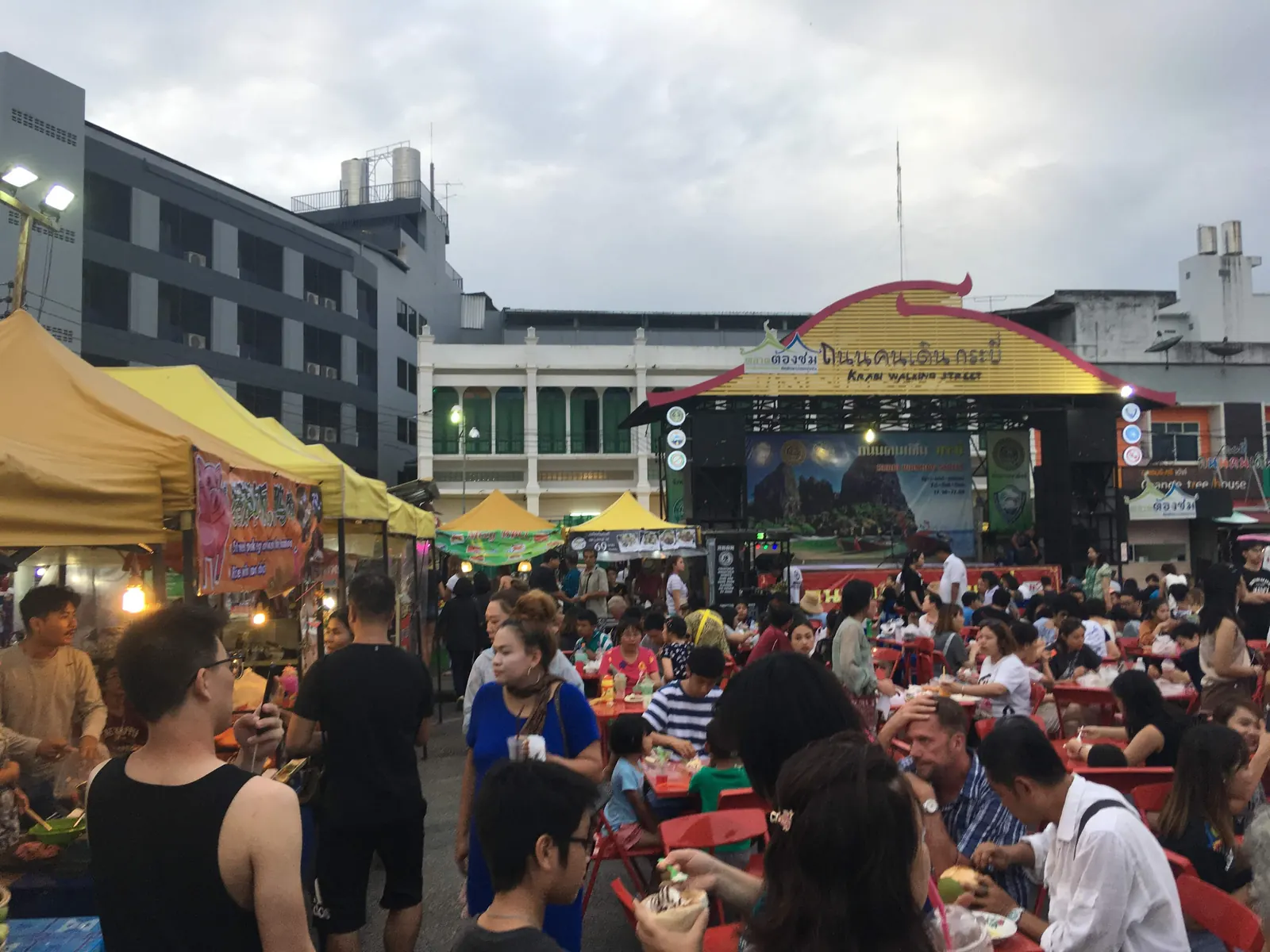
Beyond the prawns, this is freshwater country: snakehead fish grilled in a salt crust, tom yam made with river fish, and central-plains standards done properly. The night market does noodles and grilled everything at ฿50-70 a plate, and the hundred-year market in In Buri is the place for old-school coffee and Thai sweets from families who have made them for generations.
Top things to do in Sing Buri
1. Bang Rachan Memorial Park and Wat Pho Kao Ton
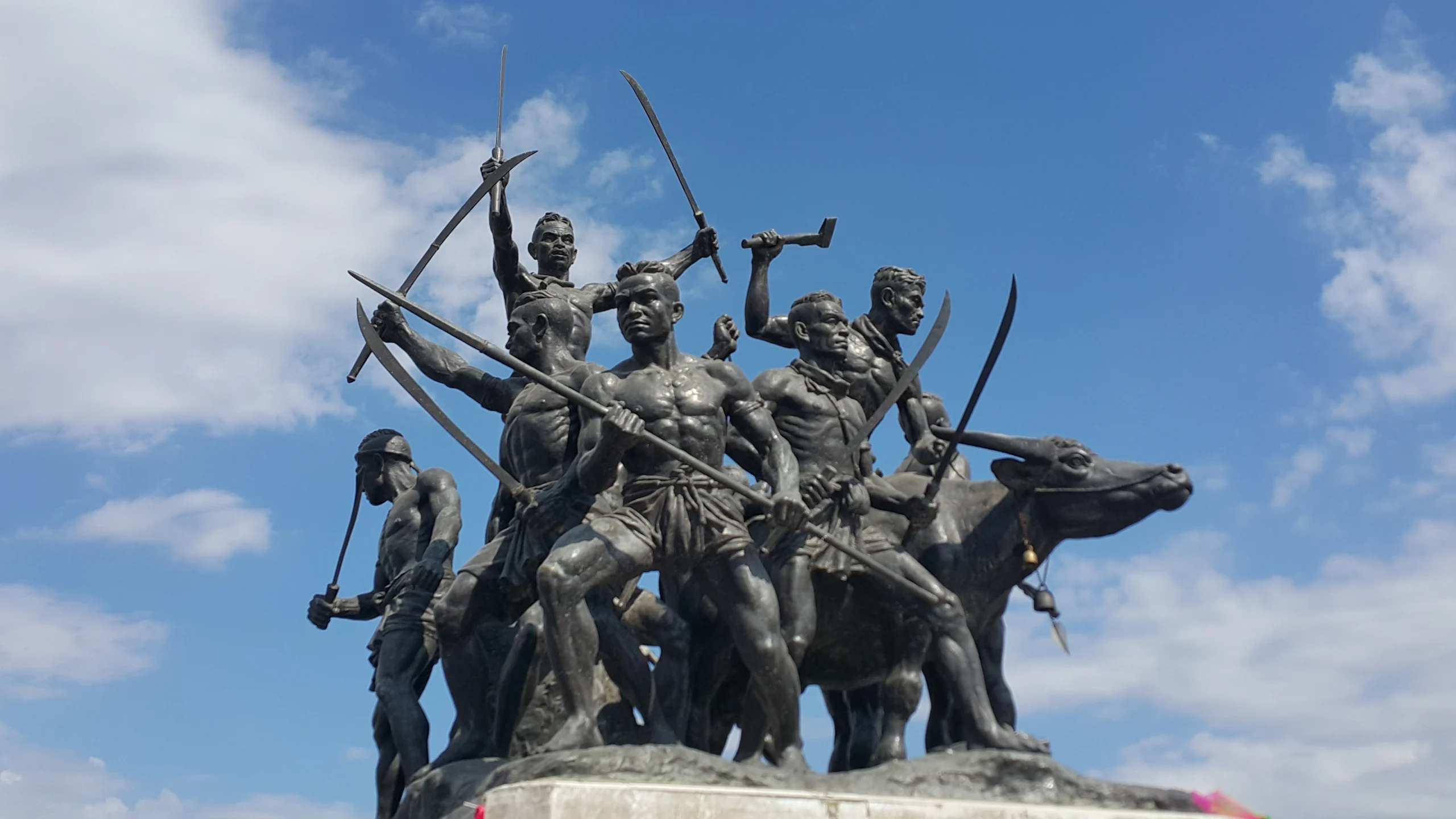
In 1766, as the Burmese army marched on Ayutthaya, the villagers of Bang Rachan — farmers, monks, a few local toughs — dug in and repelled attack after attack over roughly five months before they were finally overrun. Ayutthaya fell the following year. The story became legend, a school-curriculum staple and a brutal 2000 film. The memorial park in Khai Bang Rachan district, about 15 kilometres west of town, centres on a heroic bronze monument of the village leaders, and beside it stands Wat Pho Kao Ton, the temple at the heart of the fighting camp. Read the story before you arrive — the place is moving in direct proportion to how much of it you understand. Free entry; go in the cool of the morning.
2. The 46-metre reclining Buddha at Wat Phra Non Chakkrasi
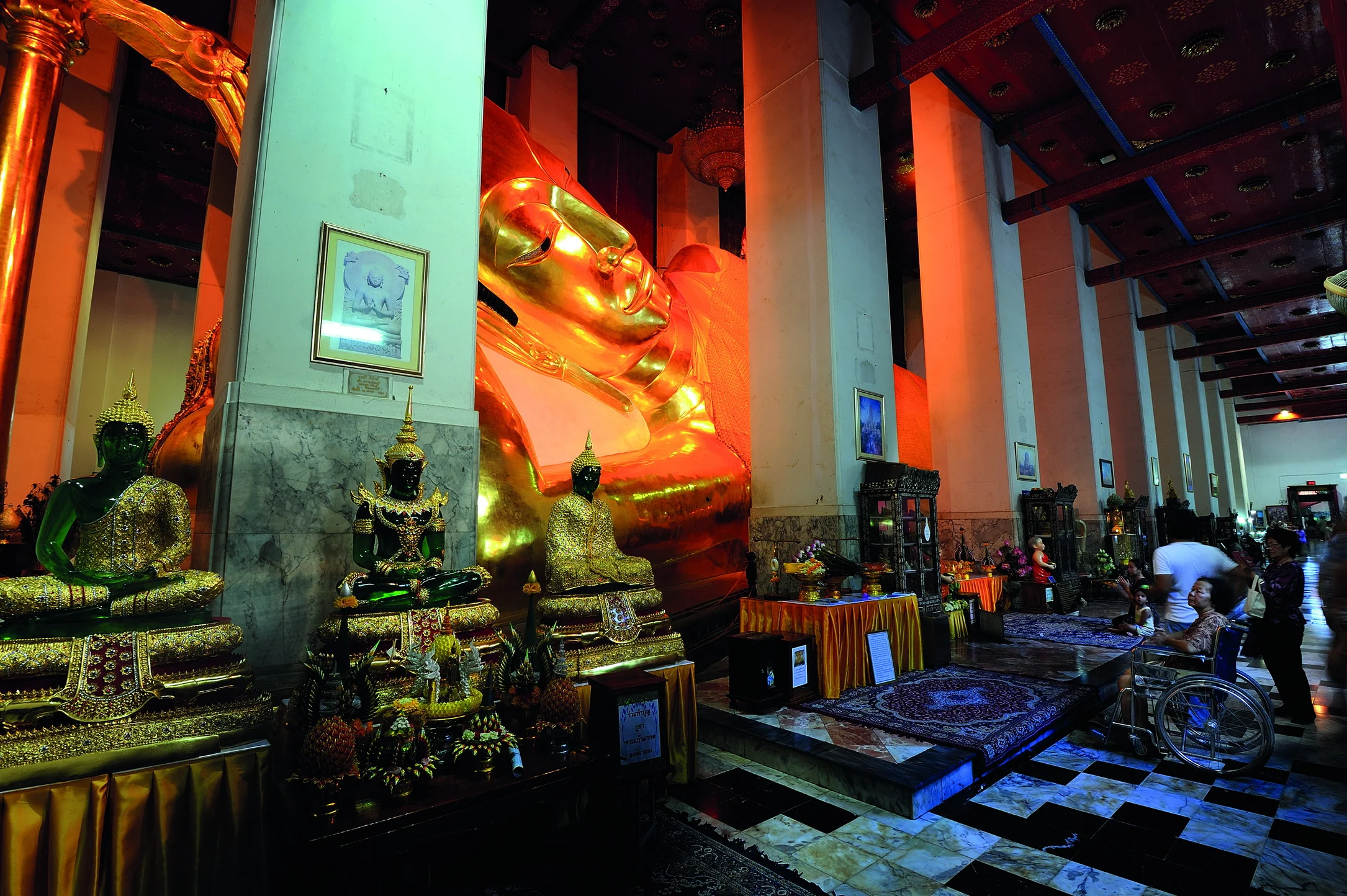
Thailand does not lack reclining Buddhas, but most of the giant ones are modern concrete. The one at Wat Phra Non Chakkrasi Worawihan, just south of town, is the real thing: a 46-metre Sukhothai-era figure, older than Bangkok itself, lying serene in its wihan whilst the province gets on with life around it. It rivals the famous one at Wat Pho in Bangkok for size, and you will share it with a handful of local worshippers rather than eight hundred cruise passengers. Free, donations welcome, dress respectfully.
3. Eat Mae La prawns on the giant-prawn restaurant strip
The prawn restaurants cluster along the Noi River and the main roads through Mueang and Tha Chang districts — big, open-sided, family-run places with tanks out front and charcoal grills going all day. Pick one busy with Thai families at lunchtime — the only restaurant review that has ever mattered. Order kung phao (grilled prawns) as the centrepiece and a som tam alongside. Weekends get busy with Bangkok day-trippers, which is exactly the endorsement it sounds like.
4. Wat Phikun Thong and its golden giant
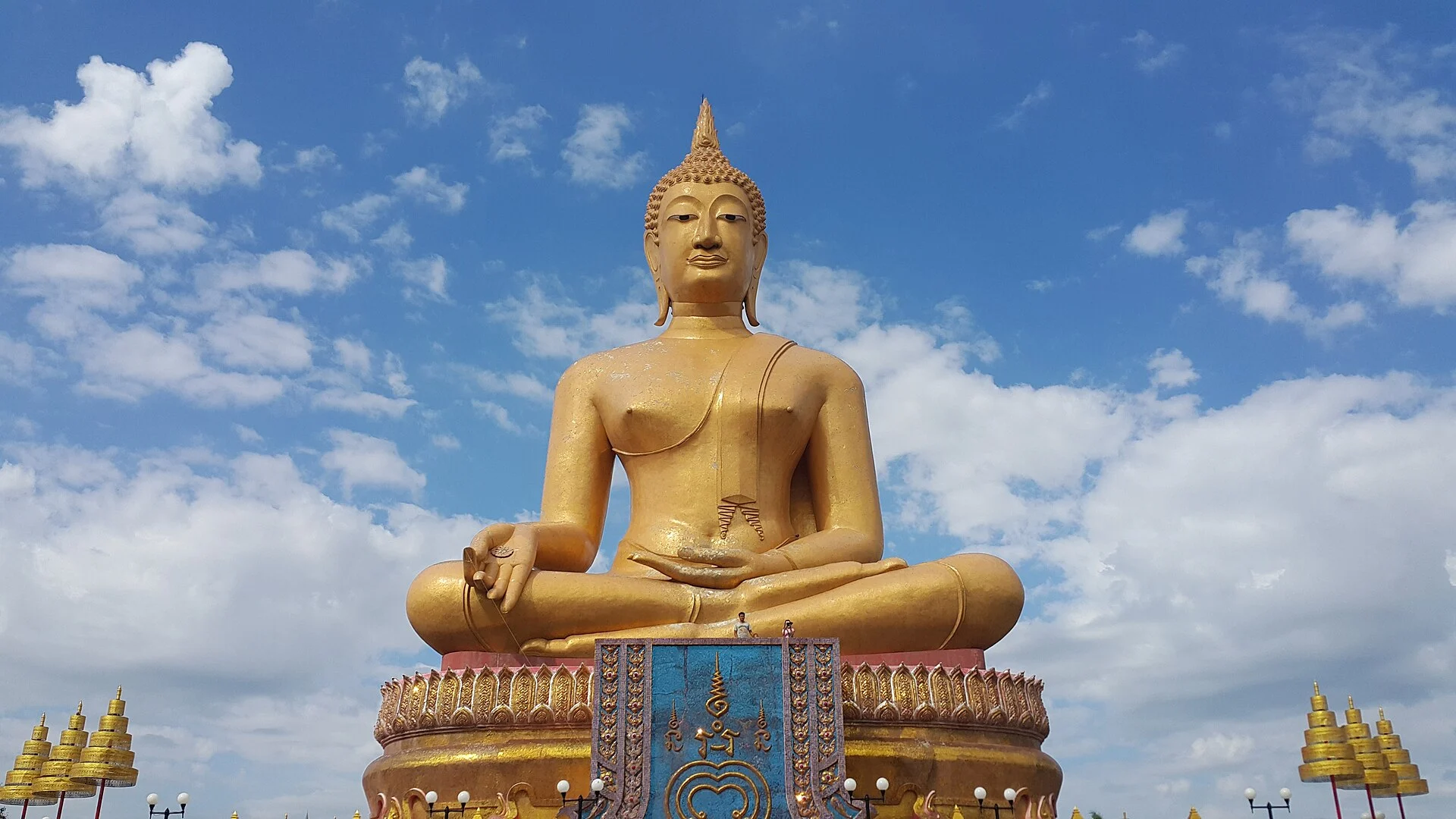
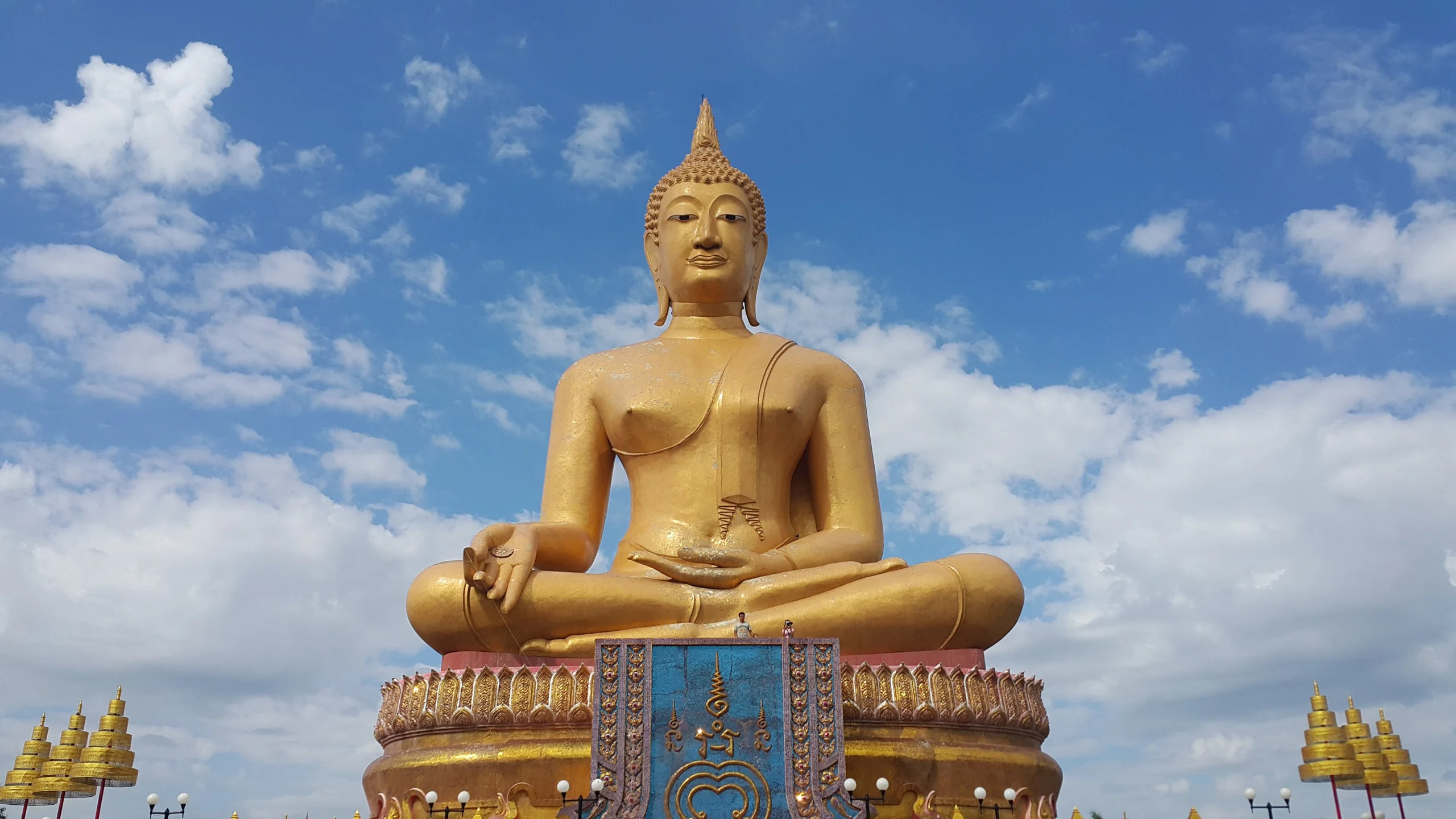
In Tha Chang district, Wat Phikun Thong announces itself from a kilometre away: an enormous golden seated Buddha rising out of the rice fields, one of the largest in the country. The temple was home to Luang Pho Pae, one of central Thailand’s most revered monks, and it remains a serious pilgrimage stop — expect merit-makers and amulet stalls rather than tourist commerce. Combine it with the prawn strip; they are in the same district. Free entry.
5. The hundred-year market at In Buri
In Buri’s old market is a run of teak shophouses by the Chao Phraya that has been trading for over a century, and unlike the restored markets elsewhere in Thailand it has not been turned into a film set. Come on a weekend morning for noodles, ancient-recipe sweets and coffee brewed the old way in a cloth sock.
6. Ride the flat back roads along the Noi
The final attraction is the province itself. The land is billiard-table flat, the back roads along the Noi River are quiet, and the scenery is rice paddies, old temples and fish farms to the horizon. Rent a motorbike or bring a bicycle and just go — this is the anti-destination done right, and an hour of aimless riding here tells you more about how most of Thailand lives than a week on Khao San Road.
What to skip
Skip the roadside resorts strung along Highway 32. They exist to catch motorists too tired to continue, they charge town-hotel prices for rooms that smell of damp air-conditioning and last decade’s cigarettes, and their fairy-light restaurants are the worst-value food in the province. You will eat better at a plastic table in the night market for a fifth of the money. Sleep in town, where you can walk to dinner.
And skip the temptation to over-schedule: give Sing Buri one honest day and a night, and it will overdeliver.
Sing Buri travel: practical info
Come between November and February, when the plains are dry and the mornings almost cool. March to May is punishingly hot on this shadeless flatland, and the rainy season, roughly June to October, turns the fields a spectacular green but occasionally floods the low-lying districts.
One night is right for most people; make it two for the In Buri market on a weekend morning plus a lazy prawn lunch. Sing Buri also slots neatly into a central-plains loop: Lopburi and its monkey-occupied Khmer ruins are 40 minutes east, Ayutthaya about an hour south, Chai Nat half an hour north, and Suphan Buri an easy country drive west.
Wikipedia’s Sing Buri entry covers the Bang Rachan history properly.
TAT’s official Sing Buri page keeps temple and market practicalities current.
FAQ
Is Sing Buri worth visiting?
Yes, for a night, if you care about history, food or seeing the central plains without a tour bus in sight. The Bang Rachan memorial, two giant Buddhas and the best river prawns in Thailand are a strong day’s work. Skip it if you need nightlife or anything resembling a scene.
How do I get to Sing Buri from Bangkok?
Bus or minivan from Mo Chit terminal, around two and a half to three hours, for roughly ฿120-160. There is no train station; the nearest rail is Lopburi, 30 kilometres east. Driving takes about two hours up Highway 32 and is the best option, since the sights are spread across the province.
What is Sing Buri famous for?
Two things above all: the 1766 last stand of the Bang Rachan villagers against the Burmese army, one of Thailand’s defining historical legends, and giant Mae La freshwater prawns, which pull food pilgrims out of Bangkok every weekend. It is also home to the Sukhothai-era reclining Buddha at Wat Phra Non Chakkrasi and the golden giant of Wat Phikun Thong.
How many days do you need in Sing Buri?
One full day and a night covers the memorial park, both giant Buddhas and a serious prawn dinner. Add a second night only for the weekend market at In Buri and slow riding along the Noi.
What is Bang Rachan?
Bang Rachan was a village whose people resisted the invading Burmese army for around five months in 1766, repelling repeated attacks before being overwhelmed shortly before Ayutthaya fell. The memorial park and the surviving temple, Wat Pho Kao Ton, mark the site in Khai Bang Rachan district.