Uthai Thani is the province Thai travellers rate highly and foreigners cannot place on a map, and both parties seem happy with the arrangement. It sits three hours north of Bangkok on the wrong side of the Chao Phraya — wrong for the railway and the tour coaches, which is precisely why it still has a working river culture instead of a gift shop. What it offers is genuinely odd and genuinely good: a temple hall lined with a million mirrors, Thailand’s last real floating community, and a UNESCO-listed forest that still holds wild tigers.
No monkeys ransack your bag here — that circus is down the road in Lopburi — and there are no coach parks, because Uthai Thani never built anything for one to stop at. Dawn on the Sakae Krang River means monks collecting alms by boat from families living on wooden rafts, and nobody is charging admission.
This guide covers the lot; for the quick version, see our Uthai Thani province profile.
What Uthai Thani really is
A small province on the west bank of the Chao Phraya, a little over 300,000 people, split into two very different halves. The east is flat river country — rice, fish cages and the capital, sitting exactly where the Sakae Krang River empties into the Chao Phraya. The west climbs through limestone hills into serious forest: Lan Sak and Ban Rai districts, ending at Huai Kha Khaeng and the Western Forest Complex, one of the largest blocks of protected forest left in Southeast Asia.
The town is low-rise, wooden and unhurried. The river is not a backdrop; it is infrastructure — people live on it, farm fish under their floorboards, cross it in longtail boats. Nothing is staged, because nobody expected you.
Why go to Uthai Thani
Because the crystal hall at Wat Tha Sung is one of the most extraordinary rooms in Thailand, and you will share it with Thai pilgrims rather than selfie sticks. Because the raft-house community on the Sakae Krang is the real, working version of the river life Bangkok’s floating markets pantomime. Because Huai Kha Khaeng is arguably the most important patch of nature in the country. And because all of it sits three hours from Bangkok and costs almost nothing.
Do not come for nightlife — nothing beyond a night market and a cold Leo by the river — and not for beaches. Uthai Thani is a two-day province done properly, and those two days will outlast most people’s fortnights.
Getting to Uthai Thani
By bus: services leave Bangkok’s Mo Chit Northern terminal for Uthai Thani town through the day — about four hours with stops, roughly ฿150-250. Minivans are slightly quicker and slightly less comfortable.
By car: about 220 kilometres and three hours — Highway 32 north past Ayutthaya and Chai Nat, then across the Chao Phraya near Manorom. A car transforms this province, because the forest half has no public transport worth the name.
By train: there is a station with Uthai Thani on the sign, and in fine provincial fashion it is nowhere near Uthai Thani — it sits across the Chao Phraya, fifteen-odd kilometres from town; ordinary Northern Line trains stop for under ฿100 in third class, and songthaews cover the rest. Slower than the bus, more charming than the bus. No airport, no prospect of one — half the reason the place is still nice.
Where to stay
In town, base yourself near the river and the night-market streets: clean guesthouses run ฿400-800, small proper hotels around ฿800-1,500.
The move worth making is a night in a raft house on the Sakae Krang — simple rooms floating on the river, fish stirring under the floorboards, monks paddling past at dawn. Book through town guesthouses or ask at the pier; around ฿1,000-1,500 with meals often included, and pack earplugs if longtail engines offend you.
For the forest, sleep out west in Lan Sak: countryside resorts and farm stays run ฿600-2,000 and put you near the sanctuary gate for the early hours that matter.
What to eat in Uthai Thani
River fish, and plenty of it. The cages beneath the raft houses raise fish metres from the kitchens that cook them, making the row of riverside restaurants near the pier some of the freshest freshwater eating in the country. Order snakehead grilled in a salt crust with a sour chilli dip; a whole grilled fish runs ฿150-300, river prawns more when they have them.
Mornings, the fresh market near the river does sock-filter coffee, patongko and rice porridge for pocket change. Old-town noodle shophouses charge ฿40-60 a bowl and have done for decades. Weekend evenings, stalls around Trok Rong Ya sell old Chinese-Thai snacks no 7-Eleven stocks; the night market covers everything else.
Top things to do in Uthai Thani
1. Wat Tha Sung, the crystal sanctuary
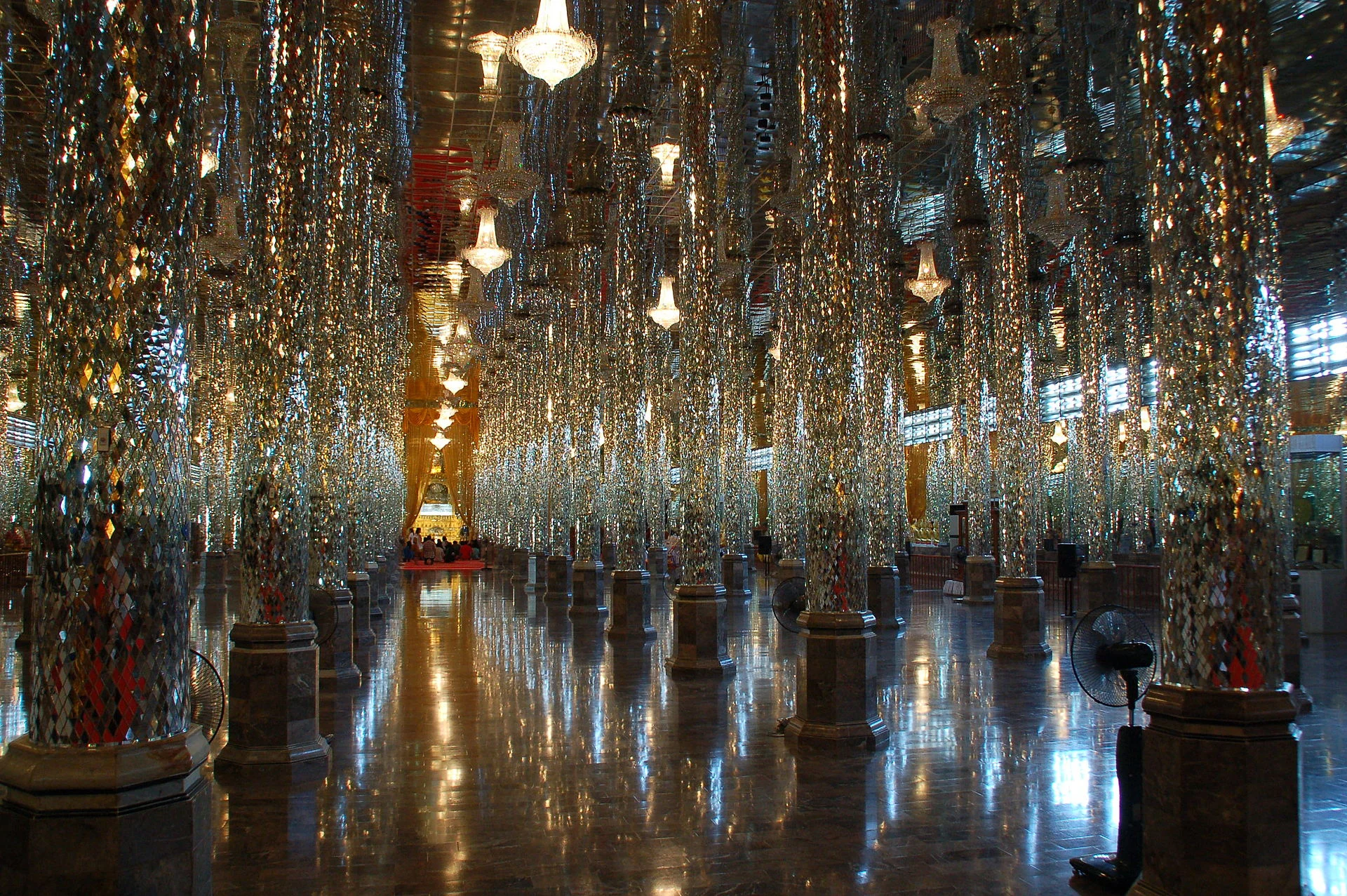
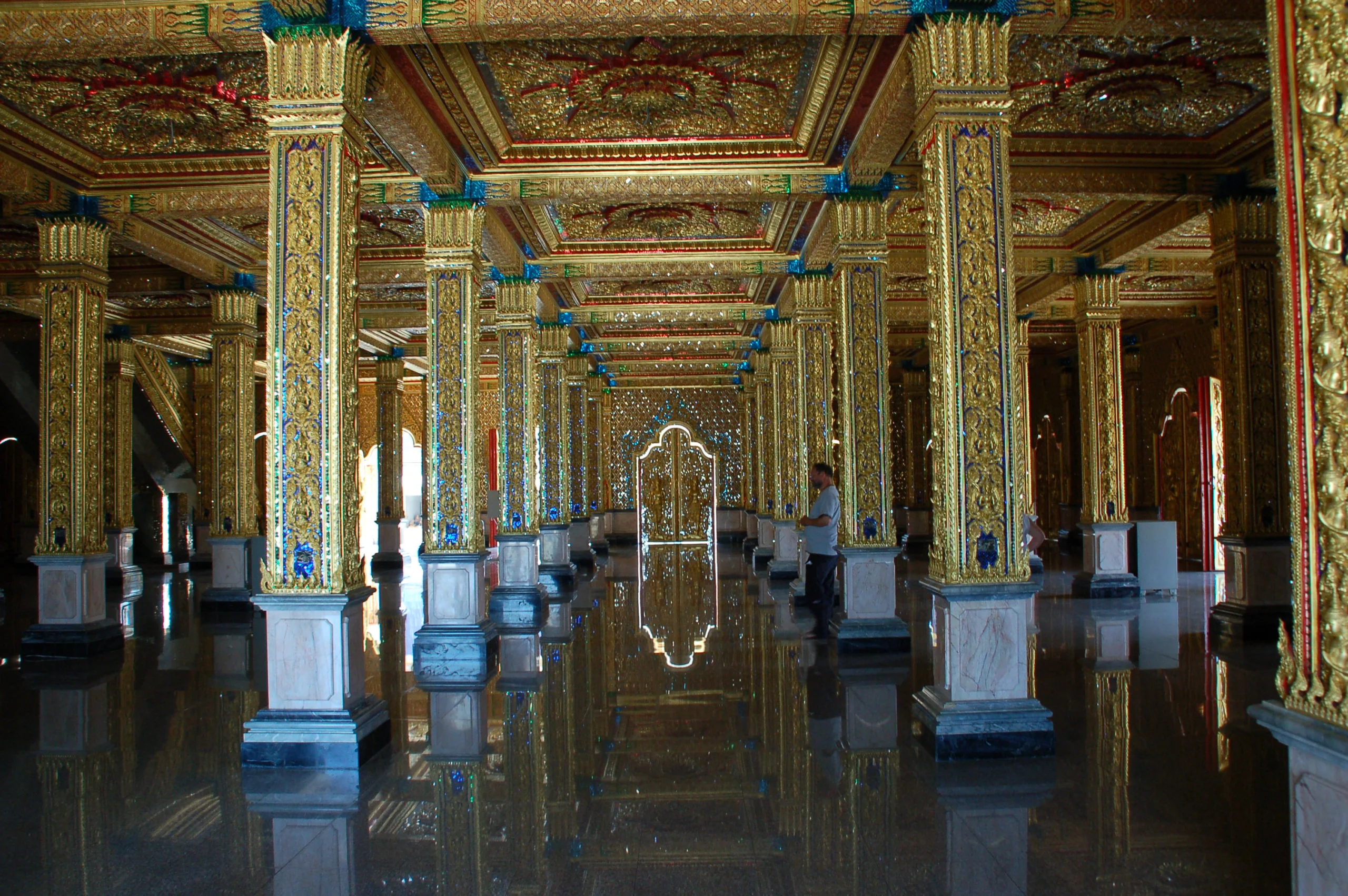
Officially Wat Chantharam, universally Wat Tha Sung, ten minutes south of town beside the Sakae Krang. The headline act is the Viharn Kaew, a hall roughly a hundred metres long where every surface — columns, walls, ceiling — is mirrored glass, the rows of golden Buddhas repeating to infinity. It sounds gaudy. It is not; it is like standing inside a cut diamond. Luang Pho Ruesi Lingdam, the abbot who built it, lies in a glass case within. Entry is free, the hall closes for a long midday stretch, and shoulders and knees must be covered. A gold-sheathed castle of a building stands on the same grounds, in case the mirrors were too subtle.
2. Dawn with the Sakae Krang raft houses
The floating settlement strung along the river in front of town is not a museum piece; it is Thailand’s last genuinely lived-in raft-house community, families raising cage fish beneath their floors as they have for generations. Be on the water at first light, when monks collect morning alms by boat, raft to raft — stay the night on one, or hire a longtail from the pier for a few hundred baht and ask for the alms round. Cross the footbridge to Wat Ubosatharam afterwards for its old murals and total silence.
3. Huai Kha Khaeng, the forest that changed Thailand
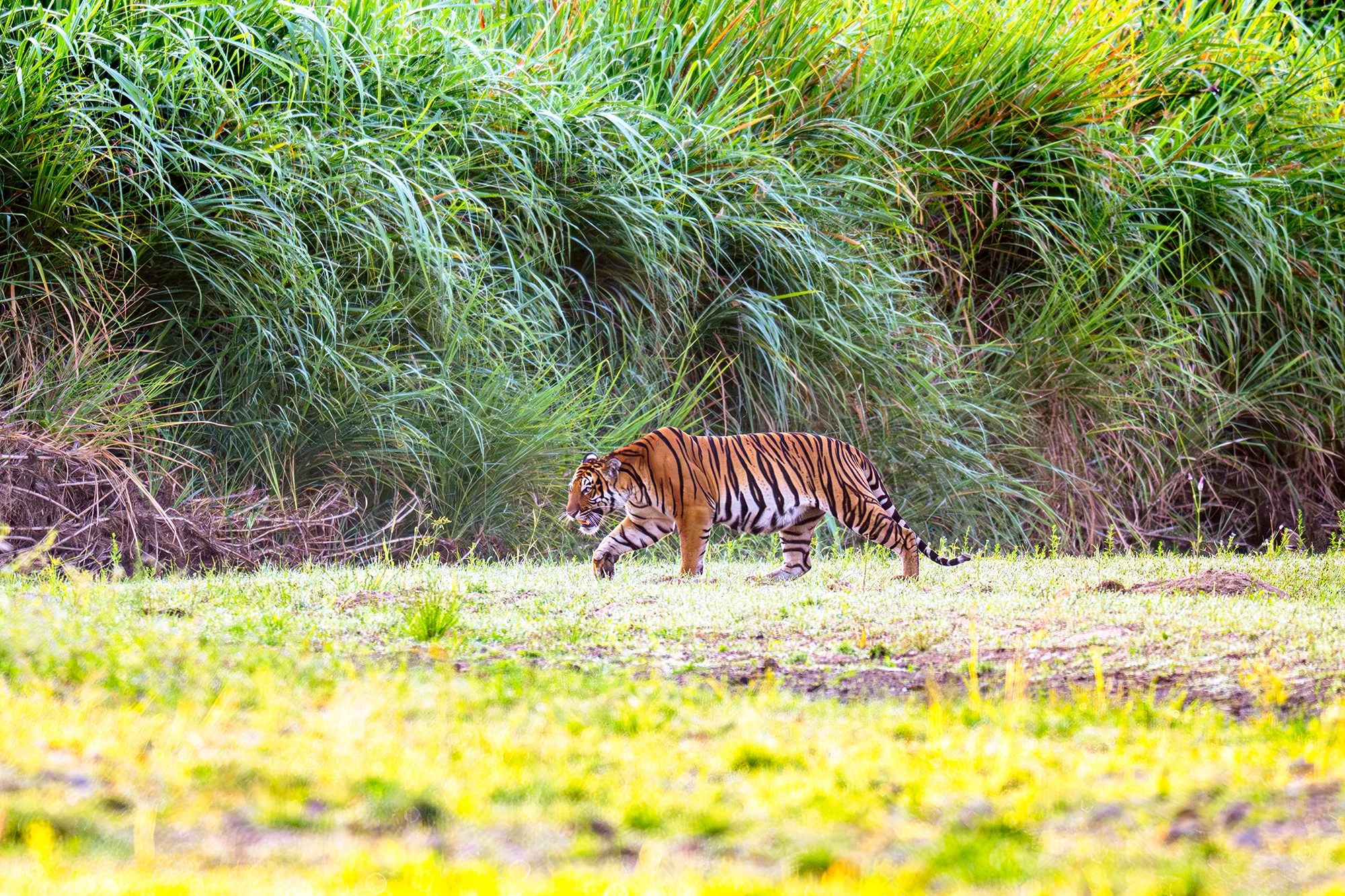
Inscribed by UNESCO in 1991 together with Thung Yai Naresuan, Huai Kha Khaeng is the beating heart of the Western Forest Complex: wild tigers, banteng, elephants, some of Thailand’s last green peafowl. It is also where sanctuary chief Seub Nakhasathien, worn down by fighting poachers with no support, took his own life on 1 September 1990 — a death that shocked Thailand into taking conservation seriously. The memorial at headquarters tells that story straight; short nature trails let you stand at the edge of the real thing; the interior is deliberately closed to casual visitors. About two hours west of town, modest entry fee, no public transport — bring your own wheels and go early.
4. Climb Khao Sakae Krang from Wat Sangkat Rattana Khiri
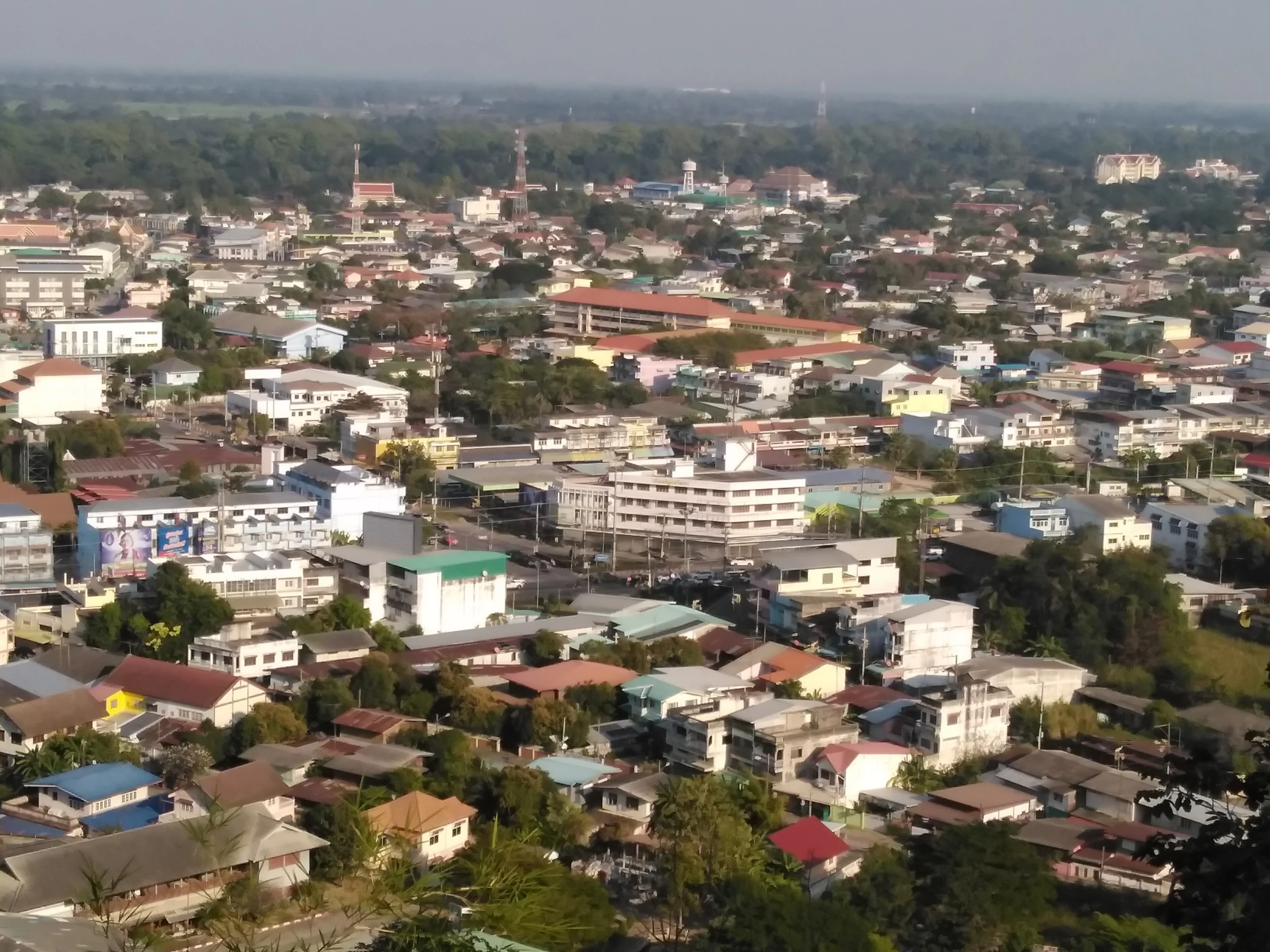
Wat Sangkat Rattana Khiri sits at the foot of Khao Sakae Krang on the edge of town, and a staircase of 449 steps climbs to a replica of the Buddha’s footprint, a large bell and the best view in the province — rivers and rice with the forest walling off the west. Go late afternoon and carry water. Each October, the day after Buddhist Lent ends, the staircase hosts Tak Bat Devo: hundreds of monks descending at dawn through thousands of alms-givers, Uthai Thani’s biggest day of the year and worth planning around.
5. Trok Rong Ya and the old-town lanes
A lane of century-old wooden shophouses a street back from the river, the heart of the Chinese-Thai merchant quarter: herbalists, ancient barbers, coffee made the old way. Weekend evenings a small street market moves in with old-fashioned snacks; midweek it is sleepy shutters and cats, its own reward if your expectations are set correctly. People live here — photograph like a guest, not a drone operator.
6. Hup Pa Tat, the valley time forgot
Out west in Lan Sak, on the way to Huai Kha Khaeng, a collapsed limestone chamber has left a valley ringed by sheer karst cliffs, entered through a dark cave tunnel — take a phone torch. Inside, the sealed microclimate grows ancient palms over a forest floor that looks convincingly prehistoric; you half expect something to bellow. Small fee, easy flat walk, one of the strangest half-hours in central Thailand.
What to skip
The tiger safari, because it does not exist. Someone hears UNESCO and tigers in the same sentence and imagines an open-top truck and a telephoto lens. Huai Kha Khaeng is not Kruger and refuses to become it: no game drives, no lodges, no guarantee of anything beyond birdsong and a wall of green. If any tour promises tigers through a windscreen, keep your money — a fantasy the sanctuary has spent three decades refusing to sell. Near-guaranteed wild elephants means Khao Yai, a different trip entirely.
And temper the Trok Rong Ya expectations: one short lane, not a walking-street festival — midweek visitors expecting a market will find shutters. Go at the weekend, or go for the atmosphere, not the shopping.
Uthai Thani travel: practical info
Best season is November to February, cool and dry; October is a smart wildcard if you can time Tak Bat Devo. March to May is kiln-hot; the rains keep everything green and the temples empty, though forest tracks turn to mud. Two nights is right — one for the town, the crystal hall and the river dawn, one out west for Hup Pa Tat and Huai Kha Khaeng.
Moving on is easy: Nakhon Sawan is under an hour north, Chai Nat under an hour south, Suphan Buri about two hours down the back roads, and Kanchanaburi roughly three hours west via Ban Rai — a lovely drive through karst country that almost nobody takes.
Wikipedia’s Uthai Thani entry fills in the history and geography properly.
TAT’s official Uthai Thani page keeps visiting practicalities current.
TAT also runs a slow-travel piece on Uthai Thani makes this guide’s pitch in politer language.
FAQ
Is Uthai Thani worth visiting?
Yes, with the right expectations: one spectacular temple, an authentic river community, a UNESCO forest and near-zero tourism infrastructure. If your Thailand is islands and bars, skip it; if it is rivers, temples and food, it absolutely is.
How do you get from Bangkok to Uthai Thani?
Bus or minivan from Mo Chit, about four hours, ฿150-250; driving takes about three via Highway 32. The train works too, but the station sits across the river fifteen kilometres from town.
Can tourists visit Huai Kha Khaeng Wildlife Sanctuary?
Yes — the headquarters area, the Seub Nakhasathien memorial and short nature trails are open for a modest fee; the interior is closed except for research. No public transport, so drive or hire a driver, and treat any wildlife sighting as a bonus, never a promise.
How many days do you need in Uthai Thani?
Two nights: day one for Wat Tha Sung, the 449 steps and the old town, dawn on the river next morning; day two out west for Hup Pa Tat and Huai Kha Khaeng. Add a third night in October for Tak Bat Devo.
What is Uthai Thani famous for?
Four things: the mirrored crystal hall at Wat Tha Sung, the raft-house community on the Sakae Krang, UNESCO-listed Huai Kha Khaeng, and the Tak Bat Devo festival each October.