Chai Nat is the province everyone barrels through at 110 kilometres an hour on Highway 32, somewhere between the Bangkok tollway and wherever they are actually going. Nobody stops. Which is a shame, because this is central Thailand with the tourism switched off completely: no tuk-tuk cartel, no banana-pancake cafes, nobody trying to sell you a suit. Just the Chao Phraya River doing what it has done for a thousand years, the 1957 dam that quietly made modern Thailand possible, and one of Asia’s largest walk-in aviaries sitting on a hillside with barely a soul in it.
This is a guide for people who find that description appealing rather than alarming. If you need rooftop bars and a beach club, close the tab now. If you want to see what the rice-growing heart of the country looks like when it is not performing for anyone, read on — and have a look at our Chai Nat province profile for the quick-reference version.
What Chai Nat really is
A small, flat, intensely agricultural province about 195 kilometres north of Bangkok, where the Chao Phraya narrows and the government decided, in the 1950s, to build the barrage that would irrigate the entire central plain. That decision defines the place. This is rice-barge and pomelo country, a province of canals, sluice gates and riverside market towns, with a provincial capital small enough to walk across in twenty minutes.
There is no tourism apparatus here in any meaningful sense. No hop-on bus, no English menus, almost no other foreigners. What it has instead is the real machinery of the Thai heartland — irrigation, temples, weekend markets — running at its own unhurried pace.
Why go to Chai Nat
Three honest reasons. First, the Chao Phraya Dam at Sapphaya, which is genuinely interesting if you have any curiosity about how this country actually works — more on that below. Second, the bird park, a walk-in aviary so large that trees grow full-size inside it. Third, the atmosphere: a hundred-year wooden market, a temple pier where pilgrims arrive by boat, and the kind of unforced friendliness you stopped getting in Chiang Mai around 2009.
There is a fourth reason if you time it right: every February the province loses its collective mind over straw, building enormous woven birds for a festival that is exactly as odd and as charming as it sounds.
Getting to Chai Nat
No airport, no railway station — the northern line swings east through Lopburi and misses the province entirely. That leaves road, which is mercifully simple.
- Bus: services leave Bangkok’s Mo Chit (Northern) terminal through the day, taking around three hours to the provincial capital. Expect ฿130-180 depending on class.
- Minivan: faster at roughly two and a half hours, similar money, from the same terminal.
- Driving: the easiest option by far. Straight up Highway 32 from Bangkok, about two and a half hours. Having your own wheels matters here, because the sights — dam, bird park, Sankhaburi, Sapphaya — are scattered 10-25 kilometres apart and public transport between them is thin to non-existent.
- From Lopburi or Nakhon Sawan: ordinary buses and songthaews connect both, taking about an hour to an hour and a half.
Where to stay
Manage your expectations: this is business-traveller and pilgrim accommodation, not boutique territory, and that keeps prices honest.
- Chai Nat town: the practical base. A clean, air-conditioned room near the night market or the river runs ฿400-700. The handful of larger hotels aimed at visiting officials sit around ฿800-1,200 and are perfectly decent in a beige, conference-carpet way.
- Riverside, near the dam: a few resort-style places along the Chao Phraya charge ฿800-1,500 for bungalows with river views. Worth it for the sunsets and the barge traffic.
- Sapphaya: simple homestays around the old wooden market from a few hundred baht. Basic, but you wake up inside the atmosphere instead of driving to it.
What to eat in Chai Nat
The river feeds you here. Giant river prawns and snakehead fish, grilled or dropped into a sour tom yam, are the order of the day at the row of riverside restaurants near the dam and along the Chao Phraya in town — expect ฿150-300 for a river-fish dish, more if the prawns are the size of your forearm, which they occasionally are.
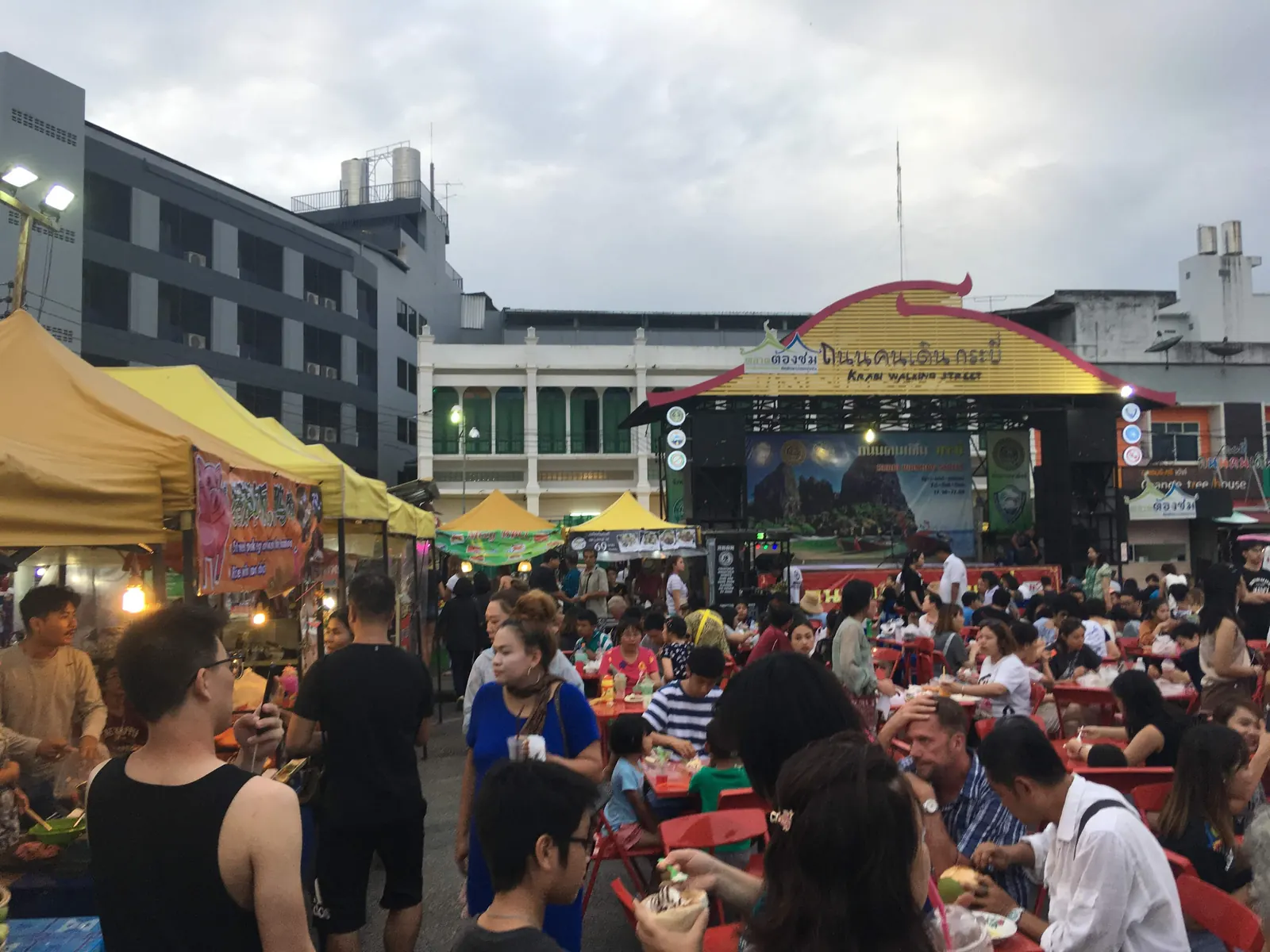
The province’s real trophy is the Khao Taengkwa pomelo from Manorom district, a fruit locals will defend with genuine aggression. In season, roughly the second half of the year, you will find them at roadside stalls for around ฿50-100 each. The night market in town does all the central-plains standards — noodle soups at ฿40-60 a bowl, grilled chicken, som tam — and the weekend food stalls at Sapphaya’s old market are the best eating in the province: old-fashioned kanom, coffee brewed the ancient way, river fish cooked by people whose grandmothers did it in the same building.
Top things to do in Chai Nat
1. Chao Phraya Dam at Sapphaya
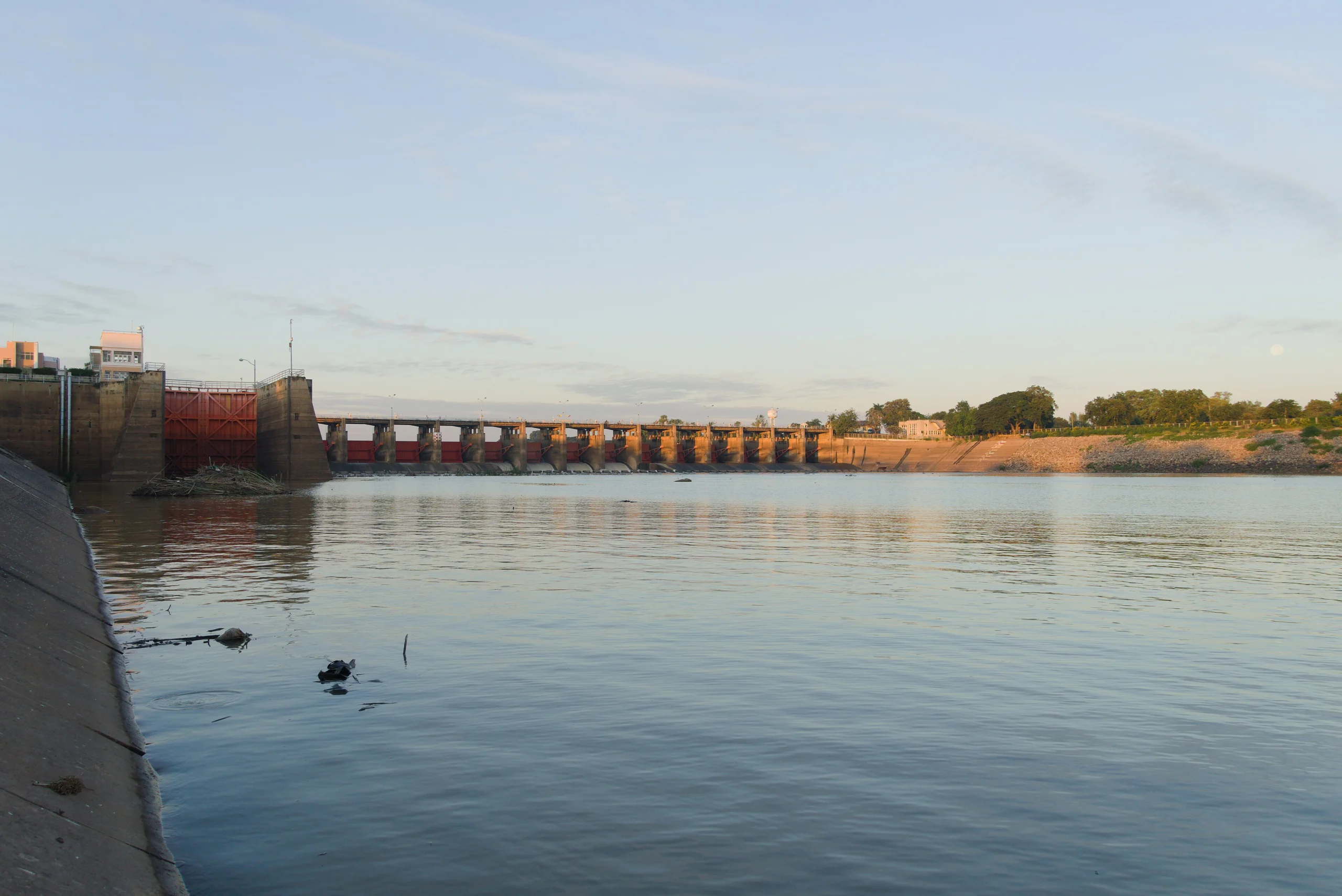
Finished in 1957, this was the first great barrage across the Chao Phraya, and it turned the central plains from flood-or-famine gambling into the rice machine that fed Thailand’s entire modern economy. That makes it, quietly, one of the most consequential structures in the country. You can drive or walk across the top, watch the sluice gates thunder in the wet season, and eat lunch nearby while rice barges queue for the lock. It is free, it is impressive in a muscular mid-century way, and the adjacent riverside park is where half the province comes to exercise at sunset.
2. Chai Nat Bird Park
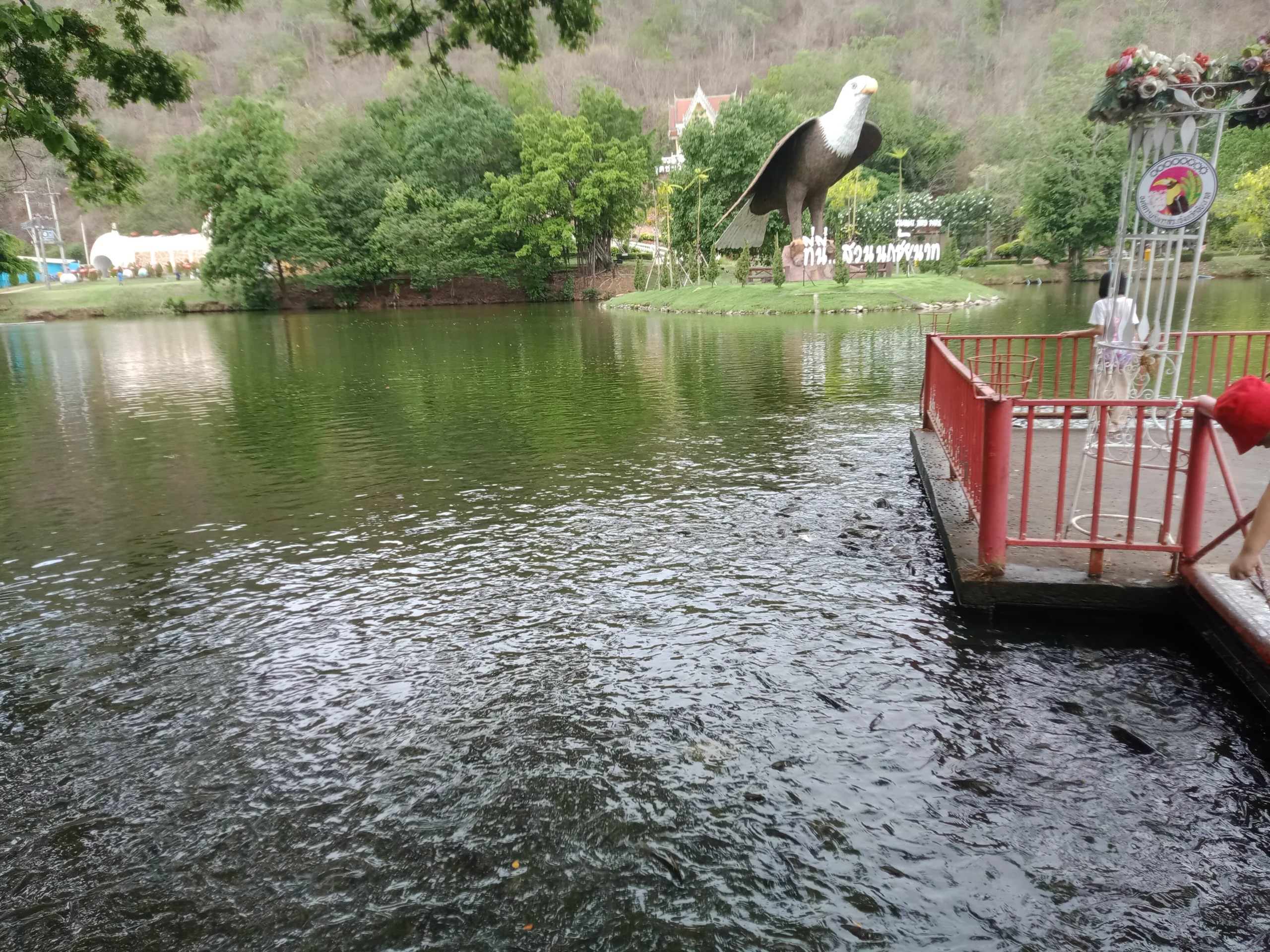
One of the largest walk-in aviaries in Asia, draped over the foot of Khao Phlong hill just outside town. The scale is the point: the netted dome is vast enough to contain mature trees, and you wander underneath while hornbills, peafowl and herons get on with their lives around you. Entry costs next to nothing — well under ฿100 — and on a weekday you may have several hectares of aviary entirely to yourself, which is a strange and rather wonderful experience.
3. Wat Thammamun and its river pier
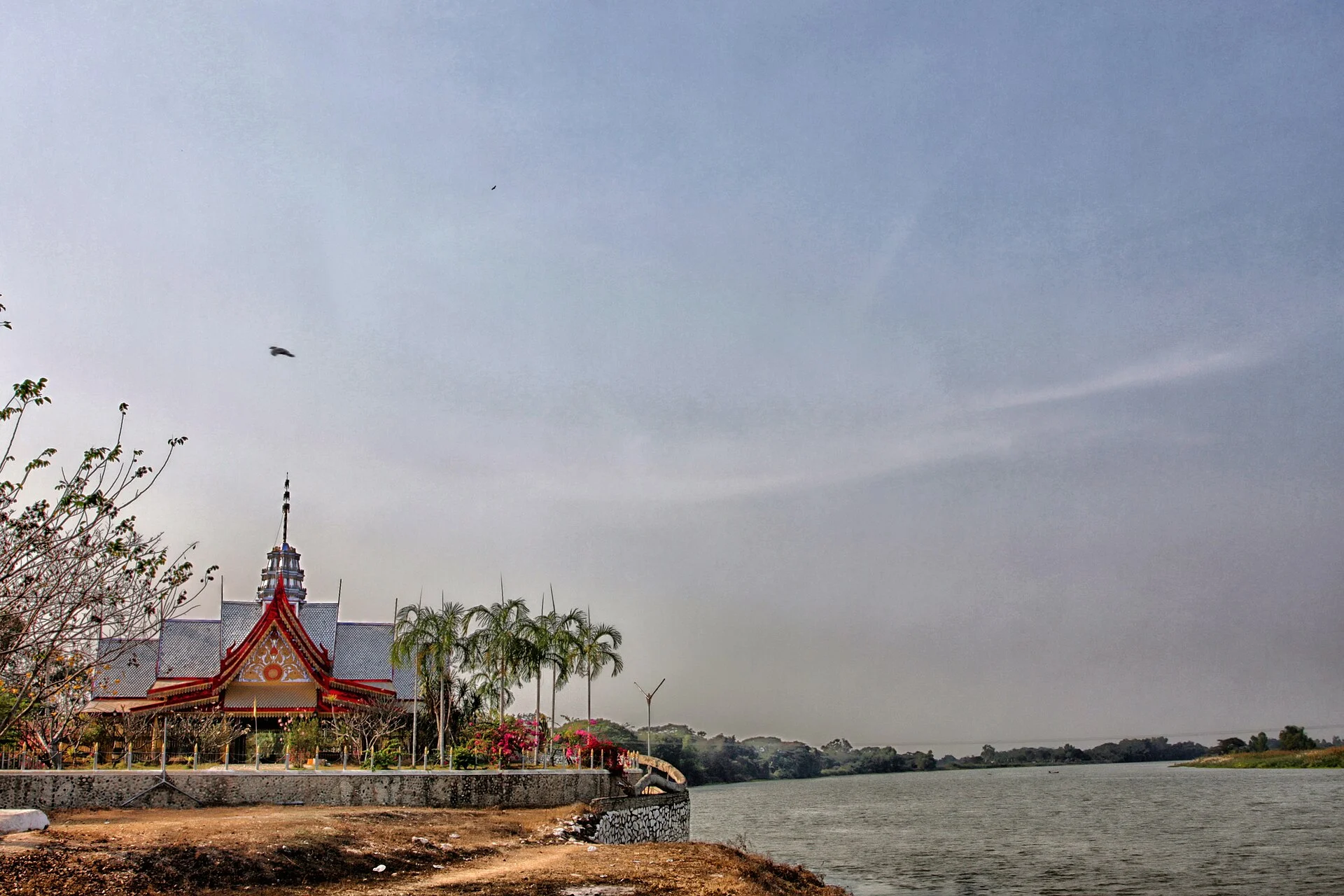
The province’s most revered temple, sitting right on the Chao Phraya with its own pier, and tied to the lineage of Luang Pu Suk — one of the most venerated monks in Thai history, whose amulets still change hands for serious money. Come for the riverside setting, stay to watch pilgrims arriving by boat and shoals of river fish churning the water below the pier, where feeding them earns you merit for a few baht of fish pellets. Go early in the morning, when the light is on the river and the coaches from other provinces have not yet arrived.
4. Sankhaburi and the ruins of Wat Mahathat
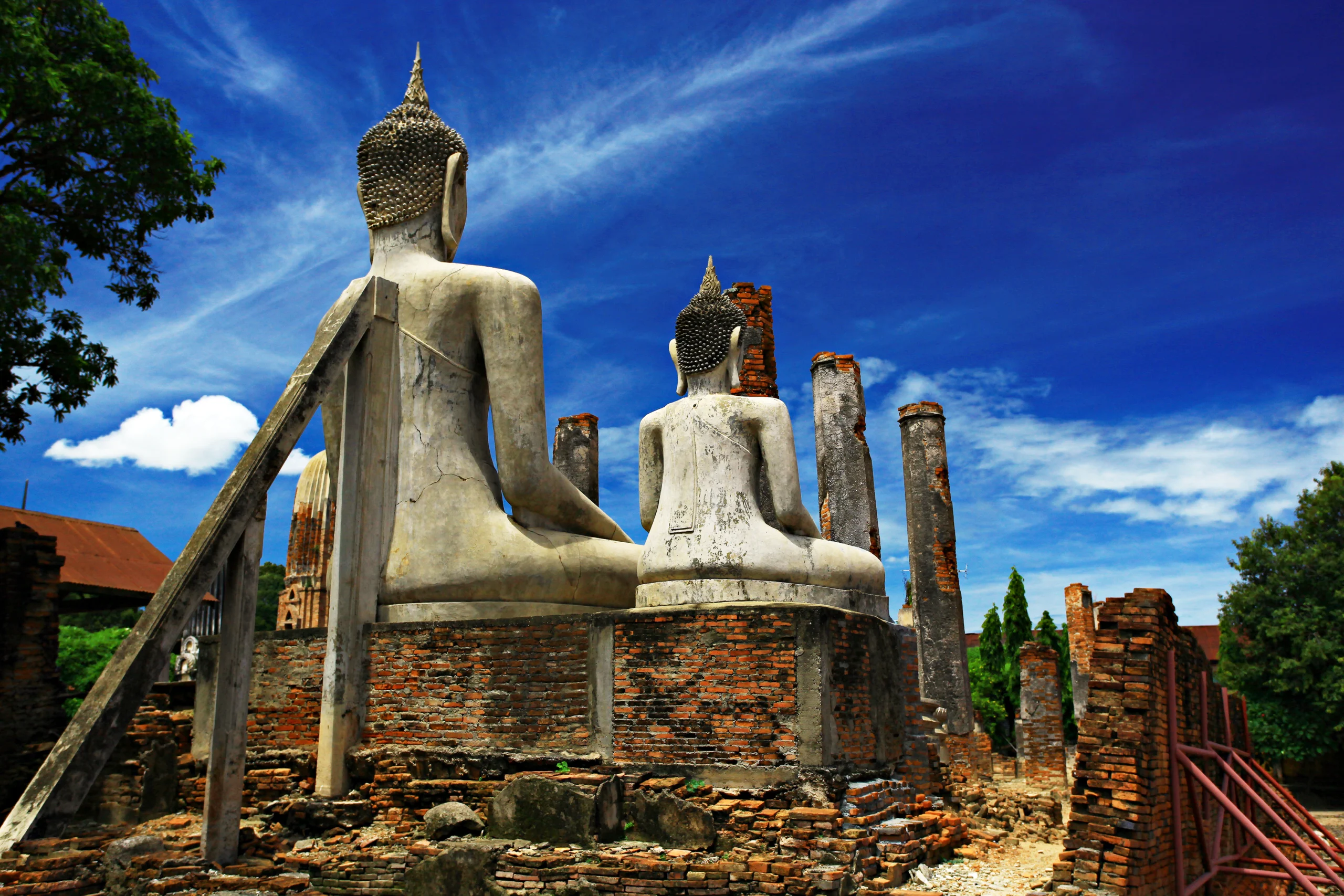
Sankhaburi district, about 25 kilometres west of town, is the old town proper — a settlement that predates the current provincial capital by centuries. The ruins of Wat Mahathat, with a weathered prang and crumbling brick chedis, reach back towards the U Thong era and stand about quietly with none of Ayutthaya’s crowds, ticket booths or elephant-pants stalls. If you like your ruined temples with birdsong instead of tour groups, this is the version.
5. The hundred-year wooden market at Sapphaya
A double row of century-old teak shophouses running along the river near the dam, still lived in, still trading. Weekends are when it wakes up properly: food stalls, old photographs on the walls, ladies selling sweets from recipes older than the shophouses themselves. It has been gently spruced up for Thai weekend visitors, but it remains the genuine article rather than a heritage theme park, and an hour spent eating your way down it is an hour well used.
6. The straw bird festival in February
Once a year, usually in February, the province celebrates the end of the rice harvest by building giant birds out of straw — from sparrow-sized up to towering creations the height of a house — and parading them through town alongside an agricultural fair. It is the province’s one big moment, and it is joyously, unselfconsciously provincial in the best possible way. If your dates line up, rearrange your route around it.
What to skip
The caged section at the back of the bird park. The great walk-in aviary is superb; the rows of smaller enclosures and the dated aquarium near the entrance are not, and some of those cages will annoy anyone with modern views on keeping animals. Do the big dome and skip the rest.
Also skip any plan that involves this province as a nightlife stop. The evening entertainment is the night market, a beer by the river and an early night. Arrive expecting Pattaya and you will have the worst week of your life. Arrive expecting nothing and the place quietly wins you over.
Chai Nat travel: practical info
Best season: November to February, when the weather is dry and merciful and the straw bird festival lands. The rice-green months of the rainy season, roughly July to October, are beautiful too, and the dam is at its most dramatic with the gates open. April is a furnace; avoid it.
How long: one full day covers the dam, the bird park and Wat Thammamun; two days lets you add Sankhaburi and a lazy Sapphaya weekend morning. This is a one-to-two-night province, and it is better for knowing it.
Onward travel: the province sits at a genuinely useful crossroads. Nakhon Sawan and the north are an hour up Highway 32; Uthai Thani and its forest country are just across the river; Sing Buri and Lopburi sit to the south and east; Suphan Buri is a pleasant back-road drive southwest. Very few provinces make a better mid-journey overnight.
Wikipedia’s Chai Nat entry has the dam-era history.
TAT’s official Chai Nat page keeps bird-park hours current.
FAQ
Is Chai Nat worth visiting?
Yes, for one or two days, provided you want unvarnished central Thailand rather than attractions with gift shops. The dam, the aviary and the wooden market are all genuinely good, and the near-total absence of other tourists is the point rather than a drawback.
How do I get from Bangkok to Chai Nat without a car?
Bus or minivan from Mo Chit (Northern) terminal, around two and a half to three hours, ฿130-180. There is no train — the northern railway line misses the province. Once you arrive, hire a motorbike or negotiate a songthaew for the day, because the sights are spread out.
What is Chai Nat famous for?
The Chao Phraya Dam, completed in 1957 as the first barrage across the river; the giant walk-in aviary at the bird park; Khao Taengkwa pomelos from Manorom; and the annual straw bird festival each February.
How many days do you need in Chai Nat?
One busy day for the highlights, two relaxed days for the lot. Most people fold it into a longer route north rather than making it the destination, which is exactly the right way to use it.
When is the Chai Nat straw bird festival?
Usually in February, held alongside the provincial agricultural fair. Dates shift each year, so check locally before you commit — but if you are anywhere in central Thailand when it is on, it is worth the detour.