Lampang is the province the Chiang Mai tour buses drive straight past, and that is precisely why you should get off. It sits ninety-odd minutes down Highway 11 from the north’s tourist capital, yet it may as well be forty years away: horse carriages still work the streets as actual transport, noodle soup arrives in the original rooster bowls, and the finest wooden temple in the Lanna world stands beside rice fields with barely a coach park to its name.
Nobody performs for you here. Lampang is a working northern town that made its fortune on Burmese teak, kept the mansions to prove it, then quietly became the factory floor for half the crockery in Thailand. It has a coal-fired power station out at Mae Moh, a lovely stretch of the Wang River, and locals who seem quietly pleased you bothered to come at all.
This guide covers the lot: how to get in, where the good beds and bowls are, and the six things worth your time, including the cliff-top temple whose silhouette turned up on a Louis Vuitton runway. For the quick-reference version, see our Lampang province profile.
What Lampang really is
In the late nineteenth century this was a teak boomtown. British-Burmese merchants floated fortunes down the Wang River and spent them on teak mansions and Burmese-style temples that still line the old Talad Gao quarter. When the teak ran out, Lampang reinvented itself around ceramics, and today its factories turn out everything from industrial tile to the red-cockerel noodle bowl you have eaten from in street stalls nationwide. It came from here.
The horse carts are the other tell. They arrived in the Rama V era, and while every other province scrapped them for pickups, Lampang never stopped. This is not a resort; it is a real place that happens to be excellent to visit.
Why go to Lampang
Because it is the closest thing northern Thailand has to a time machine, at roughly two-thirds of Chiang Mai prices. You get a walkable riverside old town, a weekend market in a genuine merchant quarter, the government’s own elephant institute rather than a roadside show, and a fifteenth-century wooden temple you might have entirely to yourself on a weekday. If your idea of the north was formed in Chiang Mai’s Old City at peak season, Lampang is the corrective.
Getting to Lampang
By train is the romantic option. Nakhon Lampang station, a 1916 gingerbread building that is an attraction in itself, sits on the Northern Line. From Bangkok it is ten to eleven hours; a second-class sleeper berth runs roughly ฿700-1,000. From Chiang Mai it is about two hours, and a third-class seat costs less than ฿50.
By bus, services from Bangkok’s northern terminals take eight to nine hours and cost around ฿450-700. From Chiang Mai’s Arcade terminal, buses and minivans leave roughly hourly, take up to two hours, and cost about ฿100.
By air, Bangkok Airways flies from Suvarnabhumi to Lampang’s toy-sized airport in about an hour and twenty minutes, typically ฿1,500-2,500 one way. Driving from Chiang Mai is 100 kilometres of good divided highway, about an hour and a half.
Where to stay
The area you want is the riverside old town around Talad Gao Road, where several teak merchant houses have been converted into small guesthouses. Expect ฿600-1,200 a night for creaking floorboards, river views and more character than any chain hotel in the country. Book ahead on market weekends.
The town centre around the five-way clock tower junction has clean, unremarkable guesthouses from about ฿400-800. Out on the highway sit the business hotels favoured by ceramics buyers; skip them unless you are driving and desperate. The boutique top end runs about ฿1,500-2,500 a night, which is to say the best bed in Lampang costs less than a mediocre one in Chiang Mai.
What to eat in Lampang
The northern classics are all here and all cheaper than over the mountain. Khao soi, the coconut curry noodle soup, runs ฿40-70 a bowl in the morning noodle shops. Khanom jeen nam ngiao, rice noodles under a tomato-and-pork sauce with a proper sour bite, is ฿40-60 and arguably better here than in Chiang Mai. Sai ua, the herb-loaded northern sausage, sells by the length at the morning market near the river.
The thing to carry home is khao taen: discs of crispy rice drizzled with palm sugar, Lampang’s signature snack, about ฿50 a bag from any market. And if your noodles arrive in a rooster-printed bowl, you are eating from the town’s most successful export in its home town. The weekend Kad Kong Ta stalls do most snacks at ฿20-60 a go, and grazing there is the correct approach to a Saturday dinner.
Top things to do in Lampang
1. Wat Phra That Lampang Luang
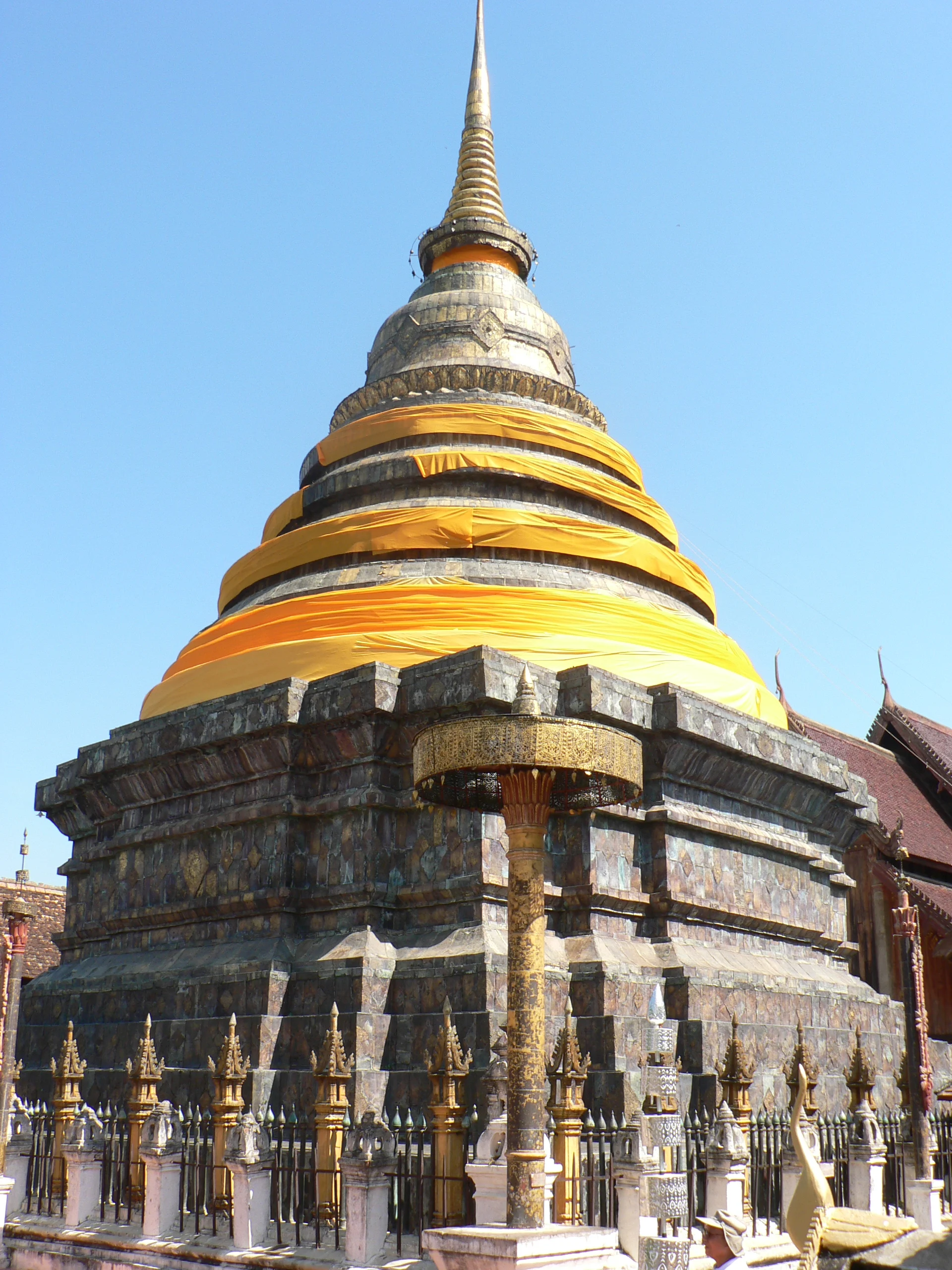
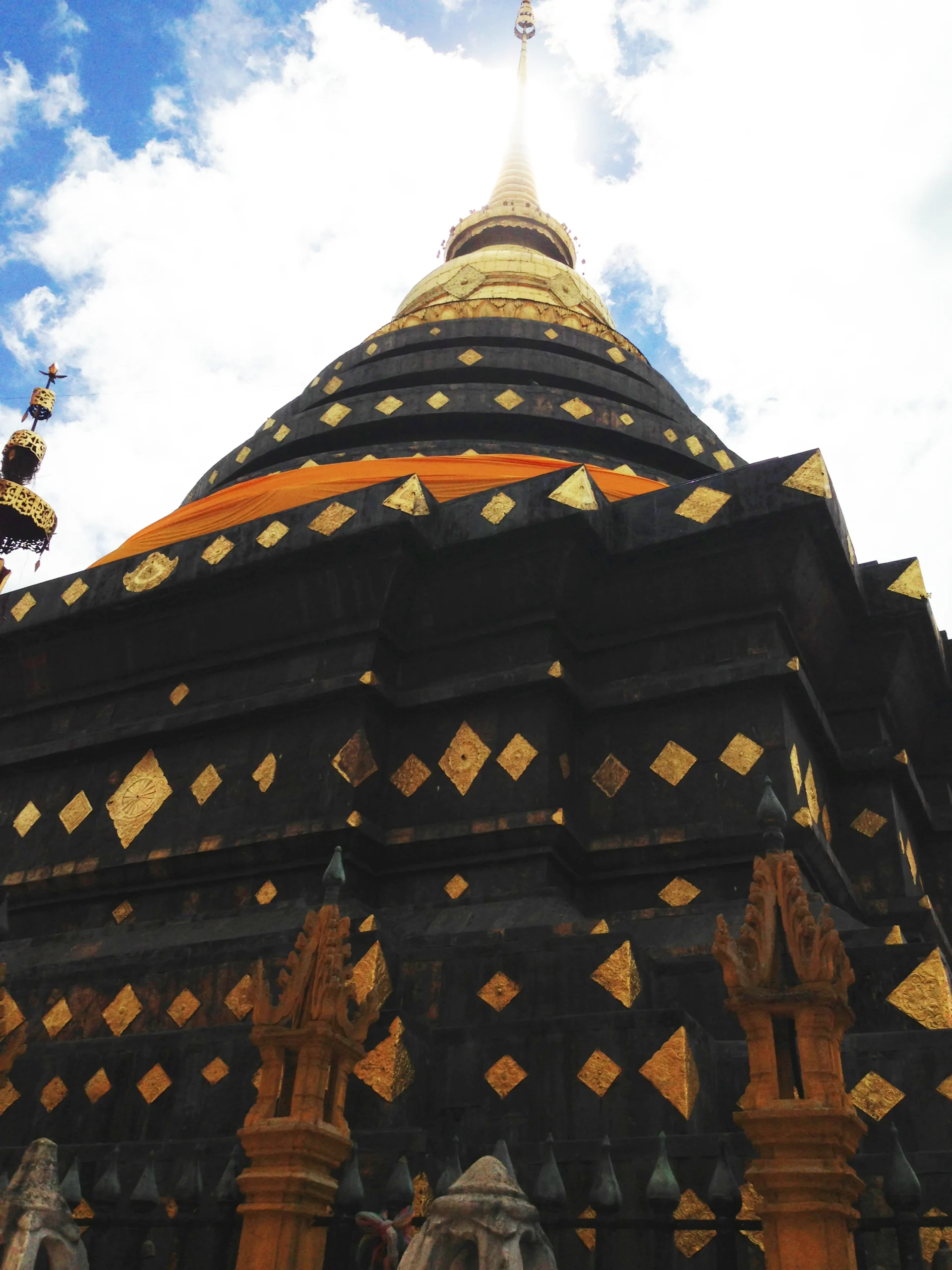
Eighteen kilometres southwest in Ko Kha district stands the finest surviving wooden temple in the Lanna world, and this is not tourist-board hyperbole. The great open-sided viharn dates to the late fifteenth century, its tiered roofs sweeping low over faded murals and a gilded ku shrine. The 45-metre chedi carries an alleged bullet hole in its brass railing, from a shot a local hero is said to have fired at a Burmese commander. The party trick is the camera obscura: a small hole in a door casts a live, inverted image of the chedi onto a cloth inside. One of the two buildings where this happens admits men only, a Lanna tradition; the other is open to everyone. Go early on a weekday, dress properly, and get there by blue songthaew or rented scooter. Entry is by donation.
2. Ride a horse-drawn carriage through the old town
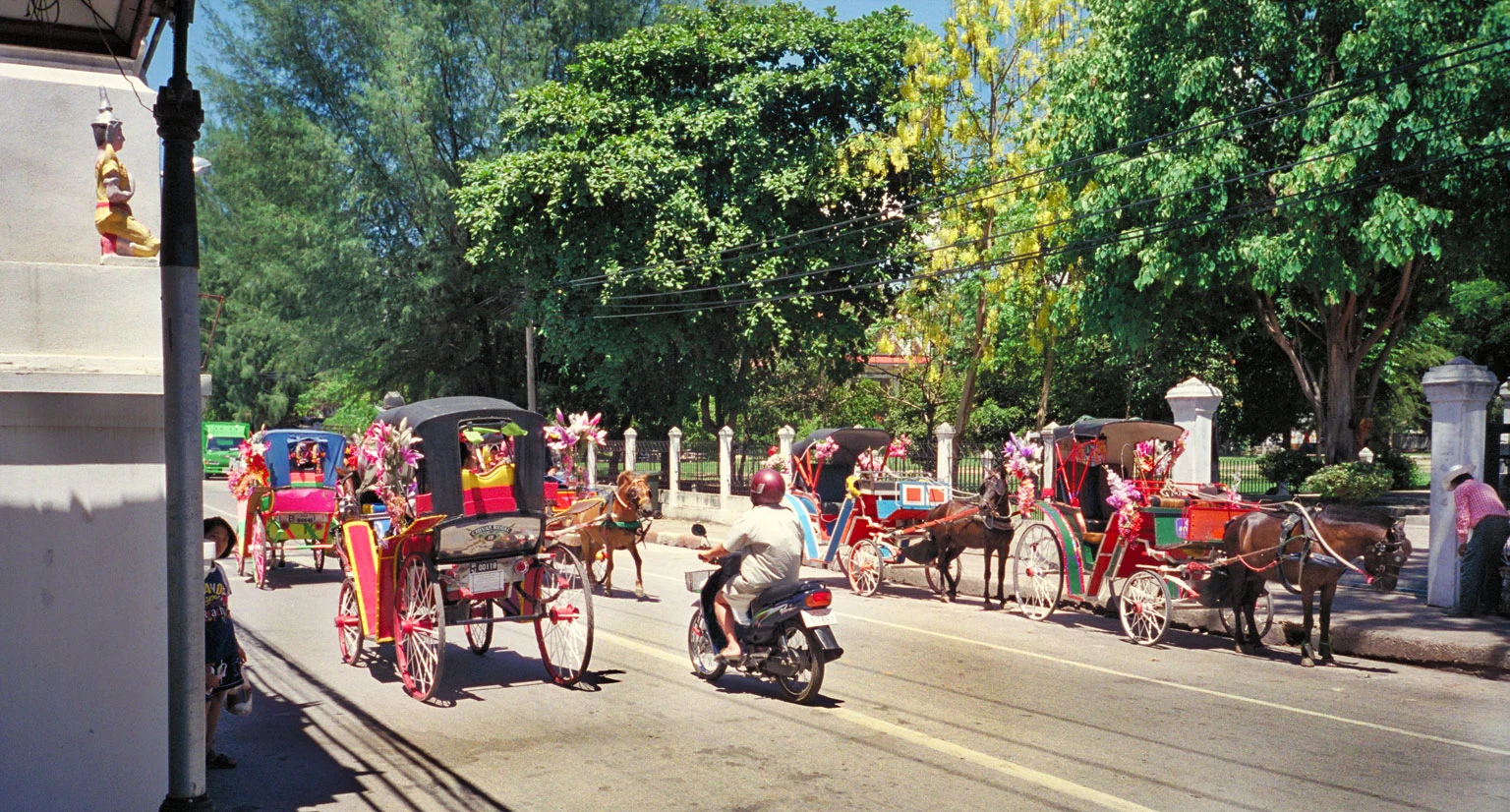
Lampang is the last province in Thailand where horse carriages still work the streets, a Rama V-era hangover the town turned into its emblem. Yes, it is now mostly for visitors; no, that does not make it skippable. Expect around ฿300 for a short loop past the river and the old quarter, more like ฿500 for the hour-long circuit, and ride in the early morning or late afternoon when it is cooler for you and the horse alike.
3. Thai Elephant Conservation Center
About thirty kilometres up the Chiang Mai highway in Hang Chat, this is the government’s own elephant institute, run by the Forest Industry Organization: retired working elephants, the royal stables and a hospital that treats the hardest cases in the country. It is not a sanctuary utopia, and some of the demonstrations feel old-fashioned, but as a state institution with working vets it is the ethical baseline against which the private camps should be judged. Entry is a couple of hundred baht, activities extra. If you are going to see elephants in Thailand, this is the defensible version.
4. Dhanabadee Ceramic Museum
The rooster bowl came to Lampang with Chinese potters last century, and the Dhanabadee works in town is where the icon lives on. The museum tour passes a dragon kiln and tells the improbable story of how a provincial factory bowl became a national design classic, for around a hundred baht. Buy the real thing in the shop; it costs a little more than the knock-offs and outlasts them by decades.
5. Kad Kong Ta weekend market
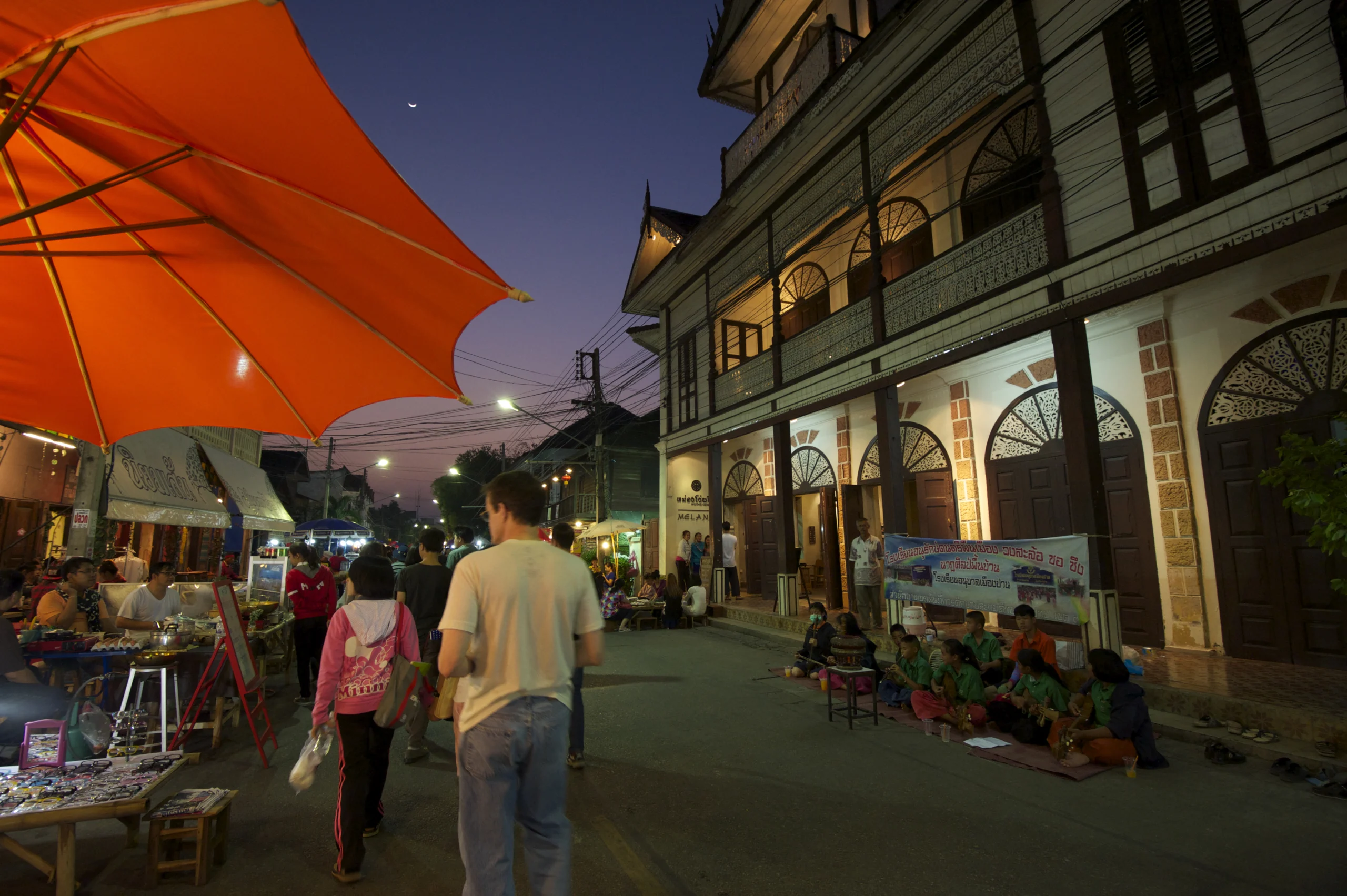
On Saturday and Sunday evenings, Talad Gao Road closes to traffic and the old teak merchant quarter fills with food stalls, craft sellers and half of Lampang out for a stroll. The buildings are the point as much as the shopping: century-old teak and brick shophouses built on teak-trade money, lit up and still lived in. Come hungry and spend ฿200 grazing.
6. Wat Chaloem Phra Kiat’s cliff-top pagodas
About seventy kilometres northeast near Chae Hom, small white pagodas are scattered impossibly across the tops of limestone pinnacles. When Louis Vuitton staged a runway show on a set of white pagodas perched on sculpted peaks, Thai social media identified the likely inspiration within hours. You need your own wheels or a driver; at the base, a small fee gets you the shuttle truck up the alarmingly steep access road, then you climb the final walkways on foot. Go early or late for the light, and give it half a day door to door.
What to skip
The privately run elephant shows dotted along the highways of the north. Lampang contains the actual government elephant institute, with veterinarians and a hospital, half an hour from town; paying a roadside outfit to watch an elephant play the harmonica when the real thing is up the road is like buying a fake rooster bowl in the town that makes the genuine article. Skip, too, the idea of doing Lampang as a two-hour stop on the way north. You will see the station, one temple, and none of the reasons this page exists.
Lampang travel: practical info
Best season: November to February, when the north is cool, dry and at its best. Be honest about March and April: burning season, when the regional haze can be genuinely unhealthy and the views from Wat Chaloem Phra Kiat vanish into grey soup. June to October is green, quiet and perfectly workable between showers.
How long: two nights minimum, three if you want the cliff-top pagodas and the elephants without rushing. Getting around: songthaews cover town; a rented scooter at ฿200-300 a day unlocks Ko Kha and Hang Chat. Onward: Chiang Mai is under two hours away, Lamphun sits on the road between the two, Phrae is a couple of hours east by bus, and Tak, to the south, puts you on the road to Mae Sot.
Planning the specifics? The Tourism Authority of Thailand’s official Lampang page and its things-to-do list carry current opening hours and market days, and Wikipedia has the historical background.
FAQ
Is Lampang worth visiting?
Yes, and more so the more of Thailand you have already seen. It has the north’s temples, food and old-town texture without the crowds, at lower prices, with the country’s finest wooden temple twenty minutes away. First trip north, do Chiang Mai; second trip, Lampang is the upgrade.
How many days do you need in Lampang?
Two nights covers the old town, Wat Phra That Lampang Luang and a weekend market if you time it right. Add a third for the elephants and the cliff-top pagodas at Chae Hom, which each eat half a day.
How do you get from Chiang Mai to Lampang?
Buses and minivans from Arcade terminal take up to two hours and cost about ฿100. The train takes around two hours and costs under ฿50 in third class. Driving Highway 11 takes about an hour and a half.
What is Lampang famous for?
Three things: Thailand’s last working horse-drawn carriages, the rooster bowl its ceramics factories turned into a national icon, and Wat Phra That Lampang Luang, widely regarded as the finest wooden Lanna temple in existence. The cliff-top pagodas of Wat Chaloem Phra Kiat lately joined the list thanks to a certain French fashion house.
Are the Lampang horse carriages ethical?
Broadly yes, by working-animal standards: the carriages are licensed, the loops short, and the trade a point of civic pride. Pick a horse that looks well fed and alert, ride in the cool hours, and if anything looks off, walk away; the old town strolls perfectly well on foot.
Related guides
- Best things to do in Lamphun province
- Where to eat breakfast in Chiang Mai
- Bangkok to Chiang Mai: every transport option compared