Chaiyaphum has a reputation problem, in that it has no reputation at all. Mention it to a Bangkok taxi driver and you get a shrug; mention it to a backpacker and you get a blank stare. Chaiyaphum sits dead centre on the map of Thailand and somewhere near dead last in the tourism statistics, the province Thai people tease each other about never having visited. Which is exactly why you should go.
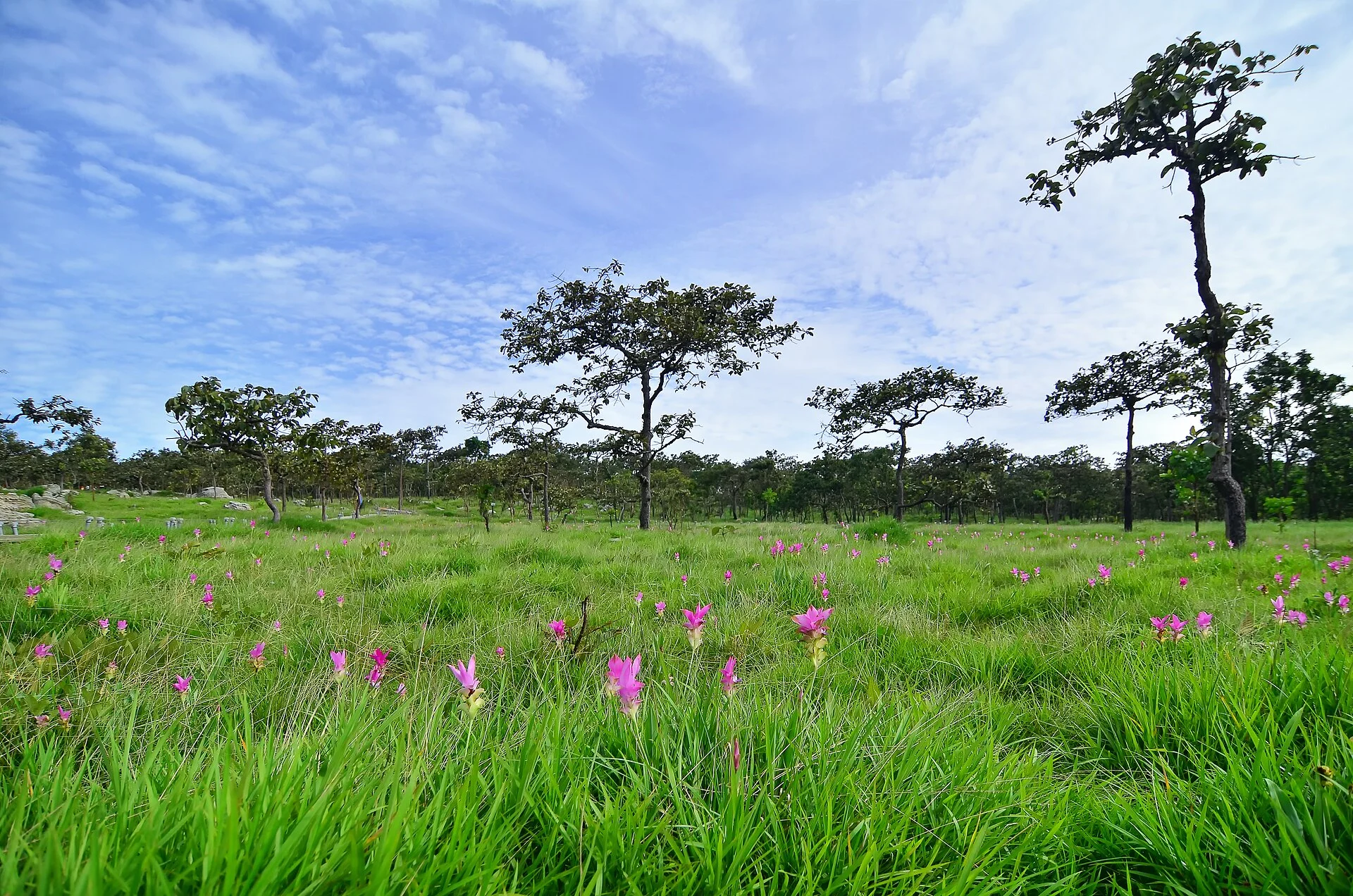
Because here is what the statistics leave out. For about eight weeks every rainy season, the high grasslands in the west of the province flood pink with millions of wild Siam tulips. A ridge an hour from town holds a cluster of chalk-white monoliths doing a convincing impression of Stonehenge, except you can camp under this one for free. And there are cliff edges where the Khorat Plateau simply stops, which you will usually have to yourself.
This guide covers the tulips, the stones, the waterfall, the routes in and what to dodge. For the quick-reference version, see our Chaiyaphum province profile.
What Chaiyaphum really is
Chaiyaphum is western Isaan at its most rural: sugarcane, cassava, silk-weaving villages and a modest capital that exists mainly to sell tractors, school uniforms and grilled chicken. The capital was founded in the early 1800s by Chao Pho Phraya Lae, a Lao noble whose statue still owns the main roundabout; more on him below, because his story is better than most provinces manage.
The geography is the actual point. The east is flat farmland; the west climbs into the Phang Hoei range until it falls off the edge of the plateau. Packed into those hills are four national parks worth your time: Sai Thong, Pha Hin Ngam, Tat Ton and Phu Laenkha.
Why go to Chaiyaphum
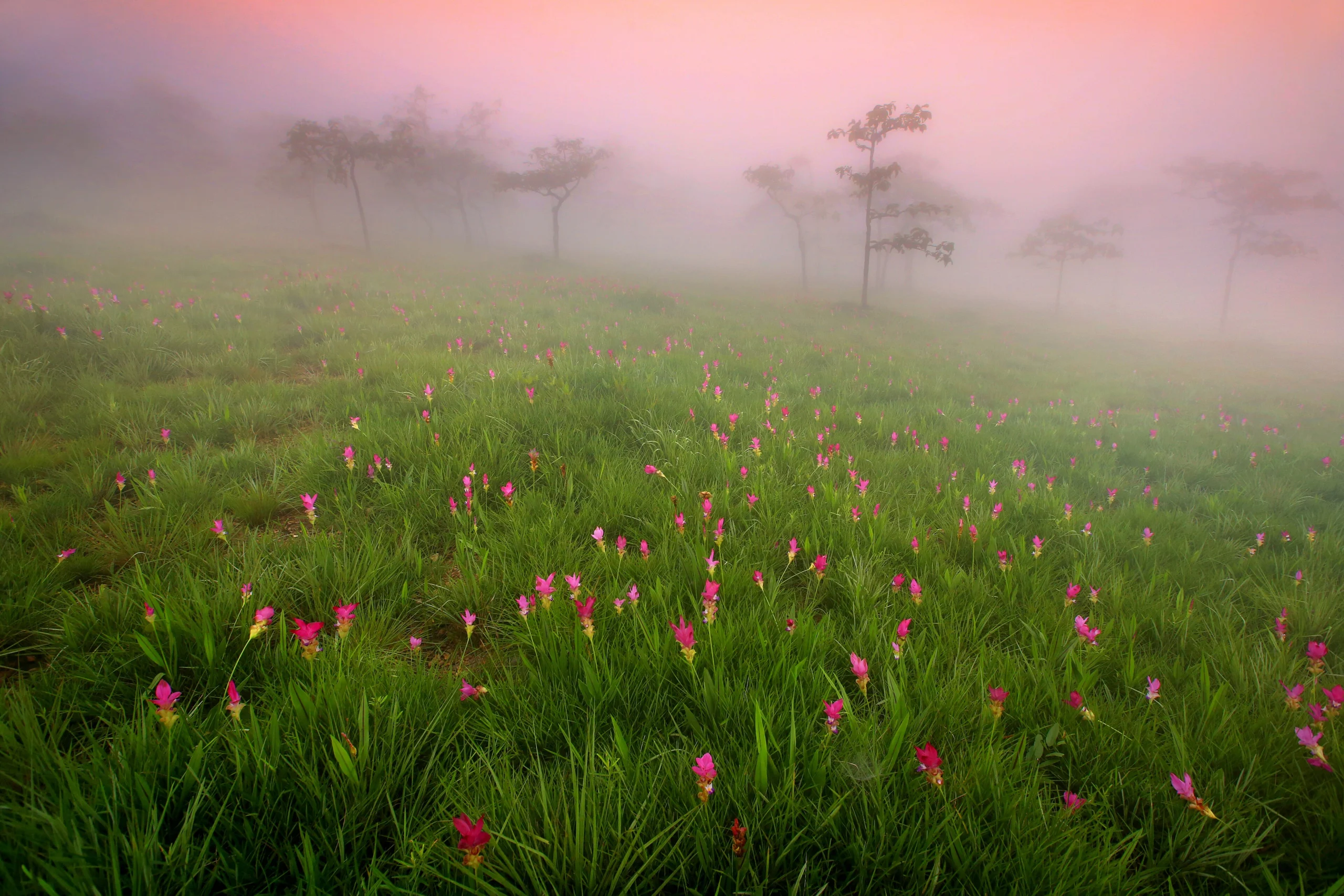
Two reasons, both seasonal. First, the dok krachiao, the so-called Siam tulip, which is not a tulip at all but a wild ginger that erupts in pink across the upland meadows from June to August. Thailand markets plenty of flower spectacles; this one delivers. Second, the emptiness. Chaiyaphum is Isaan’s blank spot on the tourist map. The far parks sit a solid three and a half hours from Khorat, which filters out every coach party in the kingdom.
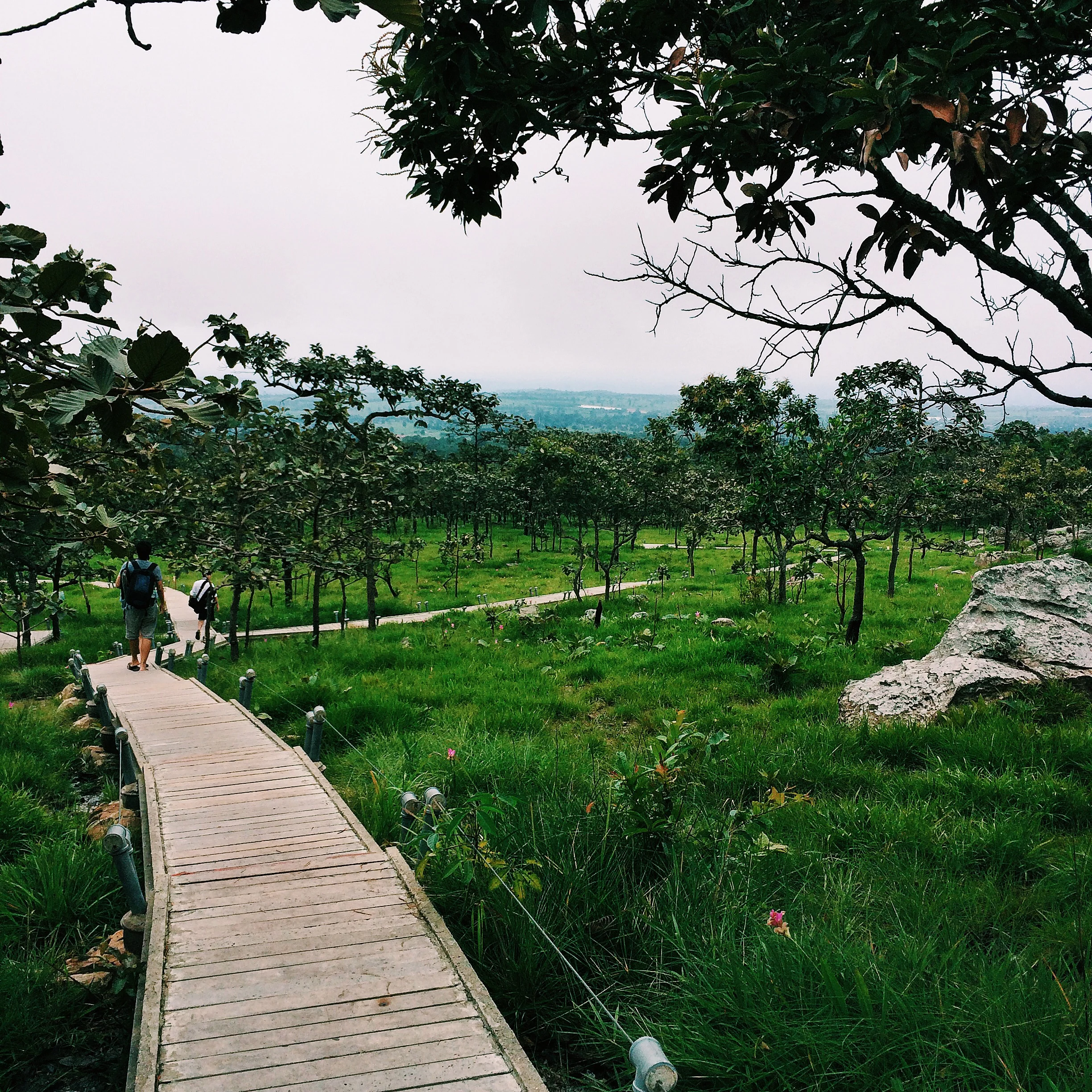
If you want beach bars, infinity pools or English menus, you are in catastrophically the wrong province. If you want to see upcountry Thailand when nobody is performing for visitors, this is it.
Getting to Chaiyaphum
There is no airport and no proper railway; the nearest station is Bua Yai Junction over in Nakhon Ratchasima, and by the time you have faffed about with connections the bus would have won. Road or nothing, which is half the reason the province stays empty.
- Bus from Bangkok: first-class and VIP services run from Mo Chit through the day and overnight. Around 5.5 to 6.5 hours, ฿300-450.
- Fly to Khon Kaen: under an hour from Bangkok, from about ฿800 booked ahead, then 2.5 to 3 hours by bus (roughly ฿100-150) or hire car. The sane play, because you want that hire car anyway.
- From Khorat: regular buses, about two hours to town, ฿80-120; the headline sights are another one to two hours beyond.
The parks are scattered 20 to 100 kilometres out of town in different directions, and public transport to them ranges from thin to non-existent. Hire a car in Khon Kaen, arrange a driver, or ride a motorbike if long hill runs in rainy-season weather do not scare you.
For live timetables and tickets on these routes, compare your options on 12Go before you commit to a departure time.
Where to stay
Chaiyaphum town is the practical base: a clean fan guesthouse near the night market runs ฿400-600, and the business hotels charge ฿700-1,200 for air-con and hot water. Nobody is winning design awards; everything works.
Thep Sathit district, down near Pha Hin Ngam, has small resorts and homestays in the ฿600-1,500 range. In tulip season the good ones fill weeks ahead.
The parks hold the best-value beds in the province. Mor Hin Khao lets you camp beside the monoliths for free, with cheap tent hire on site. Sai Thong, Tat Ton and Pha Hin Ngam have campgrounds and bungalows from about ฿1,000, booked through the DNP website. Waking up above a sea of mist beats any hotel breakfast.
What to eat in Chaiyaphum
This is deep Isaan, so the holy trinity is everywhere and excellent: som tam pounded to order for ฿40-60, grilled chicken at ฿60-90 the half bird, larb and sticky rice at prices that will make you angry about Bangkok. The local speciality is mam, a fermented beef-and-liver sausage with a sour kick that divides opinion the way all great fermented things do. Fresh markets grill it for ฿20-40 a link; try it once, preferably with a Leo.
Evenings, the night market in the town centre feeds you grilled everything, papaya salad and dessert for under ฿150. Mornings, the fresh market does khao jee, grilled sticky-rice cakes brushed with egg, for pocket change. There is no fine dining, and the province is better for it.
Top things to do in Chaiyaphum
1. See the Siam tulip fields at Sai Thong National Park
From June to August the meadows of Sai Thong turn into carpets of pink dok krachiao framed by rain-season mist, with peak bloom usually in July. Marked walkways cross the main field so the flowers survive the photographers, and the trail links to Pha Ham Hod, a cliff ledge hanging over a very long drop. Entry is the standard dual price, ฿200 for foreigners, and worth every satang. Come early on a weekday, in shoes that cope with mud; tulip season is rain season, and that is not negotiable.
2. Camp under Thailand’s Stonehenge at Mor Hin Khao
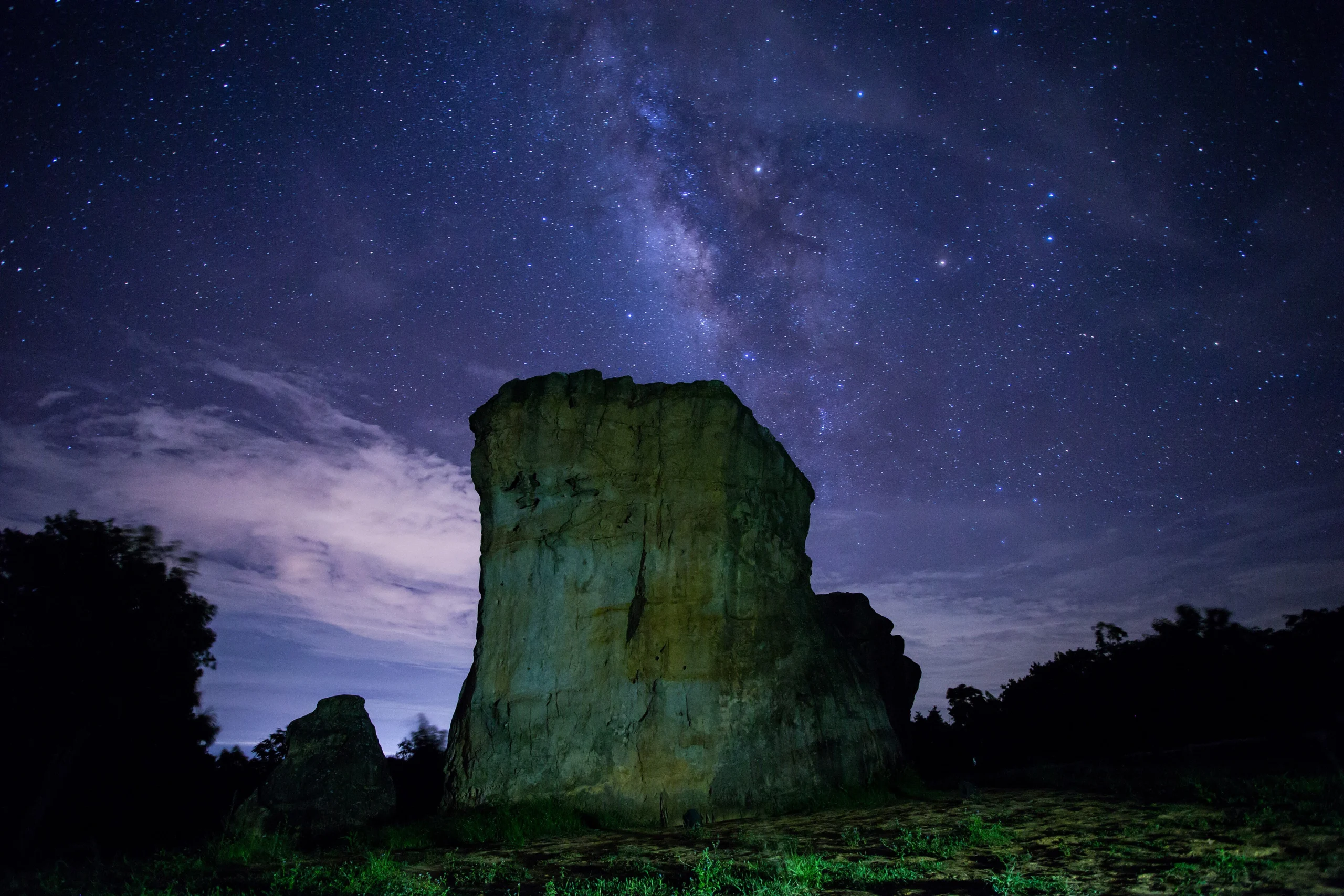
Mor Hin Khao is a row of chalk-white sandstone pillars, the tallest a dozen or so metres, standing on a ridge like a monument someone forgot to finish. The nickname undersells it: Stonehenge does not let you pitch a tent in the middle of the site, and Mor Hin Khao does, for free. Sunset turns the stones orange, sunrise fills the valley with mist, and the night sky is properly dark. Facilities are basic, so bring food and water. About an hour northwest of town, inside Phu Laenkha National Park.
3. Cool off at Tat Ton waterfall
Tat Ton National Park is the easy win, roughly 20 kilometres north of Chaiyaphum town. The fall is not tall, six metres or so, but in the rains it spreads across a huge rock shelf into a broad, thundering curtain with swimmable pools below. On weekends half the province turns up with picnic mats and fried chicken; on a weekday it can be yours alone. May to October is prime, and the foreigner entry fee is a couple of hundred baht at most.
4. Wander the rock gardens of Phu Laenkha
Phu Laenkha is the least-visited of the four parks, which around here is saying something. Its hills are scattered with wind-carved rock gardens, boulders stacked and hollowed into improbable shapes, plus quiet trails and long farmland views. No crowds, because no hype. Combine it with a night at Mor Hin Khao in the same park and you have the best cheap two-day itinerary in the province.
5. Get lost in the stone labyrinth at Pha Hin Ngam
Pha Hin Ngam means beautiful rock, and the name is honest. Lan Hin Ngam is a natural labyrinth of mushroom-shaped sandstone formations, each eroded into something stranger than the last. Keep going and you reach Sud Phaen Din, where at roughly 850 metres the Khorat Plateau simply ends and the land drops toward central Thailand — one of the great underrated viewpoints in the country. The park has its own dok krachiao fields too, with seasonal shuttles from the visitor centre. A good two hours southwest of town.
6. Pay your respects to Chao Pho Phraya Lae
The province’s founder settled the area under Vientiane, then sided with Bangkok when King Anouvong rebelled in 1826, and was killed for the choice. Two centuries on, he is Chaiyaphum’s guardian spirit: his monument commands the central roundabout, his shrine on the edge of town draws a steady stream of incense and garlands, and each January the province throws him a festival with processions, markets and a week of noise. Ten minutes here explains more about how Isaan thinks than any museum will.
What to skip
Skip the tulip fields on a July weekend. The one fortnight when Chaiyaphum does get discovered, it gets discovered all at once: convoys up from Bangkok and Khorat, shuttle queues, a thousand people photographing the same flower. The tulips do not know what day it is. Go on a Tuesday and the difference is total.
And skip budgeting a sightseeing day for the town itself. Beyond the monument, the shrine and the night market, it is a working provincial town with a couple of minor temples and a small Khmer-era ruin that will detain you for roughly four minutes. Sleep there, eat well there, then get up into the hills, because that is where the province earns its keep.
Chaiyaphum travel: practical info
When to go: June to August for the tulips, accepting rain and mud as part of the deal. November to February is the cool season, prime for camping and sea-of-mist mornings. March to May is a furnace with brown fields; give it a miss.
Wikipedia’s Chaiyaphum entry has the fuller history.
TAT’s official Chaiyaphum page posts bloom updates in tulip season.
How long: two full days with your own wheels covers Tat Ton, Mor Hin Khao and one tulip park. Three lets you do it without inhaling it.
Onward travel: Khon Kaen is 2.5 to 3 hours northeast for flights, trains and actual nightlife; Khorat about two hours southeast. Heading west, Phetchabun and the Loei hills make a natural road-trip continuation. Stock up on cash and fuel in town before park days; out in the hills both become theoretical.
FAQ
When do the Siam tulips bloom in Chaiyaphum?
June through August, peaking in July, at Sai Thong and Pha Hin Ngam national parks. Weekday mornings beat the crowds, and rain is part of the package, so dress for it.
How do you get from Bangkok to Chaiyaphum?
Direct buses from Mo Chit take 5.5 to 6.5 hours, ฿300-450. Quicker: a one-hour flight to Khon Kaen from about ฿800, then a hire car for the 2.5 to 3 hour drive.
Is Chaiyaphum worth visiting?
Yes, on two conditions: your own transport, and timing — tulip season or the cool months. The reward is national-park scenery with almost nobody in it. If your trip runs on nightlife and shopping, spend your time elsewhere and feel no guilt.
Can you visit Chaiyaphum without a car?
Barely. Buses reach the town easily, and a motorbike-taxi hop gets you to Tat Ton waterfall. The tulip parks and Mor Hin Khao have little or no public transport; hire a car in Khon Kaen or negotiate a driver in town for the day, typically ฿1,500-2,500.
Where can you camp in Chaiyaphum?
Mor Hin Khao offers free camping beside the white monoliths, with cheap tent hire on site. Sai Thong, Tat Ton and Pha Hin Ngam all run campgrounds and bungalows bookable through the DNP. November to February is the comfortable season for sleeping outdoors.