Let us be clear from the start: Pathum Thani is not pretty. It is the province Bangkok uses as a warehouse — a flat grid of canals, campuses, factories and lorry parks stitched onto the capital’s northern edge, and most visitors only ever see it through a taxi window on the way to Don Mueang. Which is exactly why it is interesting: nobody here is performing for tourists.
What Pathum Thani actually holds is Thailand’s largest wholesale food market, the national science museum in a giant balancing cube, a chedi built out of fossilised oyster shells, and a string of 300-year-old Mon temple communities along the Chao Phraya. Our Pathum Thani province profile has the statistics; this guide covers what genuinely deserves your time and what does not.
Nobody needs a week here: one well-planned day, a ฿20 commuter train from Bangkok, and an appetite for boat noodles served in bowls so small you order them by the stack.
What Pathum Thani really is
On paper it is a separate province. In practice it is Greater Bangkok’s attic. The eastern districts — Rangsit, Khlong Luang, Thanyaburi — are a continuous sprawl of expressways, mega-malls and student dormitories feeding Thammasat’s Rangsit campus, Bangkok University and Rangsit University.
Head west to the Chao Phraya, though, and the province changes character completely. Sam Khok district is old Siam: Mon families who fled Burma in the seventeenth and eighteenth centuries settled these banks, built temples, fired red-clay water jars and never left. The name Pathum Thani — city of lotuses — was bestowed by Rama II in 1815 after villagers here presented him with lotus flowers.
Why go to Pathum Thani
Because it does three things better than anywhere else within an hour of Bangkok. Talad Thai at 4am is the most impressive food spectacle in the country, and it is free. The National Science Museum complex is the best day out with children north of the capital. And the Mon riverside at Sam Khok gives you something Ayutthaya’s coach-party circuit cannot: silence.
Pathum Thani is also absurdly cheap: the student economy keeps food and rooms at prices central Bangkok abandoned a decade ago. A full day here — transport, meals, museum entry — costs under ฿500.
Getting to Pathum Thani from Bangkok
The SRT Dark Red Line commuter train is the sensible way into Pathum Thani: Krung Thep Aphiwat (Bang Sue) to Rangsit in about 25 minutes, trains every 10 to 20 minutes, and the flat ฿20 fare has held for a couple of years now. From Rangsit station you are a short Grab ride from Future Park, the boat noodle canal and the university belt.
Buses and minivans run constantly from Mo Chit; expect ฿20-50 and 40-90 minutes depending on the traffic gods. A taxi or Grab from central Bangkok costs about ฿250-450 to Rangsit, more out to Sam Khok. Ordinary northbound trains toward Ayutthaya also stop at Rangsit and Chiang Rak, and third class costs less than a bottle of water.
Flying in? Don Mueang airport sits practically on the provincial border, ten minutes from Rangsit by taxi. Once here, Grab covers the eastern sprawl, but for Wat Chedi Hoi and the Sam Khok riverside you want a hired car, because public transport out west is a rumour.
Where to stay
The honest answer: stay in Bangkok and day-trip. The train makes Pathum Thani easier to reach than half of Bangkok’s own suburbs, and the hotel scene here exists for salesmen and visiting parents, not pleasure.
Three reasons to sleep here anyway: a pre-dawn raid on Talad Thai, an early flight from Don Mueang, or a student to visit at Thammasat. Base yourself in Rangsit around Future Park, where clean, anonymous business hotels run ฿600-1,200 a night, or in Khlong Luang near the university, where student-belt apartment-hotels go for ฿400-800.
Do not book anything out here described as a riverside resort and expect romance. Expect a clean ฿800 room with a view of sand barges.
What to eat in Pathum Thani
Boat noodles, first and always. Khlong Rangsit is one of the spiritual homes of kuay tiew ruea, and the shophouses along the canal near Rangsit market still serve them the proper way: intense, blood-dark broth in bowls barely bigger than a teacup, ฿15-20 each, your total tallied from the tower of empties at your elbow. Ten bowls is a respectable score.
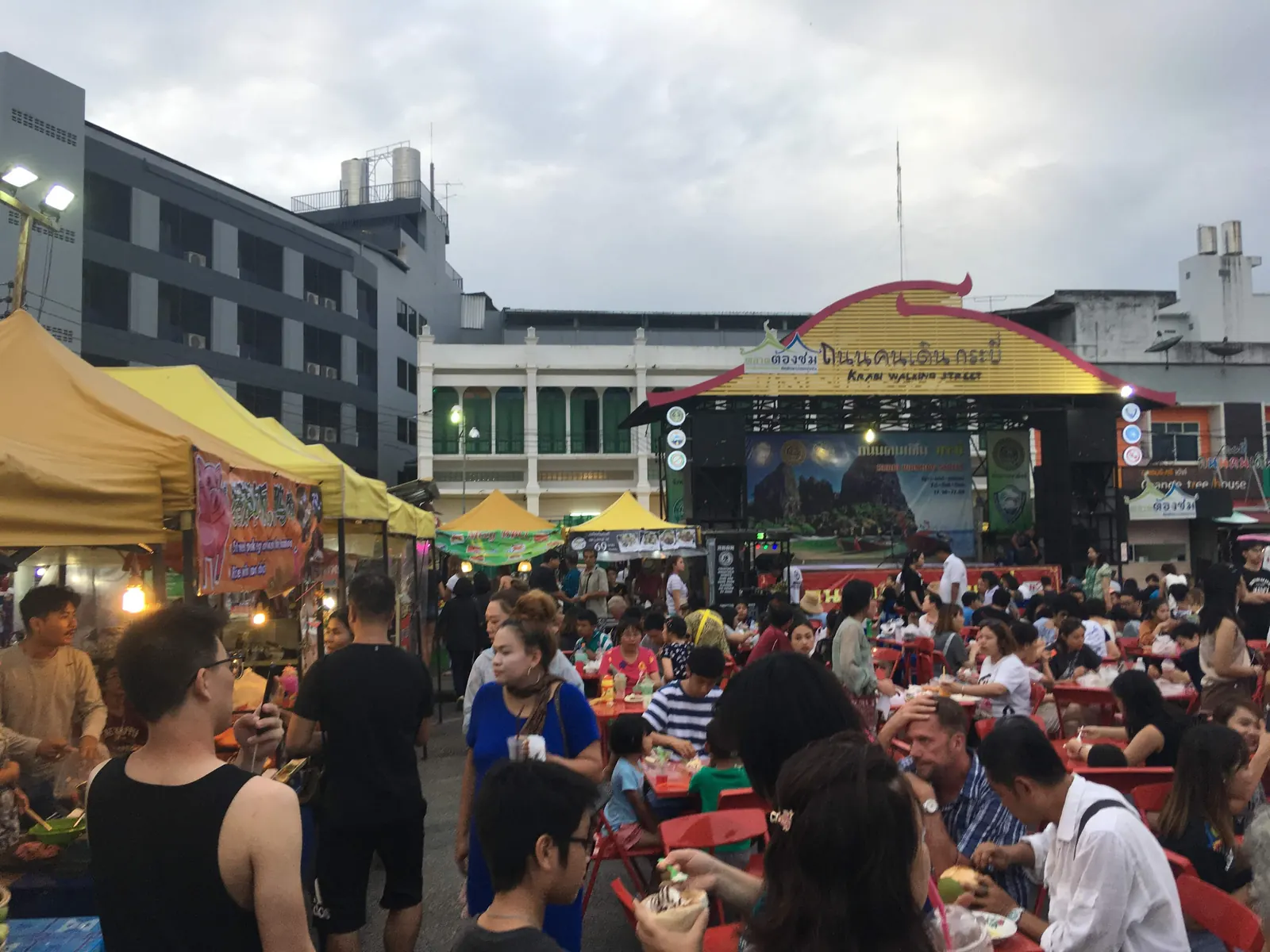
The university belt around Thammasat Rangsit and Bangkok University runs one of Thailand’s great cheap-eats economies: night markets and canteen rows where a proper plate of krapao or khao man gai costs ฿40-70 because the customers are nineteen and broke. Follow the students; they have optimised this to a science.
In Sam Khok, look for Mon food. Khao chae — chilled, jasmine-scented rice with fiddly fried accompaniments — was a Mon dish long before Bangkok’s grand hotels claimed it, and it surfaces around Songkran in the riverside communities. The row of open-air places near the Sam Khok piers does honest river prawn and snakehead fish at a third of Bangkok riverside prices.
Top things to do in Pathum Thani
1. Talad Thai at 4am
Thailand’s largest wholesale market sprawls over hundreds of rai in Khlong Luang, and it is the single best reason to set an alarm in Pathum Thani. It runs 24 hours, but 3am to 6am is the show: lorries rolling in from Chanthaburi and Isaan, durian stacked into actual mountains in season, forklifts hauling restaurant-scale everything past traders shouting prices per tonne. Entry is free and everything costs less per kilo than anywhere in Bangkok. Wear closed shoes, keep out of the forklift lanes, and do not stand between a porter and his trolley.
2. The National Science Museum cube
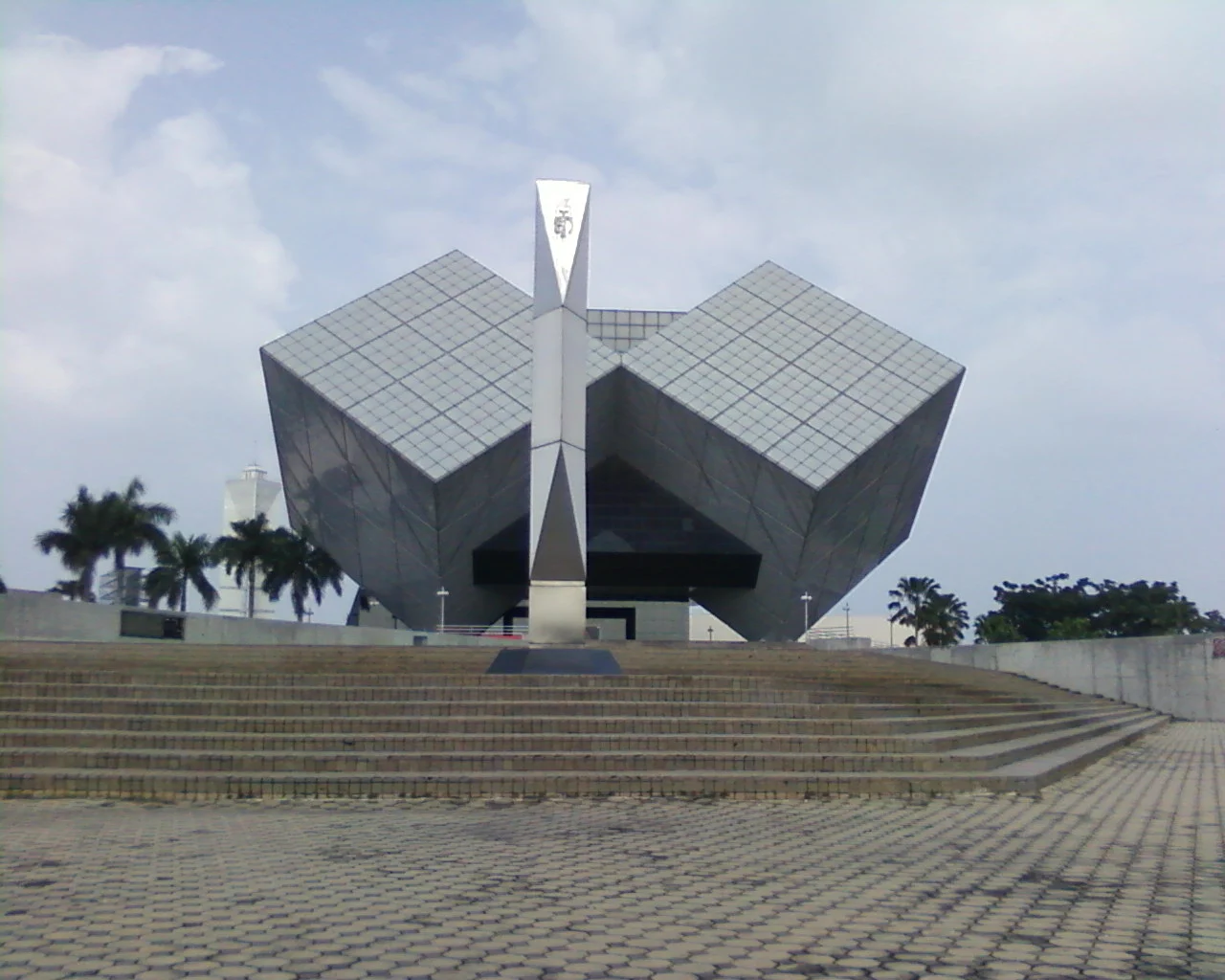
At Technopolis in Khlong Luang, three enormous cubes balance on their corners like a physics dare — and the museum inside is genuinely good, not provincial-good. The same campus holds the Natural History Museum and the Rama 9 Museum, the newest and best of the lot, a vast ecology hall better than many European museums. Closed Mondays; entry runs a couple of hundred baht for foreign adults, with cheap or free entry for kids. With children on a hot or wet day, there is no better half-day within reach of Bangkok.
3. Wat Chedi Hoi, the fossil-oyster temple
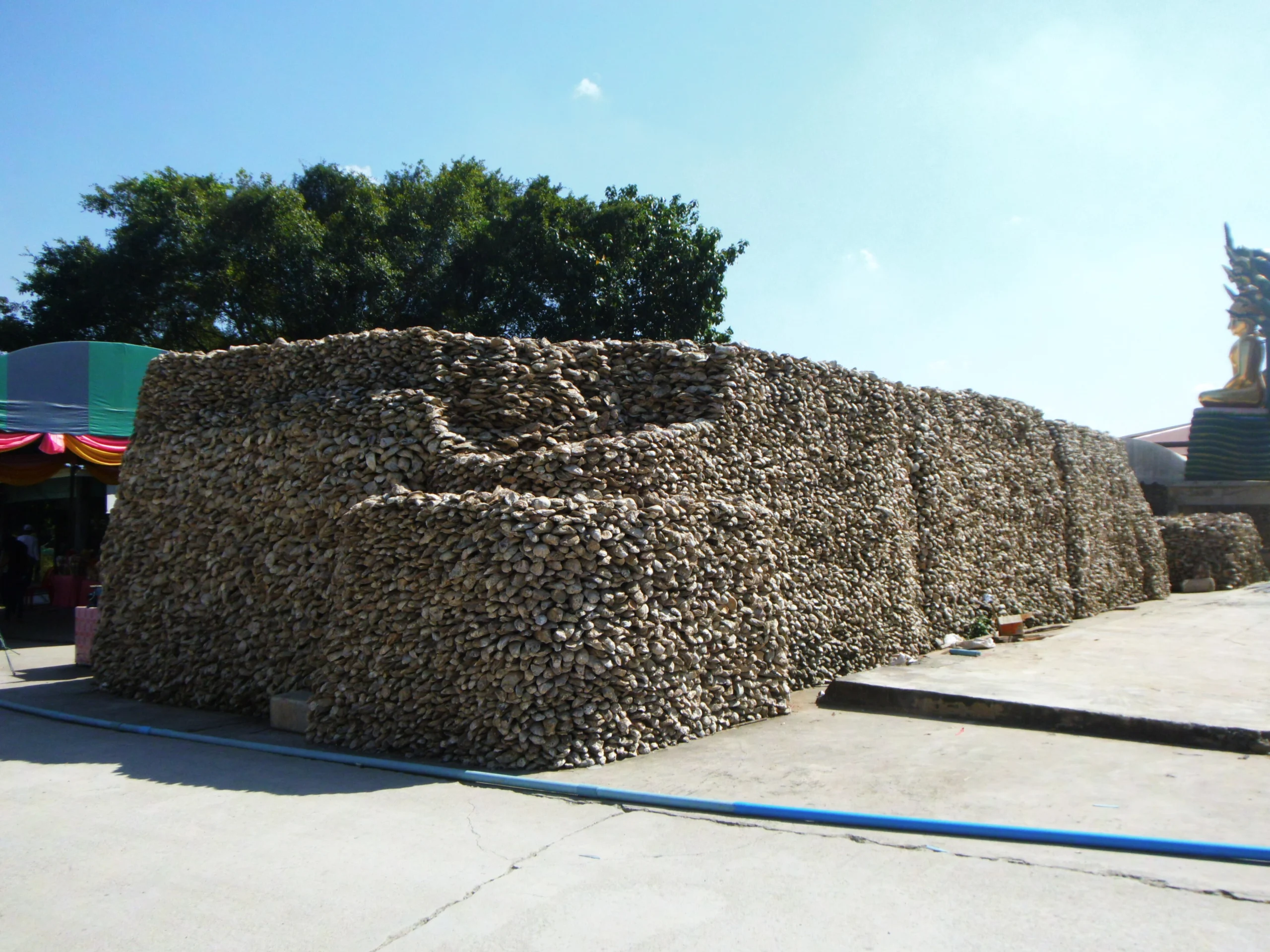
Out west in Lat Lum Kaeo, a temple abbot digging ponds kept unearthing giant fossilised oyster shells, several million years old, from when this entire plain sat under the sea. He did the only sensible Thai thing and built chedis out of them. The result is exactly as strange as it sounds: whole stupas clad in dinner-plate-sized fossil shells, turtles in the ponds, and almost nobody around. Free, donations welcome, about half an hour’s drive west of Rangsit. Go for the weirdness; stay because it is oddly moving.
4. Wat Sala Daeng Nuea and the Mon riverside
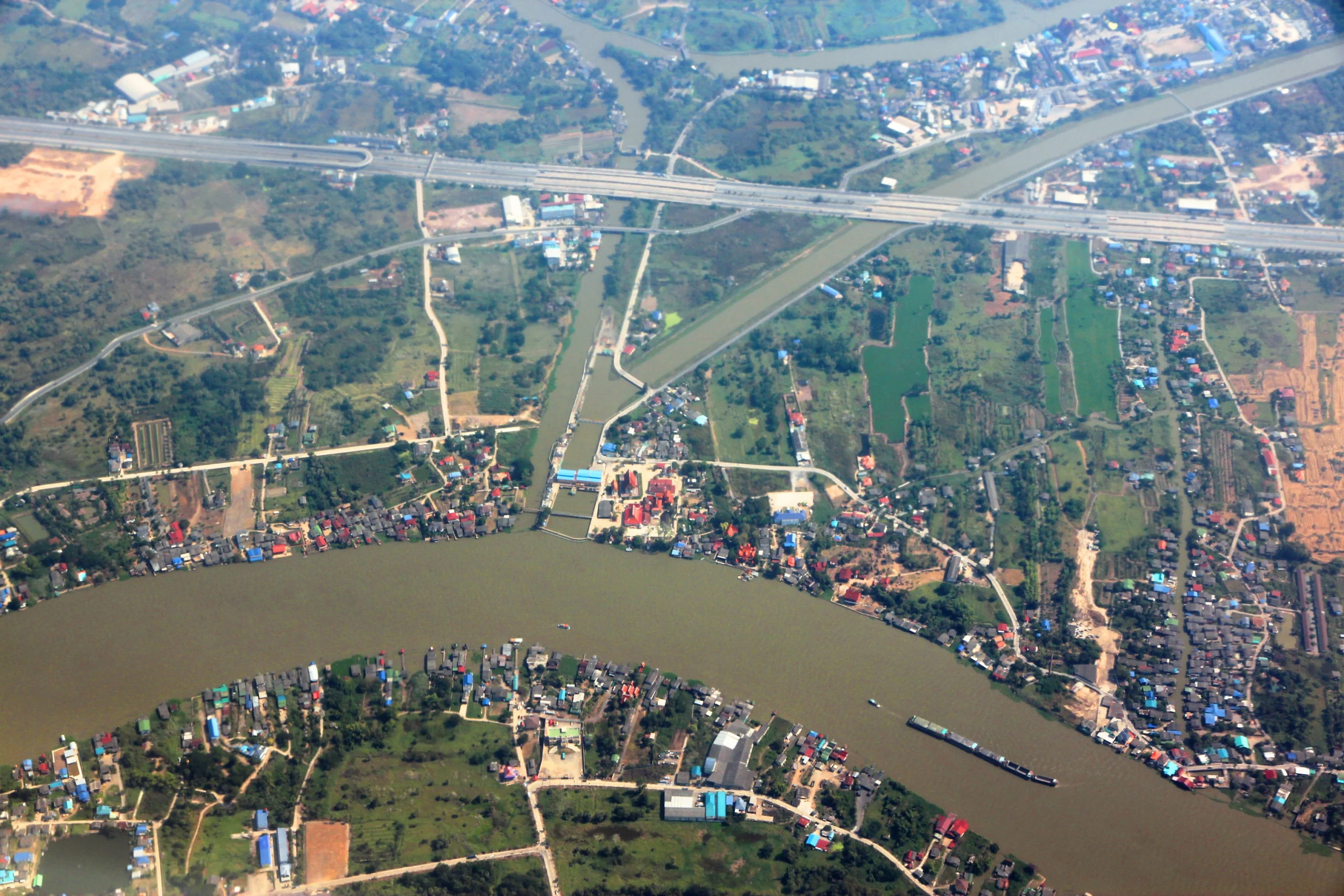
In Sam Khok district, Wat Sala Daeng Nuea anchors one of the best-preserved Mon communities on the Chao Phraya: a working riverside temple, wooden houses on the bank, and a community that still keeps Mon language, chants and Songkran rituals alive after three centuries. There is nothing to buy and nothing staged, which is precisely the point. Dress respectfully, walk quietly, and you will see the version of central Thailand that existed before tour buses.
5. Sam Khok earthenware country
The Mon potters of Sam Khok fired the water jars of old Siam, and their red-clay earthenware once travelled the whole kingdom by barge. Overgrown kiln mounds still stand near the riverside temples, and a handful of workshops keep the craft going at prices that make Bangkok homeware shops look like a scam. It is an archaeology-and-atmosphere stop rather than a spectacle, but paired with Wat Sala Daeng Nuea it makes the western river bank the most rewarding quiet corner of Pathum Thani.
6. Dream World and SnowTown, rated honestly
Off the Rangsit–Nakhon Nayok road in Thanyaburi sits Dream World, a 1990s-vintage amusement park that Thai families adore. Honest verdict: with children under twelve, it is a brilliant day out — log flume, hanging coaster, gardens built for photographs. Without children, you will notice the flaking paint and the hot queues. SnowTown is a refrigerated hangar with a sledging slope: pure magic for Thai kids meeting snow for the first time, utterly baffling if you grew up in Manchester. Foreigners pay package rates of roughly ฿1,000-1,500 including SnowTown — dual pricing, and yes, it stings. Go on a weekday or not at all.
What to skip
Future Park Rangsit. Travel listicles keep presenting it as an attraction, presumably because it is one of the largest shopping malls in Southeast Asia, and size, apparently, is a personality. It is not an attraction. It is a mall, containing the same shops as every other mall in Thailand, with the same smell of cinnamon pretzels. Use it for what it is — aircon, a food court and a cinema when the sky opens — but do not cross the province for it. You came to the city of lotuses; go and look at the river instead.
Pathum Thani travel: practical info
Best season is November to February, when the 4am market run and the riverside walking are genuinely pleasant. March to May is brutal out on the concrete — plan around the museum cube. The rainy months are fine here, since the headline sights are markets, museums and temples with roofs.
One full day covers the essentials: Talad Thai or the science museum in the morning, boat noodles at Khlong Rangsit, the Sam Khok riverside for the late afternoon. Add a second day only for Dream World with kids. Onward travel is easy: Ayutthaya’s ruins are around 40 minutes north by road or rail, Nakhon Nayok’s waterfalls lie an hour east along the Rangsit–Nakhon Nayok road, and Don Mueang airport is on the doorstep.
Wikipedia’s Pathum Thani entry covers the Mon settlement history behind the lotus name.
TAT’s official Pathum Thani page keeps museum hours current.
TAT’s 10-things list for Pathum Thani exists if you want the official version.
FAQ
Is Pathum Thani worth visiting?
Yes, for a day — for things you cannot see elsewhere: Thailand’s biggest wholesale market, its best science museum, a fossil-shell temple and a living Mon riverside. Come with a plan; this is not a strolling province.
How do I get from Bangkok to Pathum Thani by train?
Take the SRT Dark Red Line from Krung Thep Aphiwat (Bang Sue) to Rangsit: about 25 minutes, ฿20 flat, trains every 10-20 minutes. From Rangsit station, Grab covers the rest of the province’s east side.
What is Pathum Thani famous for?
Talad Thai wholesale market, the National Science Museum cube at Technopolis, Mon heritage and earthenware at Sam Khok, boat noodles along Khlong Rangsit, and Dream World theme park.
Is Dream World in Pathum Thani worth it for adults?
Honestly, no. It is a well-run, ageing family park that children adore and adults endure. Two adults are far better off with a Talad Thai morning and the Sam Khok riverside — which cost almost nothing.
What time should I go to Talad Thai market?
Between 3am and 6am, when the wholesale trade peaks and the produce arrives by the lorryload. It runs 24 hours, but daytime is the aftermath, not the performance. In durian season, April to June, go early and bring an empty bag.
Related guides
- Getting around Bangkok by water taxi
- Ari: Bangkok’s most liveable neighbourhood
- The temples of Ayutthaya