Every February the Thai-Chinese half of this country goes home and the other half goes to Yaowarat to eat. Chinese New Year is not a Thai public holiday, and it is still the loudest, reddest weekend of the year. The date moves with the moon and Bangkok’s 2026 street festival was cancelled at three weeks’ notice, so this Chinese New Year Thailand 2027 guide starts with the dates and the small print.
The short version: Saturday 6 February 2027, Year of the Goat. Yaowarat is the big one, Nakhon Sawan’s dragon the better one, Phuket Old Town’s the prettiest. Prices are as of October 2026 and anchor to our Thailand Price Index; the Bangkok province profile has the map and Thailand’s festivals and public holidays calendar the rest of the year.
Confirmed dates: Chinese New Year’s Day is Saturday 6 February 2027; New Year’s Eve is Friday 5 February, the shopping day Thursday 4 February. Not a Thai public holiday, except for government offices in the deep south. No 2027 festival programme has been published as of October 2026; the working dates below are projected from 2026 and will be updated when confirmed.
When is Chinese New Year 2027, and does Thailand shut down for it?
Thai-Chinese families run it as three days. Thursday 4 February is wan jai, the shopping day, when Sampeng Lane is a crush of whole ducks, mandarins and paper money. Friday 5 February is wan wai, the offering day: altar tables go out in front of the shophouses, firecrackers go off on the doorsteps around midday, the shutters come down and the family eats together. Saturday 6 February is wan thiao, the outing day: something red, ang pao for the children, then the temple, the mall and Yaowarat.
Nationally, nothing closes: banks, immigration, the BTS and MRT and the malls all run, because the Cabinet’s 2027 holiday list does not include it. Pattani, Yala, Narathiwat, Satun and, on recent lists, Songkhla give government offices the day, which on a Saturday barely matters. What closes is anything run by a Thai-Chinese family: gold shops, Sampeng wholesalers and a surprising number of Bangkok’s best old restaurants, for an afternoon to four days. If the owner is over sixty, ring first. Early February is the tail of the cool season; our best time to visit Thailand guide has the weather, and Makha Bucha, expected on Sunday 21 February, shuts the bars for a day.
Yaowarat: what happens on Bangkok’s Chinatown road, and what happened in 2026
In a normal year the Yaowarat Chinese New Year festival is a two-day affair, New Year’s Day and the day after. Yaowarat Road closes to traffic from the afternoon until around midnight: stages at the Chinatown Gate on Odeon Circle, lion and dragon troupes working the shopfronts, and the opening ceremony that Princess Maha Chakri Sirindhorn has presided over at the Gate for years, usually late afternoon on the first day. Entry is free.
Then there was 2026. The committee cancelled the 17–18 February street festival because it fell inside the mourning period for Queen Sirikit; the temples, the restaurants and the ang pao carried on, and only the stage show went missing. The official year of mourning runs to late October 2026, so 2027 is expected to return, but the committee confirms in January and we will update this page when it does.
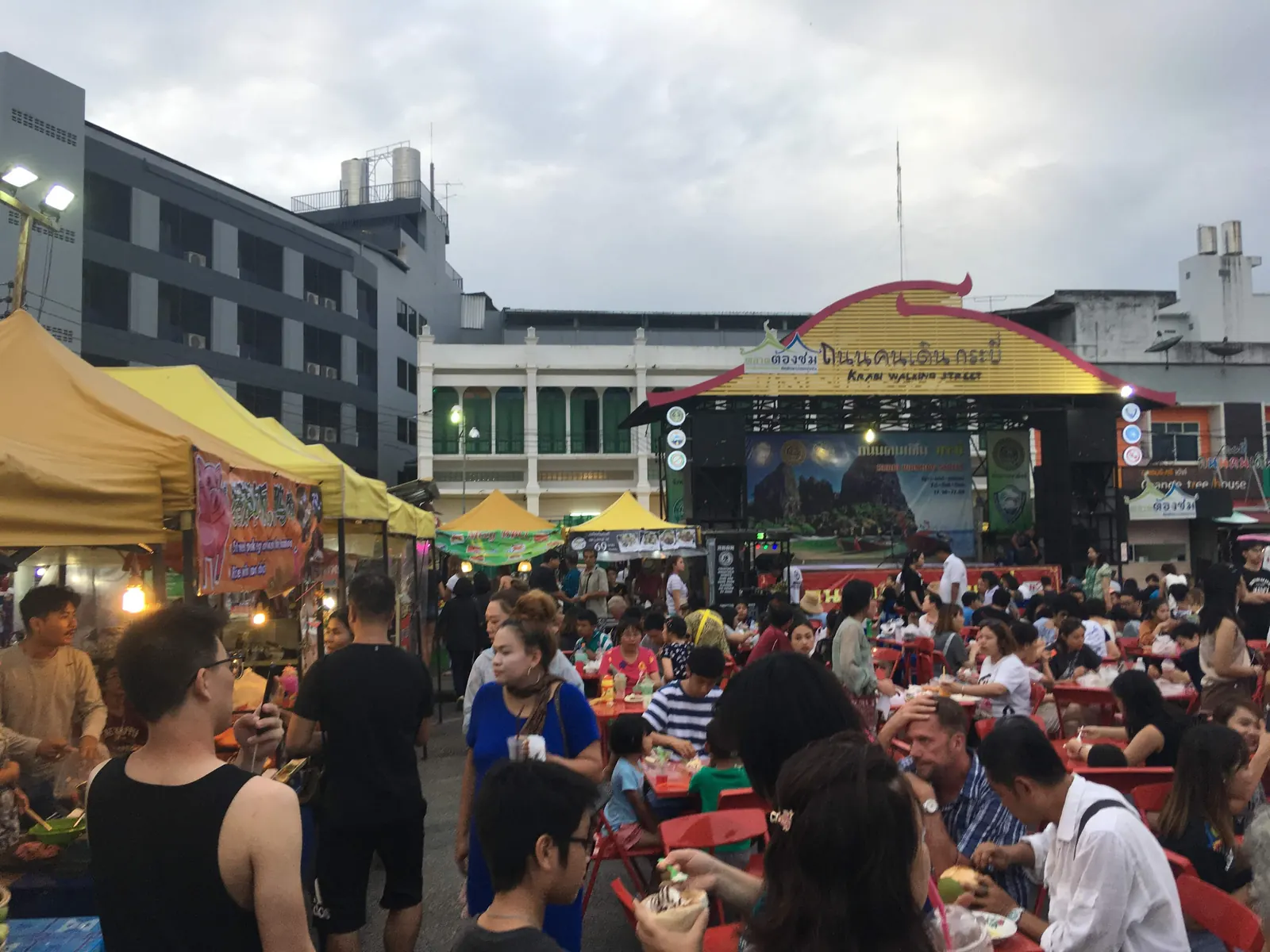
Arrive by MRT to Wat Mangkon: nothing on wheels gets within 500 metres of the road after 3pm, and Grab surges from around ฿120 to ฿400. Walk the road once between 4pm and 6pm, then eat: the stalls are mostly there with a festival mark-up of ฿10–20 a plate, kuay jab around ฿70–90. Our Bangkok street food guide names the stalls, Bangkok night markets covers the other evenings and things to do in Bangkok fills the daylight. A Bangkok Chinatown food tour on GetYourGuide, from around ฿1,500, orders for you.
Sleeping in Chinatown is sensible and expensive. Shanghai Mansion on Yaowarat Road itself is normally from around ฿2,500 and roughly doubles for 5–6 February; Hotel Royal Bangkok from around ฿1,500; Grand China Bangkok from around ฿1,800; ASAI Bangkok Chinatown from around ฿2,000. Verdict: stay in Chinatown if the festival is the trip; otherwise sleep on the MRT blue line, which where to stay in Bangkok explains.
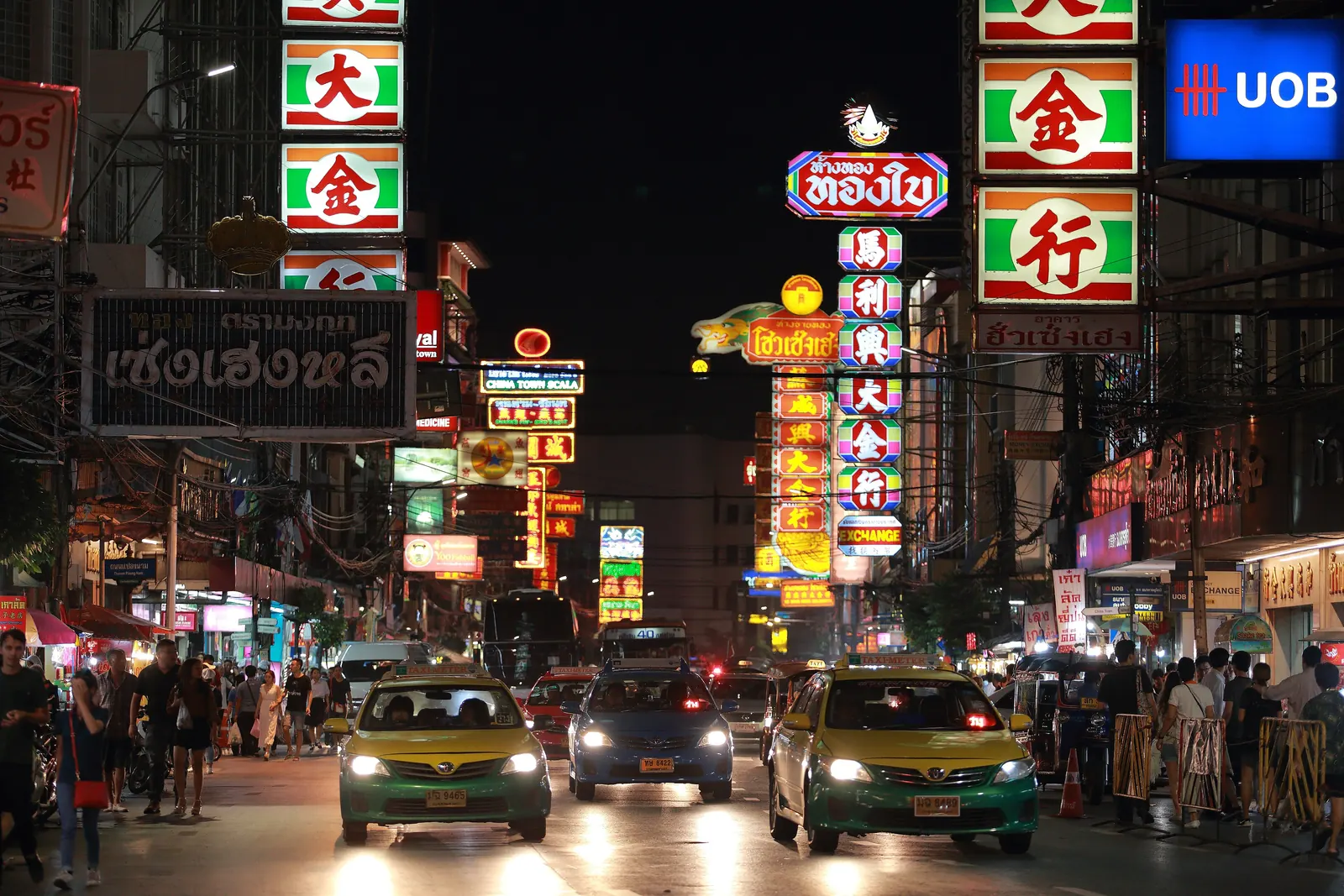
Wat Mangkon, kae chong and the temple side of Chinese New Year
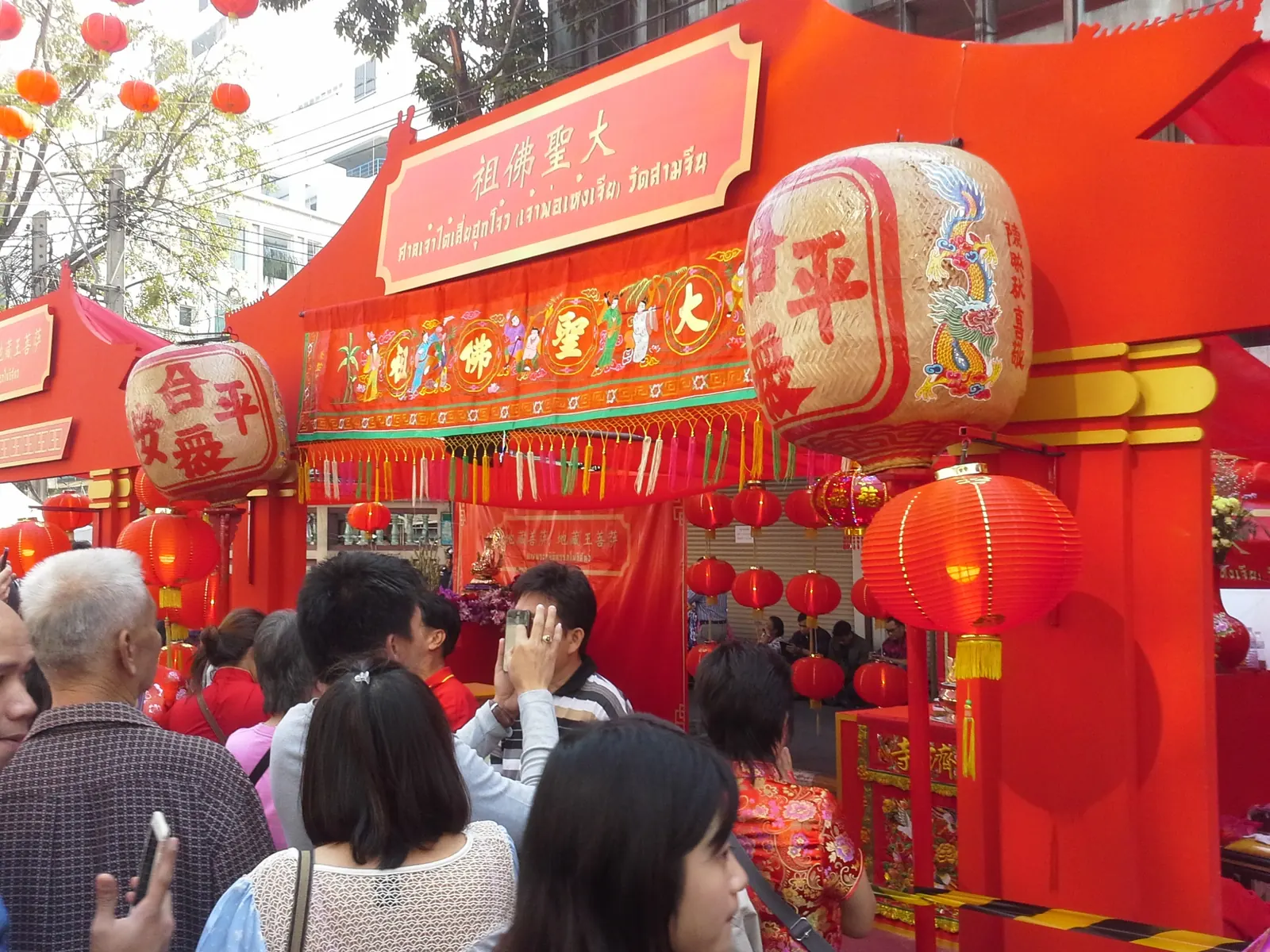
The festival’s religious centre is Wat Mangkon Kamalawat, the 1871 Teochew temple on Charoen Krung Road that names the MRT station: free, open early to late, and on 5 and 6 February the busiest religious building in Thailand, a courtyard of incense smoke and families queuing for kae chong, the offering to the year god from anyone whose birth sign clashes with the incoming animal, which in a Goat year means the Ox above all, then the Goat, Dog and Dragon. The set costs around ฿100 and a volunteer will show you what to do. Many Teochew households eat jay, strict vegetarian food, for the first meal of the year; our guide to what jay food actually is explains the yellow-flag stalls, and our Thai temple etiquette guide covers the rules, plus one: never blow out someone else’s incense.
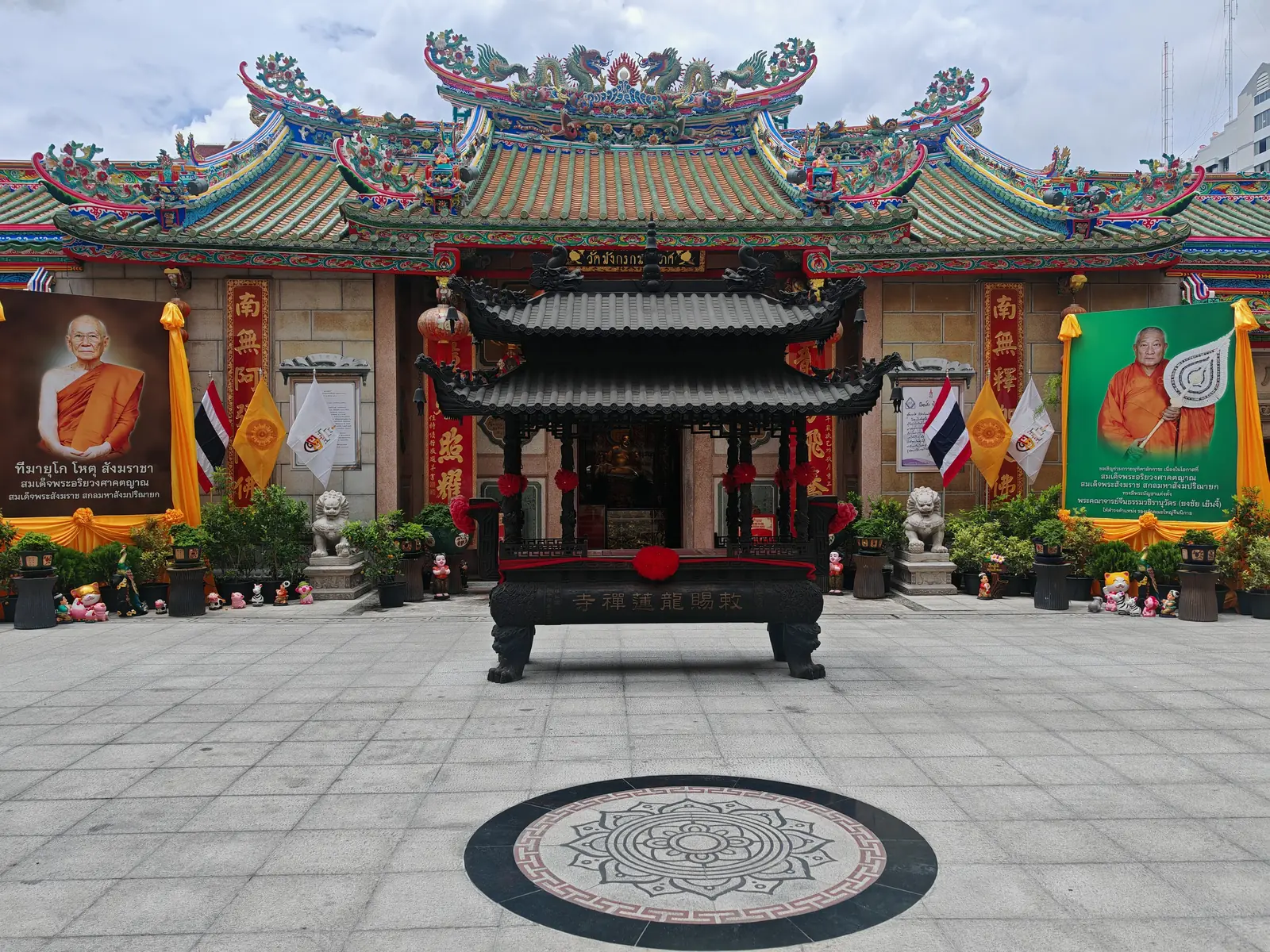
Nakhon Sawan: the biggest Chinese New Year parade in Thailand, and the one to plan around
Two and a half hours north, Nakhon Sawan has held the Chao Pho–Chao Mae Pak Nam Pho procession for 110 years, the largest and oldest Chinese New Year festival in the country. The 2026 edition ran 10–21 February: opening ceremony Wednesday 11 February, night procession Thursday 19 February and day procession Friday 20 February, the third and fourth days of the new year. For 2027 that projects to roughly 30 January to 10 February, night parade Monday 8 February, day parade Tuesday 9 February; the committee usually publishes in December, and the official TAT listing will carry it.
The centrepiece is the golden dragon, an illuminated beast carried at a run by relay teams of young men through streets so packed the crowd breathes in to let it pass. No tourists, no English signage, free. Verdict: Do it, if you do one thing on this list; our Nakhon Sawan guide has the rest of the town. The catch is beds: a river-view room is normally ฿1,000–1,600, a business hotel ฿500–900, and the town books out for the parade nights at roughly double, so book by November. Trains take three to four hours for around ฿100–400; compare with buses on 12Go.
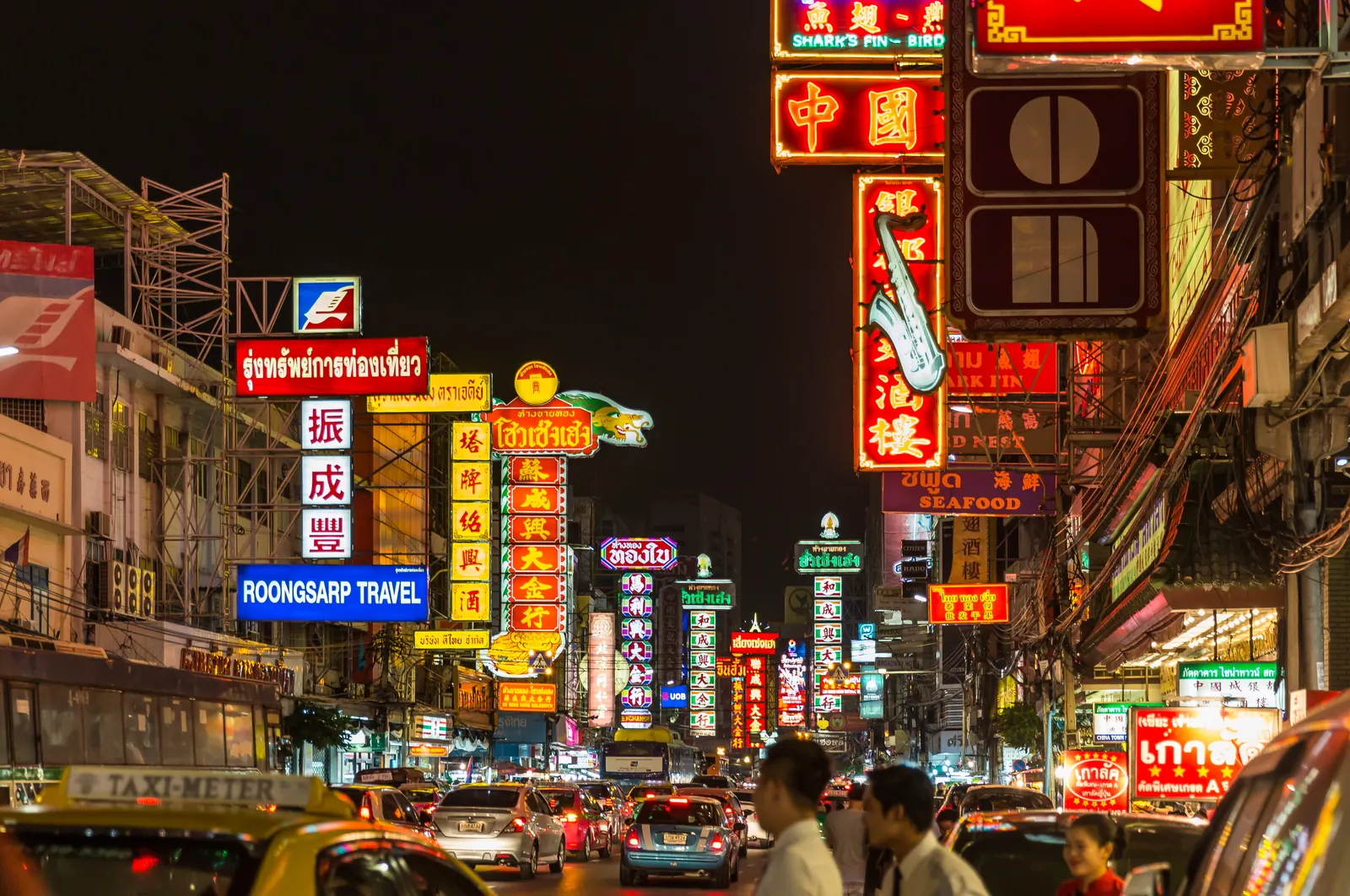
Phuket Old Town, Hat Yai and Chiang Mai: the other Chinatowns worth a trip
Phuket Old Town holds its festival a week or two after the day itself. In 2026 it ran 22–24 February, with Thalang Road and Soi Romanee closed each evening for stages, food stalls and two 40-metre illuminated dragons; for 2027 expect mid-to-late February, announced in January. Verdict: Worth it, and the prettiest, though the food is better on an ordinary Sunday at Lard Yai, which our Phuket night markets guide covers. Sleep in town: The Memory at On On Hotel from around ฿1,300, Casa Blanca Boutique Hotel from around ฿1,900; where to stay in Phuket explains why Patong is 40 minutes and ฿500 away. Compare Bangkok flights and buses on 12Go; an Old Town walking tour on GetYourGuide fills the afternoon.
Hat Yai is the Malaysian and Singaporean long weekend, and packed for it. TAT’s 2026 edition ran 17–20 February on Saneha Nusorn and Thammanoon Vithi roads with Fujian acrobats, lion dances and fireworks; expect the same shape from 6 February 2027. Hotels double. Verdict: Fine if already south; Songkhla Old Town is the calmer bed. Bangkok to Hat Yai on 12Go is a 90-minute flight or a 15-hour sleeper.
Chiang Mai celebrates at Warorot and Ton Lam Yai markets by the Ping. In 2026 it ran 17–18 February with a parade leaving Tha Phae Gate at 8.30am and the riverside road closed both nights; pencil in 6–7 February 2027. Verdict: Do it if you are there anyway, in the morning; evenings belong to our Chiang Mai night markets guide. The air is turning by early February. Bangkok to Chiang Mai on 12Go lists the sleeper and the ฿1,000 flights.
| Where | 2026 (actual) | 2027 (projected) | Verdict |
|---|---|---|---|
| Bangkok, Yaowarat Road | 17–18 Feb, cancelled | Sat 6–Sun 7 Feb | Do it, by MRT |
| Nakhon Sawan | 10–21 Feb; parades 19 (night), 20 (day) | About 30 Jan–10 Feb; parades 8–9 Feb | Do it; book by November |
| Phuket Old Town | 22–24 Feb, 6–11pm | Mid-to-late Feb | Worth it |
| Hat Yai | 17–20 Feb | About 6–9 Feb | Fine if already south |
| Chiang Mai, Warorot | 17–18 Feb | About 6–7 Feb | Do it if there |
Nearer Bangkok, Suphan Buri celebrates beneath the Dragon Descendants Museum’s 135-metre dragon (see our Suphan Buri guide), Ratchaburi dresses its Mae Klong waterfront for the municipality’s lion dances (fold it into a one-day trip to Ratchaburi), and Pattaya stages a city-hall show and feels the festival mainly in the hotel bill (Pattaya beyond the bars is the daytime answer). Bangkok to Pattaya and Bangkok to Ratchaburi on 12Go are under ฿250.
Hotel and flight prices over Chinese New Year 2027: where they spike and where they don’t
Chinese New Year is a mainland-China travel week as well as a Thai one, and as of October 2026 China is back at the top of Thailand’s arrival tables. Phuket’s group hotels in Patong, Karon and Kata, Pattaya’s beach-road towers, Bangkok’s Pratunam and Ratchaprasong blocks and central Chiang Mai add roughly 20–40 percent to high-season rates for the week either side of 6 February, and Bangkok Chinatown roughly doubles for the two festival nights. Bangkok–Phuket flights go from ฿1,200–2,500 to around ฿2,500–4,000. At the five-star end, per our Bangkok luxury hotel prices guide, the supplement is a few thousand baht, not a doubling.
Where prices do not move: Isaan, Hua Hin on weekdays, Koh Chang and the Gulf islands, Kanchanaburi and the far north beyond Chiang Mai; Verdict: if you are not coming for the festival, spend the week on that list and arrive in Bangkok on the Monday, when Chinatown’s hotels drop back and the restaurants reopen. Check Bangkok hotels on Agoda for 5–7 February and watch the number move.
Etiquette: red, ang pao and the firecracker rule
Wear red, or at least not black or white, both funeral colours. Ang pao, the red envelopes, go from elders to unmarried juniors and bosses to staff; visitors are not expected to give them, but a ฿100–500 note in a red envelope for a host family’s children is correct, in even amounts and never with a four. Do not sweep, wash your hair or argue on New Year’s Day if you want the luck to stay in the house.
Firecrackers are the shrines’ business, not yours: Thailand licenses fireworks and Bangkok police confiscate unlicensed ones in crowds. Stand back from the doorstep strings on the offering day and bring earplugs for the children. Get cash out before the shopping day, when the Chinatown ATM queues are the longest of the year; a foreign card pays ฿220 a withdrawal regardless, as our money in Thailand guide explains.
The honest bit
Chinese New Year in Thailand is a family festival that tourism has been bolted onto, and the bolt shows. The Yaowarat street event is a stage show in a traffic jam of people, and the family restaurants you came for are shut. The 2026 cancellation proves the official programme can vanish; the temples and the food cannot, so plan around those.
What to skip: a hotel’s gala-dinner supplement, a set menu and a lion for around ฿3,000 a head; Pattaya for the festival. What to do instead: the offering day, Friday 5 February, when the altars are out and the lion troupes work the streets, is quieter than the Saturday and the better photograph. For a stranger Chinese festival, come back in October for the Phuket Vegetarian Festival.
Chinese New Year in Thailand 2027: your questions, answered
Is Chinese New Year 2027 a public holiday in Thailand?
No. Saturday 6 February 2027 is a normal day for banks, immigration, transport and malls everywhere except the deep-south provinces of Pattani, Yala, Narathiwat, Satun and Songkhla, where government offices observe it. Thai-Chinese family businesses and many old restaurants close for one to four days regardless.
Is Yaowarat Road closed to traffic for Chinese New Year 2027?
In a normal year, yes: from the afternoon until around midnight on New Year’s Day and the day after. The 2026 closure was cancelled during the royal mourning period; the 2027 programme will be confirmed by the organising committee around January. Either way, arrive by MRT to Wat Mangkon.
When is the Nakhon Sawan Chinese New Year parade in 2027?
Not yet announced. The 2026 festival ran 10–21 February with the night procession on the third day of the new year and the day procession on the fourth, so the 2027 equivalents are Monday 8 and Tuesday 9 February, inside a festival of roughly 30 January to 10 February; provisional until the committee publishes.
What should I wear to Chinese New Year celebrations in Thailand?
Something red, or at least not black or white, the mourning colours. Cover shoulders and knees for temples and shrines, and wear closed shoes and long trousers on the offering day, when firecracker strings go off at ground level. Earplugs are non-negotiable for children under ten.
Do hotel prices in Thailand go up for Chinese New Year?
Yes, where mainland-Chinese groups and Thai-Chinese families go: Bangkok Chinatown roughly doubles for the two festival nights, Phuket, Pattaya, Chiang Mai and central Bangkok add roughly 20–40 percent to high-season rates, and Nakhon Sawan and Hat Yai book out; Isaan, Kanchanaburi and the far north barely notice.
Related guides
- Bangkok Street Food by Neighbourhood: What to Eat, Exactly Where, and What It Should Cost (2026)
- Nakhon Sawan: Where Thailand’s Great River Is Born
- Things to Do in Bangkok That Aren’t a Tourist Trap: Worth It vs Skip It
Book the trip
Some links in this guide are affiliate links. If you book through them we may earn a small commission at no extra cost to you — it helps keep Destination Thailand independent.
Hotels: book a Chinatown room for 5–6 February on Agoda before December. Tours: a Chinatown walking tour on GetYourGuide covers the shrines before the road closes. Getting there: compare trains and buses to Nakhon Sawan on 12Go, and read our Suvarnabhumi arrival guide for the airport end. Still deciding whether a Thai February is your trip? Run our where to go in Thailand matcher first.