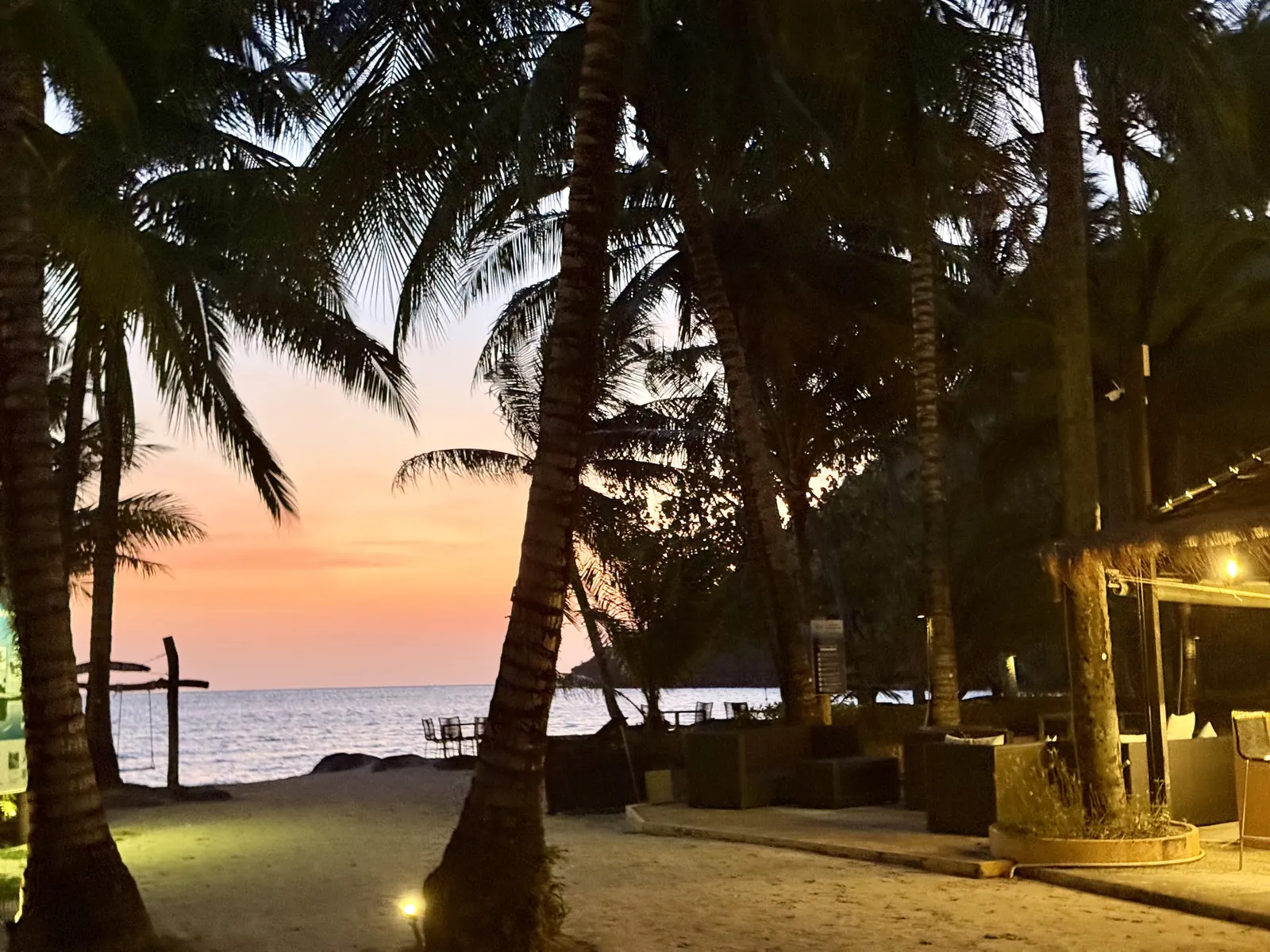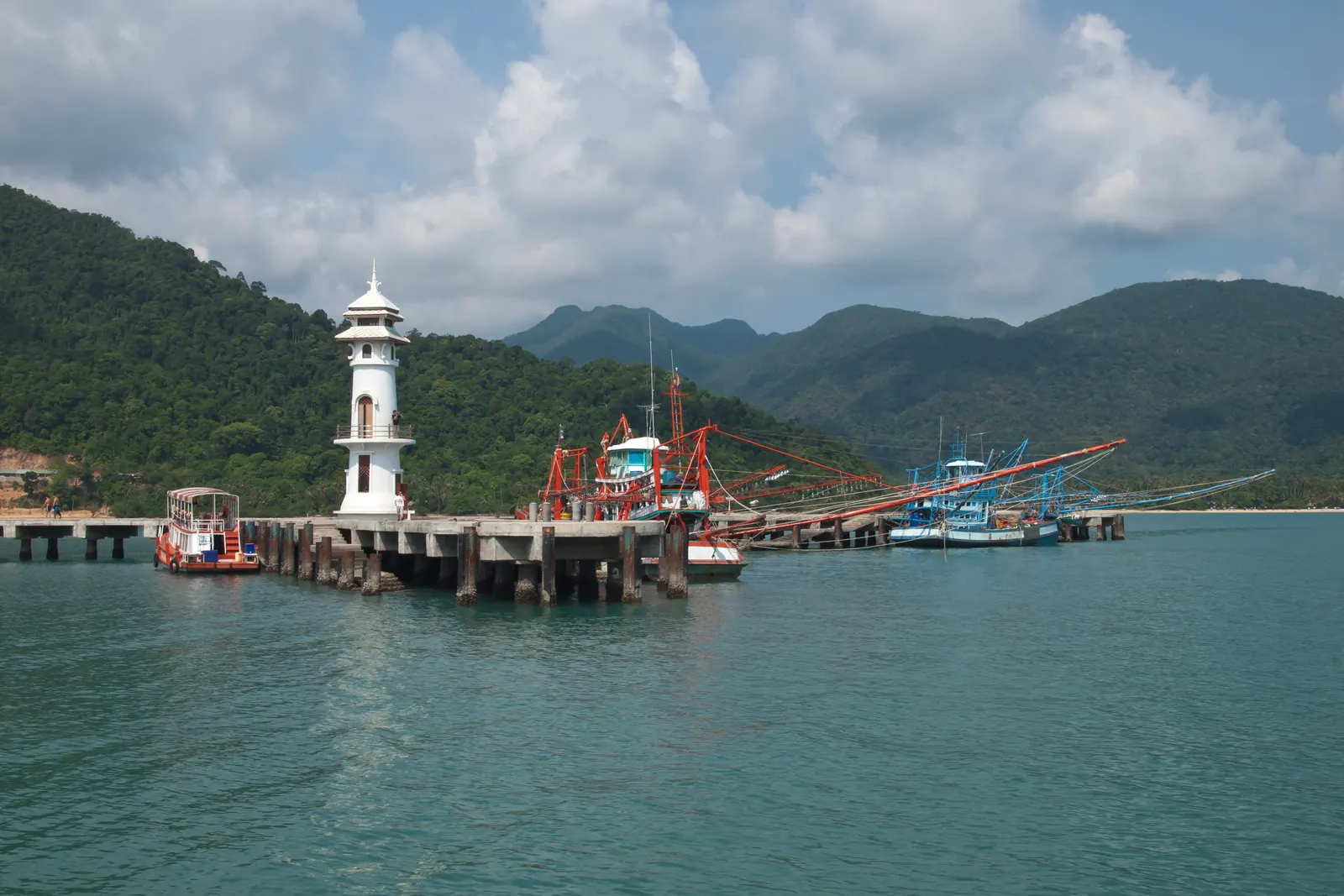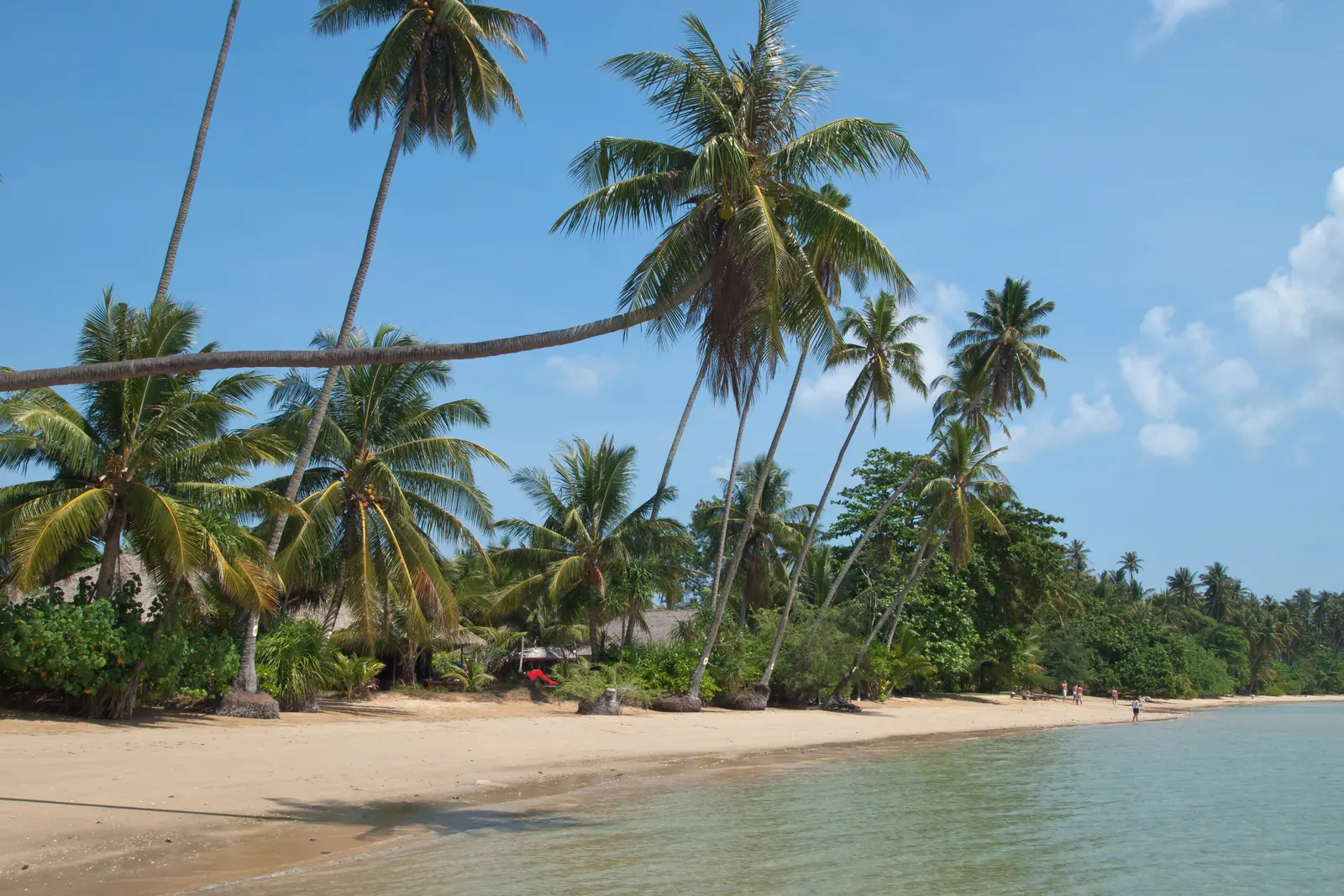
Around 2018, a few hundred people on a flat coconut island off Trat sat down and decided what they did not want. They did not want jet skis, banana boats towed in circles by men shouting, car ferries, foam boxes, karaoke at 2am or a Full Moon Party with a sponsor. They wrote it down, called it a charter, and — this is the unusual part — stuck to it. Koh Mak is what an island looks like when the people who own it are allowed to say no, and the result is the most restful 16 square kilometres in the Gulf of Thailand.
The short version: Koh Mak is a small, flat, privately owned island between Koh Chang and Koh Kood, a 50-minute speedboat from the mainland for around ฿450–550. Two beaches carry the resorts, a bicycle is the only vehicle you need, and there is almost nothing to do after dark, which is the point. Go between November and April, bring cash, give it three nights. The wider province is in our Trat travel guide; the Trat province profile has the quick-reference version.
What Koh Mak is, and who owns it
Most Thai islands are national park, government land or a scramble of investors. Koh Mak is a family estate. In the late 1800s a Chinese affairs officer under Rama V planted coconuts here; around 1904 a colleague, Luang Prompakdee, and his wife bought the plantation and, effectively, the island, for a sum usually quoted at about ฿24,000. Their descendants — five related families, by most accounts — still own most of it. Treat the figures as folklore with a paper trail.
That ownership is why Koh Mak looks the way it does. Nobody could sell a headland to a chain or build above the palms. The resorts are family-run bungalows, the interior is working coconut and rubber plantation with concrete lanes through it, and the whole thing — roughly 10 km by 5, flat, a few hundred residents — has a rubber-tapper’s idea of a rush hour.
The Koh Mak charter: what “low carbon” actually means here
The “Koh Mak Low Carbon Destination” label is used by the Tourism Authority of Thailand and half the travel press, and it is easy to assume it is a marketing sticker. It is not, quite. In 2018 the island community adopted a charter — usually described as eight points, though published versions vary — that amounts to a list of things you will not find: no motorised water sports (so no jet skis, banana boats or parasailing), no vehicle ferries, no single-use foam, no loud music or all-night parties, no drugs, no chemicals on the reef, plus a pledge to cut waste and keep the landscape and local character intact. Bicycles are the default and rental scooters are kept deliberately few. As of September 2026 that is still the reality on the ground.
Two caveats. “Low carbon” does not mean “no engines”: you arrive by speedboat and the longtails run on diesel. And the charter is a community agreement, not a law; it holds because the landowners want it to. What you notice within an hour is the absence of sound.
How Koh Mak works: two beaches, one bicycle
Picture a lopsided butterfly. The south-west wing holds Ao Kao, the longest beach and the closest thing to a main drag: a couple of kilometres of sand with resorts, cafés and the odd bar under the trees, walkable end to end, where most visitors sleep. The north-west wing holds Ao Suan Yai, wider, calmer, with fewer places to stay and the island’s best sunset. Between them is the interior — plantations, a temple, a couple of villages, the museum — and on the east side is Ao Nid, a working pier and not much else. The other coves are quieter still.
Because it is flat, you cycle. Rental shacks charge about ฿100–150 a day for a basic bicycle, up to ฿200 for a decent mountain bike, or about ฿150 a person for a guided plantation tour in high season; Ao Kao to Ao Suan Yai is fifteen minutes through coconut trunks. Scooters are around ฿250 a day and only necessary if you have bad knees or a toddler. No taxis, no songthaews, no traffic lights, not one busy road.
Koh Mak beaches, ranked honestly
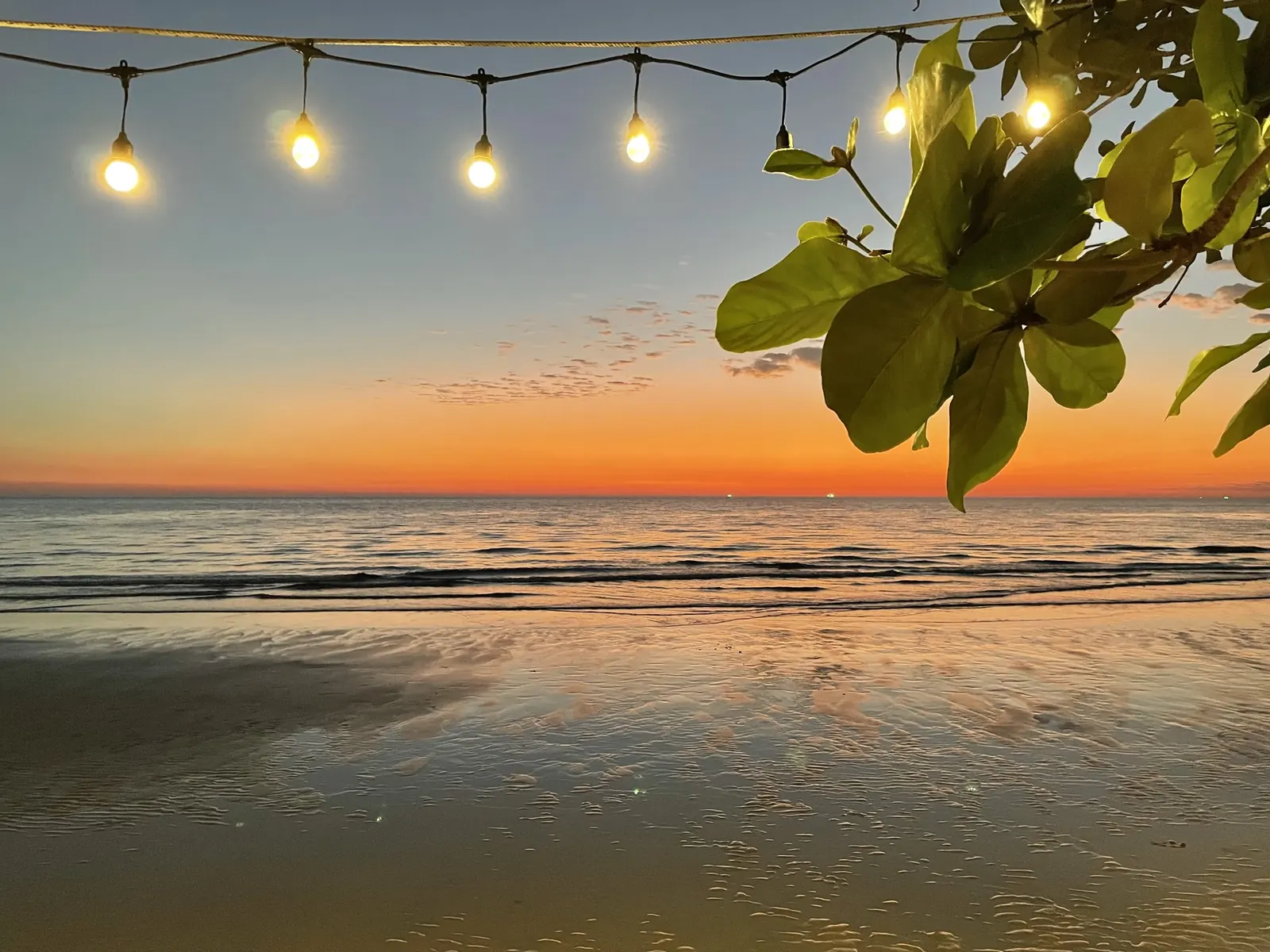
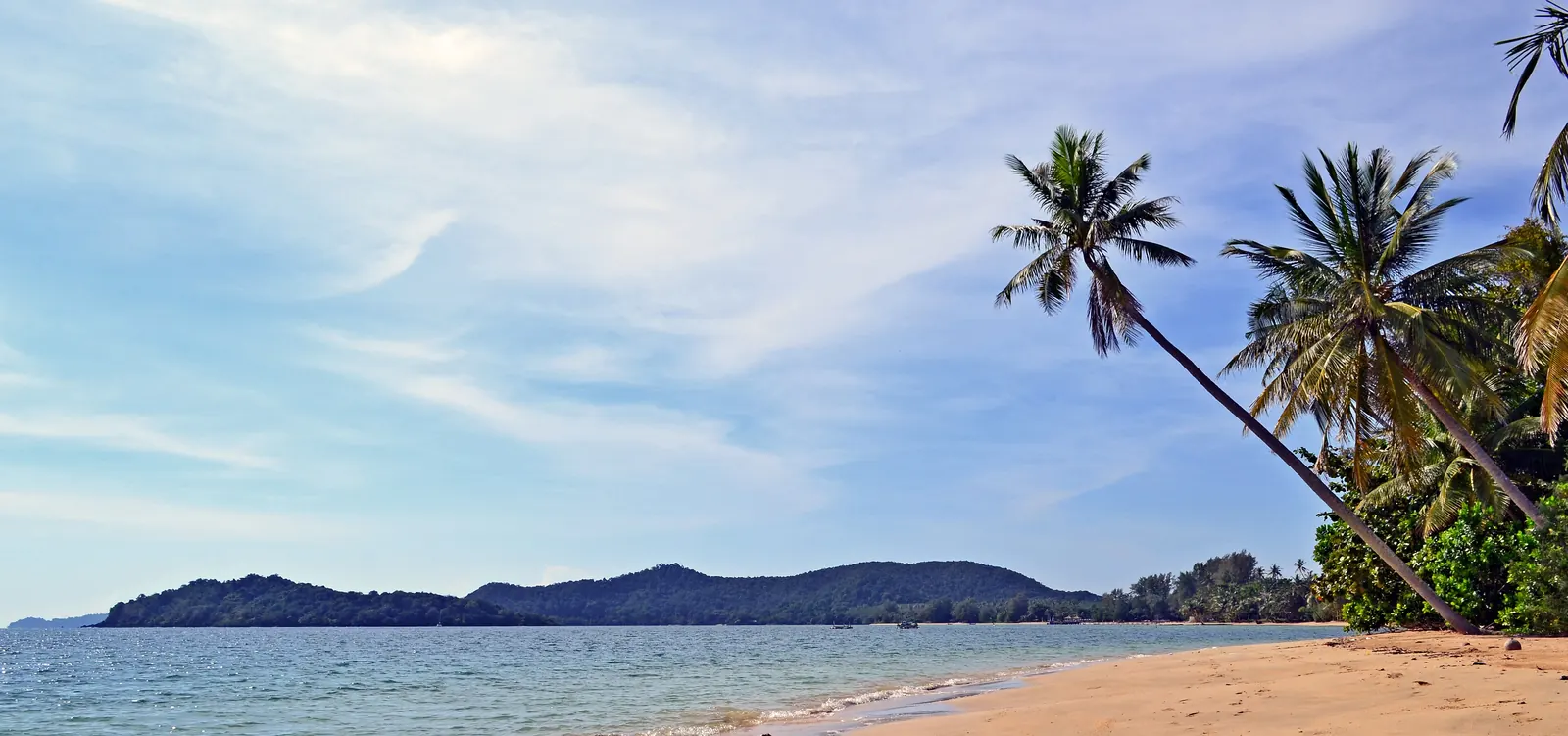
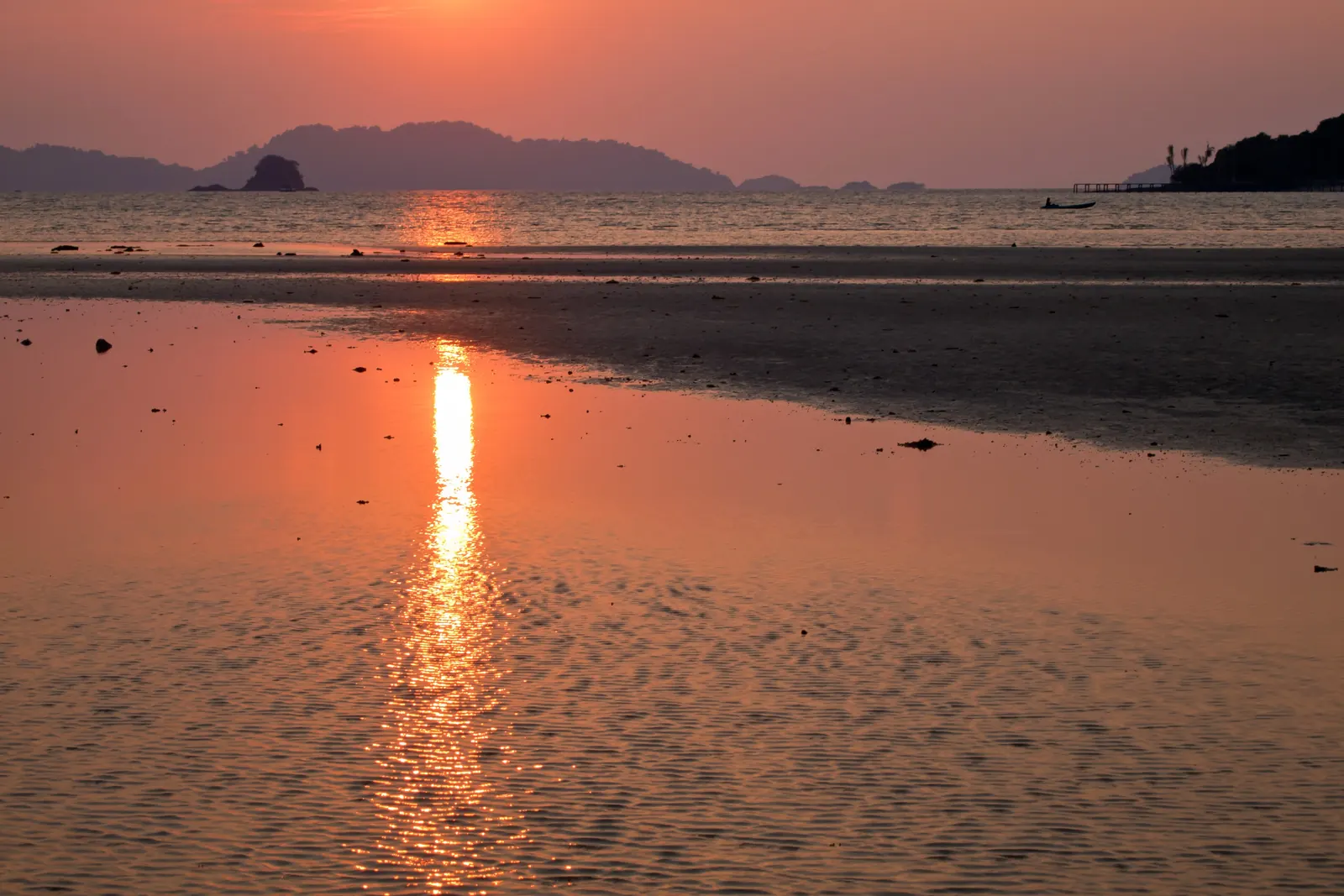
Ao Suan Yai — the best beach, by a nose. Wide, pale, shallow a long way out, with Koh Kham parked photogenically offshore and the sun going down straight in front of you. Fewer resorts, so fewer people; the pier bars are where the island gathers at 6pm. Swim at high tide.
Ao Kao — the practical beach. The longest and the most complete: you can walk to breakfast, lunch and a massage without putting shoes on. Fine sand, clean water, softer entry at the western end. Also where the sandflies are most reported, so keep reading.
Everything else — for the committed. The north-east and southern coves are rockier, shallower, with a single resort or none: worth a bicycle detour, not a week. Ao Nid is a pier, not a beach.
Things to do on Koh Mak (all six of them)
| What | How | Cost (2026) | Verdict | Book |
|---|---|---|---|---|
| Koh Kham day trip | Kayak from Ao Suan Yai (30–40 min) or longtail | ฿200 landing fee (฿300 with boat); kayak ฿100–200/hr | Do it | Compare snorkel trips |
| Koh Rayang | Kayak from Ao Kao | ฿150 landing fee | Do it if the sea is glassy | Ask your resort |
| Koh Rang snorkelling | Half-day boat, Nov–Apr | ฿800–1,000 pp plus park fee | Do it — the only real reef | Via resorts |
| Koh Mak Museum | Bicycle, near Ao Nid | Free / donation | Do it, 30 minutes | — |
| Cinnamon Art gallery | Bicycle to Ao Suan Yai | Free | Fine with a coffee | — |
| Ao Suan Yai sunset | Sit down | One beer, ฿70–90 | Mandatory | — |
Koh Kham is the one to plan around: a private islet off Ao Suan Yai with a proper white sandbar, black volcanic boulders and the clearest water within paddling range. Kayak over before 10am while the wind is down and spend the morning. Koh Rayang, off Ao Kao, is the same idea, smaller. For actual coral you need the half-day trip to Koh Rang, dry months only. The museum is one room of family photographs and plantation tools and explains the island better than this article can. The sunset is the evening appointment, from a pier bar on Ao Suan Yai.
The honest bits: cash, wi-fi, sandflies and the low season
Money. As of September 2026 Koh Mak has, depending on which week you ask, either no ATM or one that is usually empty and unreliable with foreign cards. Behave as if there is none. Bigger resorts take cards, sometimes with a 3% surcharge; the noodle shack, the bicycle man and the Koh Kham landing fee do not. Withdraw in Trat or at the pier — the ฿220 foreign-card fee in our ATMs and cards guide applies wherever you do it. There is no 7-Eleven either, only minimarts that close early.
Connectivity. Better than its reputation. Resort wi-fi handles email and off-peak streaming; AIS and True 4G/5G works on the west-coast beaches, patchy inland and east. Sort a plan before the mainland — our SIM and eSIM guide covers which network to pick.
Sandflies. Yes. Worst on the quieter stretches at dawn and dusk, bites itch for a week, and the local remedy — coconut oil before you sit down — works better than it has any right to. DEET or icaridin also works; do not scratch. Box jellyfish turn up in the warmer months, hence the vinegar stations and the nets at some resorts.
Low season (May to October). The east coast takes the monsoon seriously. Many resorts close from about June to September, the Koh Chang and Koh Kood boats stop, and the mainland speedboats thin to one or two a day, with the Boonsiri ferry from Laem Sok as the fallback. Open rooms drop 30–50% and the beaches are empty — a fine trade if you know you are making it.
When to go to Koh Mak
November to April, with December to February the sweet spot: dry, calm seas for the Koh Kham paddle, every boat running, every resort open. March and April are hotter and hazier but still good; May and October are the shoulder gamble. Book Christmas and Chinese New Year months ahead. Our month-by-month guide has the coast-by-coast detail.
How to get to Koh Mak
No airport, no car ferry, and the charter intends to keep it that way. Every route ends in a boat.
| Route | Time | Price (2026) | Runs | Book |
|---|---|---|---|---|
| Laem Ngop (Krom Luang pier) → Koh Mak, speedboat | 45–60 min | ฿450–550 | Year-round, fewer in low season | Laem Ngop to Koh Mak |
| Laem Sok → Ao Nid, Boonsiri ferry | 60–90 min | ฿400–500 | Year-round | Via Trat joint tickets |
| Koh Chang (Bang Bao) → Koh Mak, speedboat (wooden boat ฿400, 1 h 45) | 50 min | ฿600 incl. pickup | Nov–Apr only | Koh Chang to Koh Mak |
| Koh Kood → Ao Nid, express boat | 30–45 min | ฿350–400 | Nov–Apr only | Via resort |
| Bangkok → Koh Mak, bus/van + boat joint ticket | 7–8 h | ฿750–1,000 | Daily | See Book the trip, below |
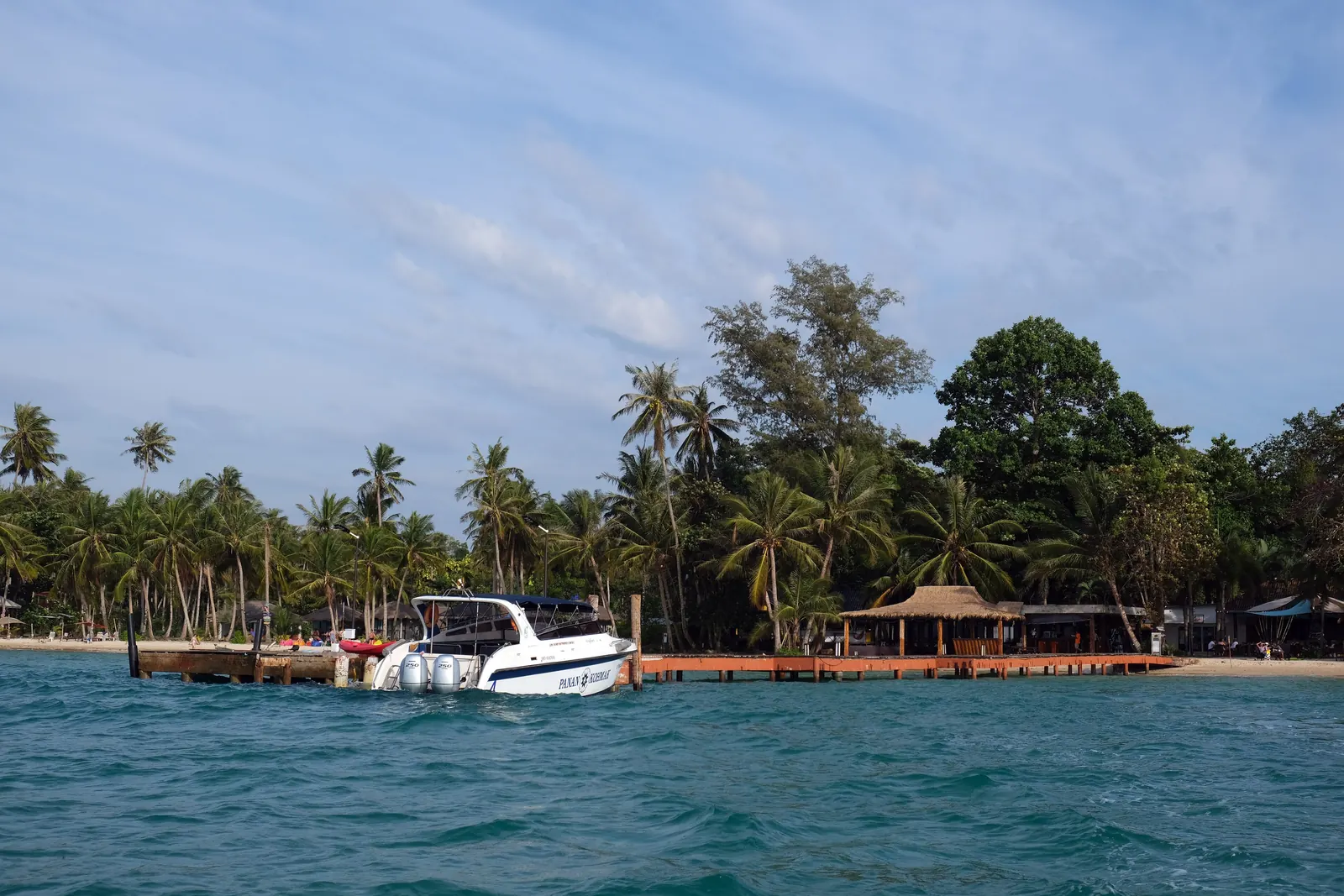
From Bangkok the sensible move is a joint ticket: a morning bus or minivan from Ekkamai to Laem Ngop (five to six hours), then the speedboat, and you are on the sand by mid-afternoon. Bangkok Airways flies to Trat in about an hour for ฿2,500–4,500 one way, then 30–40 minutes by van to the pier. Combining islands? Come via Koh Chang — the Bangkok to Koh Chang guide has every option costed — and hop across from Bang Bao in high season. Speedboats land at different piers depending on the operator (Koh Mak Resort, Makathanee or Ao Nid); check which is nearest your bed.
Koh Mak vs Koh Kood vs Koh Chang
Koh Chang is the big one: waterfalls, jungle, restaurants, nightlife, and the only island of the three you can reach in the monsoon without praying, but its main beaches went to jet skis and laminated menus long ago — our Koh Chang guide tells you where to hide. Koh Kood has the best sand and water on the east coast, hills, waterfalls and resorts priced accordingly, and costs more time and money to reach. Koh Mak is the small, flat, cheap, quiet one, with beaches a notch below Koh Kood and a night out that consists of a second beer; if “there is nothing to do” reads as a promise rather than a threat, it wins. A full three-way comparison follows shortly.
Where to stay on Koh Mak
Almost everything is family-run and low-rise: fan huts from about ฿400, decent air-con bungalows ฿1,200–2,500, and a handful of places that call themselves resorts with a straight face at ฿3,500–6,000. Cool-season “from” rates: Seavana Koh Mak Beach Resort (from around ฿3,500, the smartest rooms on Ao Suan Yai, sunset from the terrace); Koh Mak Resort (from around ฿2,500, the original family resort on Ao Suan Yai with its own speedboat pier); Maka Thanee Resort (from around ฿1,800, mid-Ao Kao, another pier, pool, and the sensible mid-range pick); Koh Mak Cococape Resort (from around ฿1,500, on its own cape at the western tip of Ao Kao, the best budget-to-view ratio on the island); and Lazy Day The Resort (from around ฿1,600, garden bungalows a short walk off Ao Kao, popular with people on their third visit). Banana Sunset’s cheap bungalows on Ao Suan Yai are the backpacker default. In low season, ask what is actually open before booking anything non-refundable.
What Koh Mak costs per day
Cheaper than Koh Kood, and the lack of things to spend money on does the budgeting for you. Budget, about ฿1,500 a day: a fan bungalow at ฿500–700, a ฿100 bicycle, ฿300–400 of rice, noodles and grilled fish from the village places (the usual street-food common sense applies), a couple of ฿70 beers and a kayak split two ways. Comfortable, about ฿3,500 a day: an air-con beachfront bungalow at ฿1,800–2,500, a seafood dinner at ฿500–700, a scooter, the Koh Kham trip and a ฿300–400 massage on the sand. Both exclude the ฿1,000–1,500 from Bangkok and back. Cross-check our Thailand Price Index and what Thailand costs per day; the island runs 10–20% above mainland Trat for anything that arrives by boat, which is everything.
Koh Mak: your questions, answered
Is Koh Mak worth visiting?
Yes, if quiet is what you are buying: two good beaches, a flat island to cycle, Koh Kham on the doorstep and a community rule against jet skis and noise that actually holds. If you want nightlife, waterfalls or thirty restaurants, Koh Chang is your island.
How do you get to Koh Mak from Bangkok?
Bus or minivan from Ekkamai to Laem Ngop pier (five to six hours), then a 45–60 minute speedboat at ฿450–550; joint tickets bundle both for roughly ฿750–1,000. Or Bangkok Airways to Trat in an hour for ฿2,500–4,500, then a 30–40 minute van to the pier. Either way you leave Bangkok at breakfast and swim before sunset.
Are there ATMs on Koh Mak?
Assume not. As of September 2026 reports range from “no ATM” to “one that is usually empty”, and there is no 7-Eleven. Larger resorts take cards, often with a surcharge; bicycles, small restaurants, boats and landing fees are cash only. Withdraw in Trat or at the pier.
How many days do you need on Koh Mak?
Three nights: one to cycle the island, one for Koh Kham or a snorkelling trip, one to do nothing on purpose. Two feels rushed given the boat times at each end; a week is for people who have found their bungalow and have no intention of leaving it.
Is Koh Mak better than Koh Kood?
Koh Kood has the better beaches and water, hills, and higher prices. Koh Mak is flatter, cheaper, easier to reach and easier to cycle. With a week, do both — the express boat between them runs in high season.
Related guides
- Trat, Thailand: The Gateway to Koh Chang That Deserves More Than a Ferry Queue
- Things to Do in Koh Chang: Worth It vs Skip It
- Koh Samet from Rayong: The East Coast’s Quick Island Fix
Book the trip
Some links in this guide are affiliate links. If you book through them we may earn a small commission at no extra cost to you — it helps keep Destination Thailand independent.
Hotels: a few hundred rooms and no overflow, so December to February sells out early — the island is listed under Trat on Agoda, so compare Koh Mak and Trat hotels and filter by “Koh Mak (Trad)”. Getting there: the bus-plus-speedboat joint ticket from Ekkamai is the one to book — Bangkok to Koh Mak on 12Go shows every departure and which pier it lands at. Not sure a quiet island is what you want? Our Where to Go in Thailand matcher scores all 77 provinces against your month, your crowd tolerance and what you actually want from the trip.