Sisaket is the province Thai tourism forgot, and I mean that as a compliment. Wedged into the bottom-right corner of Isaan, hard up against the Cambodian border, it grows a serious share of the country’s garlic and shallots, speaks four languages before breakfast, and has a temple built out of roughly one and a half million empty beer bottles. Officially it is Si Sa Ket; on train tickets, road signs and half the maps it collapses into Sisaket. Either way, nobody you know has been.
That is not because there is nothing here. It is because the best things in the province take actual effort. The two headline acts sit 60 to 100 kilometres south of the provincial capital, down towards the Dangrek mountains, where a cliff called Pha Mo I Daeng lets you stand on the edge of an escarpment and stare straight down into Cambodia. No tour buses do this run. You sort it yourself, which is exactly why it is still good.
The fast facts live in our Si Sa Ket province profile. This is the long version: what the province actually is, how to reach it, and what deserves your limited time.
What Sisaket really is
A farming province, first and last. The northern half is flat rice country threaded by the Mun river; the southern edge climbs into the Dangrek range along the Cambodian frontier. In between, people grow rice, garlic, shallots and tamarind, and get on with life at a pace that makes Ubon Ratchathani look frantic.
What makes it interesting is who lives here. Sisaket is four-tribes country: Lao speakers in the north, Khmer speakers along the border, the Suay (Kui) people famous across lower Isaan as elephant handlers, and the Yer, a small group you will barely find mentioned in any guidebook. Four languages, four kitchens, one province. The Khmer empire ran through here a thousand years ago and left sandstone sanctuaries scattered across the paddies like dropped luggage.
Why go to Sisaket
Because it holds two of the strangest and most dramatic sights in Isaan, and you will share them with almost nobody. A temple made of beer bottles that sounds like a gimmick and turns out to be genuinely beautiful. A cliff where Thailand simply stops and Cambodia unrolls a couple of hundred metres below your boots. Khmer ruins with no ticket queue because there is no queue of any kind. Add food priced for farmers rather than tourists, and a night out that costs less than a Bangkok cocktail, and the case makes itself. This is Thailand with the marketing layer peeled off.
Getting to Sisaket
The train is the sensible move. Sisaket sits on the Bangkok to Ubon Ratchathani line, with several services a day from Krung Thep Aphiwat station. The trip runs nine to ten hours: a third-class seat costs a few hundred baht, a second-class sleeper berth on the overnight service runs roughly ฿700-1,100, and arriving at dawn as the paddies turn pink is the right way to meet Isaan.
Buses from Bangkok’s Mo Chit terminal take eight to nine hours and cost about ฿500-700. In a hurry, fly to Ubon Ratchathani instead — about an hour in the air, typically ฿800-1,800 one way — then take a minivan or bus the hour or so west to Sisaket city for under ฿100.
Once here, understand the geography: the sights that matter are 60-100 kilometres south of the city. Hire a car, arrange a driver for the day, or resign yourself to slow songthaew arithmetic. There is no tourist shuttle because there are no tourists.
For live timetables and tickets on these routes, compare your options on 12Go before you commit to a departure time.
Where to stay
Sisaket city, near the railway station and the night market, is the practical base: clean guesthouses at ฿400-800 and the better business-style hotels at ฿800-1,500. Nobody has ever travelled here for the hotels, and the hotels know it — expect firm beds, cold air conditioning and zero pretension.
If you are serious about the border sights, spend a night in Kantharalak, the workaday district town about 65 kilometres south. Simple hotels run ฿400-900 and it puts you within striking distance of the cliff for early morning light, which is when you want it.
What to eat in Sisaket
This is Isaan with a Khmer accent. The staples are all here and all excellent: som tam pounded with fermented crab and pla ra for ฿40-60, grilled chicken at ฿60-100 a bird, larb, sai krok Isaan sausage soured just right, sticky rice by the basket. Along the border districts the food tilts Khmer — heavier on herbs and fermented fish, closer to what is being cooked twenty kilometres south in Cambodia than to anything in Bangkok.
The province’s own bragging rights are in the ground: Sisaket garlic and shallots are famous across Thailand, and the tamarind here is worth carrying home by the kilo. The night market near the railway station in the capital is the easy one-stop version — go hungry, budget ฿150, leave defeated.
Top things to do in Sisaket
1. Wat Lan Khuat, the Temple of a Million Bottles
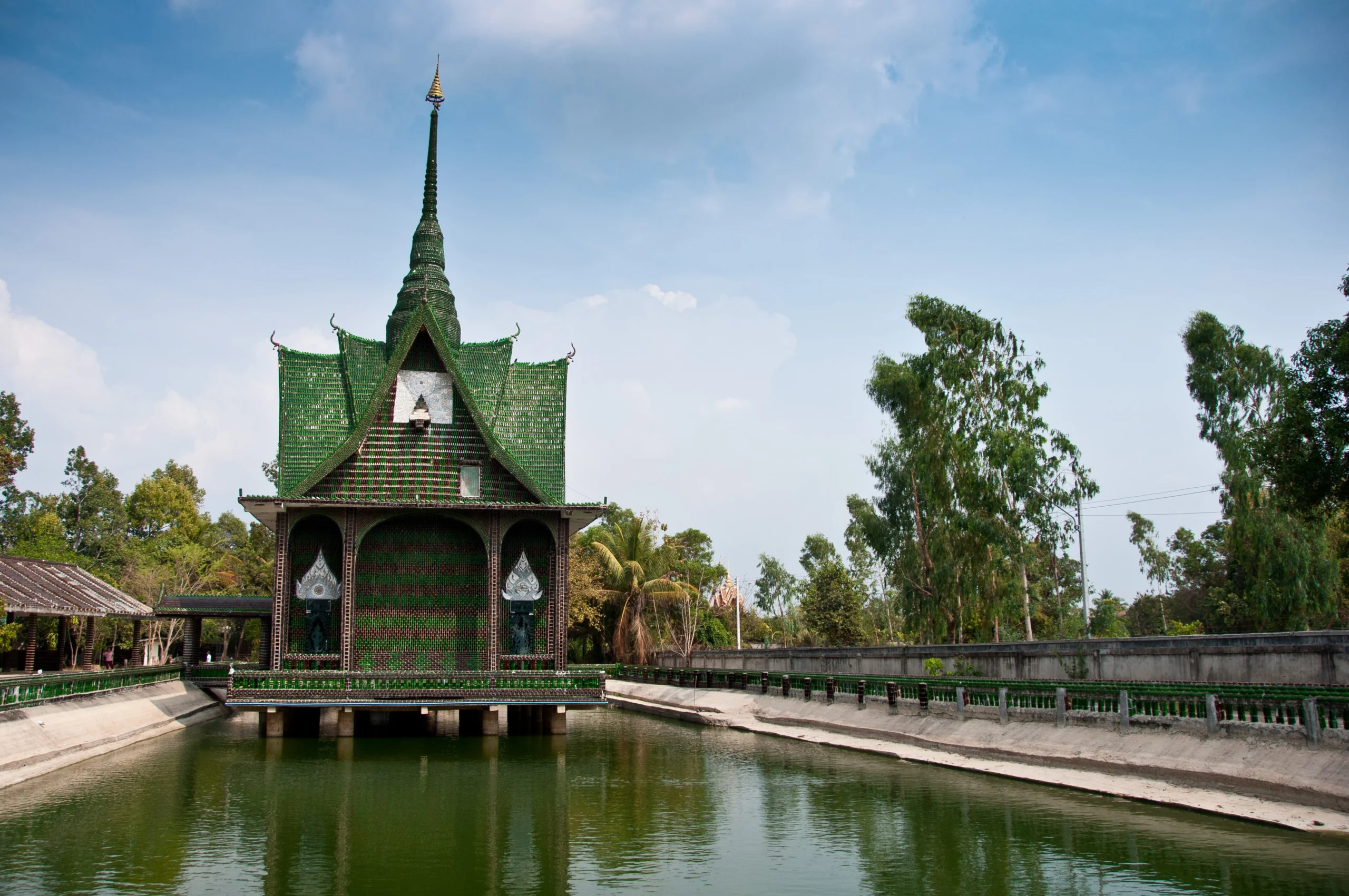
In Khun Han district, about an hour south of the city, monks started collecting empty bottles in the 1980s to shame the litter problem, then kept going until they had built an entire temple complex from them — around 1.5 million bottles, mostly Heineken green and M-150 brown, with mosaics made from the caps. It should be a joke. It is not. In afternoon light the walls glow like stained glass, and the message about waste lands harder than any government poster. Free entry during daylight hours; leave a proper donation.
2. Pha Mo I Daeng cliff and the Preah Vihear borderlands
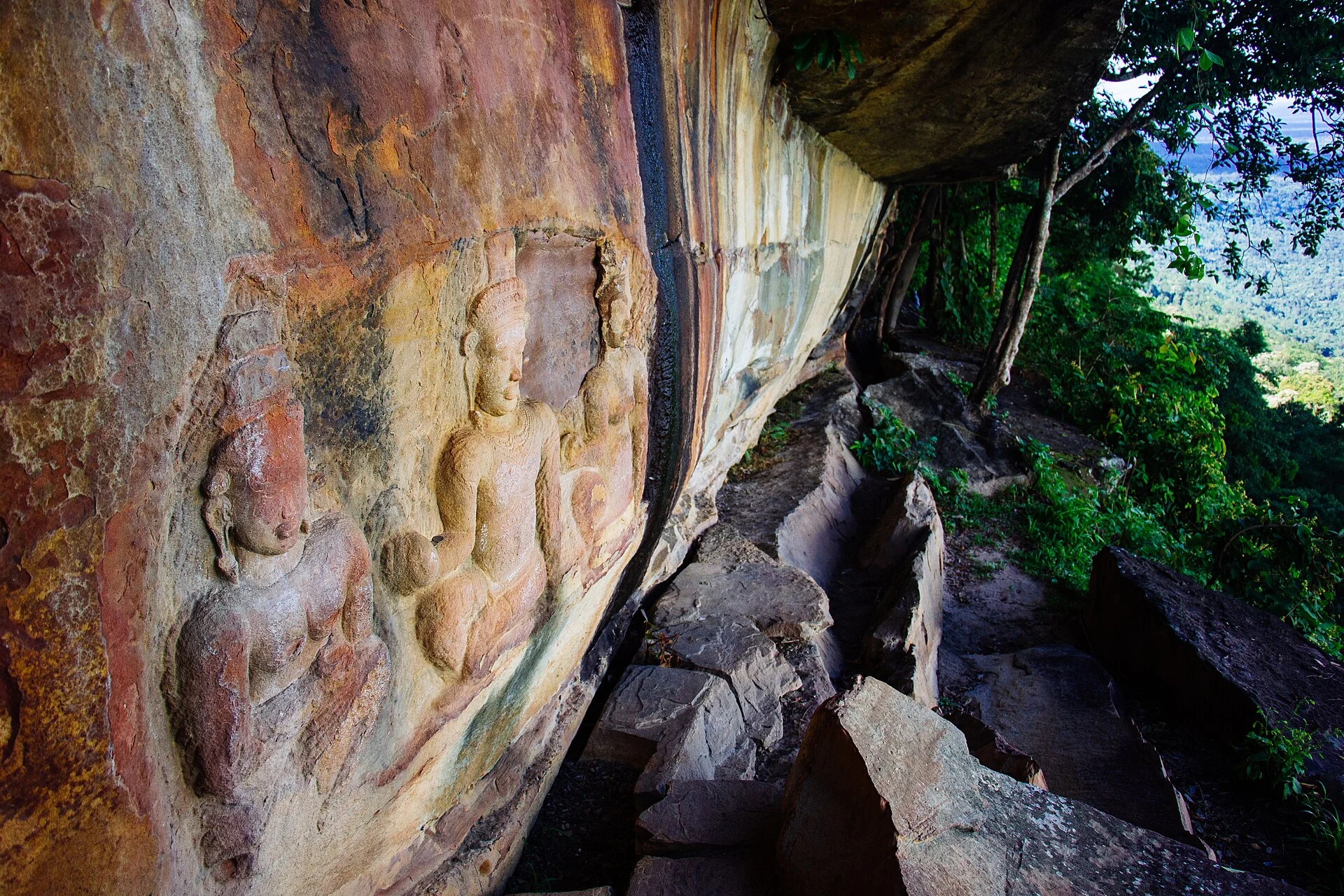
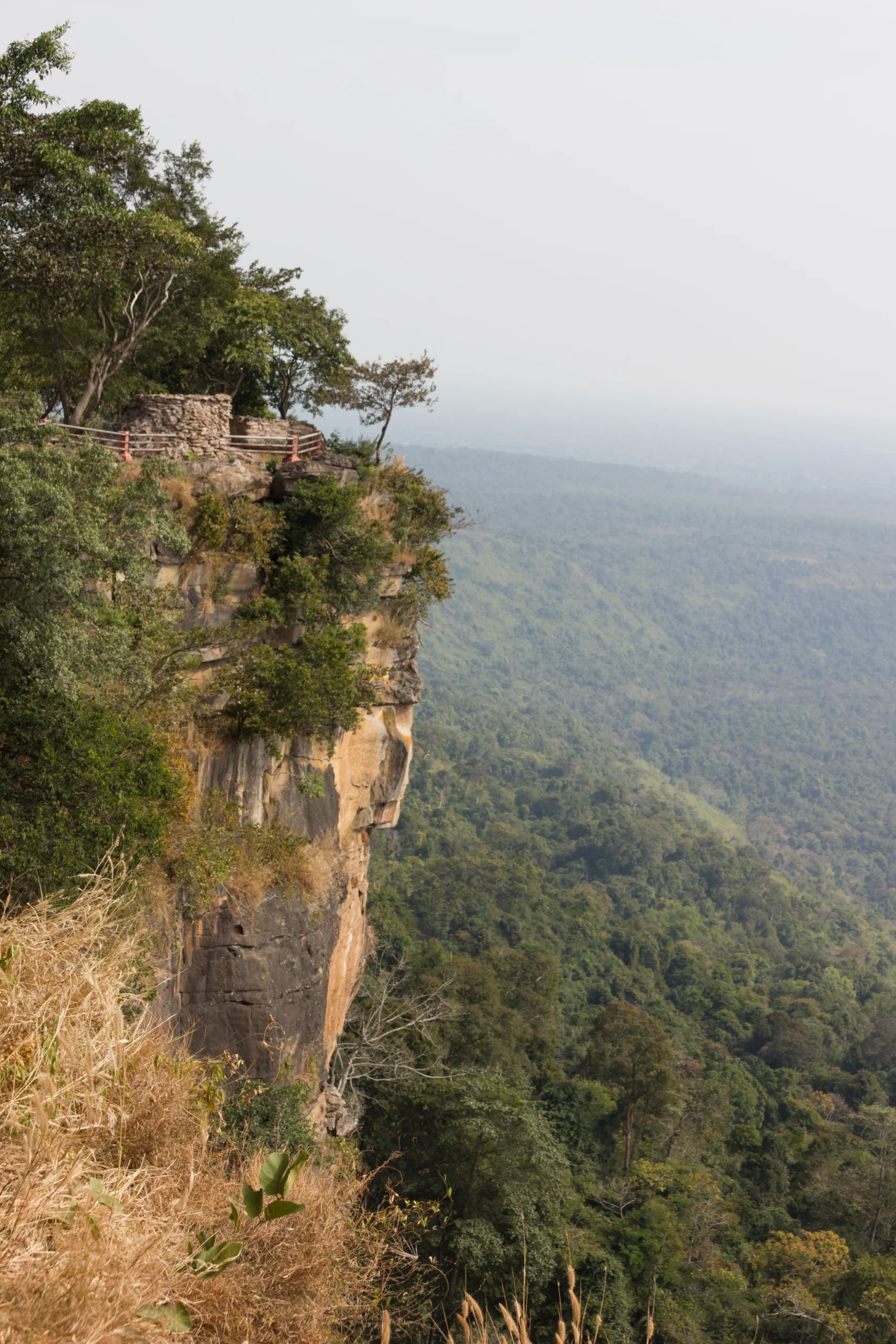
The province’s great set piece, inside Khao Phra Wihan National Park about 100 kilometres south of the city. You walk to the lip of the Dangrek escarpment and the ground ends: below you, the Cambodian plain runs to the horizon. In a rock shelter near the edge are bas-relief carvings of three figures, cut around the 11th century and among the oldest of their kind in Thailand. Be clear about one thing: Preah Vihear temple itself stands on the Cambodian side, courts have twice said so, and the crossing from Thailand has been shut for years — with fresh border clashes as recently as 2025 closing the park entirely at times. Check current status before driving down. Foreigner entry is a few hundred baht when open.
3. Prasat Wat Sa Kamphaeng Yai
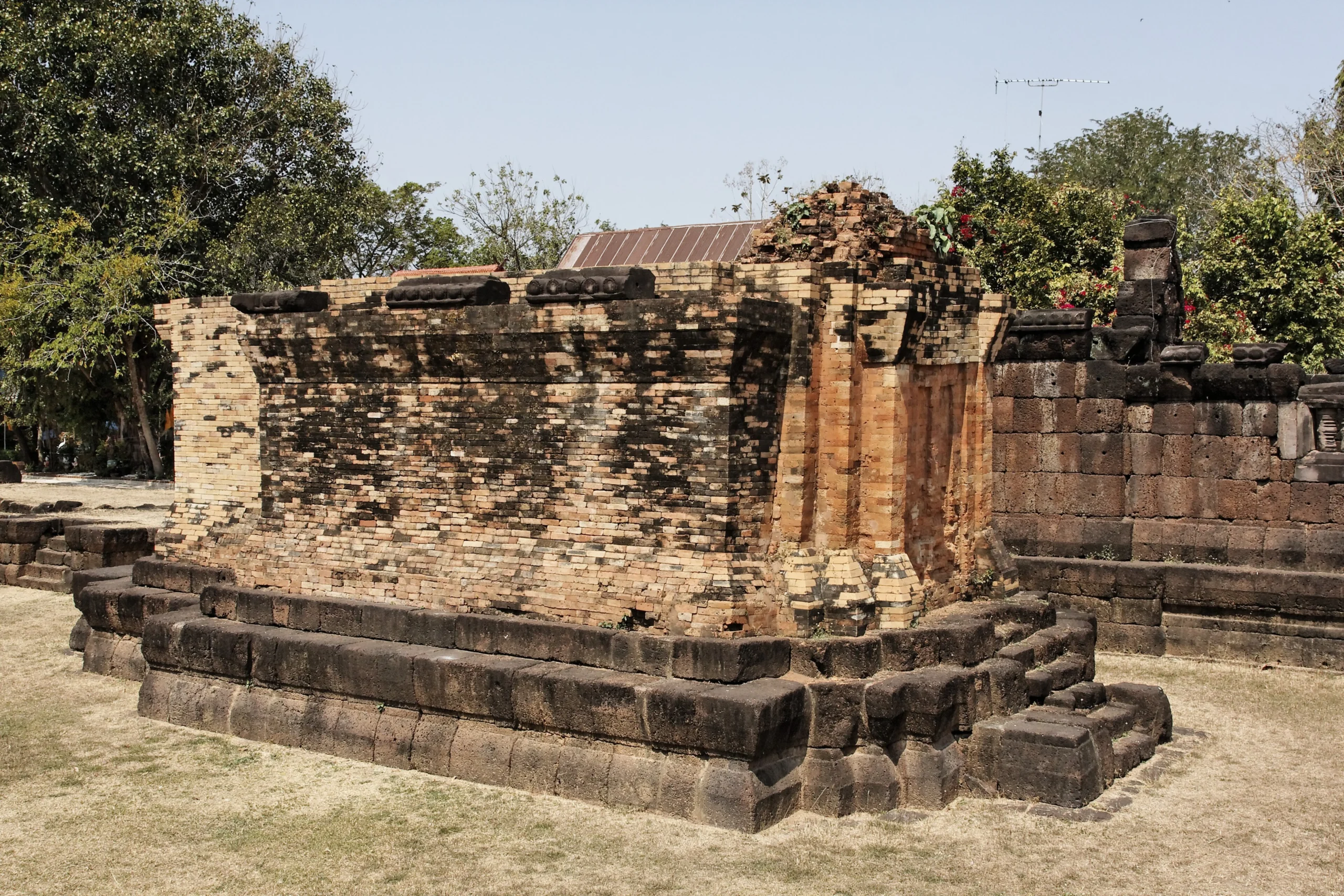
The finest Khmer sanctuary in the province, in Uthumphon Phisai district conveniently close to the rail line. Built in the 11th century as a Hindu temple and later absorbed into Buddhism, it now sits inside a working modern monastery, which means you get thousand-year-old carved lintels with monks’ laundry drying nearby. That collision is the charm. Entry costs next to nothing, and you will likely have the sandstone to yourself.
4. Four-tribes Sisaket: markets and border villages
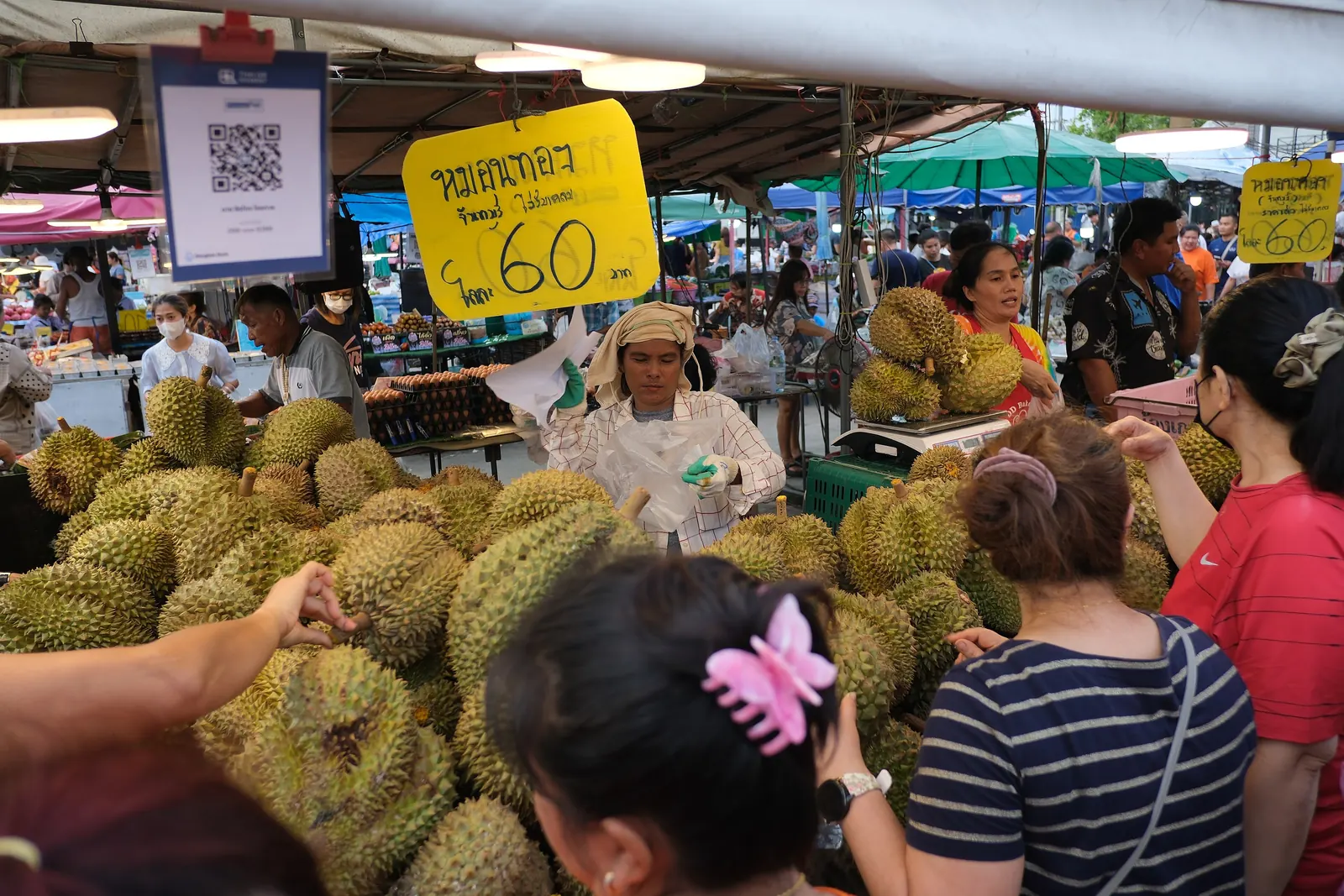
Spend a morning in any district fresh market and listen: Lao in one aisle, Khmer in the next, Suay and Yer if your ear is sharp. The border districts around Khun Han and Kantharalak are the Khmer heartland; the Suay heritage links this province to the elephant culture of neighbouring Surin. There is no ticketed attraction here and that is the point — this is the living culture the ruins only hint at, available for the price of breakfast.
5. Garlic, shallot and tamarind country
From roughly December to February the fields north of the city, around districts like Yang Chum Noi, turn over to shallots and garlic, and the harvest is weirdly photogenic: red-gold bulbs drying in ropes under every stilt house. Buy shallots, garlic and sweet tamarind straight from growers for a fraction of Bangkok prices. It sounds mundane. It is the single most Sisaket thing you can do.
6. The Mun river backwaters at Rasi Salai
Up in the north of the province, the Mun spreads into wetlands around Rasi Salai, where locals run raft trips through the backwaters in the cooler months. The area carries real history: the Rasi Salai dam flooded these wetlands in the 1990s and villagers spent decades fighting over it, one of Thailand’s longest-running environmental battles. Go for the birdlife and the slow water, and you will understand what they were fighting for.
What to skip
Sisaket city itself, as a destination. It is a perfectly decent farm-town capital with a good night market and a useful railway station, and that is the complete list. Anyone who tells you to spend two days exploring the capital’s sights is padding an itinerary. Sleep there, eat there, then get south. And do not build your trip around walking into Preah Vihear temple from the Thai side — you cannot, you have not been able to for years, and no amount of optimism at the park gate will change the geopolitics. The cliff view is the prize; take it on its own terms.
Sisaket travel: practical info
November to February is the season: cool, dry, harvest in the fields and clear views off the escarpment. March brings the lamduan bloom, the province’s own flower, celebrated with a festival in the city. The rains from roughly June to October turn everything luminous green but make the cliff paths slick.
Wikipedia’s Sisaket entry covers the four-tribes history.
TAT’s official Si Sa Ket page carries border-crossing status for the Preah Vihear area.
Two to three days is right — one for the southern border run, one for the ruins and the bottle temple, a half-day for markets. Onward travel is easy: Ubon Ratchathani is about an hour east by train for a few tens of baht, Surin about ninety minutes west. The Chong Sa-Ngam crossing into Cambodia exists in Phu Sing district, but after the 2025 border troubles its status changes; verify before you rely on it.
FAQ
Is Sisaket worth visiting?
Yes, if you want Isaan without a single coach party. The bottle temple and Pha Mo I Daeng cliff are legitimately among the region’s best sights, and prices are some of the lowest in Thailand. Skip it if you need nightlife or beaches — there are neither.
How do you pronounce Sisaket?
See-sah-ket, three even syllables, stress nowhere in particular. It looks harder than it is, which may explain why so few travellers ever test it out loud.
Can you visit Preah Vihear temple from Thailand?
No. The temple stands in Cambodia and the crossing from the Thai side has been closed for years, with border tensions flaring again in 2025. From Sisaket you visit Pha Mo I Daeng cliff and the national park when open — a spectacular consolation, but check current access first.
How many days do you need in Sisaket?
Two full days covers the essentials with your own transport; three lets you add the Rasi Salai wetlands and a proper market crawl. Day-tripping from Ubon Ratchathani is possible but wastes hours on the road.
What is Sisaket famous for?
Garlic, shallots and tamarind; the temple built from 1.5 million beer bottles; Khmer sanctuaries; and the cliff-edge view into Cambodia. Within Thailand it is also known for its four-tribes mix of Lao, Khmer, Suay and Yer cultures.
Related guides