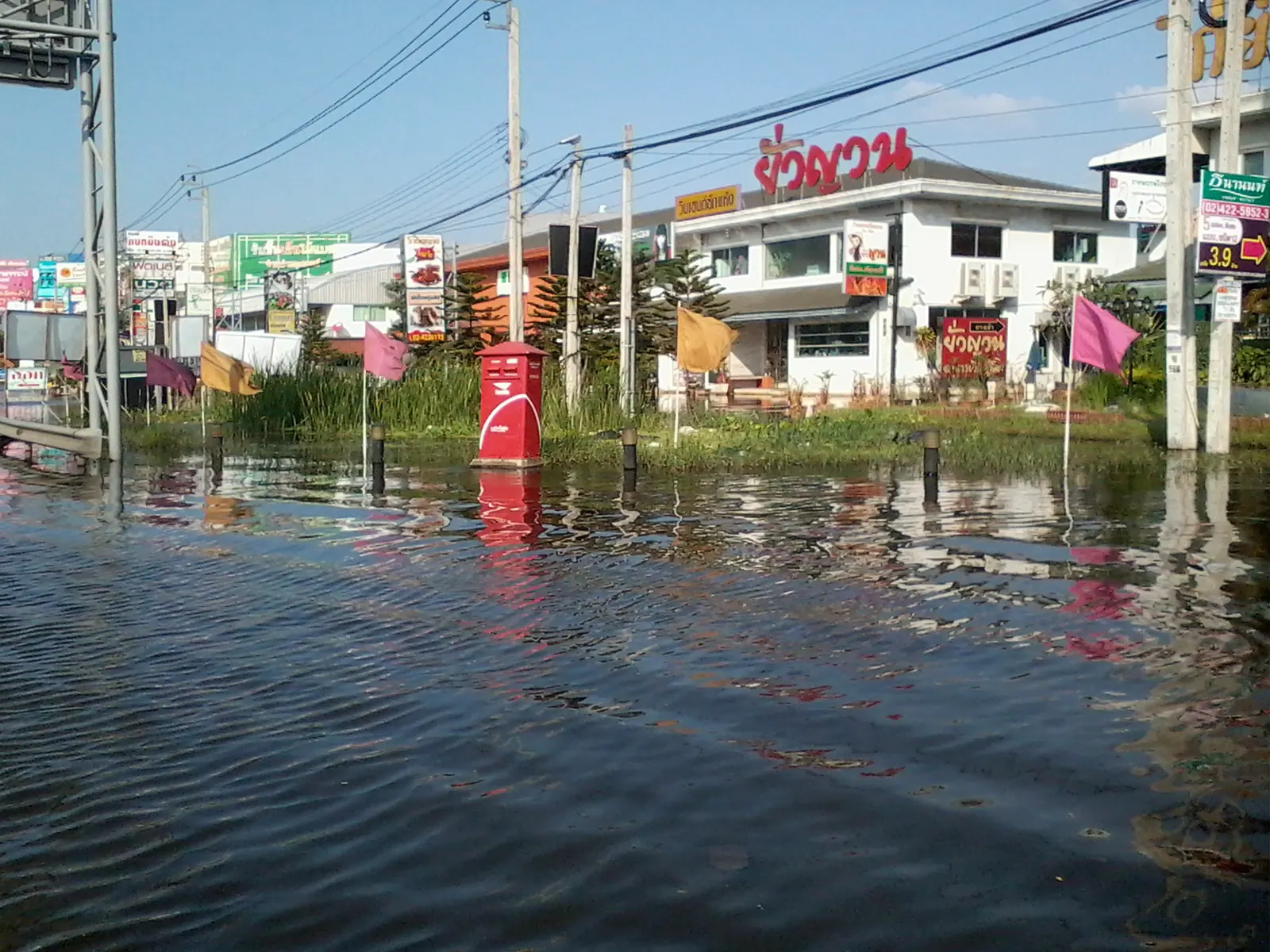
Status: BANGKOK FLOODS 2026 — DRAINING IN THE CITY, STILL RISING ON THE RIVERS. As of 29 September 2026 inner Bangkok is drying out and the capital’s water levels are stable, but eight outer districts — Lat Krabang, Bang Kapi, Min Buri, Saphan Sung, Suan Luang, Bueng Kum, Khlong Sam Wa and Sai Mai — still have 10–30cm or more standing; the BMA needs two to three rain-free days to drain the main canals. Both airports are open, but Thai Airways has cancelled 22 flights on 29–30 September and the roads in are slow. The BTS, MRT, Airport Rail Link and Red Line are running; the SRT eastern line is only partly back, from Ban Thap Chang rather than Hua Lamphong. Nationally the DDPM counts 29 provinces plus Bangkok, about 2.6 million people and 23 deaths, and the rivers are the next act: the Chao Phraya Dam went to 2,000 cubic metres a second on 28 September and the Pasak Jolasid Dam raises its releases from 30 September. 28–29 September were special public holidays in Bangkok, Nonthaburi, Pathum Thani and Samut Prakan.
Update log — 28 Sep 2026: page created from the TAT advisory (27 Sep, 18.00), BMA figures via Nation Thailand and the DDPM’s 27 Sep report via Khaosod English. · 29 Sep 2026: DDPM national figures (29 provinces plus Bangkok, 2.6 million people, 23 deaths including four in the capital), the eight critical Bangkok districts, the 2,000 m³/s Chao Phraya Dam release, the Pasak and Mae Klong warnings, Thai Airways cancellations and the partial eastern-line restart (Nation Thailand, Thai Enquirer, Bangkok Post, Khaosod English). Updated here as the status changes.
The Bangkok floods 2026 are two stories wearing one headline: a 48-hour deluge on the capital from 24 September, and a Chao Phraya running high on dam releases through Sing Buri, Ayutthaya and Pathum Thani. The Bangkok province page is the normal-times guide; this is the other one.
What happened in Bangkok between 24 and 29 September 2026
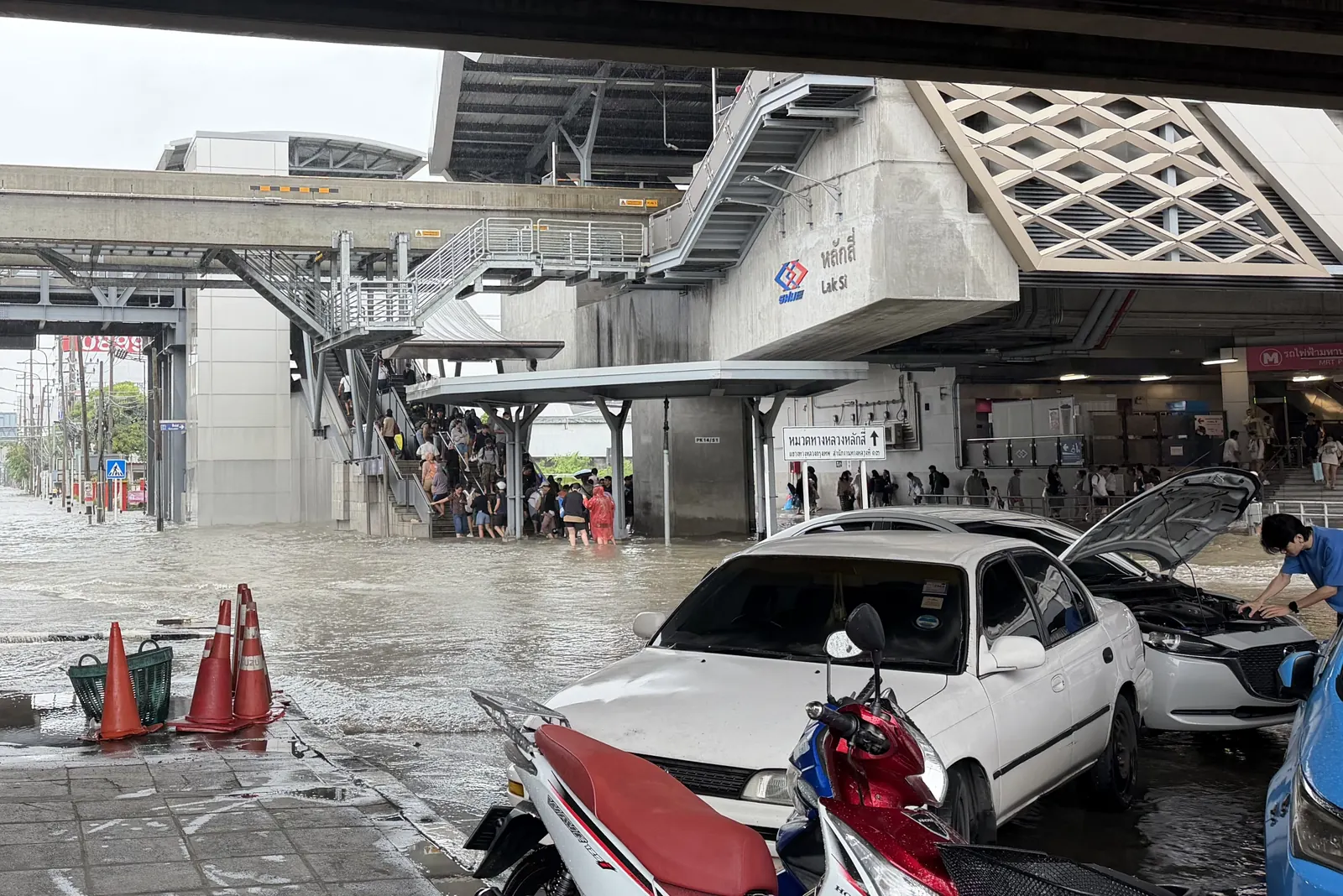
More than 300mm fell on parts of the city between 24 and 27 September. The BMA’s count on the 28th was 329,000 households, with the outer east worst off — Lat Krabang and Khan Na Yao at 30,000–40,000 people each, Bang Kapi and Lak Si behind them (Nation Thailand). By the 29th the outer east and north-east were still the problem — Lat Krabang, Bang Kapi, Min Buri, Saphan Sung, Suan Luang, Bueng Kum, Khlong Sam Wa and Sai Mai — while inner Bangkok dried out, and 233 temporary shelters were open (Thai Enquirer, Nation Thailand). Nationally, the DDPM’s report on 29 September counts 29 provinces plus the capital, 940,300 households, about 2.6 million people and 23 deaths since 16 September: eight in Samut Prakan, six in Sa Kaeo, four in Bangkok, two in Chanthaburi and one each in Pathum Thani, Ayutthaya and Saraburi (Nation Thailand). Two days earlier the count had been 25 provinces and eight deaths; the growth is the rivers, not new rain on the capital.
On 27 September a special Cabinet meeting under Prime Minister Anutin Charnvirakul made 28 and 29 September public holidays in Bangkok, Nonthaburi, Pathum Thani and Samut Prakan (Bangkok Post, TAT). Essential services continue and offices with booked appointments may open at their heads’ discretion, so ring before an immigration appointment.
Are Suvarnabhumi and Don Mueang airports open during the floods?
Yes, both, throughout. The Tourism Authority of Thailand’s visitor advisory, updated at 18.00 on 27 September, has both “open and operational”; the problem is the road in. For Suvarnabhumi avoid the Lat Krabang approach and use Motorway 7 or the Burapha Withi elevated expressway; for Don Mueang take the Don Muang Tollway. Suvarnabhumi is asking for three hours before an international flight and two before a domestic one. Thai Airways cancelled 22 flights on ten routes for 29–30 September, so check your booking, and allow an extra two to three hours on the road to either airport (Thai Enquirer). The Airport Rail Link is running normally and is the flood-proof way in from Phaya Thai and Makkasan; the BMTA A1–A4 airport buses are operating. The same update listed metered-taxi services as temporarily suspended — we read that as the airport rank; have Grab or the rail link as the fallback. Normal routes: two-airport guide, Suvarnabhumi arrival guide.
Is the BTS, MRT and Airport Rail Link running, and can I get around Bangkok?
Yes. TAT has the BTS and MRT running as the alternative to flooded roads. The SRT Red Line — Krung Thep Aphiwat to Rangsit and to Taling Chan — was suspended on 26 September and resumed its normal timetable from 09.30 on the 27th. The water is in the outer east and north; the central hotel districts are wet but working, and Ramkhamhaeng joins the roads to avoid. Chao Phraya Express boats: we found no suspension notice, but the river is high and services can be pulled at short notice, so check on the day before you plan around the water taxis.
Trains and buses out of Bangkok: which SRT lines are running
As of TAT’s 27 September evening update and the SRT’s partial restart on the 28th: Northern Line reopened, Northeastern operating, Southern normal, Eastern partly running. In plain terms, the sleeper to Chiang Mai is back on after water closed the line in Nakhon Sawan for part of the week; trains to Ayutthaya, Lopburi and Isaan are running; Hua Hin and Surat Thani trains never stopped; the eastern line is the one to avoid: the SRT cancelled eastern services on 27 September after water covered the tracks, and from the 28th has run just eight trains from Ban Thap Chang to Chachoengsao and Prachin Buri — not from Hua Lamphong, and not to Pattaya — with six sections still closed out to Aranyaprathet (Khaosod English, Bangkok Post). Buses: no reported closures at Mo Chit or the Southern Terminal in anything we read, but we could not confirm with the operators — absence of bad news, not proof of good.
Ayutthaya, Khao Yai and Kanchanaburi: which day trips need a phone call first
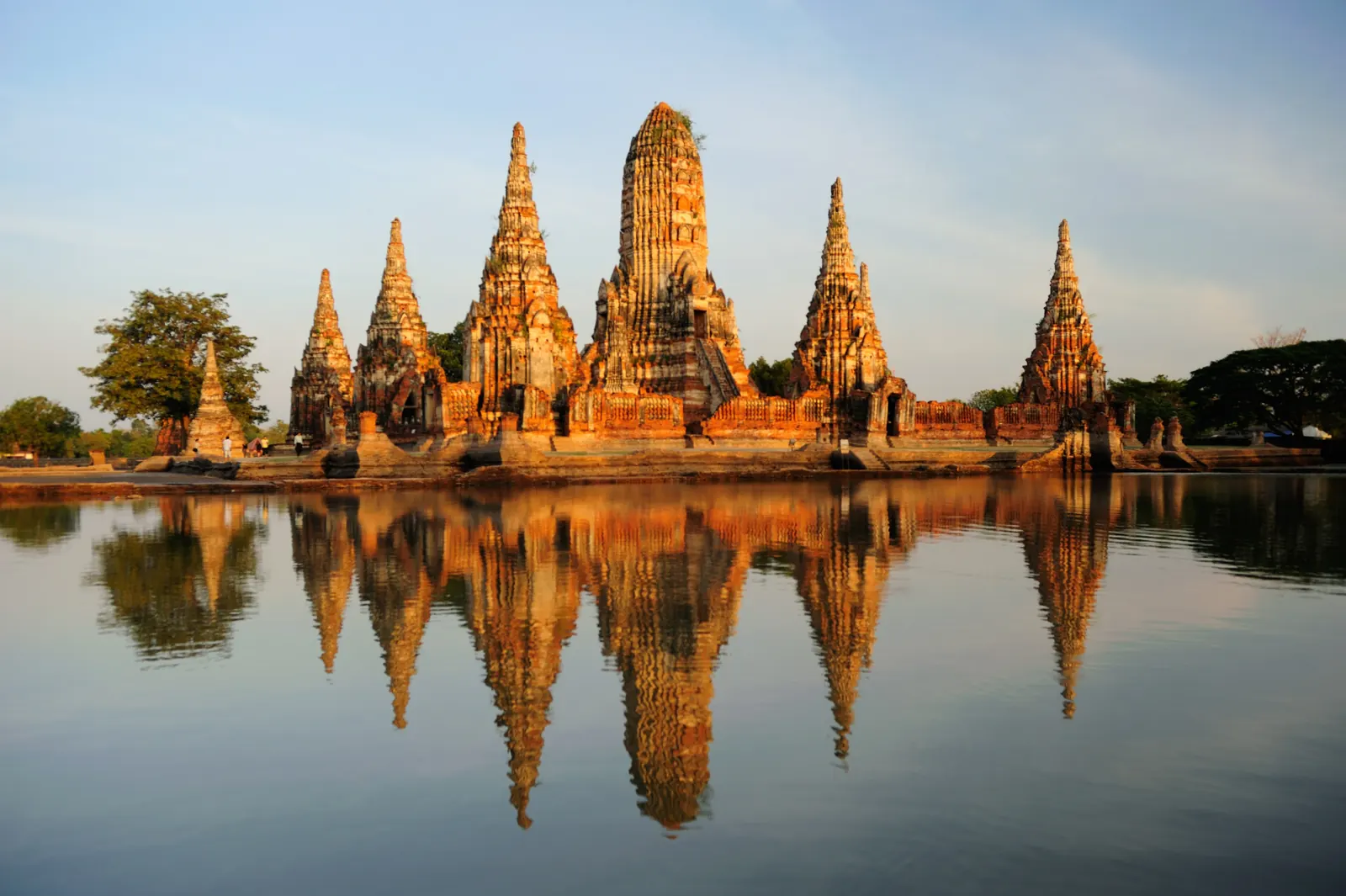
Ayutthaya is river, not rain. The Royal Irrigation Department raised the Chao Phraya Dam’s discharge to 1,850 cubic metres a second on 26 September and to 2,000 by noon on the 28th, and expects 1,500–2,000 a second for up to nine more days — enough to lift the river 0.7–1.7 metres downstream (Nation Thailand). The Pasak Jolasid Dam, at 96% capacity, raises its releases from 30 September to 2 October, lifting the Pasak River — which meets the Chao Phraya at Ayutthaya — by 3.5 to 4 metres on the plan reported by Thai Enquirer. On 24 September water was about 30cm below the outer bank at Wat Chaiwatthanaram; monks and soldiers built a 165-metre barrier, and the temple stayed open with its access roads dry (Nation Thailand). By the 27th the DDPM had 13,971 Ayutthaya families affected and the water still rising. We found no report of the island core — Wat Mahathat, Wat Phra Si Sanphet, Wat Ratchaburana — being closed. Verdict: this week, go only if the day matters to you, by train, keep to the island temples on our half-day cycle route, and ask locally about the riverside sites that morning.
Khao Yai straddles Nakhon Ratchasima, Nakhon Nayok and Prachin Buri, all on the DDPM list; we found nothing from the park itself, so ring the DNP office first. Kanchanaburi was not on the 27 September list, and Erawan and the Death Railway were in ordinary wet-season condition in everything we read; on the 29th, though, higher Mae Klong Dam releases were expected to lift the river downstream by up to 2.5 metres, with warnings for five provinces (Thai Enquirer), so check before a river raft or a floating-hotel night. Pathum Thani was still rising on the 27th, so leave Koh Kret, a river island, for a drier week.
Hua Hin, Pattaya, the eastern seaboard and the islands: what is normal
The DDPM’s 27 September list of 25 provinces — it had grown to 29 by the 29th, and the four additions were not named in the reports we read — covered the north-central plains, the Bangkok ring, the east and a slice of lower Isaan: Phitsanulok, Phetchabun, Nakhon Sawan, Uthai Thani, Lop Buri, Sing Buri, Chai Nat, Suphan Buri, Saraburi, Ayutthaya, Samut Prakan, Pathum Thani, Nakhon Pathom, Nakhon Nayok, Prachin Buri, Chachoengsao, Sa Kaeo, Chon Buri, Rayong, Chanthaburi, Trat, Buri Ram, Chaiyaphum, Nakhon Ratchasima and Surin. Read what is missing. Prachuap Khiri Khan is not on it, so Hua Hin is a normal late-September beach town with afternoon showers and a running train. Nothing south of Phetchaburi is on it: Phuket, Krabi, Lanta, Samui, Phangan and Tao are having their ordinary monsoon — a season, not an emergency. The east is the exception: Chon Buri, Rayong, Chanthaburi and Trat are listed, the eastern railway is suspended and Pattaya had flooding of its own, less severe than the capital’s. The DDPM counts by province, so a listed Trat says nothing about Koh Chang’s beaches; ask your resort about the road and the ferry.
How to check tomorrow: the official flood map, hotlines, health and packing
The BMA’s Department of Drainage and Sewerage publishes the city’s live rain and flood map at dds.bangkok.go.th. Hotlines: BMA 1555 for flood assistance, 1669 for medical emergencies, DDPM 1784, TAT 1672 in English, Tourist Police 1155.
Pack what our packing list says — sandals that can get wet, a dry bag, a rain shell — plus repellent, because standing water is how dengue happens. The Department of Disease Control’s rainy-season warning is the one to heed: leptospirosis enters through cuts and eyes while wading, shows up one to two weeks later as sudden fever, headache and calf pain, and kills every year. Do not wade if you can avoid it, cover cuts if you cannot, and keep away from water near electrical cabinets. Scams: nothing flood-specific has surfaced in the Thai press, but the usual dozen run regardless, and “the airport road is closed, I take you to the other airport” is the one to expect.
Is this 2011 again? No — and why the river is the part to watch
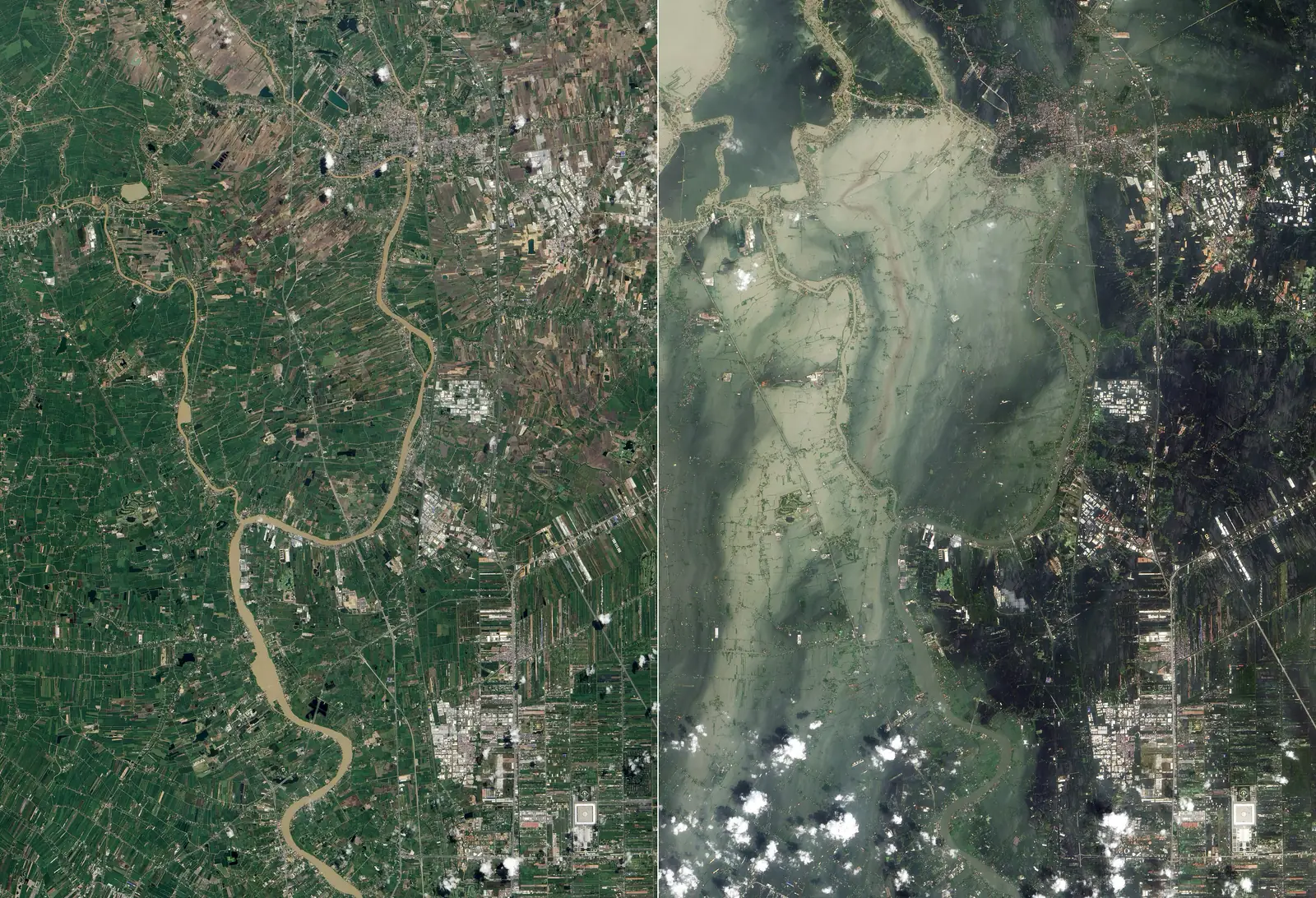
The 2011 floods were a river event that built for months: rain across the north from July, dams full, water walking down the basin through 65 provinces and sitting in Bangkok’s suburbs for weeks; Don Mueang closed, the Ayutthaya historical park went under, and the official toll was 815. What Bangkok had on 24–27 September 2026 was a rain event, landing while the canals were already carrying dam water; rain floods drain in days. The part that rhymes with 2011 is upstream: 2,000 cubic metres a second is well short of 2011’s peaks, but water was still rising in 14 provinces on the 29th, the Chao Phraya and Pasak basins among them, and October is the central plains’ wettest month (best-time guide). Loy Krathong is 24 November; on the current pattern the capital and Sukhothai will be dry by then, and Thailand in November carries this year’s caveat.
How to help without being scammed
Give through channels that existed before this week. The Thai Red Cross Society’s official donation hub has its Emergency Disaster Relief Fund and a flood-victim project open; the BMA’s donation-coordination line for supplies to district shelters is 02-248-5115. We are not linking to personal fundraisers, and we would be wary of any QR code taped to a lamp post.
Bangkok floods 2026: your questions, answered
Is Bangkok flooded right now, and can I still fly in?
As of 29 September 2026, parts of it: eight outer districts — Lat Krabang, Bang Kapi, Min Buri, Saphan Sung, Suan Luang, Bueng Kum, Khlong Sam Wa and Sai Mai — still have standing water, while inner Bangkok is drying out. Suvarnabhumi and Don Mueang are open, the Airport Rail Link is running.
Should I cancel my Bangkok trip because of the floods?
No, unless your plan was the outer east or a riverside day-trip programme. The centre, both airports and the BTS, MRT and Airport Rail Link were working on 29 September, and the BMA expects to drain the city within two to three rain-free days. Check Thai Airways bookings for 29–30 September; otherwise rebook the Ayutthaya day, not the flight.
Is Ayutthaya open during the 2026 floods?
The island core had not been reported closed as of 29 September; the riverside temples are the concern. Wat Chaiwatthanaram was open behind a new barrier on 24 September, but the Chao Phraya and the Pasak were still rising, so go by train, stick to the island and ask locally about the west-bank sites.
Are Phuket, Krabi and Koh Samui affected by the Thailand floods?
No. No southern province appears in any DDPM figure we have seen; the flooded provinces stop at the Bangkok ring, the central plains, the east and lower Isaan. The south is in its normal monsoon — rough Andaman seas, the odd cancelled speedboat — a season, not a disaster.
Where do I check the official Bangkok flood map and hotlines?
The BMA Department of Drainage and Sewerage map at dds.bangkok.go.th, updated through the day. Hotlines: BMA 1555, medical 1669, DDPM 1784, TAT 1672, Tourist Police 1155.
DT News Desk: one URL per question, updated when the answer changes.
Related guides
- BKK vs DMK: Bangkok’s Two Airports and Getting Into Town (2026)
- Temples in Ayutthaya: A Half-Day Cycle Through the Ruined Capital
- Best Time to Visit Thailand: Month by Month, Coast by Coast
Book the trip
Some links in this guide are affiliate links. If you book through them we may earn a small commission at no extra cost to you — it helps keep Destination Thailand independent.
Hotels: if a changed plan means rebooking nights, compare Bangkok rates on Agoda and favour the centre and the riverside over the outer east this week. Or let our Where to Go in Thailand matcher score all 77 provinces against your month.