Bueng Kan is the province most foreigners have never heard of and plenty of Thais have never visited, which is precisely why you should go. Wedged into Isaan’s far north-eastern corner with the Mekong on one side and Laos staring back across the water, Bueng Kan is Thailand’s youngest province — official only since 2011 — and it holds, with zero fanfare, one of the country’s most remarkable natural sights: three colossal sandstone whales surfacing through a forest canopy, roughly 75 million years in the making.
There is no airport, no train station, no banana pancake trail, no hostel scene. What there is: a temple bolted to a sandstone tower by monks with no discernible fear of death, a Ramsar-listed lake, rubber plantations to the horizon, and one of the finest river drives in Thailand. Start with our Bueng Kan province profile for the vitals; this is the opinionated version.
If your idea of Thailand involves beach clubs and infinity pools, leave now. If you want the country before anyone worked out how to monetise it, keep reading.
What Bueng Kan really is
Until March 2011 this was simply the far end of Nong Khai — remote enough that the government eventually gave up and made it a province of its own. It remains an afterthought in the best possible way: a small capital town on the Mekong, eight districts of rubber and rice, and people getting on with life whether or not anyone is watching.
Rubber is the economy. Bueng Kan is one of the biggest rubber producers in the Northeast, and you will pass endless rows of skinny grey trunks with collection cups strapped to them like drip bags. The other constant is the river: Laos sits across the water for the entire length of the province, close enough that your phone keeps trying to defect to a Lao network.
Why go to Bueng Kan
Because the sights are genuinely first-division and nobody is there. Sunrise at Three Whale Rock — mist lifting off the Mekong, sandstone glowing orange, the mountains of Laos stacked behind — would be barricaded behind tripods anywhere else in Asia. Here you share it with a few Thai families and the man who drove you up. Wat Phu Tok would be a national icon in most countries. In Bueng Kan it is simply a temple, and the entry fee is whatever you drop in the donation box.
Getting to Bueng Kan
Overnight buses run from Bangkok’s Mo Chit terminal, taking 11 to 12 hours; expect ฿600-950 depending on class. They leave in the evening and arrive at dawn, which is convenient, because dawn is exactly when you want to be standing on a whale.
The faster route is to fly to Udon Thani — about an hour from Bangkok, often under ฿1,200 one way booked ahead — then take a van or bus east, roughly four hours and ฿150-250, via Nong Khai. Sakon Nakhon airport is closer for the southern half of the province, about two hours by road.
The honest advice: hire a car at Udon Thani airport, from about ฿1,000-1,500 a day. The sights are scattered across a province with no meaningful public transport between them, and the drive in on Route 212 — Mekong on your left, Laos beyond — is a highlight in itself.
For live timetables and tickets on these routes, compare your options on 12Go before you commit to a departure time.
Where to stay in Bueng Kan
Bueng Kan town is the sensible base. Stay near the riverfront and the clock tower, where the evening food is, and you will pay ฿400-700 for a clean guesthouse and ฿800-1,500 for the newer mid-range hotels with proper mattresses and hot water that actually gets hot. Nobody has built anything you could honestly call a resort, and long may that continue.
Wat Phu Tok is about 45 minutes south, so town covers everything in the north of the province. Around Bueng Khong Long lake, in the far south, simple guesthouses and homestays run ฿300-600: basic, friendly, and the sunset over the water is the evening entertainment.
What to eat in Bueng Kan
This is deep Isaan, so the canon applies: som tam pounded to order for ฿40-60, grilled chicken, laab, sticky rice in woven baskets, and enough chilli to make you reconsider several life choices; learn the phrase phet noi.
The river adds the good stuff. Whole Mekong fish, grilled in a salt crust with lemongrass rammed down its throat, runs ฿150-300 at the simple riverside places in town and beats any fish you have paid four times as much for in Bangkok. The evening market near the riverfront is where the town actually eats: point, pay, sit on a plastic stool, repeat. Dinner rarely clears ฿150 a head.
Western food barely exists here; treat that as a feature, not a bug.
Top things to do in Bueng Kan
1. Hin Sam Wan — Three Whale Rock
The headline act. Three enormous humps of sandstone — nicknamed the father, mother and baby whale — break through the forest of Phu Sing Forest Park like a pod surfacing mid-ocean. The rock is around 75 million years old, meaning these whales predate the dinosaurs’ extinction. You walk out along their backs to a sheer drop, the Mekong and the hills of Laos laid out below.
You cannot drive yourself to the top: local pickup trucks run from the base, about ฿500 per truck return, split between whoever is in it, and the drivers know every viewpoint. Go at sunrise. The river mist burns off fast, and by 9am you have lost the magic and gained the heat.
2. Wat Phu Tok — seven levels of vertigo
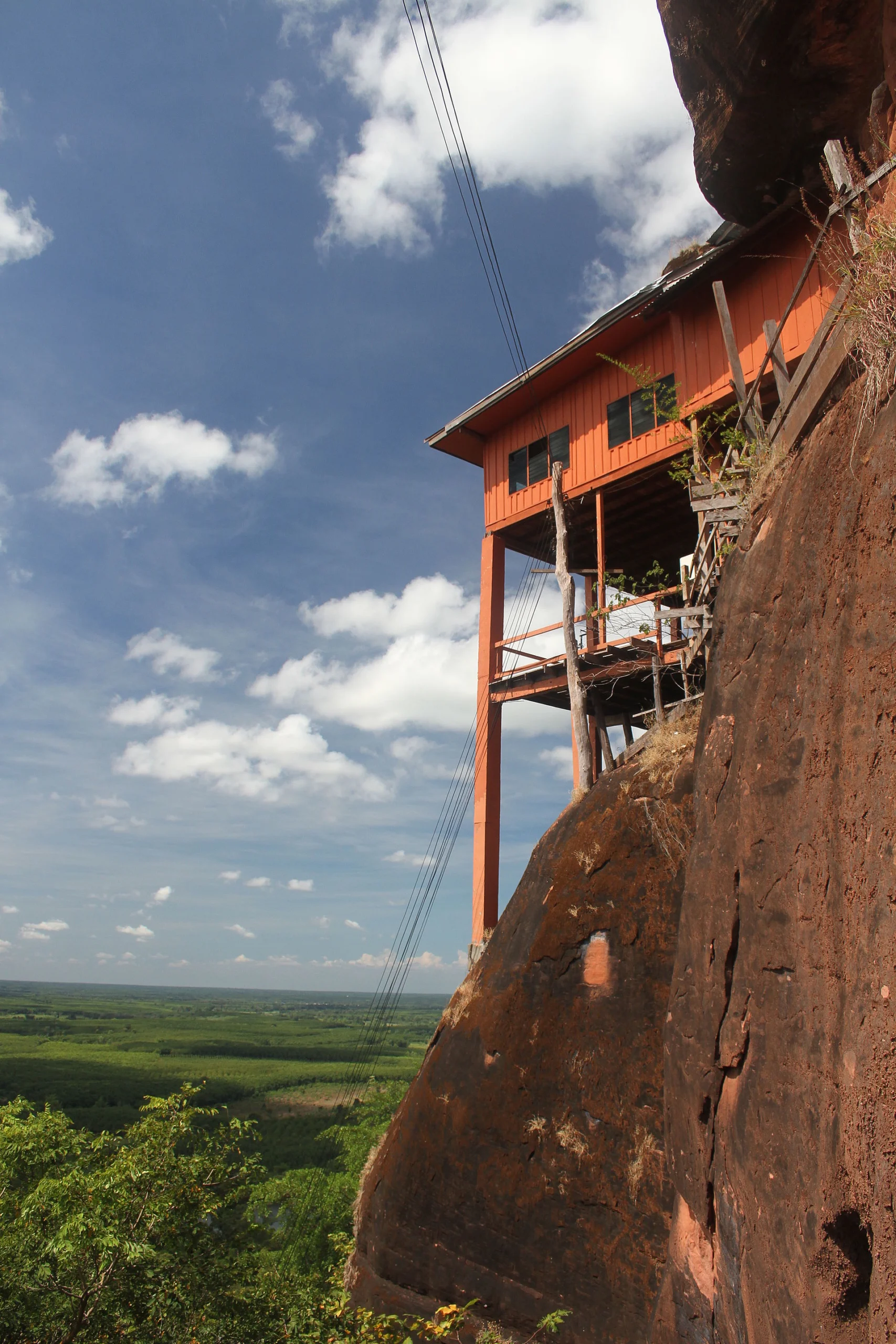
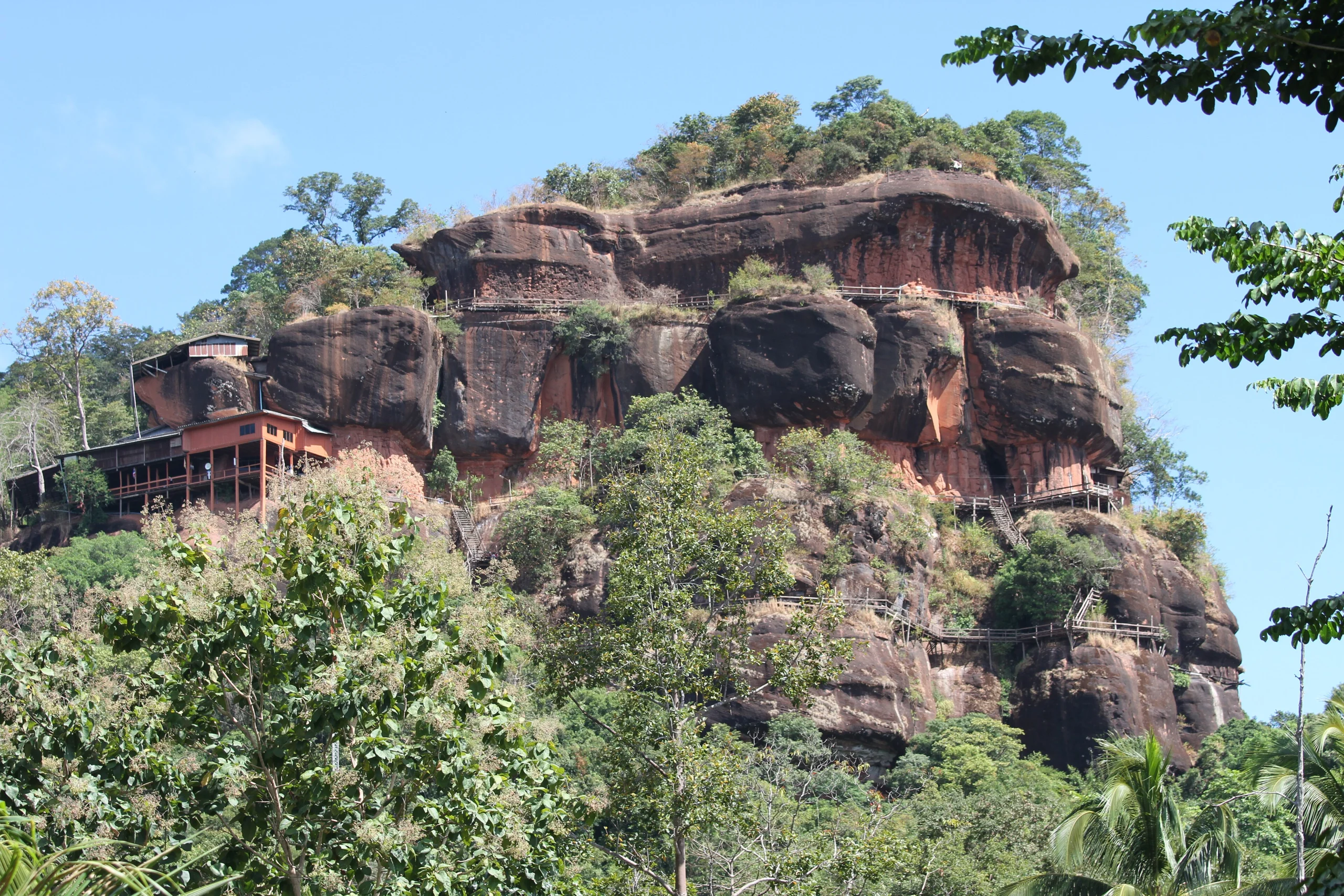
A sandstone tower rising out of flat farmland, wrapped in seven levels of wooden staircases and walkways pinned to the cliff face by monks from the late 1960s onwards. Seven levels for the seven stages of enlightenment; you will reach at least three through fear alone. The planks creak, the handrails are more philosophy than engineering, and the views across Isaan from the upper tiers justify every white-knuckled step.
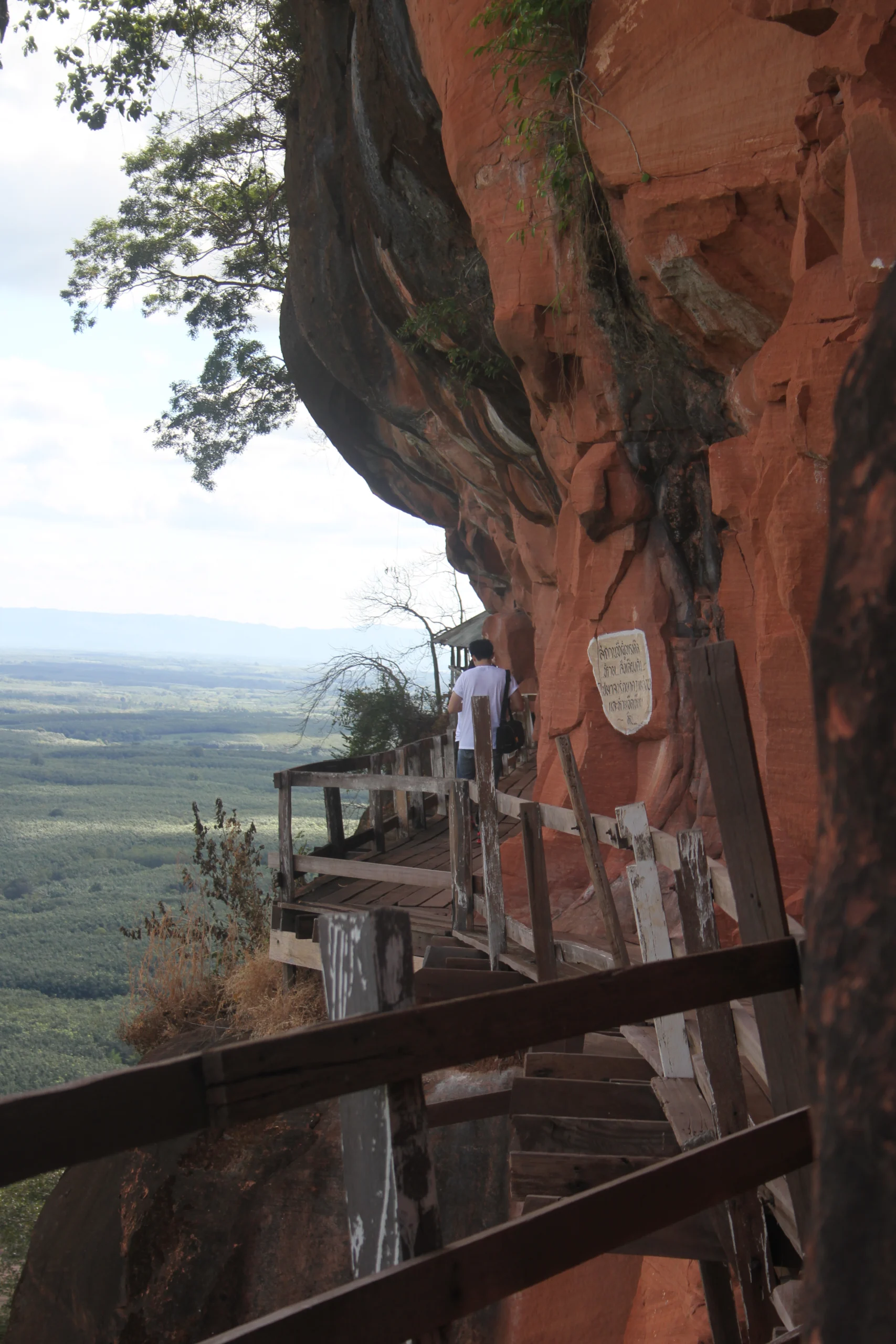
Entry is free — leave something in the donation box. Allow two hours, wear real shoes, and dress like you are visiting a monastery, because you are. It closes for a few days each April, so check before driving out. Ajahn Juan, the meditation master who built it, died in a plane crash in 1980; his relics sit in the marble chedi at the base.
3. Bueng Khong Long — the Ramsar lake
An enormous freshwater lake in the far south, Ramsar-listed for its birdlife. In the cool season the shallows fill with waterbirds and the light at either end of the day is absurd. No jet-ski, no banana boat, no beach club — just fishermen, lakeside places grilling whole fish, and a horizon. Come for a slow afternoon into sunset; Naka Cave is nearby.
4. Phu Langka National Park and Naka Cave
Proper wilderness on the province’s south-eastern edge. The star is Tham Naka — Naka Cave — where rock textured exactly like giant snake scales went viral in 2020 and turned a hard forest walk into a pilgrimage. Legend says a naga king cursed into stone; geology says weathered sandstone; standing in front of it, you will briefly side with the legend.
Be clear what this is: two kilometres of steep, rooty, sweat-through-your-shirt climbing each way, four to five hours round trip. Numbers are capped, you must book ahead and take a local guide — park entry plus the shared guide fee comes to a few hundred baht each. Worth it, with one caveat below.
5. The Mekong riverfront and the Naga fireballs
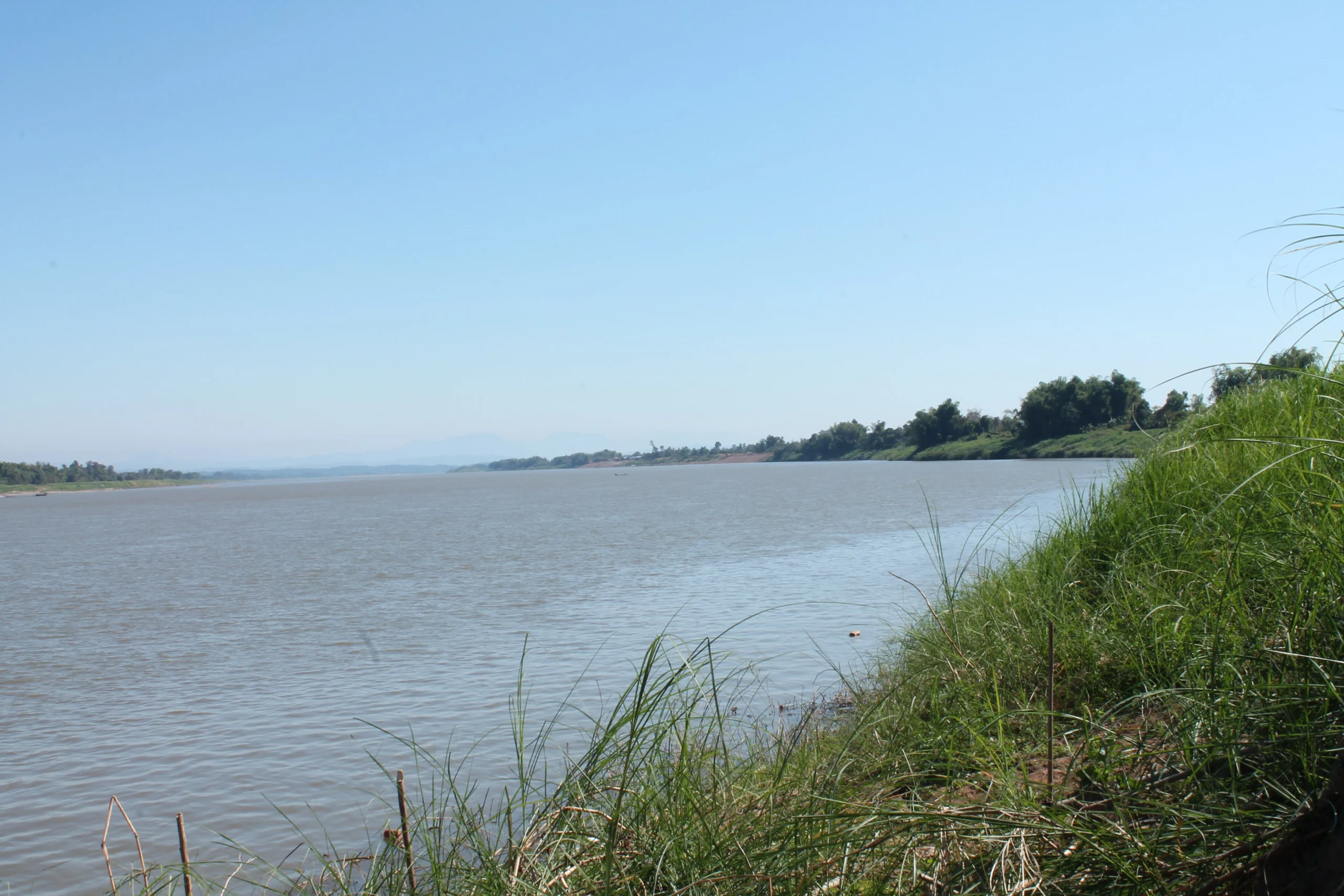
At the end of Buddhist Lent, usually late October, glowing orbs are said to rise silently from the Mekong and vanish. Scientists mutter about methane; locals know it is the Naga exhaling; I know better than to argue with either. The famous viewing spots are downstream in Nong Khai, but Bueng Kan’s stretch of river reports fireballs too, with a fraction of the crowds. The rest of the year, the town’s riverfront promenade still earns an evening: sunset over Laos, aerobics ladies at full volume, ฿10 pork skewers.
6. Wat Ahong Silawat — the navel of the Mekong
A small temple among river boulders about twenty minutes west of town, at the point locals call Sadue Nam Khong — the navel of the Mekong, reputedly the river’s deepest point. In the rains the water churns into slow whirlpools; in the dry season the boulders emerge and monks pick their way between them. Quiet, oddly moving, free, and a favoured fireball-watching spot in October.
What to skip
Naka Cave on a weekend or a Buddhist holiday. What should be a serious jungle hike becomes a conveyor belt: coach parties queuing forty minutes to photograph the snake-scale wall, many of them hunting lottery numbers rather than enlightenment. The cave did nothing to deserve this and neither did you. Go midweek or give it a miss — Three Whale Rock delivers more spectacle for a twentieth of the effort.
And skip treating Bueng Kan town as a destination in itself — it is a pleasant base, not an attraction. Two nights, not five.
Bueng Kan travel: practical info
Best season is November to February: cool mornings, river mist for the whale-rock sunrise, birds on the lake. Late October adds the fireballs and the end-of-Lent festivals along the river. The rains, May to October, turn the province a violent green and get the waterfalls running — Phu Wua Wildlife Sanctuary east of town is best just after them — but trails get slippery. April is brutally hot; not the month for climbing sandstone.
Wikipedia’s Bueng Kan entry covers Thailand’s newest province properly.
TAT’s official Bueng Kan page keeps park access details current.
Two to three days covers it: one dawn for the whales, one morning for Wat Phu Tok, one long day south for the lake and the cave. Onward, the river road east to Nakhon Phanom — about three hours — is one of Thailand’s great drives, and Nong Khai, with its border crossing to Vientiane, is under three hours west.
FAQ
Is Bueng Kan worth visiting?
Yes, if you want Thailand without the packaging. Three Whale Rock and Wat Phu Tok are genuinely spectacular, prices are among the lowest in the country, and you will often be the only foreigner in sight. Skip it if you need nightlife or English menus.
How do you get to Bueng Kan from Bangkok?
Fly to Udon Thani in about an hour, then drive or take a van east for roughly four hours. Or take the overnight bus from Mo Chit, 11 to 12 hours for ฿600-950, arriving at dawn.
What is Bueng Kan famous for?
Hin Sam Wan, the Three Whale Rock — 75-million-year-old sandstone shaped like a family of whales — plus the cliff temple of Wat Phu Tok, the snake-scale rocks of Naka Cave, and being Thailand’s youngest province, created in 2011.
When is the best time to visit Three Whale Rock?
Sunrise in the cool season, November to February, when mist hangs over the Mekong below the rocks. Be at the Phu Sing Forest Park base before first light and take a local pickup up, about ฿500 per vehicle. By mid-morning the mist is gone and the rock is a frying pan.
Can you cross into Laos from Bueng Kan?
Historically the local crossing to Paksan has been for Thai and Lao nationals only, and the fifth Thai-Lao Friendship Bridge here has been years in the building — check its current status locally. For a guaranteed crossing, use the bridge at Nong Khai, under three hours west.