“Thai” is a nationality, not a single people. The country that shows up in the brochures as one smiling, temple-dotted whole is in fact a patchwork of peoples, languages and histories, and once you notice it, Thailand gets a great deal more interesting. The food changes, the dialects change, the festivals change — sometimes within a couple of hours’ drive. Here’s a plain-English guide to the main ethnic groups of Thailand and where each one lives, for travellers who’d rather understand a place than just photograph it.
A note before we start: this is a broad map, not a census. Identity in Thailand is layered and often overlapping, and most people here would happily tell you they’re both their region and Thai. Treat the categories below as a way in, not a set of boxes.
Central Thai — the default setting
The Central Thai are the group most visitors meet first, because theirs is the Thailand of Bangkok, the central plains and the official everything. Central Thai is the language of government, television and school, which is why it reads as the “standard” — but that’s a matter of political history, not superiority. Roughly a third of the country is Central Thai, concentrated around Bangkok and the rice-growing heartland, and their customs are the ones that tend to get exported as “Thai culture” full stop.
Isan — the biggest region you’ve barely heard of
Head northeast onto the Khorat Plateau and you’re in Isan, home to around a third of all Thais and culturally far closer to Laos than to Bangkok. The everyday language here is Isan, a set of dialects closely related to Lao; the food is the som tam, sticky rice and grilled-chicken tradition that’s since conquered the whole country; and the identity is proudly, distinctly its own. Within Isan sit smaller Tai groups too — the Phu Thai, for instance, whose weaving villages around Kalasin produce the celebrated Praewa silk once reserved for royalty. Isan is the heartland of internal migration, which is why you’ll meet Isan people working in every corner of the country.
Khon Muang — the northern Lanna world
The north is the land of the Khon Muang, the “people of the principalities”, whose Lanna kingdom ruled from Chiang Mai for centuries before it was folded into Siam. They speak Kham Muang (Northern Thai), write in their own historic script, and keep a gentler, more ceremonial culture that you can still feel in the temples, festivals and slower rhythm of the north. This is the Thailand of Loi Krathong lanterns and misty hills — see our Chiang Mai province page for the region’s cultural capital.
Southern Thai — the peninsula’s own thing
Down the peninsula, the Southern Thai (Pak Tai) speak a rapid-fire southern dialect that even other Thais struggle with, cook with fiercer, more turmeric-and-seafood-driven flavours, and carry a culture shaped by centuries of maritime trade. It’s a distinct world from both Bangkok and the north, and it stretches down to where Thailand meets the Malay world.
The Malay-Muslim deep south
In the far southern provinces of Pattani, Yala and Narathiwat, the majority are ethnic Malay and Muslim, speaking Patani Malay rather than Thai as a first language. This is a region with its own deep history as part of the old Malay sultanates, and a culture — food, dress, faith, festivals — that belongs to the wider Malay world as much as to Thailand. It sees few tourists and deserves to be understood on its own terms rather than reduced to headlines.
Khmer, Kuy and the eastern borderlands
Along the Cambodian border in provinces like Surin, Buriram and Sisaket live communities of Northern Khmer, descendants of the Khmer empire that built the region’s magnificent stone temples, alongside the Kuy, long associated with elephant-keeping. Here the everyday language may be Khmer, and the culture bridges Thailand and Cambodia in a way the map’s hard line pretends it doesn’t.
Thai-Chinese — woven right through the cities
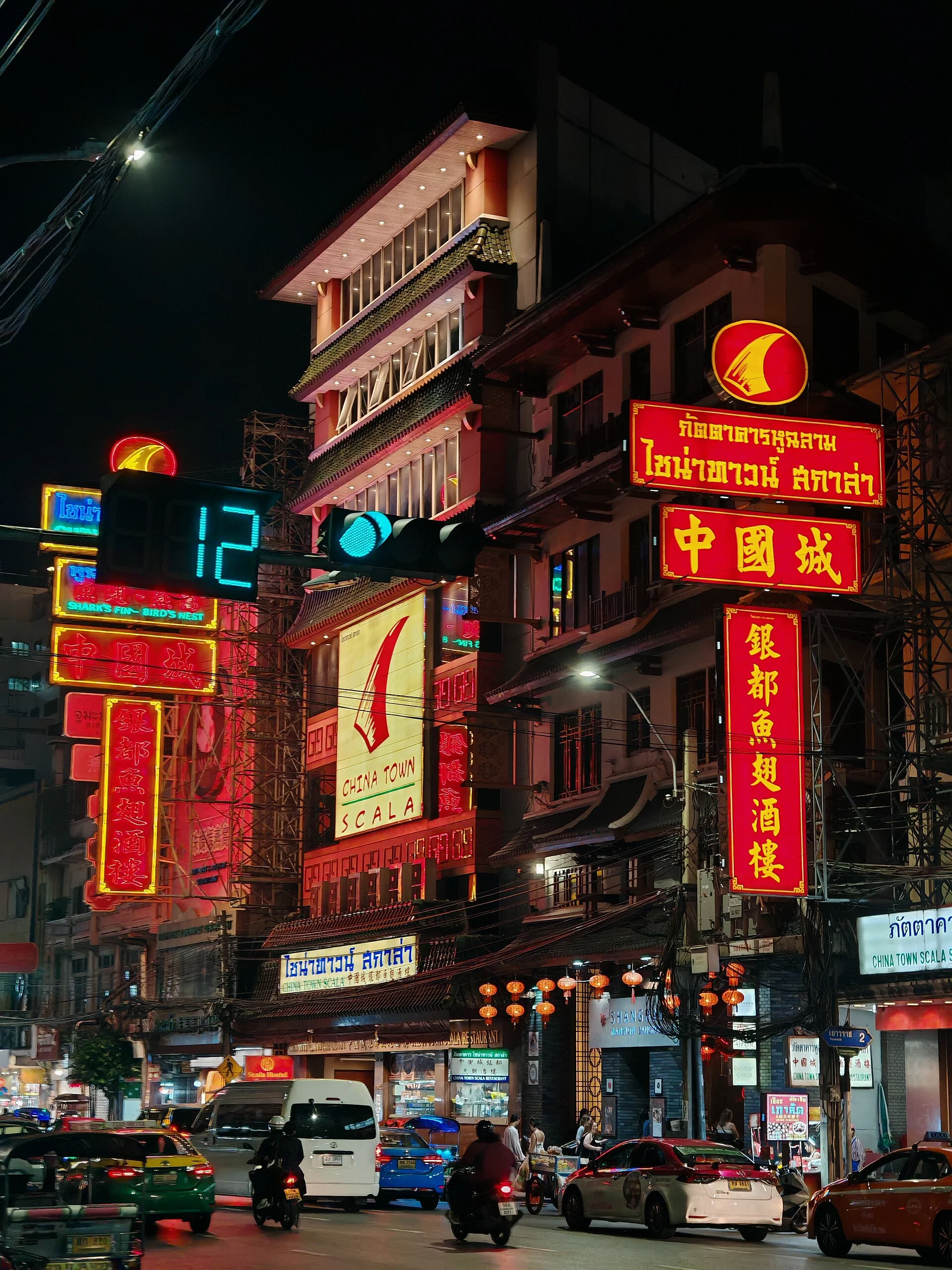
One of the country’s largest and most influential communities is the Thai-Chinese, the descendants of generations of Chinese migrants who settled, intermarried and became inseparable from Thai commercial and urban life. Unlike some of its neighbours, Thailand largely absorbed rather than segregated its Chinese population, which is why Thai-Chinese heritage runs through everything from Bangkok’s Yaowarat to the family names above half the shops in any town — visible, celebrated, and thoroughly Thai.
The highland peoples — the “hill tribes”
In the mountains of the north and northwest live the peoples still commonly grouped, a little clumsily, as the hill tribes — each a distinct group with its own language, dress and beliefs. The largest by far are the Karen, spread along the Burmese border through Mae Hong Son, Tak and Chiang Mai. Alongside them are the Hmong, the Akha (concentrated around Chiang Rai), the Lahu, Lisu and Mien (Yao), plus smaller groups such as the Lua, Khamu and H’tin. Many are relatively recent arrivals from southern China and Myanmar, and a real, ongoing issue is citizenship: a significant number of highland people still lack full Thai papers, which limits everything from travel to land rights.
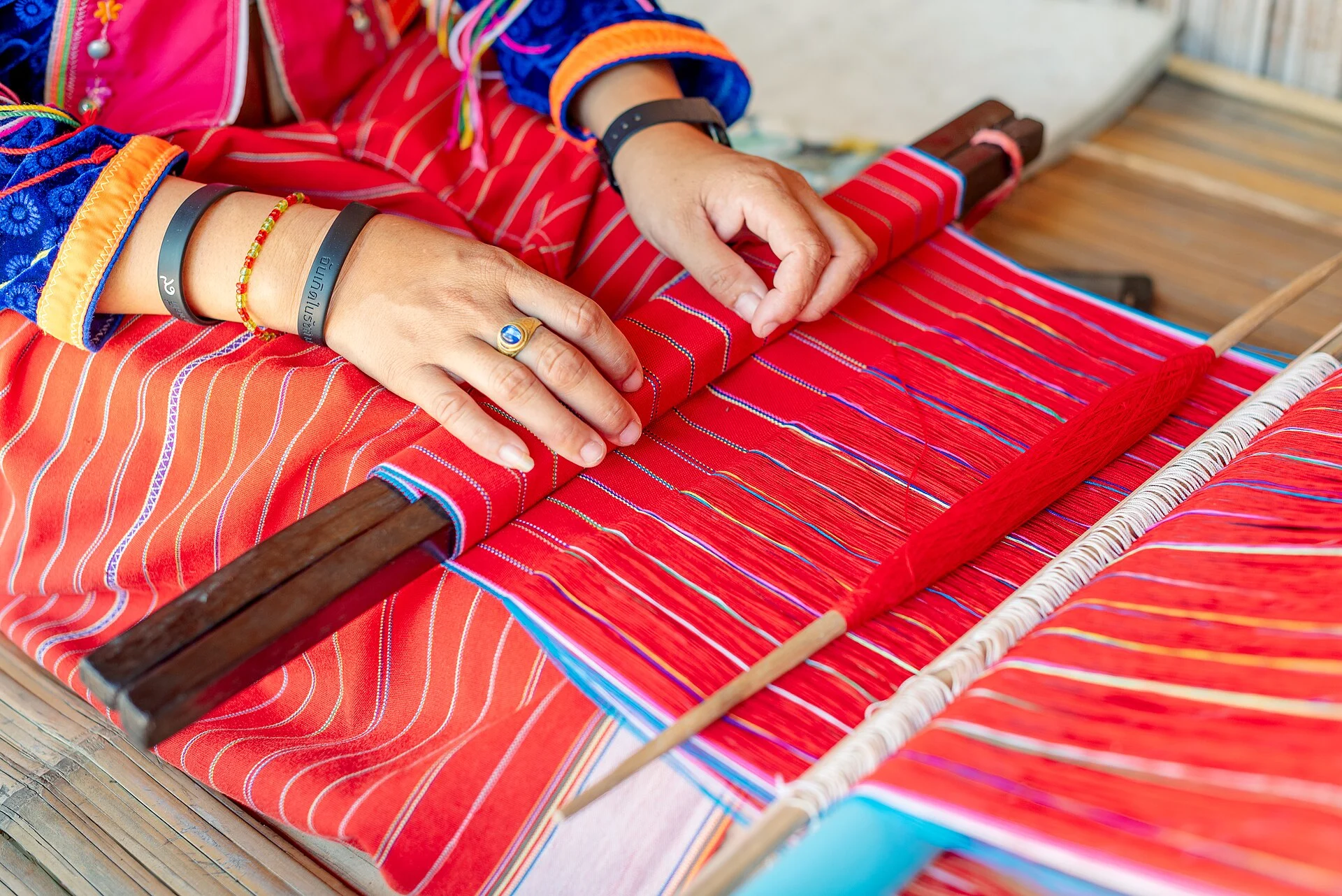
If you want to encounter these cultures, do it thoughtfully — community-based and village-run tourism, not the grim “long-neck” photo-stop circuit. Our guides to Chiang Rai, Chiang Rai province and Mae Hong Son are the right places to start.
The sea peoples — Thailand’s oldest coast-dwellers
Finally, along the Andaman coast and its islands live the Chao Leh, the “sea people” — the Moken, Moklen and Urak Lawoi, sometimes called sea gypsies. Traditionally semi-nomadic and extraordinarily at home in the water, they are among the region’s oldest inhabitants, and their way of life is now under real pressure from coastal development and tourism. You’ll find their communities around Phuket, Phang Nga and the Surin Islands.
Travelling with this in mind
None of this needs to weigh down your trip — but knowing it changes what you see. The “Thai culture” on the postcard is really Central Thai culture; the country underneath is far more varied, and far more worth your curiosity. Learn a word of the local dialect, eat what the region actually eats, ask before you photograph anyone, and remember that every group here is Thai on their own terms. For a concrete starting point, our guide to Kalasin takes you into Phu Thai weaving country in the Isan northeast.