Koh Samui isn’t one holiday — it’s a ring road with a dozen different ones hanging off it. Where to stay in Koh Samui comes down to one honest question: what kind of traveller are you? Chaweng’s neon and Choeng Mon’s hush sit on the same island, twenty minutes apart, and booking the wrong one is the difference between a great trip and a slightly baffled one. Here’s how to pick your patch of Samui by traveller type, with no resort-brochure gloss.
How Koh Samui is laid out
Samui is a roughly circular island wrapped by one main ring road. The busy east coast holds Chaweng and Lamai, the two biggest beach towns. The north coast — Maenam, Bophut and Choeng Mon — is calmer and faces Koh Phangan. The west and south (Nathon, Lipa Noi, Taling Ngam) are quiet, sunset-facing and where the ferries dock. Nowhere is truly far, but Samui traffic and that single ring road mean the beach you book is the beach you’ll actually use, so choose it deliberately.
Where to stay in Koh Samui by traveller type
First-timers and party people: Chaweng
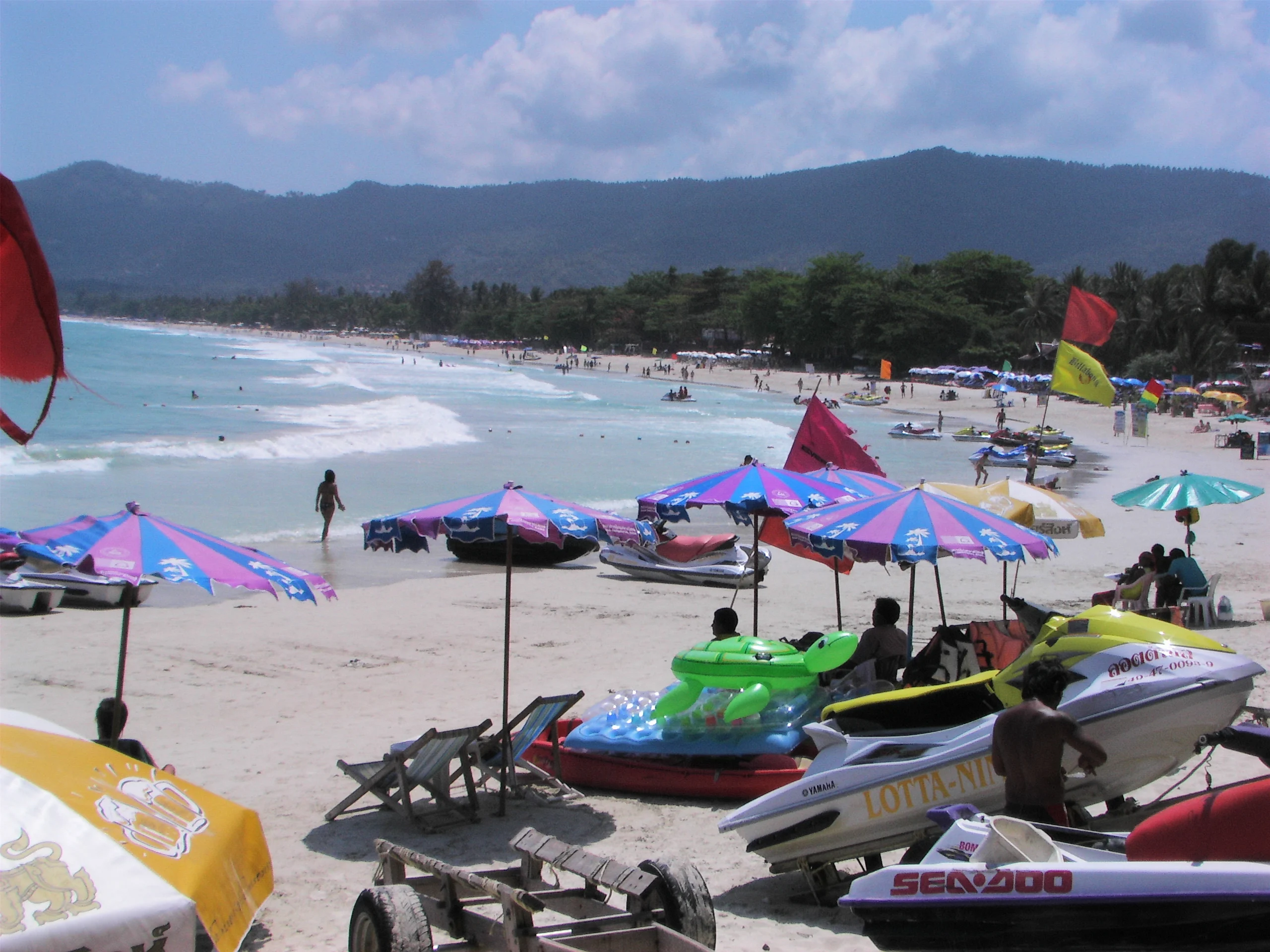
Chaweng is Samui’s main event — the longest, liveliest beach, backed by a strip of bars, malls, massage shops and restaurants that never quite switches off. If it’s your first time and you want the beach, the nightlife and the everything-is-right-here convenience in one place, this is it. Want the same sand with a fraction of the noise? Book the quieter southern hook, Chaweng Noi.
Couples and honeymooners: Choeng Mon and Bophut
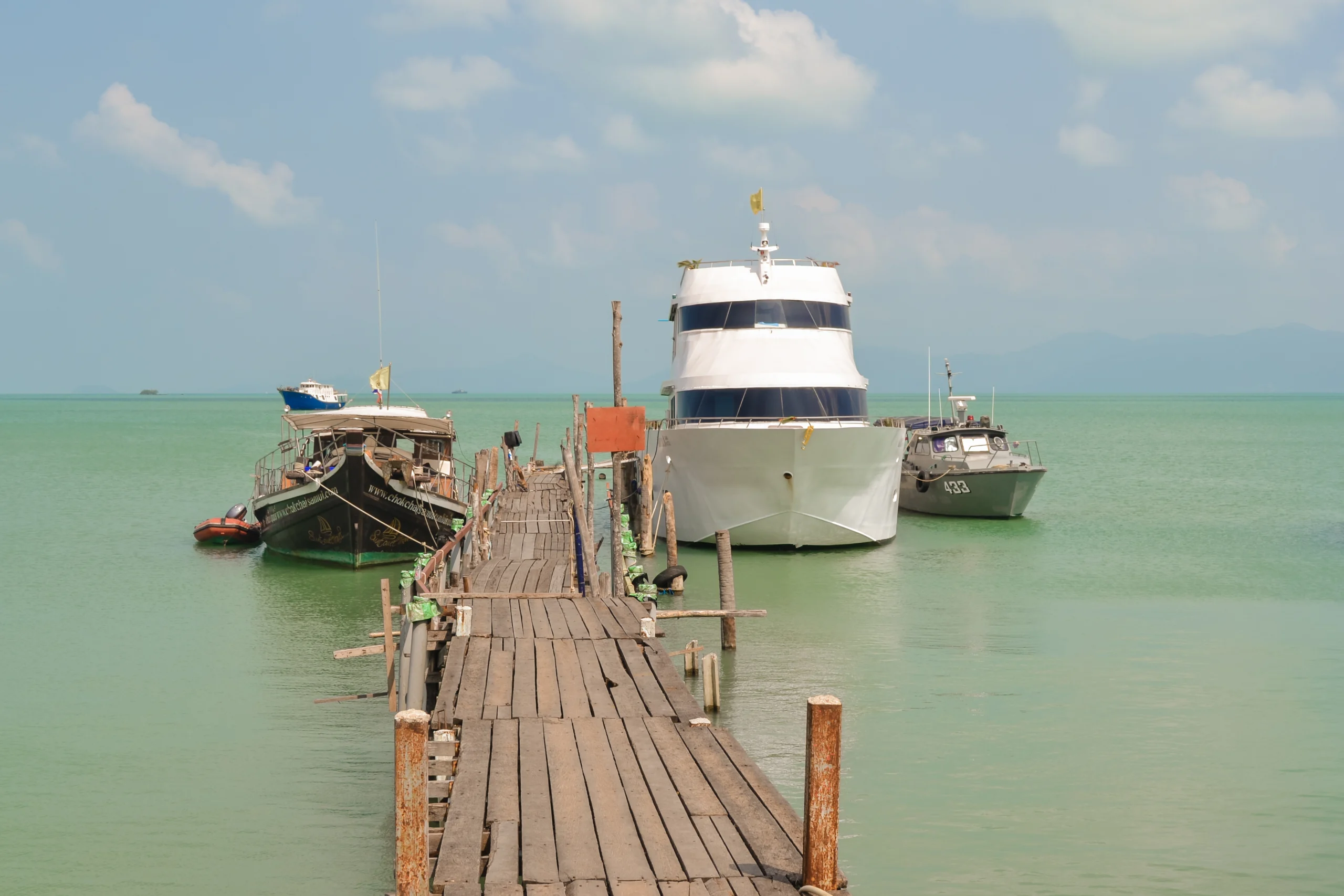
Choeng Mon, on the northeast tip, is the honeymoon corner: a calm, shallow bay, a short sweep of sand and a cluster of upscale resorts without Chaweng’s crowds. For something with more character, Bophut and its Fisherman’s Village — restored teak shophouses, a good Friday walking-street market and boutique hotels — is romance with a pulse rather than spa-silence.
Families: Bophut and Lamai
Families want calm water, space and food that isn’t all cocktails. Bophut delivers a gentle north-coast beach, the village market and easy airport access. Lamai, Chaweng’s more relaxed neighbour, has soft sand, gentle swimming and the full range of restaurants and shops without the full-volume party — plus the Hin Ta and Hin Yai rock formations nearby to keep older kids amused.
Budget and backpackers: Lamai and Maenam
Samui isn’t Phangan-cheap, but you can still do it sensibly. Lamai has the best mix of budget guesthouses, hostels and cheap eats within stumbling distance of a proper beach. Maenam is even easier on the wallet and far quieter, with old-school bungalows still hanging on. Skip the isolated cheap places miles from any beach; the transport will eat your savings.
Slow travel, remote work and long stays: Maenam
Maenam is where Samui exhales — a long, unflashy north-coast beach, a low-key village, cafés with actual wifi and monthly rentals that don’t require a trust fund. It’s the sensible base if you’re staying weeks rather than nights and want island life without the churn. Bang Po, just west, is sleepier still if you want to properly disappear.
Luxury and total seclusion: the west coast, Taling Ngam and Lipa Noi
For high-end quiet, cross to the southwest coast. Taling Ngam and Lipa Noi trade nightlife for sunsets, glassy calm water and some of the island’s most private resorts and villas. You’ll drive to reach restaurants and attractions, which is exactly the point: this side of Samui is for people who want the island to leave them alone.
Wherever you stay, don’t book yourself out of these
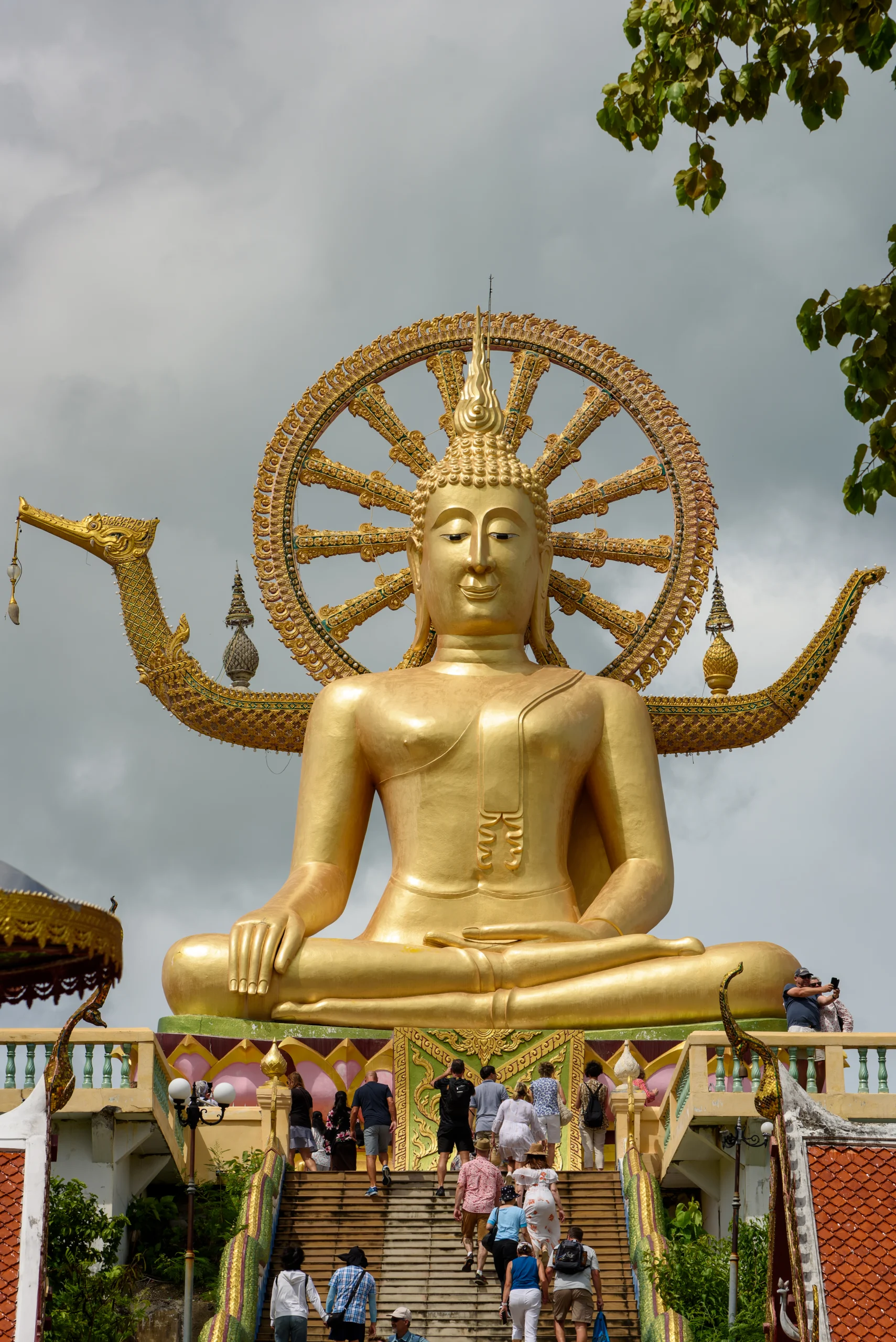
The Big Buddha (Wat Phra Yai) on the northeast causeway is the island’s signature landmark and an easy sunset stop. Bophut’s Fisherman’s Village market, the Na Muang waterfalls inland, and a boat day out to the Ang Thong Marine Park are all worth building around — so pick a base that keeps the ones you care about within an easy drive.
Honest warnings before you book
- Don’t book by price alone. A cheap room on the wrong side of the island means daily taxi fares that wipe out the saving.
- Mind the seasons. Samui’s wettest, choppiest stretch is roughly October to December, and the exposed east coast (Chaweng, Lamai) feels it most.
- Nathon is a port, not a holiday. Handy for ferries and errands, not for staying.
- Ring-road traffic is real. “Twenty minutes away” can double in high season, so stay near what you actually came for.
Koh Samui: practical info
- Getting there: fly straight into Samui Airport, or come cheaper by air-and-ferry through Surat Thani on the mainland.
- Getting around: songthaew shared taxis run the ring road; a scooter gives you freedom if you’re confident, but Samui’s roads punish the careless.
- Best time to visit: roughly February to April and July to September for the driest, calmest weather; avoid the Oct–Dec monsoon peak if the beach is the point.
- Best all-round base: Bophut — central-ish, calm, characterful and close to the airport, it suits the widest range of travellers.
Heading across the water next? Samui pairs naturally with its wilder sister island — see our guide to where to stay in Koh Phangan, use Surat Thani as your mainland base for the whole archipelago, and read up on southern Thai food before you go hungry.
Related guides
- Where to Stay in Koh Phangan: Best Areas by Traveller Type
- Where to Stay in Phuket: Areas That Match How You Travel
- Surat Thani: The Launchpad for the Gulf Islands
Book the trip
Some links below are affiliate links. If you book through them we may earn a small commission at no extra cost to you — it helps keep Destination Thailand independent.
Hotels: once you’ve picked your beach, see what’s actually available for your dates — compare Koh Samui hotels on Agoda and filter by Chaweng, Bophut or Maenam rather than searching the whole island.
Ferries: there’s no bridge — everyone arrives over water, most cheaply on the bus-and-ferry combos via Surat Thani. Compare ferry and combo tickets on 12Go instead of queuing at the pier.