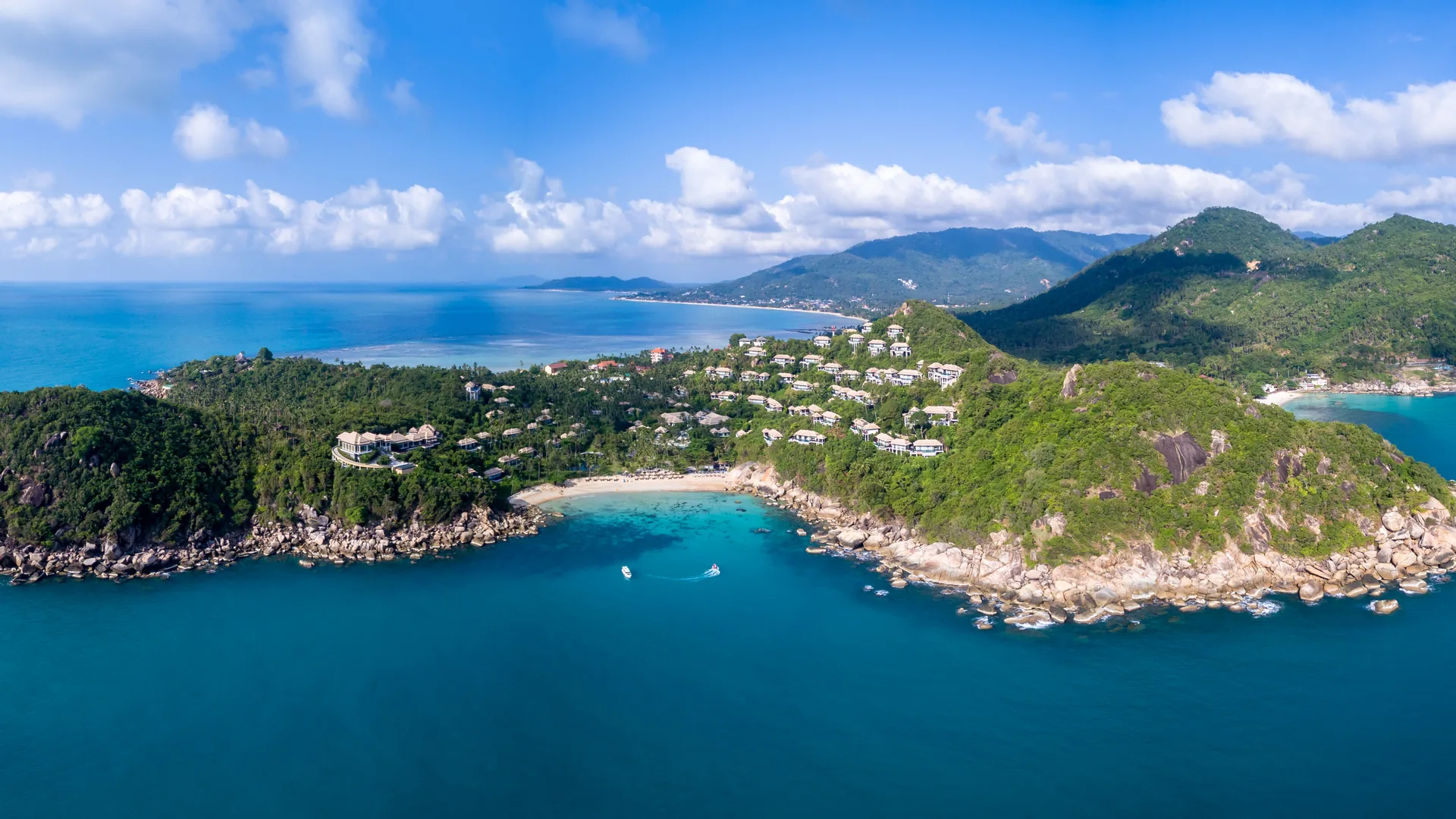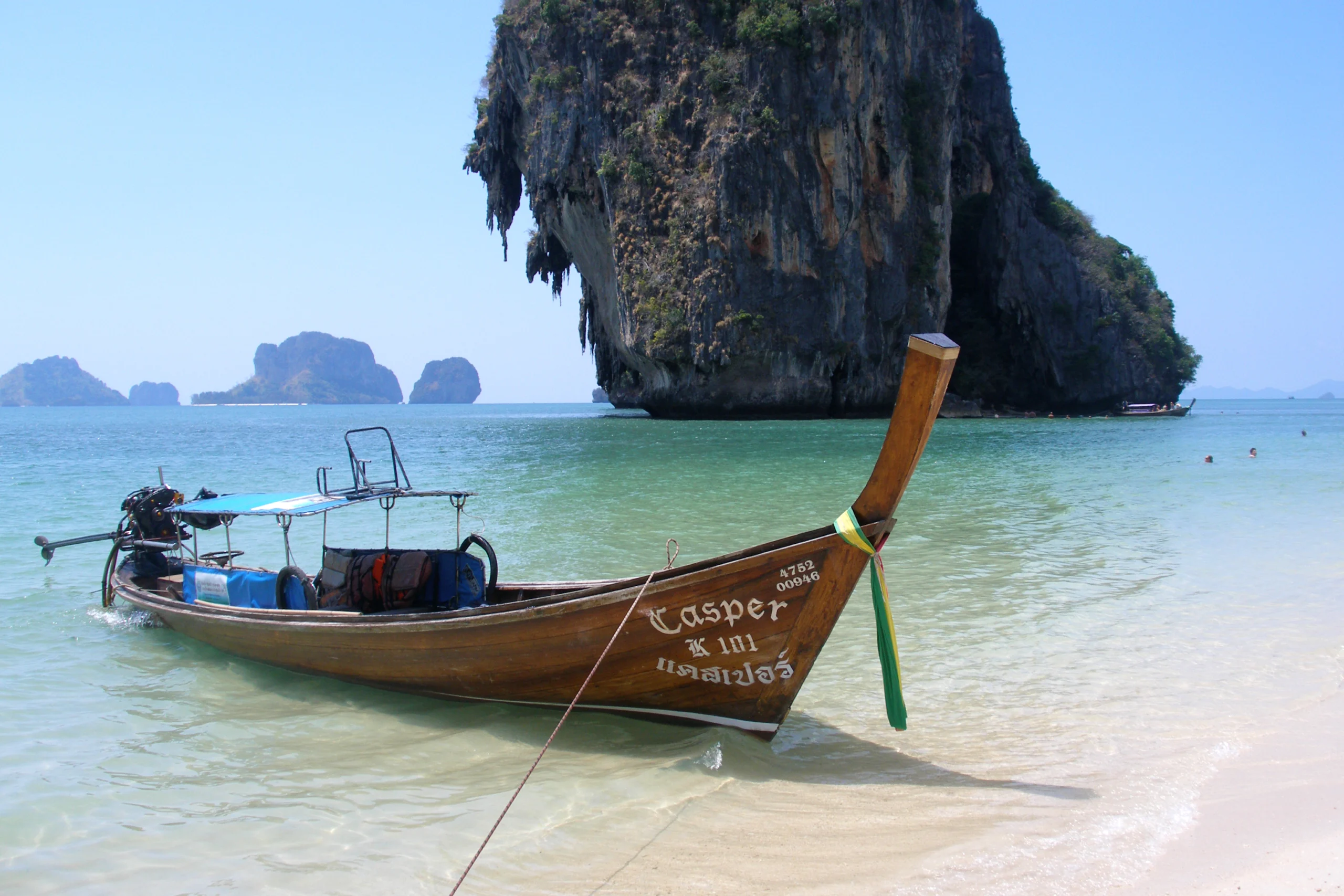
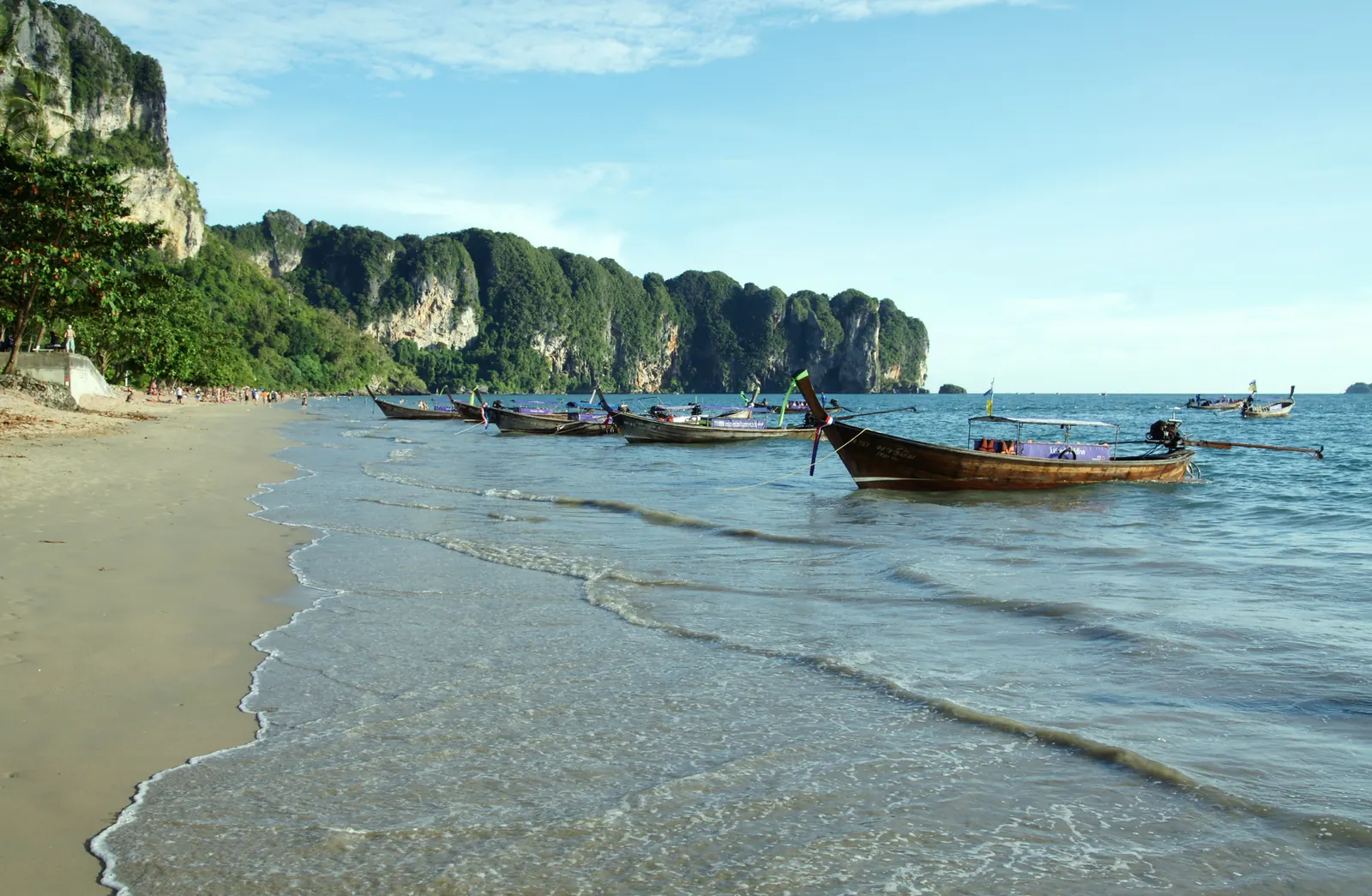
Krabi is the province that appears on the screensaver: limestone towers rising out of green water, longtail boats lined up like a postcard someone over-saturated. It is also a province where the famous beach is a ten-minute boat ride from the road, the town everyone flies into is forty minutes from the sand, and the bit called “Ao Nang Beach” is mostly a pier. Where you sleep decides whether you spend the week in the picture or commuting to it.
This guide splits the mainland coast into its four real areas (plus the island that technically counts), matches each to how you actually travel, and finishes with the hotels we’d book — from ฿400 dorm beds in Krabi Town to the cove where the Ritz-Carlton keeps its Reserve. Not sure Krabi beats Phuket for your trip at all? Start with our Krabi province profile.
How Krabi is laid out
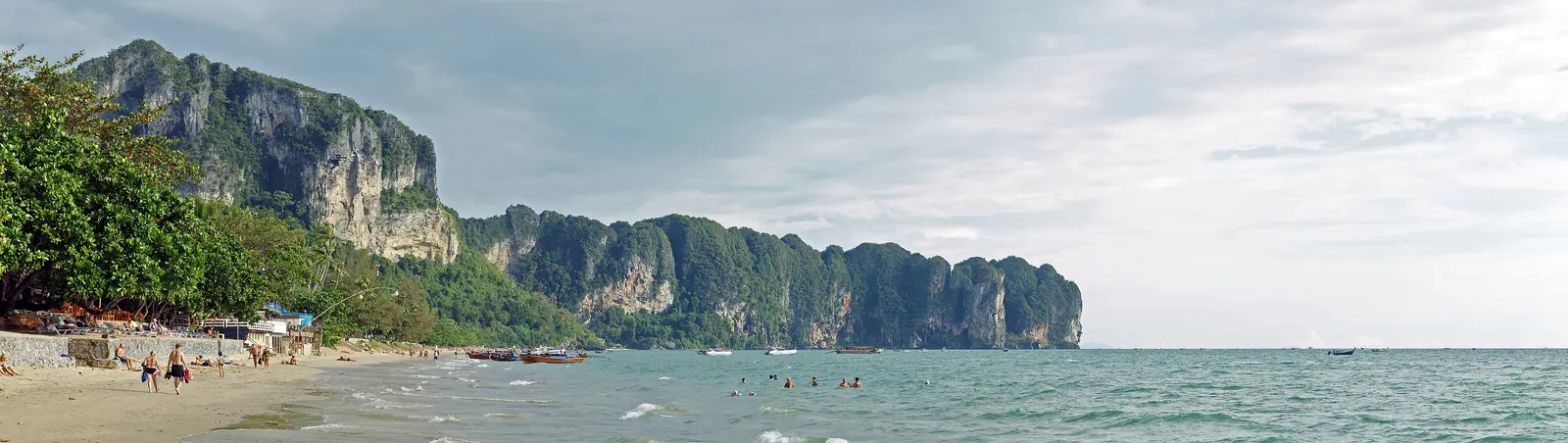
Ao Nang is the hub: one beach road of restaurants, dive shops, tailors and 7-Elevens, with the longtail pier at the end that takes you everywhere better. The beach itself is fine for a sunset walk and poor for a swim; the views from it are the whole Andaman. Railay is the peninsula in those views — cut off from the road by cliffs, reachable only by boat, with a resort-lined west beach, a mangrove-mudflat east side, and Phra Nang, the cave-and-karst beach that started the legend. Its rough-edged neighbour Tonsai is where the climbers live. Krabi Town, twenty minutes inland on the river, is an actual Thai town with an actual night market and no beach — the honest budget base. Klong Muang and Tubkaek, the quiet strip fifteen minutes north of Ao Nang, is where the five-star resorts went to escape all of the above: calm water, sunsets over Hong Island, nothing to do after dark, which is the point. Out to sea, Koh Lanta and Koh Phi Phi are both Krabi province on paper and their own trips in practice.
Where to stay in Krabi by traveller type
First-timers: Ao Nang, then a night on Railay
Ao Nang wins on logistics: every island tour, kayak trip, dive boat and minivan starts here, the hospital and ATMs are here, and you can walk to dinner. Sleep at the northern end, nearer Noppharat Thara, where the road quietens and the beach is less pier. The trade-off is that you’ll be looking at paradise rather than sitting in it, so do what everyone wishes they’d done — split the stay and spend the last two nights on Railay, where the boat ride home is the commute.
Climbers and adventurers: Railay East and Tonsai
This is one of the planet’s great limestone playgrounds and the climbing schools cluster on Railay East and over the headland at Tonsai. Tonsai is cheaper, scruffier and more fun after dark in a reggae-bar way; Railay East has better rooms and the walk to the west-side beaches. Both lose electricity or water occasionally and both are the reason people come back to Krabi for a decade. Bring cash — the peninsula has cash machines now, but they run dry.
Couples: Railay West or the Tubkaek strip
Railay West is the romance most people picture — sunset straight down the beach, karst on both sides, dinner on the sand — and it comes with day-trippers from 10am to 4pm, after which the peninsula is yours. Tubkaek, up past Klong Muang, gives you the same sunset with zero crowds and the best stretch of resort architecture in the province; you pay for quiet in both money and a taxi bill every time you want a restaurant that isn’t the hotel’s.
Families: Klong Muang and north Ao Nang
Klong Muang’s big resorts are built for children — kids’ clubs, shallow pools, a calm swimming beach that Ao Nang doesn’t have — and the drive to the pier for island days is fifteen minutes. If you want restaurants within walking distance, north Ao Nang near Noppharat Thara beach is the compromise. Railay with small kids works for a night or two; the longtail boarding in waist-deep water with luggage and a toddler is a memory, not a routine.
Budget: Krabi Town, Tonsai and the Ao Nang back sois
Krabi Town is the honest answer: excellent hostels, the best night market food in the province, songthaews to Ao Nang for ฿60 and the Railay boat from Ao Nam Mao twenty minutes away. Tonsai is the cheap way to sleep inside the karst. Ao Nang has dorm beds too, a few streets back from the beach road, and the difference between a ฿450 hostel there and a ฿4,000 hotel is mostly the pool.
Luxury: Railay’s cape, the Tubkaek cove, or Lanta
Krabi’s top tier is genuinely top tier — three of the country’s most photographed resorts sit within thirty minutes of each other. The choice is between Railay’s cape (boat access, three beaches, cave-pool drama) and the Tubkaek cove (road access, Hong Island sunsets, total quiet), with Koh Lanta’s hillside palaces as the “one more ferry” option. For what each actually costs across the seasons — all-in, ++ tax included — see our Thailand luxury hotel price guide.
The hotels we’d actually shortlist
Rough cool-season (November–April) “from” rates — green season knocks 30–45% off, and Railay more than most. Hotel links go to Agoda; they’re affiliate links (same price for you, a small commission keeps this site independent).
Ao Nang: Glur Hostel (from around ฿450 for a dorm bed) is the pool-and-pods hostel a few minutes from the beach road — sociable without the bucket-bar tax. Avani Ao Nang Cliff Krabi Resort (from around ฿3,800) is the old Ao Nang Cliff Beach Resort under new management, still with the hillside pool that stares down the whole bay. Centara Grand Beach Resort & Villas Krabi (from around ฿7,500) owns the only truly private swimming beach at Ao Nang, Pai Plong, reached by a boardwalk through the cliffs — families love it, and the monkeys know it.
Railay and Tonsai: Tonsai Bay Resort (from around ฿1,500) is the comfortable end of the climbers’ beach. Railay Princess Resort & Spa (from around ฿2,900) is the sensible East-side base — garden pools, five minutes’ walk to the sunset. Sand Sea Resort (from around ฿3,900) and Railay Bay Resort & Spa (from around ฿4,900) both sit directly on Railay West; Railay Bay stretches coast to coast, so its East-wing rooms are the cheap way to sleep on the famous side. Rayavadee (from around ฿24,000) has the cape to itself — pavilions in the coconut grove between three beaches, including Phra Nang, and the only bar in Thailand built inside a cave the guidebooks point at.
Krabi Town: Pak Up Hostel (from around ฿400) is the province’s best-run hostel, two minutes from the night market, with a rooftop that does Friday nights properly. Krabi Heritage Hotel (from around ฿1,400) is the clean, quiet double for anyone who has aged out of dorms but not out of the town’s prices.
Klong Muang and Tubkaek: The Tubkaak Krabi Boutique Resort (from around ฿5,500) is the small, grown-up one — forty-odd rooms facing Hong Island, adults mostly, sunsets guaranteed. Dusit Thani Krabi Beach Resort (from around ฿5,800) and Sofitel Krabi Phokeethra (from around ฿6,500) are the family-scale resorts with the kids’ clubs and the lagoon pools; the Sofitel’s pool is the biggest in the south and earns the brochure line. Amari Vogue Krabi (from around ฿5,500) is the Lanna-styled mid-luxury pick with the best beach on the strip. Banyan Tree Krabi (from around ฿13,000) brought pool villas to Tubkaek in 2020 and is the honeymoon default. Phulay Bay, a Ritz-Carlton Reserve (from around ฿30,000) is the one in the hidden cove — 54 villas, butlers, and the rare Thai luxury resort that is genuinely difficult to leave.
Koh Lanta, for the record: Pimalai Resort & Spa (from around ฿12,000) is the hillside-and-beach estate at the island’s quiet southern end, and the reason a lot of Krabi luxury bookings quietly become Lanta bookings. The island deserves its own week — our slow road to Koh Lanta explains why.
Honest warnings before you book
Ao Nang is not a swimming beach. It’s a working longtail harbour with sand attached; the water is shallow, brown at low tide and busy with propellers. Swim at Railay West, Phra Nang, Klong Muang or Pai Plong, or accept that your Ao Nang hotel pool is the beach. Railay is boat-only — there is no road, no car, no way around it: a longtail from Ao Nang (about ฿150, 10–15 minutes) or from Ao Nam Mao to the East side, and in the green season (May–October) afternoon swells can mean a wet, bouncy landing in waist-deep water carrying your bag. Pack accordingly and don’t plan a Railay arrival for the evening of an international flight. Green season cancels island days — the famous four-island and Hong Island trips stop when the Marine Department says so, sometimes for days; if the islands are the point, come November to April and pay for it. The longtail counters are fixed-price and fair; the freelancer on the sand quoting double is not. And the macaques at Phra Nang and Pai Plong are professional thieves — zipped bags, no food in view.
Krabi stays: your questions, answered
Is it better to stay in Ao Nang or Railay?
Ao Nang for convenience and choice — tours, restaurants, pharmacies, the airport transfer ending at your door. Railay for the scenery you came for, at the cost of boat-only access and resort prices for food. The best answer for most people is both: Ao Nang first for the island days, Railay last for the slow finish.
How many nights do you need in Krabi?
Four covers Railay and Phra Nang, one island-hopping day and a kayak morning without rushing. Add two for Koh Lanta or a climbing course; add three if Phi Phi is on the list, because it deserves a night rather than a day-trip dash. Fewer than three nights and you’ll spend half the trip on transfers.
Can you get to Railay by road?
No. The peninsula is sealed off by limestone cliffs; every arrival is by longtail or resort boat — Ao Nang for the West side, Ao Nam Mao for the East. It takes 10–15 minutes, costs around ฿150 per person at the fixed-price counters, and runs until roughly 6pm, after which you’re chartering the whole boat.
Is Krabi better than Phuket?
Different rather than better. Krabi has the scenery, the calmer pace and the climbing; Phuket has the international airport, the nightlife, the shopping and a far bigger hotel range at every price. If you want karst views from the pillow and nothing else, Krabi. If you want options every evening, Phuket — our Phuket stay guide lays those out. Plenty of trips do a week of each.
When is the best time to stay in Krabi?
November to April for flat seas, running island boats and the classic light — December to February is the sweet spot. May to October is the green season: lush, cheap and mostly fine on the mainland, but island days get cancelled and Railay landings get wet. Our best time to visit Thailand guide has the coast-by-coast calendar.
Related guides
- Seven Days on the Andaman Coast: An Island-Hopper’s Itinerary
- The Slow Road to Koh Lanta
- Thailand Luxury Hotel Prices (2026): What a Night Really Costs
Book the trip
Some links in this guide are affiliate links. If you book through them we may earn a small commission at no extra cost to you — it helps keep Destination Thailand independent.
Hotels: once you’ve picked your area, see what’s actually available for your dates — compare Krabi hotels on Agoda and filter by Ao Nang, Railay or Klong Muang rather than searching the whole province.
Tours: the four-island longtail day, Hong Island by speedboat, a sunset kayak through the Ao Thalane mangroves — browse Krabi tours on GetYourGuide and read the recent reviews before you commit.
Getting there: Krabi has its own airport (about 40 minutes from Ao Nang), or come by ferry from Phuket, Koh Lanta and Phi Phi — you can book ferries, buses and flights on 12Go.
Not sure Krabi is your Thailand at all? Our Where to Go in Thailand matcher scores all 77 provinces against your month, your crowd tolerance and what you actually want from the trip — honest ratings included.