Most people experience Nakhon Sawan as a blur through a train window, somewhere around hour three of the long haul to Chiang Mai. Their loss. This unglamorous junction city 240 kilometres north of Bangkok is where the Ping and the Nan rivers finally collide and become the Chao Phraya — which means every drop of water that slides past the Grand Palace starts life right here, at a river mouth called Pak Nam Pho.
Nobody’s feed is full of Nakhon Sawan. There is no beach, no infinity pool, no elephant sanctuary with a gift shop. What there is: the birthplace of Thailand’s great river, the country’s biggest and oldest Chinese New Year festival, and the largest freshwater swamp in the kingdom, where at dawn you can drift through lotus beds with several thousand birds for company. See our Nakhon Sawan province profile for the quick version; this is the longer, more opinionated one.
What Nakhon Sawan really is
A working Chinese-Thai river town that used to be one of the most important commercial ports in Siam. In the late nineteenth century, Pak Nam Pho was where the rice of the central plains and the teak of the north came down the Ping and the Nan to be lashed onto barge trains bound for Bangkok. The Teochew and Hainanese merchants who ran that trade never left; their great-grandchildren run the gold shops, pharmacies and noodle houses today. The result is possibly the most Chinese city in Thailand outside Bangkok’s Yaowarat — where the man ladling your broth answers to hia, and the busiest religious site is the Chao Pho–Chao Mae Pak Nam Pho shrine, not a temple.
When the railway pushed north in the early twentieth century, Nakhon Sawan became the great transfer point — goods off the boats, onto the trains — and it has been the halfway house ever since. It sits almost exactly midway between Bangkok and Chiang Mai on the northern line, which is precisely why you should stop: one numbing twelve-hour journey becomes two civilised ones with a dragon in the middle.
Why go to Nakhon Sawan
Three honest reasons. First, the geography: standing at the exact point where two rivers become the Chao Phraya is quietly thrilling in a way no rooftop viewpoint café can manufacture. Second, the timing: if you are anywhere in Thailand around Chinese New Year, this is the single best place in the country to be, and most foreigners have no idea. Third, Bueng Boraphet at dawn — one of the finest wildlife experiences in the central plains, for less than the price of a Bangkok cocktail. The fourth reason is the absence of everyone else. You will not queue, you will not be hustled, and menu prices are the same for you as for the man at the next table.
Getting to Nakhon Sawan
The train is the civilised option. Every northern-line service between Bangkok and Chiang Mai stops here, and the run from Krung Thep Aphiwat station takes between three and four and a half hours, depending on how express your express actually is. Third class on an ordinary train costs well under ฿100; an air-conditioned second-class seat on a rapid or special express falls in the ฿250–450 range. The station is a short ride outside the centre; budget ฿60–100 for a motorcycle taxi into town.
Buses leave Bangkok’s Mo Chit terminal roughly every hour, take about four hours, and cost around ฿180–250. Driving takes about three hours up Highway 32 and then Highway 1. There are no scheduled flights — the nearest working airports are Don Mueang and Phitsanulok — and flying 240 kilometres would be absurd anyway.
Where to stay
Stay in the town centre near the river and the Pak Nam Pho market area, which is where the food and the evening life are. Expect clean, unfussy business hotels at ฿500–900 a night, a handful of newer mid-range places with river views at ฿1,000–1,600, and basic fan guesthouses near the night market from ฿300–400.
One warning: during the Chinese New Year festival the entire town books out and rates jump hard. Coming for the dragon? Reserve weeks ahead, not days. For dawn trips to Bueng Boraphet, town works fine as a base — the lake is around half an hour away.
What to eat in Nakhon Sawan
This is a Chinese-Thai food town, and it shows. Breakfast means patongko doughsticks and hot soy milk from morning stalls, or old-school dim sum at the Chinese coffee shops in the market streets. Noodles are the local religion: expect ฿50–70 a bowl almost anywhere, made with the casual competence of four generations behind the same wok.
From Bueng Boraphet comes the freshwater fish — snakehead above all, grilled over coals, fried crisp, or dropped into a sour, furious tom yam. Order it near the lake or at the town night market and pay village prices for genuinely good fish. Then there is moji, Nakhon Sawan’s signature sweet: a soft rice-flour ball around a mung-bean heart, sold in gift boxes all over town. Nice? Yes. Worth its near-religious local status? Buy one box and form your own view. Do not buy five.
Top things to do in Nakhon Sawan
1. Stand where the Chao Phraya is born at Pak Nam Pho
The headline act. At the edge of town, the Ping, already carrying the Wang, meets the Nan, already carrying the Yom, and together they become the Chao Phraya: the river that built Ayutthaya, then Bangkok. When the two rivers arrive carrying different sediment loads, most reliably during and just after the rainy season, you can see an actual two-colour line in the water where they meet and refuse, for a few hundred metres, to mix. The sweeping modern PASAN landmark at the confluence point makes a decent viewing spot; go late afternoon, when the light softens and the fishing boats come home.
2. Time your trip for Thailand’s biggest Chinese New Year
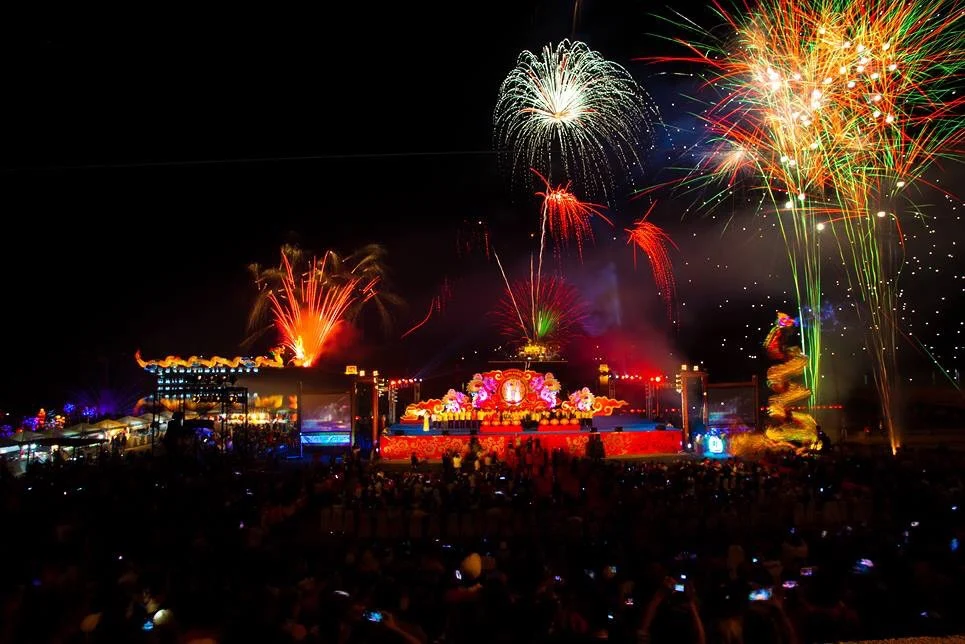
Nakhon Sawan’s Chinese New Year festival has been running for over a century and is, without much argument, the biggest in Thailand. For ten to twelve days around the lunar new year — late January to mid-February, the date shifts annually — the town gives itself over to deity processions from the Chao Pho–Chao Mae Pak Nam Pho shrine, lion dances, and the centrepiece: the golden dragon parade, a colossal illuminated dragon carried at a run through packed streets by relay teams of young men. It is loud, chaotic, sincere and completely unstaged for tourists, because there mostly are none. Plan around it if you can.
3. Take a dawn bird boat on Bueng Boraphet
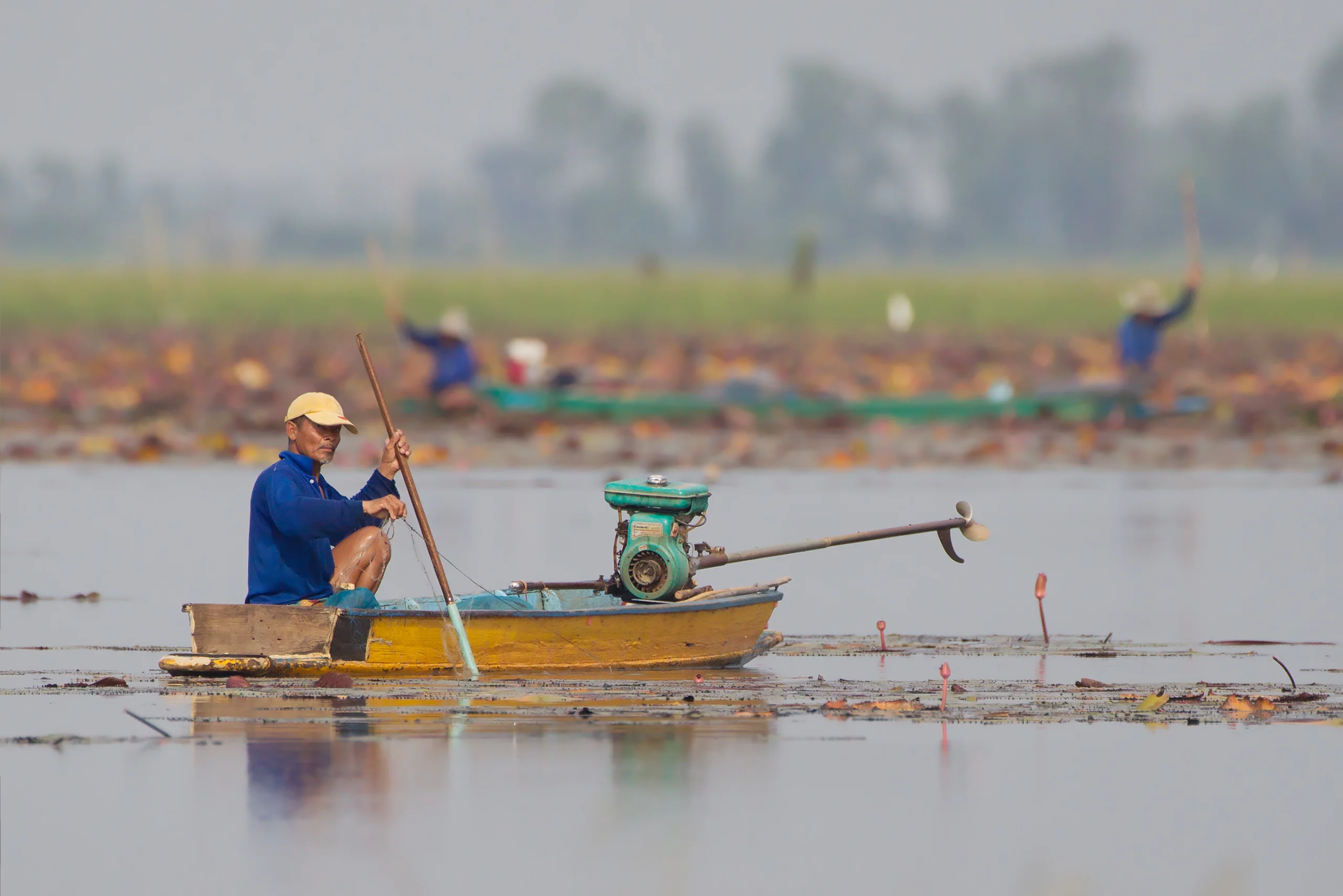
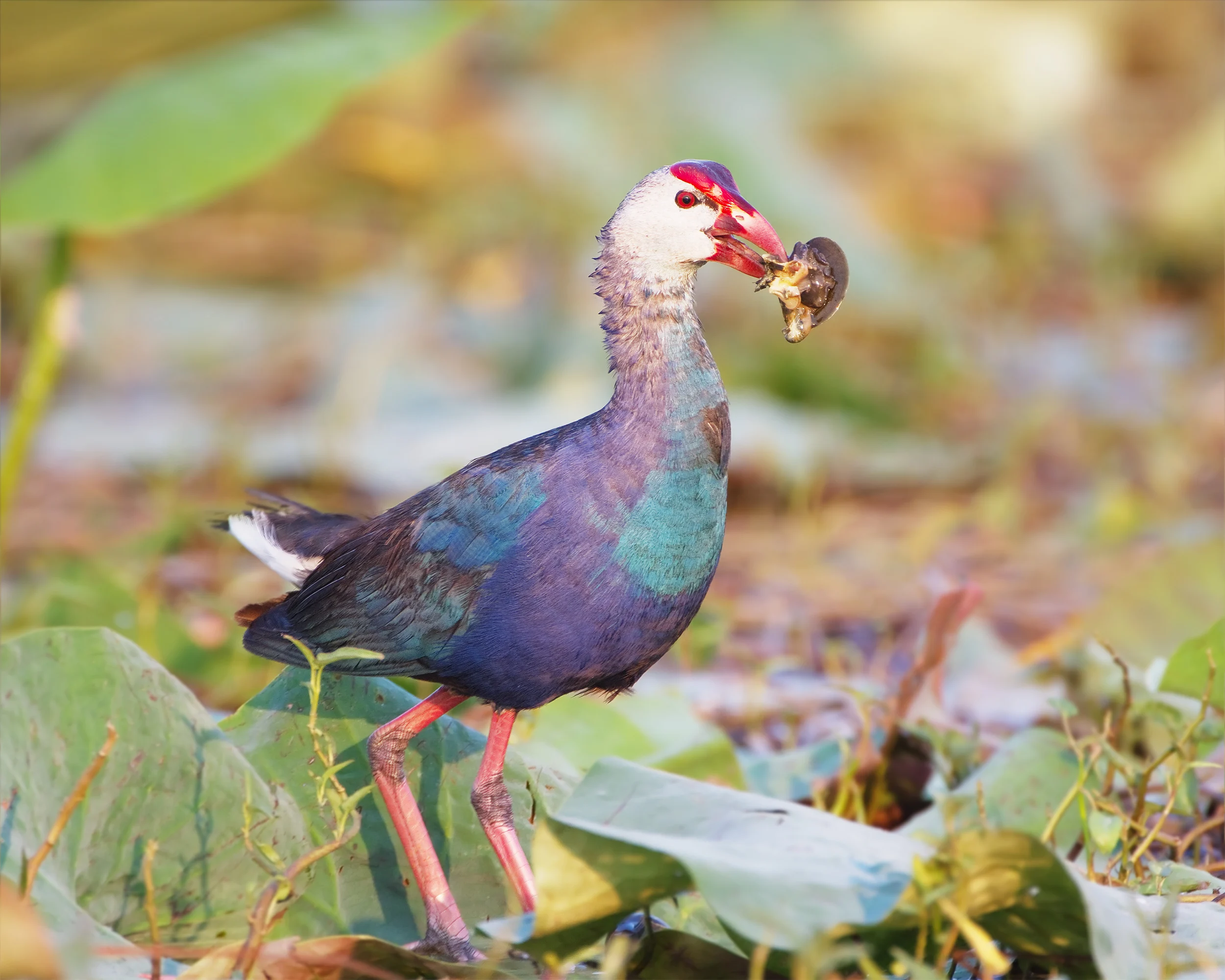
East of the city lies Bueng Boraphet, Thailand’s largest freshwater swamp — a vast sheet of open water, reed beds and lotus that becomes serious birdwatching territory between December and February, when tens of thousands of migratory waterbirds pile in. Do it by longtail boat at first light: hire one at the lakeside for a few hundred baht and glide through lotus fields with whistling ducks getting up in waves around you. This is where the white-eyed river martin was discovered in 1968 — recorded nowhere else on Earth, and not reliably seen since 1980. You will not find it. People far more obsessive than you have tried.
4. Climb to Wat Khiriwong’s hilltop chedi
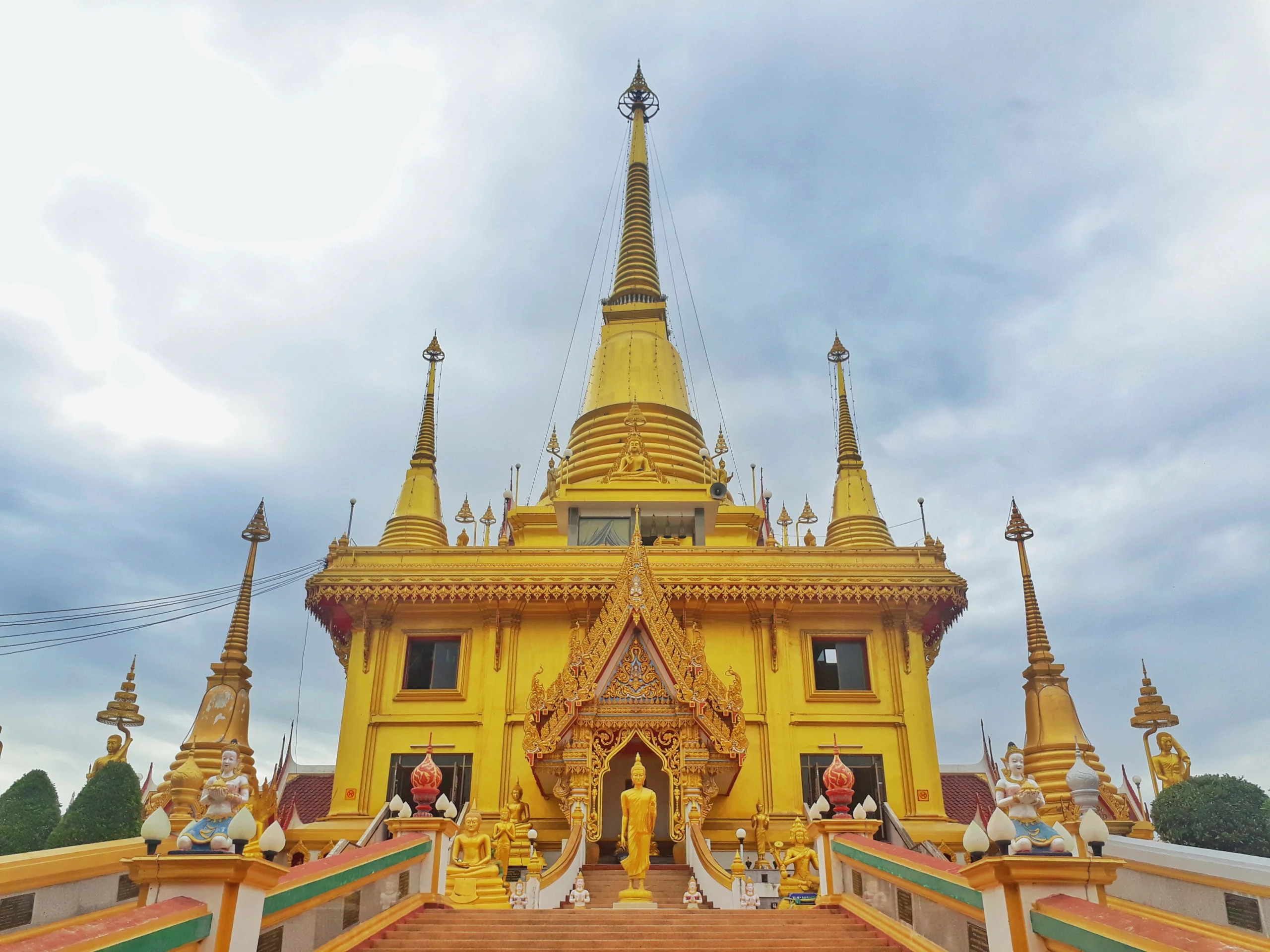
On a hill above the city stands Wat Khiriwong, its golden Phra Chulamanee pagoda gleaming over Nakhon Sawan like a lighthouse. Drive most of the way up, or take the steps if you enjoy suffering. The reward is the best view in the province: the city grid below, the rivers threading in from the north, and the flat green sweep of the central plains. Go late afternoon, when the heat drops and the light turns amber. Entry is free; leave a donation and go quietly.
5. Walk the old rice-port streets
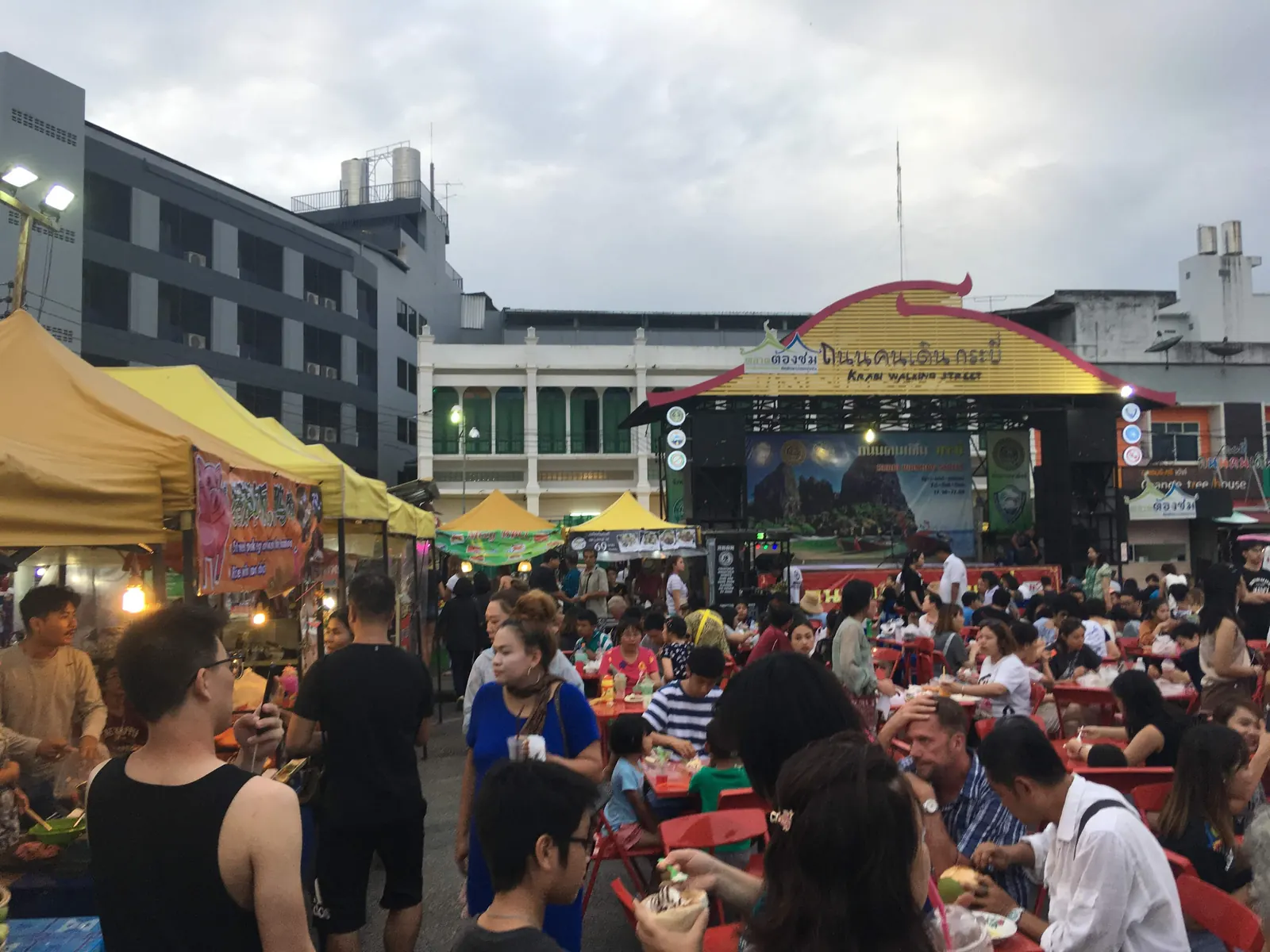
Give the town itself one unhurried evening. The streets behind the riverfront are the residue of the barge era: old Chinese shop-houses, gold shops under red signage, shrine smoke, sacks of dried goods — a port town that lost its port but kept all its habits. Start at the Chao Pho–Chao Mae Pak Nam Pho shrine, drift through the market streets, and finish at the night market by the river. No ticket, no set route, no audio guide, which is exactly the point.
What to skip
Bueng Boraphet in the middle of the day. Turning up at Thailand’s greatest wetland at 1pm in the hot season is like arriving at a legendary restaurant an hour after the kitchen closed: the birds are deep in the reeds, the light is a white hammer, and you will stand on a jetty looking at hot water. It is a dawn experience, full stop. And do not build the whole trip around the two-colour water line either — in the late dry season both rivers can arrive the same shade of brown. The geography is still momentous; the photographic evidence may be underwhelming.
Nakhon Sawan travel: practical info
Best season: November to February, when the weather is merciful, the migratory birds are on Bueng Boraphet, and Chinese New Year lands. Two nights is the correct length of stay — an afternoon and evening for the confluence, the hilltop chedi and the night market, then a dawn start for the lake before moving on.
Onward travel is easy, because everything on the northern line stops here. North, Phitsanulok is around two hours by train — your gateway to Sukhothai. Northwest, Kamphaeng Phet is about an hour and a half by road. South, the same railway drops you at Lopburi in under two hours and Ayutthaya in roughly two and a half: a respectable history-themed run back towards Bangkok.
Wikipedia’s Nakhon Sawan entry fills in the history of Thailand’s river-junction city.
TAT’s official Nakhon Sawan page has Bueng Boraphet boat practicalities and the Pak Nam Pho landmarks.
FAQ
Is Nakhon Sawan worth visiting?
Yes, for one or two nights — provided you come for what it actually offers: the birthplace of the Chao Phraya, dawn birdlife on Bueng Boraphet, excellent Chinese-Thai food and, timed right, Thailand’s biggest Chinese New Year. It is not a resort town and does not pretend to be.
How do I get from Bangkok to Nakhon Sawan?
Take the northern-line train from Krung Thep Aphiwat station — three to four and a half hours, from under ฿100 in third class to around ฿250–450 in air-conditioned second class. Buses from Mo Chit run roughly hourly, take about four hours and cost ฿180–250.
When is the Nakhon Sawan Chinese New Year festival?
It runs for ten to twelve days around the lunar new year, which falls between late January and mid-February depending on the year. The golden dragon parade nights are the peak. Accommodation sells out well in advance, so book early.
What is Nakhon Sawan famous for?
Three things: the point where the Ping and Nan rivers merge to form the Chao Phraya at Pak Nam Pho; a century-old Chinese New Year dragon festival, the largest in Thailand; and Bueng Boraphet, the country’s biggest freshwater swamp. Among Thais it is also famous for moji, its signature sweet.
How many days do you need in Nakhon Sawan?
Two nights covers it properly: the confluence and Wat Khiriwong on day one, a dawn boat on Bueng Boraphet on day two, then onward. If the Chinese New Year festival is on, add another night and surrender to the dragon.