“Sanctuary” is the most abused word in Thai tourism. Ten years ago it meant something specific — a handful of places, mostly in the north, that had bought or rescued working elephants and let them stop working. Then riding became unfashionable, the booking platforms stopped listing it, and a large share of the riding camps repainted the sign, took the saddles off, and replaced “ride an elephant” with “bathe an elephant” at the same price. Same animals, same hooks, same mahouts, same eight-hour day with a different tourist on the schedule. The result is that a visitor searching for an ethical elephant experience in Chiang Mai, Phuket or Samui today gets a list in which the genuine article and the rebrand look identical from the outside. This guide is how to tell them apart, what it should cost, the places we’d point a friend to, and the honest case for seeing elephants wild instead.
The short version: the test is who decides the contact. At a real sanctuary the elephant walks away and nobody follows; at a rebranded camp the elephant stands in a river while forty people pour buckets on it because that’s the product. No riding, no bathing, no shows, no hooks in hand, small groups, and a bill of ฿2,500–3,500 for the day — that’s the shape. Our Chiang Mai things-to-do guide made this promise in its elephant entry; here’s the long answer.
Why the choice matters more than a boycott
Thailand has roughly three thousand captive elephants, most of them born into logging or tourism and none of them releasable — an elephant that has spent forty years around people doesn’t go back to the forest, and there isn’t enough forest left to take it. Each one eats around 150–250 kilos a day and costs its owner well over ฿1,000 a day to keep, which in practice means tourist money feeds Thailand’s captive elephants. When the pandemic shut the camps, mahouts walked elephants hundreds of kilometres home to villages that couldn’t feed them. So “don’t visit any elephant venue” doesn’t help the elephants; it helps the camps that can still fill seats with cheap volume. The useful thing a visitor can do is spend the same money at a place where the elephant’s day is built around the elephant — and those places exist, they’re well run, and they need the bookings.
The red flags, in the order you’ll meet them
Riding, in any form. Including “bareback”, “no saddle”, “just the mahout” and “only once”. A ridden elephant was trained to be ridden, and the training is the problem. Bathing with tourists. This is the big one, because it’s what the rebrands sell. Elephants bathe; they don’t need help, and a queue of strangers in the water with them every hour is the opposite of a day off. A place whose menu says “feed, bathe, mud spa” is a camp with a new sign. Shows, tricks, painting, football, “kisses”. Taught with a hook. The hook itself (the bullhook, or a nail in a stick) in a mahout’s hand during your visit — look at hands, not brochures. Chains during visiting hours, or concrete stalls in view. Honest places will tell you their elephants are tethered at night for safety and explain why; dishonest ones hide the chains behind the gift shop. Babies performing. A camp with a young elephant that “loves to play with visitors” has a breeding programme and a training schedule. Big groups. A coach-load per slot means the elephant’s day is the tourists’ day. Price. ฿900 for a half day with transfer and lunch can’t be paying for the elephant.
The two-minute check before you book: open the place’s most recent reviews and search the text for ride, bath, mud, hook and show. Reviews written by delighted visitors will describe exactly what happened. If bathing or mud is described as an activity you did, it isn’t the place you’re looking for, however many stars it has.
The green flags
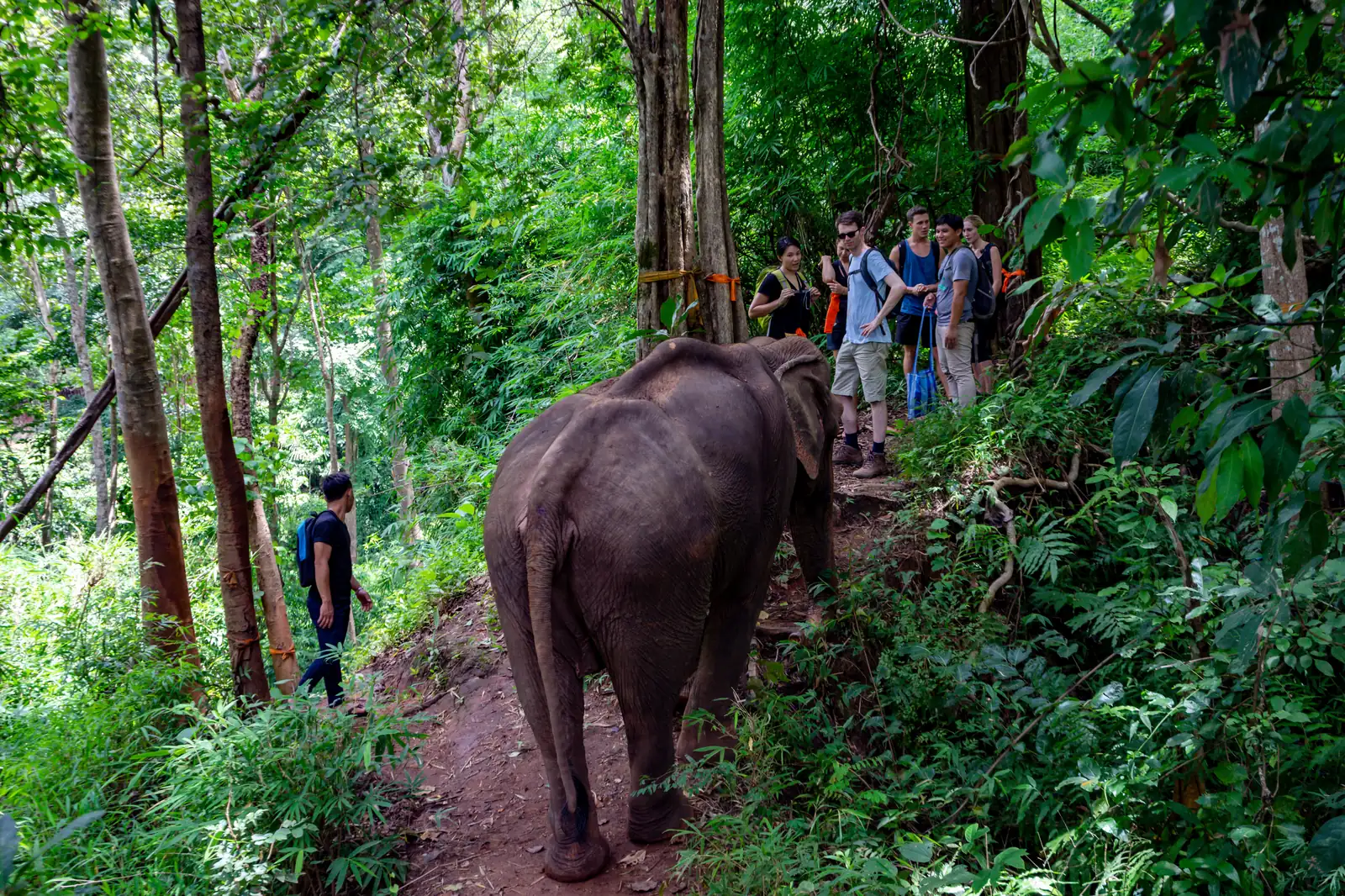
The elephants move away from you and nobody redirects them. You walk behind or beside them through forest or pasture for an hour rather than standing at a platform. Feeding is either from a barrier, a short scheduled moment, or not offered at all. There’s a vet on site and the rescue stories have names, dates and medical detail rather than adjectives. The staff can tell you how many hours a day the elephants are free-ranging and where they sleep, and don’t flinch at the chain question. Groups are small — a dozen people is a lot. The price is in the ฿2,500–3,500 range and includes the transfer from town, because that’s what the maths of feeding the animal looks like. And, increasingly, the model is observation-only: no touching at all. It feels like less to a first-timer and is more for the elephant — and the good places will explain that, not apologise for it.
Places we’d point a friend to
Models change — a place can improve or slip — so treat this as a starting list and run the two-minute check on recent reviews before you pay. Nothing here was comped, and none of these pay to appear.
Elephant Nature Park, Mae Taeng (Chiang Mai) — Do it; it’s the benchmark. The original, founded by Lek Chailert, an hour north of the city: a large rescue herd, observation-only since it ended bathing and close contact, a day visit at ฿2,500 including the hotel pick-up and lunch, and the place most of the others learnt from. The single-day visit books out weeks ahead in high season; book direct. Its sister projects around the north and south (look for its name on a partner project) follow the same rules.
ChangChill, Mae Wang (Chiang Mai) — Do it. A former riding camp converted to an observation-only model with outside help and held up as the proof that conversion works: small groups, the elephants foraging in the valley while you watch from a distance, a half-day or full-day format at the usual price. The easiest “right answer” for someone with one day in Chiang Mai who wants to see the converted model for themselves.
The Mae Chaem valley projects — Do it if you’ll stay a night or more. Two or three hours south-west of Chiang Mai, several small community-based projects — BEES (Burm and Emily’s Elephant Sanctuary), Kindred Spirit and the Mahouts Elephant Foundation‘s walking project among them — keep a handful of elephants in forest near Karen villages and take small numbers of guests for one to several days to walk behind the elephants and do nothing else. Slower, more honest, more expensive per day, and the closest thing Thailand has to seeing a captive elephant live a roughly normal life.
Boon Lott’s Elephant Sanctuary, Sukhothai — Do it if you can get in. Tiny, British-founded, books by application with a waiting list, and takes a handful of staying guests at a time. The elephants spend the day in hundreds of acres of forest and you spend it watching them. The one to plan a year ahead.
On the islands — Do it, with the same check. Phuket Elephant Sanctuary in Paklok (observation from walkways and forest, morning and afternoon sessions), Samui Elephant Sanctuary (observation and feeding, an ENP partner) and Following Giants on Koh Lanta are the established observation-model options in the south, in a region where the “bathe and mud spa” rebrands are thickest on the ground. Expect ฿2,500–3,500 for a half day with transfer.
Wildlife Friends Foundation Thailand, Phetchaburi — Do it, especially from Hua Hin. A rescue centre rather than an elephant-only venue, with retired elephants among bears, gibbons and a lot of other confiscated animals; day tours explain how the animals ended up there. A good fit for families, and three hours from Bangkok.
The national centre in Lampang — know what it is. The government’s Thai Elephant Conservation Center has historically run shows and rides alongside genuine conservation work and an elephant hospital. If you’re passing, the hospital and the mahout-training history are worth understanding; the show is the old model.
The booking platforms have caught up with this shift: filter for observation-only sanctuaries on GetYourGuide (which removed riding products years ago) and then run the review check on whatever you shortlist. Where a sanctuary books direct, book direct — more of the money reaches the elephant.
Or see them wild: Kui Buri and Khao Yai
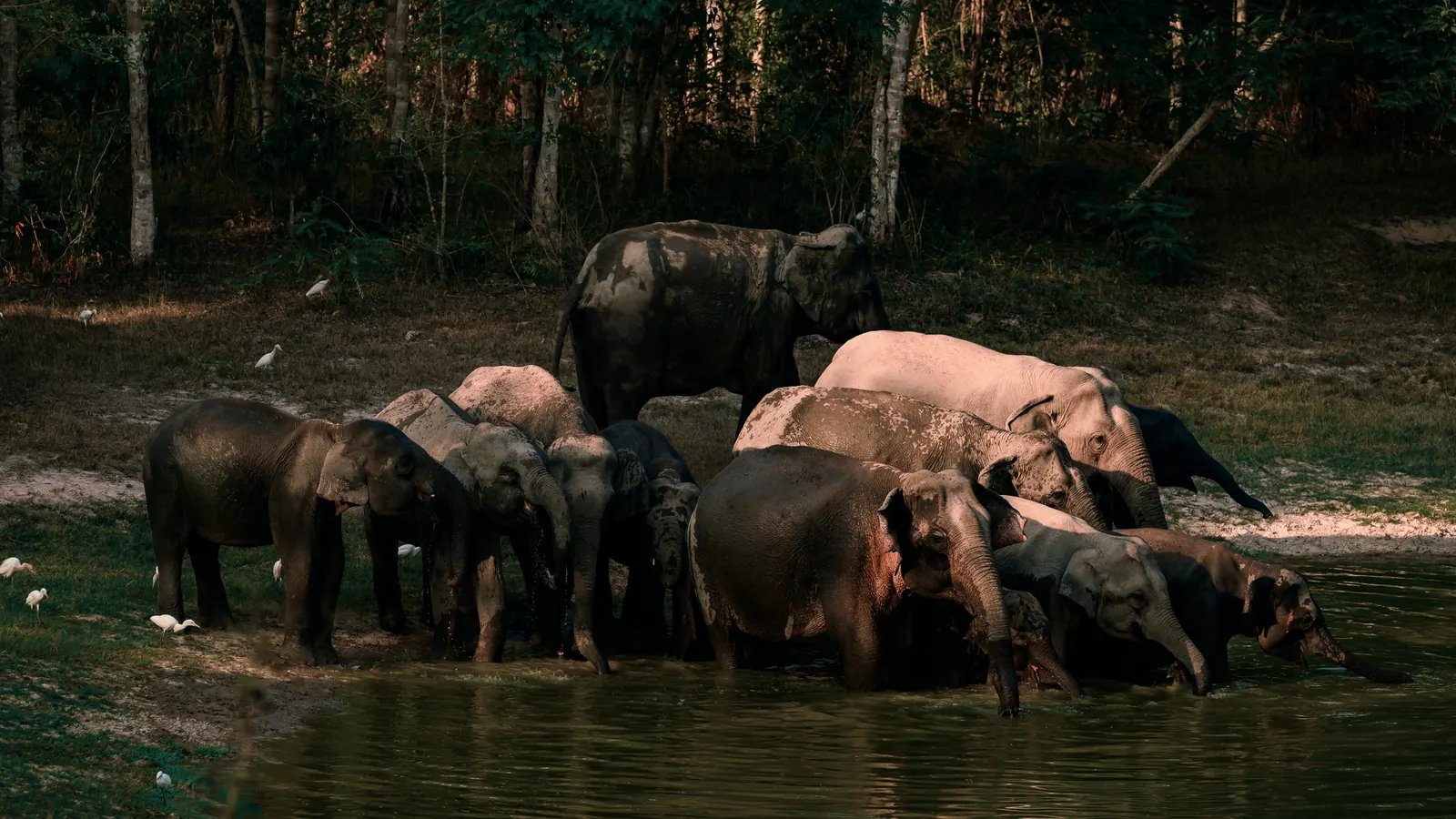
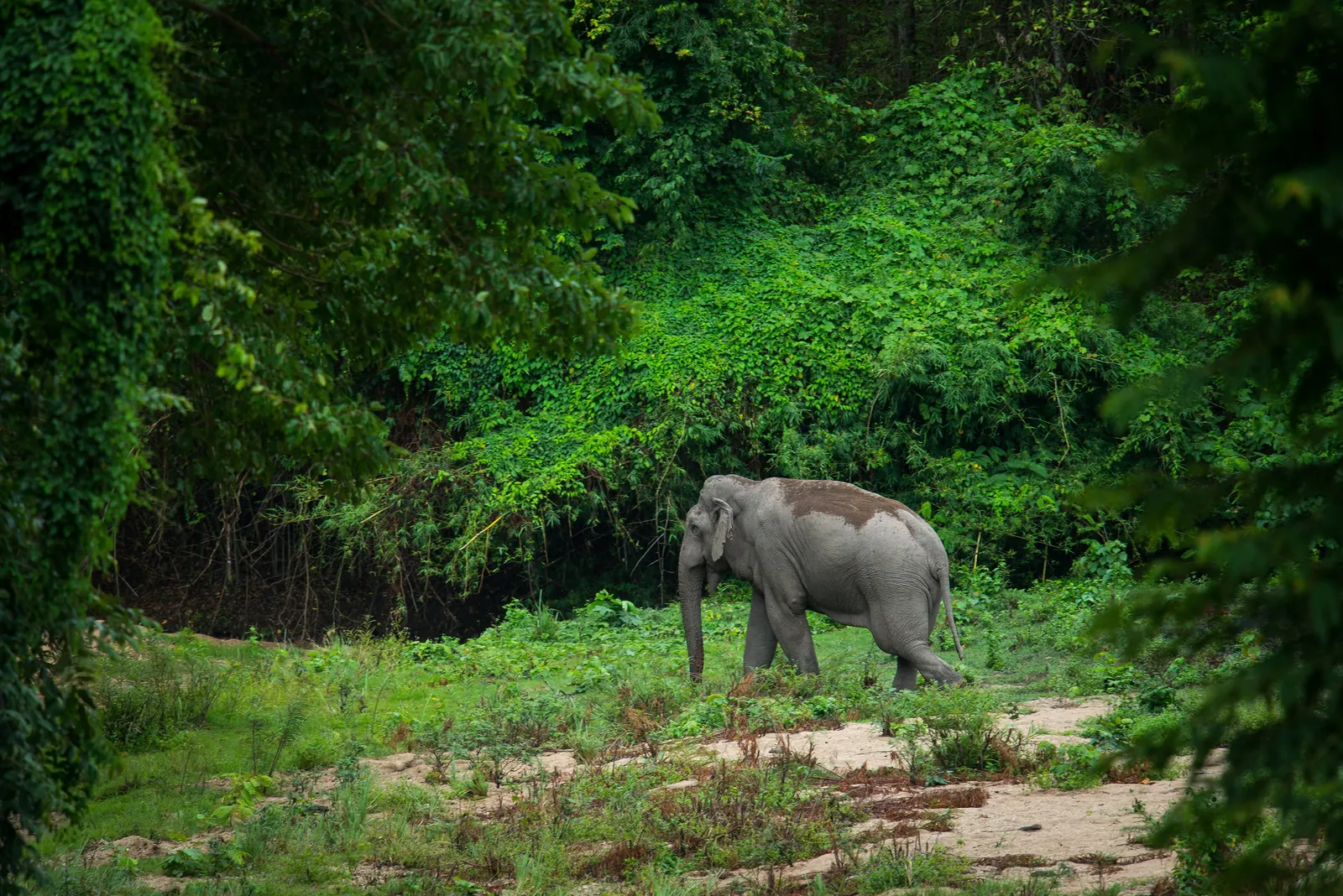
The honest alternative to any of the above is an elephant that has never met a mahout. Kui Buri National Park in Prachuap Khiri Khan, an hour south of Hua Hin, has the most reliable wild-elephant viewing in the country: ranger-guided pickup trucks from about 2pm to 6pm, ฿850 per truck (shared between up to eight) plus the ฿200 foreigner park fee, and herds grazing the old pineapple fields at dusk on most evenings of the year — the rangers quote a sighting rate in the high nineties and it feels about right. Khao Yai, closer to Bangkok, has wild elephants too but on its own terms: you may see one on the road at dusk or you may not, and the park is worth the trip for everything else. Neither costs more than a sanctuary day, and both answer the question “what does a Thai elephant actually do all day” better than any camp can.
Honest warnings before you go
They are dangerous. Elephants kill mahouts most years in Thailand and they don’t distinguish between a mahout and a tourist who walked behind one to take a picture; follow the guide’s distance rules exactly, and treat the observation model as the safety model too. Insurance. Check your policy covers animal activities — some exclude them. Heat and terrain. A full day is walking in sun and mud; closed shoes, a hat, water. Photos. The better the place, the less dramatic your photos, because nobody is posing the elephant. That’s the point, and it’s worth saying to the friend who wanted the hug. Dual pricing applies at the national parks as everywhere — the Price Index has the foreigner fees.
Ethical elephant sanctuaries: your questions, answered
Is it ethical to visit an elephant sanctuary in Thailand?
Yes, if it’s a genuine one — no riding, no bathing with visitors, no shows, no hooks, small groups, elephants free to walk away. Thailand’s captive elephants can’t be released and are fed by tourism, so spending at a real sanctuary is more useful to them than staying away.
Is bathing with elephants ethical?
No. It’s the activity most rebranded riding camps switched to, because it looks gentle and sells well. An elephant bathes itself; a rota of strangers pouring water on it every hour is work, not rest. Treat “bathing” in a menu as a reason to choose somewhere else.
How much does an ethical elephant sanctuary cost?
About ฿2,500–3,500 per person for a full day including hotel transfer and lunch, ฿1,800–2,500 for a half day. Elephant Nature Park’s day visit is ฿2,500. Much cheaper than that and the price isn’t paying for the elephant’s food.
Which is the best ethical elephant sanctuary in Chiang Mai?
Elephant Nature Park is the benchmark and the most visited; ChangChill in Mae Wang is the clearest example of a camp converted to observation-only. For more than a day, the small community projects in the Mae Chaem valley are the most honest experience in the country. Check recent reviews for the words “bath” and “ride” whatever you pick.
Can you see wild elephants in Thailand?
Yes. Kui Buri National Park near Hua Hin has near-daily sightings from ranger trucks at dusk for ฿850 per truck plus the ฿200 park fee; Khao Yai has wild elephants but sightings are luck. Both are cheaper than a sanctuary day and more elephant for it.
Related guides
- Things to Do in Chiang Mai: Worth It vs Skip It
- Khao Yai National Park: The Bangkokers’ Weekend Wildlife Trip
- Hua Hin Weekend: Royal Beach, Night Market, and the Cicada
Book the trip
Some links in this guide are affiliate links. If you book through them we may earn a small commission at no extra cost to you — it helps keep Destination Thailand independent.
Sanctuary days: compare observation-only elephant days from Chiang Mai, or the Phuket and Samui equivalents — and run the review check before you pay. Wild elephants: Kui Buri dusk safaris from Hua Hin. Getting to the north: the sleeper train or a flight — book Bangkok to Chiang Mai on 12Go — and a base in the Old City or Nimman from our Chiang Mai stay guide or Agoda’s Chiang Mai listings. Not sure the north is your Thailand? Our Where to Go in Thailand matcher scores all 77 provinces against your month and what you actually want from the trip.