Here is the strange truth about Samut Prakan: millions of people arrive in it every year and almost none of them know they were there. Suvarnabhumi Airport, the great glass shed the world uses as its front door to Thailand, sits in Samut Prakan province, not Bangkok. You have almost certainly stood on its soil, jet-lagged in an immigration queue, without giving it a thought.
Which is a shame, because down at the river mouth sits some of the oddest, most rewarding sightseeing in central Thailand. A 250-tonne bronze elephant with three heads that you climb inside. A 240-acre park holding scaled replicas of nearly a hundred of the kingdom’s greatest monuments. A seaside pier where thousands of migrating seagulls scream at you for prawn crackers every winter. And because the BTS Sukhumvit line now runs all the way to Kheha, every bit of it is on the Skytrain from central Bangkok for about the price of a decent coffee.
Give it a day. Possibly two. Start with our Samut Prakan province profile for the vitals, then read on for the honest version.
What Samut Prakan really is
Samut Prakan wraps around Bangkok’s southern edge where the Chao Phraya finally gives up and empties into the Gulf. The old town is still called Pak Nam — river mouth — and for two centuries its job was guarding the capital: a chain of forts stood watch over the estuary, which worked splendidly right up until 1893, when French gunboats sailed straight past them in the Paknam Incident and anchored within shelling distance of the Grand Palace. Today it is a working province of container ships, fish piers, factory estates and suburbs that blur into Bangkok so completely you will never spot the join.
Two things redeem all that concrete. First, an eccentric millionaire named Lek Viriyaphant chose this province for his two maddest monuments. Second, geography: mudflats, mangroves and the great green loop of Bang Kachao — the famous green lung everyone credits to Bangkok is, in fact, Samut Prakan territory.
Why go to Samut Prakan
Because no other province within an hour of your Bangkok hotel offers this density of the genuinely strange. The Ancient City and the Erawan Museum are two of the most ambitious follies ever built in Asia — the same mind produced the Sanctuary of Truth in Pattaya. Add a river fort with a museum warship parked outside, one of Thailand’s most respected meditation monasteries, and a winter pier crowded with Siberian gulls, and you have a day out that beats most of what central Bangkok will charge you triple for.
Getting to Samut Prakan from Bangkok
The Skytrain is the whole story. The BTS Sukhumvit line runs south to Kheha, the end of the line, in about 50 minutes from Siam for roughly ฿60. The station names telegraph the sights: Chang Erawan drops you at the Erawan Museum, Pak Nam puts you by the market and the river ferry, and from Kheha a songthaew covers the last stretch to the Ancient City for about ฿10.
A taxi from lower Sukhumvit runs ฿150-250 depending on traffic. Coming from Suvarnabhumi you are already in the province: 25-30 minutes and around ฿200 on the meter gets you to Pak Nam. The little cross-river ferry from Pak Nam market to Phra Samut Chedi costs a few baht and takes five minutes. Ignore the buses.
Where to stay in Samut Prakan
The honest answer: most people should not. This is the definitive Bangkok day trip, and the hotel scene knows it. If you do want a night here — say, to catch the Bang Pu sunset and be first through the Ancient City gates — Pak Nam has clean, unglamorous business hotels in the ฿700-1,200 range within walking distance of the BTS and the market. Otherwise base yourself at On Nut or Bearing on the same Skytrain line, where ฿900-1,500 buys a better room and vastly better evening food, and ride south in the morning.
What to eat in Samut Prakan
This is an estuary province, so eat accordingly. The market streets around Pak Nam pier do grilled river prawns, mantis shrimp and oysters straight off the boats — expect ฿100-300 a plate depending on how greedy you are feeling. Bang Phli Old Market, a century-old wooden market strung along a canal in the airport district, is the place for a ฿50-70 bowl of noodles and old-school Thai sweets you will not find in a Bangkok mall. The province’s signature is pla salit — snakeskin gourami, salted and sun-dried in Bang Bo district, then crisp-fried and eaten over rice; buy a bag at any local market. And at Bang Pu, the old pavilion at the end of the pier serves proper, unfussy Thai-Chinese seafood while several thousand gulls provide the atmosphere.
Top things to do in Samut Prakan
1. Cycle the Ancient City (Muang Boran)
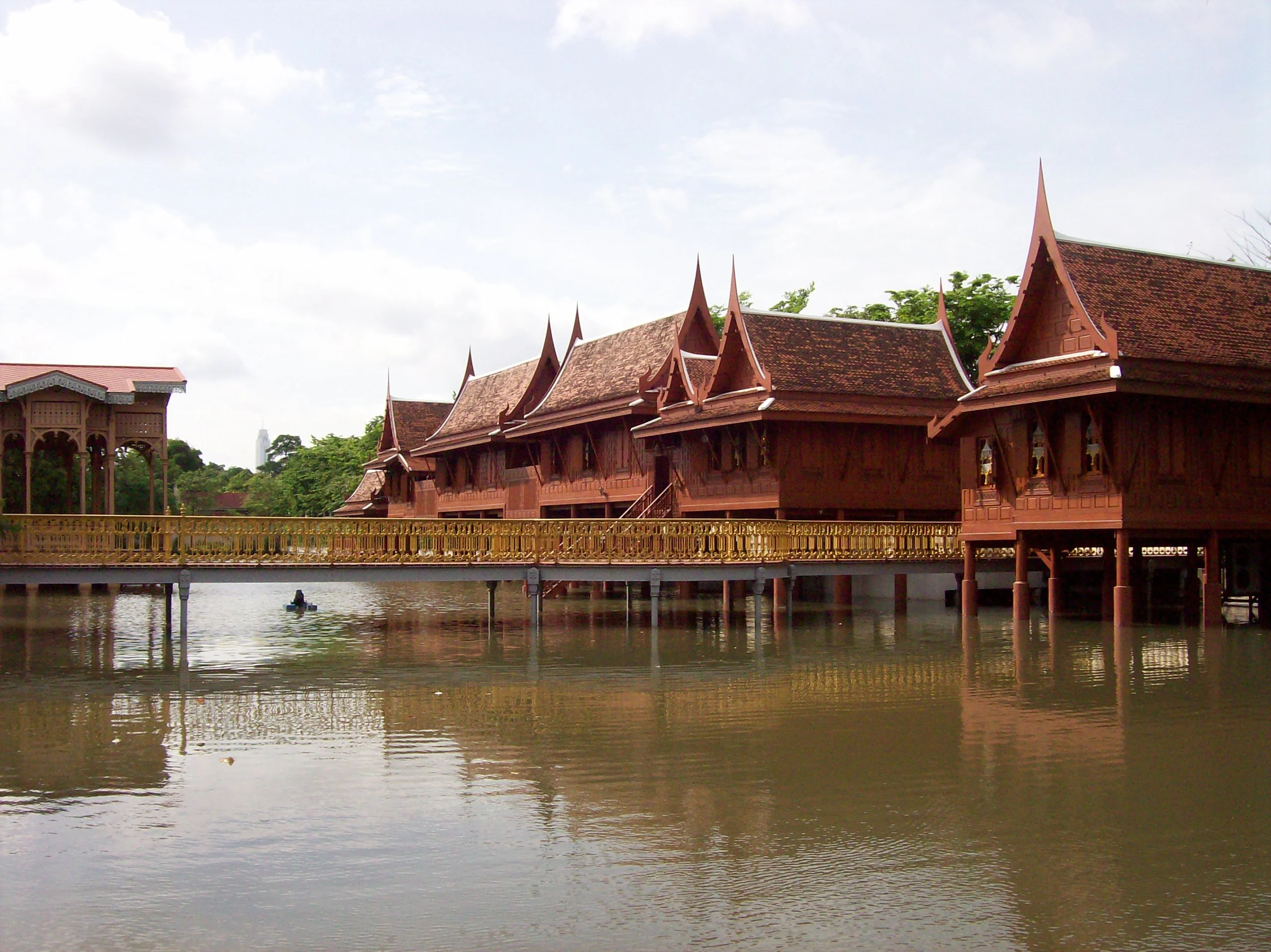
Ninety-six scaled replicas of Thailand’s greatest monuments spread across 240 acres landscaped into the shape of the country itself — northern temples in the north, southern shrines in the south. It sounds like a tourist trap and is anything but: the craftsmanship is museum-grade, several replicas preserve buildings that no longer exist anywhere else, and parts were built with genuine salvaged materials. Do it by bicycle, included with your ticket, and give it at least half a day. Entry is about ฿700 for foreign adults; open daily from 9am. From BTS Kheha it is a ฿10 songthaew hop.
2. Climb inside the Erawan Museum’s three-headed elephant
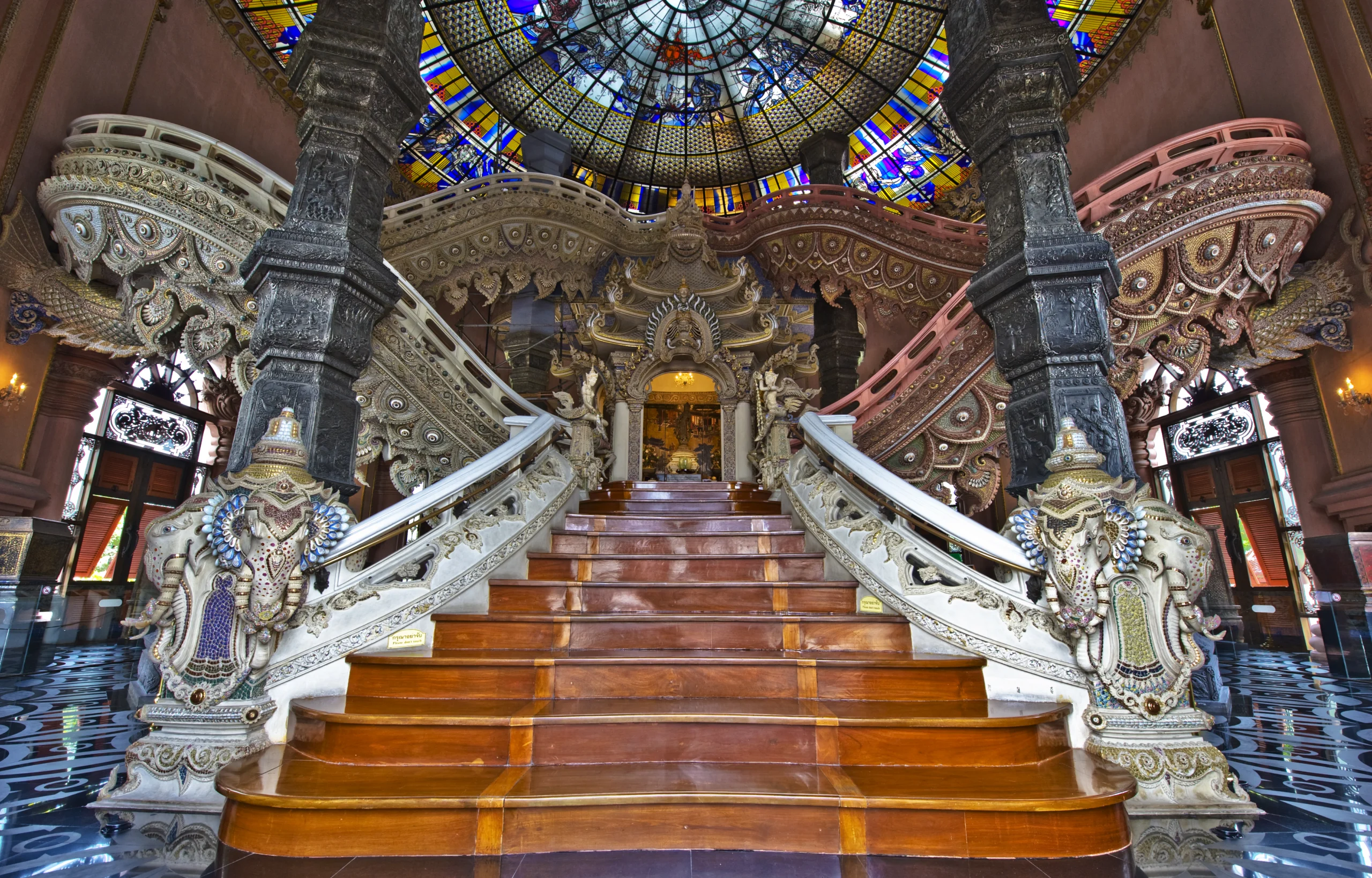
A 250-tonne, three-headed bronze elephant standing taller than a ten-storey building, with a museum in its pedestal and a shrine in its belly. The interior is the real shock: a spiralling staircase rises through a hall lit by an enormous stained-glass ceiling, and you emerge inside the elephant’s body, decorated as a Buddhist heaven. The lower floors hold the founder’s genuinely fine collection of antiques and Buddha images. Entry is about ฿400, and BTS Chang Erawan station is named after the place — you can see the beast from the platform.
3. Feed the seagulls at Bang Pu pier
From November to April, thousands of brown-headed gulls migrate down from as far away as Siberia and take up residence at Bang Pu, wheeling over a long concrete pier that juts out across the Gulf mudflats. Buy a bag of prawn crackers, hold one up, and lose it instantly. At the end of the pier sits that old-school seafood pavilion, and the sunsets over the water are the best in the province. Entry is free; it is a short songthaew or taxi ride from BTS Kheha.
4. Phra Samut Chedi and the river forts
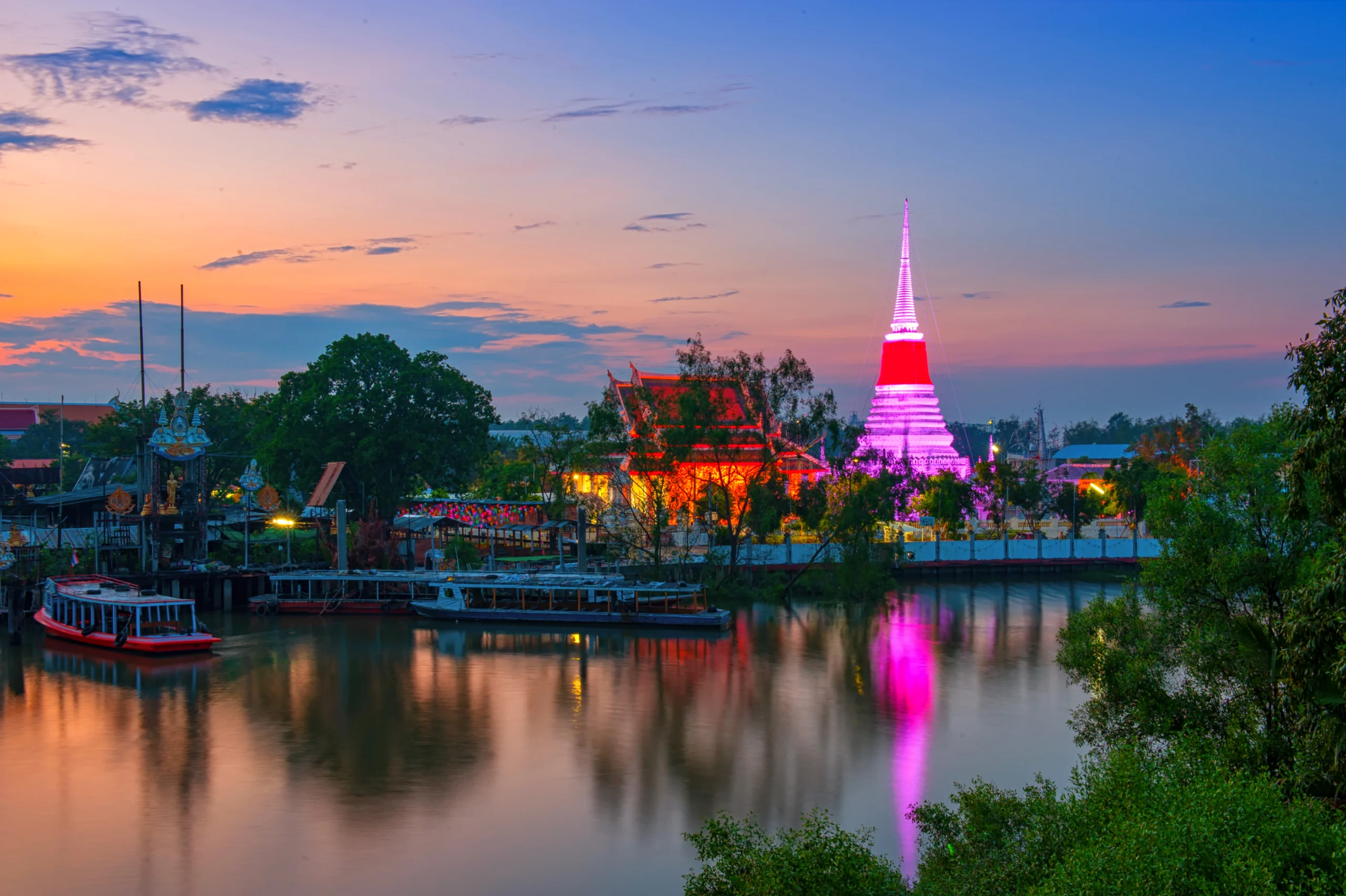
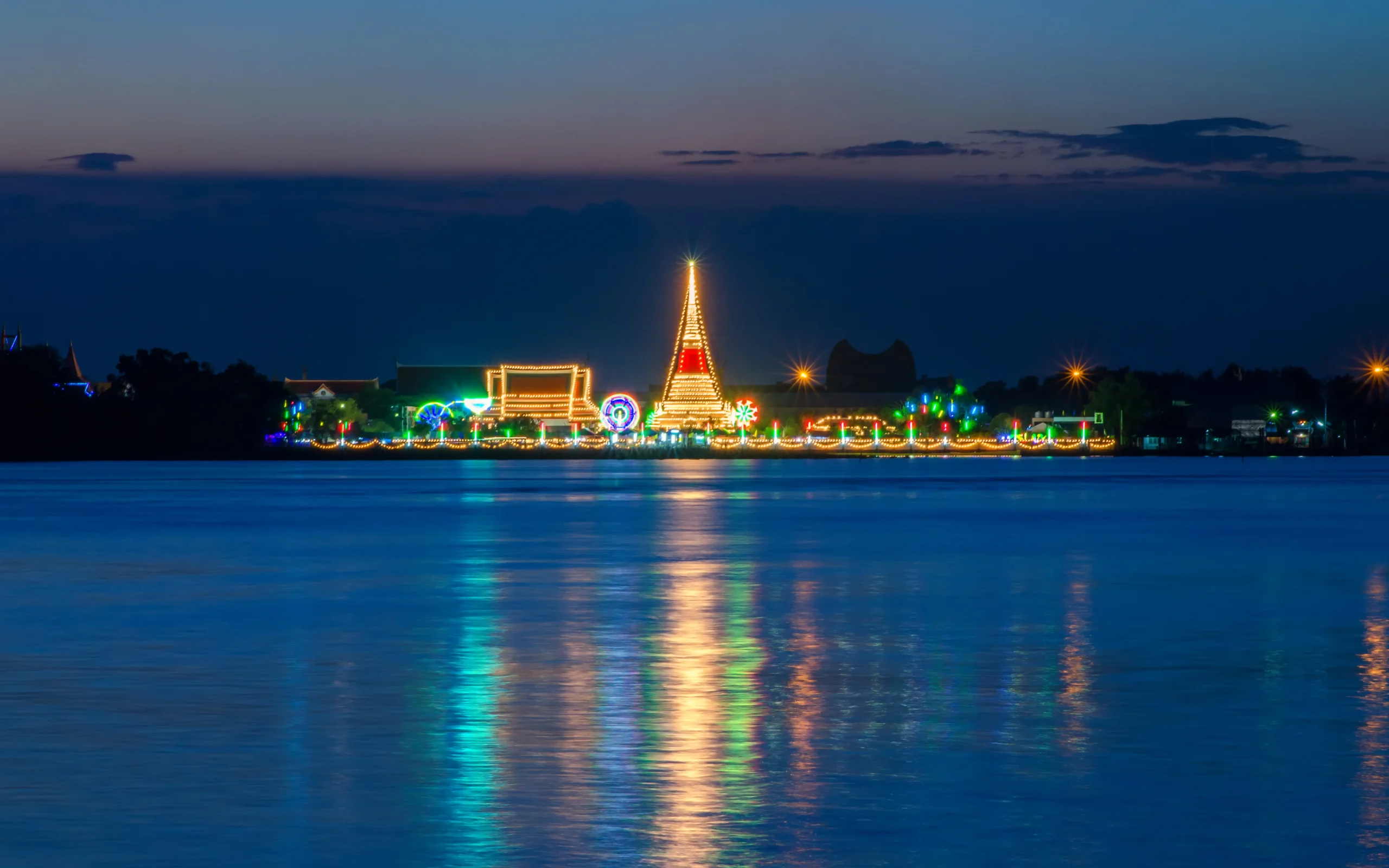
The white chedi across the river from Pak Nam was begun under Rama II on what was then an island mid-stream, positioned so that sailors arriving in Siam saw a Buddhist monument before they saw anything else. The river has long since silted it onto the bank, but the five-minute ferry from Pak Nam market is still the proper way to arrive. Pair it with the estuary forts that failed so spectacularly in 1893: Phi Suea Samut fort near the town, and Phra Chulachomklao fort down at the river mouth, where the museum ship HTMS Mae Klong sits in retirement. Around October the chedi hosts a rowdy nine-day temple fair.
5. Sit still at Wat Asokaram
Founded in the 1950s by Ajahn Lee Dhammadharo, one of the great masters of the Thai Forest Tradition, Wat Asokaram is a serious meditation monastery rather than a photo stop — although its white chedi complex with thirteen spires, out by the mangroves, is quietly magnificent. Laypeople can join meditation retreats here, and day visitors are welcome provided they dress modestly and keep the volume down. Free, and a short ride from Bang Pu.
6. Ride a bicycle around Bang Kachao
The celebrated green lung in the loop of the Chao Phraya belongs to Samut Prakan, whatever Bangkok’s tourist board implies. Cross by shuttle boat for a few baht, hire a bicycle for ฿50-100, and spend a morning on raised concrete paths threading through jungle, plantations and stilt houses. Sri Nakhon Khuean Khan Park is the set-piece; at weekends, Bang Nam Phueng floating market adds decent food to the equation. Go early — by 11am the heat wins.
What to skip
The Samut Prakan Crocodile Farm bills itself as the largest in the world, and I do not doubt it. What it also is, is depressing: concrete pens crammed with animals, and shows in which men put their heads inside crocodiles’ mouths for tips. It was a marvel in 1950; it is not one now, and your few hundred baht does nothing good for anyone, reptiles included. The Ancient City is ten minutes away and superior in every conceivable respect. While we are at it: do not come to Bang Pu expecting a beach. It is a mudflat. A glorious, gull-covered, sunset-lit mudflat — but if you want sand, that is what Rayong is for.
Samut Prakan travel: practical info
Come between November and February: seagull season is in full swing, the air is as cool as central Thailand ever manages, and cycling the Ancient City stops being an endurance sport. One full day covers the Erawan Museum, the Ancient City and a Bang Pu sunset; add a second for Bang Kachao, the chedi and Wat Asokaram. Samut Prakan also works brilliantly as a first or last day in Thailand, since Suvarnabhumi sits inside the province — you can be standing under a three-headed elephant within 40 minutes of clearing customs. Moving on, Chachoengsao and its Bang Pakong river country lies about an hour east; Bangkok is one Skytrain ride north.
Planning the specifics? The Tourism Authority of Thailand’s official Samut Prakan page and its things-to-do list carry current opening hours and festival dates, and Wikipedia has the historical background.
FAQ
Is Samut Prakan worth visiting?
Yes — it is arguably the best-value day trip from Bangkok. The Ancient City and the Erawan Museum alone justify the ฿60 Skytrain fare, and in winter the Bang Pu seagulls add a spectacle you will not find anywhere else near the capital.
How do you get to the Ancient City in Samut Prakan?
Take the BTS Sukhumvit line to Kheha, the final station, then a songthaew or motorbike taxi for the last couple of kilometres — ฿10-40. From central Bangkok the whole journey takes around an hour and a quarter.
When is seagull season at Bang Pu?
November to April, with the thickest flocks from December to February. Late afternoon is the time to go: the gulls are active, the light is kind, and you can stay for sunset and dinner at the pier pavilion.
Is Samut Prakan part of Bangkok?
No — it is a separate province immediately south of the capital, though the sprawl makes the border invisible on the ground. Confusingly, Suvarnabhumi Airport is inside the province, so most visitors to Thailand technically land here rather than in Bangkok.
How many days do you need in Samut Prakan?
One well-planned day covers the big three: Erawan Museum in the morning, the Ancient City through the middle of the day, Bang Pu for gulls and sunset. Two days lets you add Bang Kachao by bicycle, Phra Samut Chedi and Wat Asokaram at a saner pace.
Related guides
- Bangkok water taxis: the river and canal boats explained
- Ari: Bangkok neighbourhood guide
- The temples of Ayutthaya