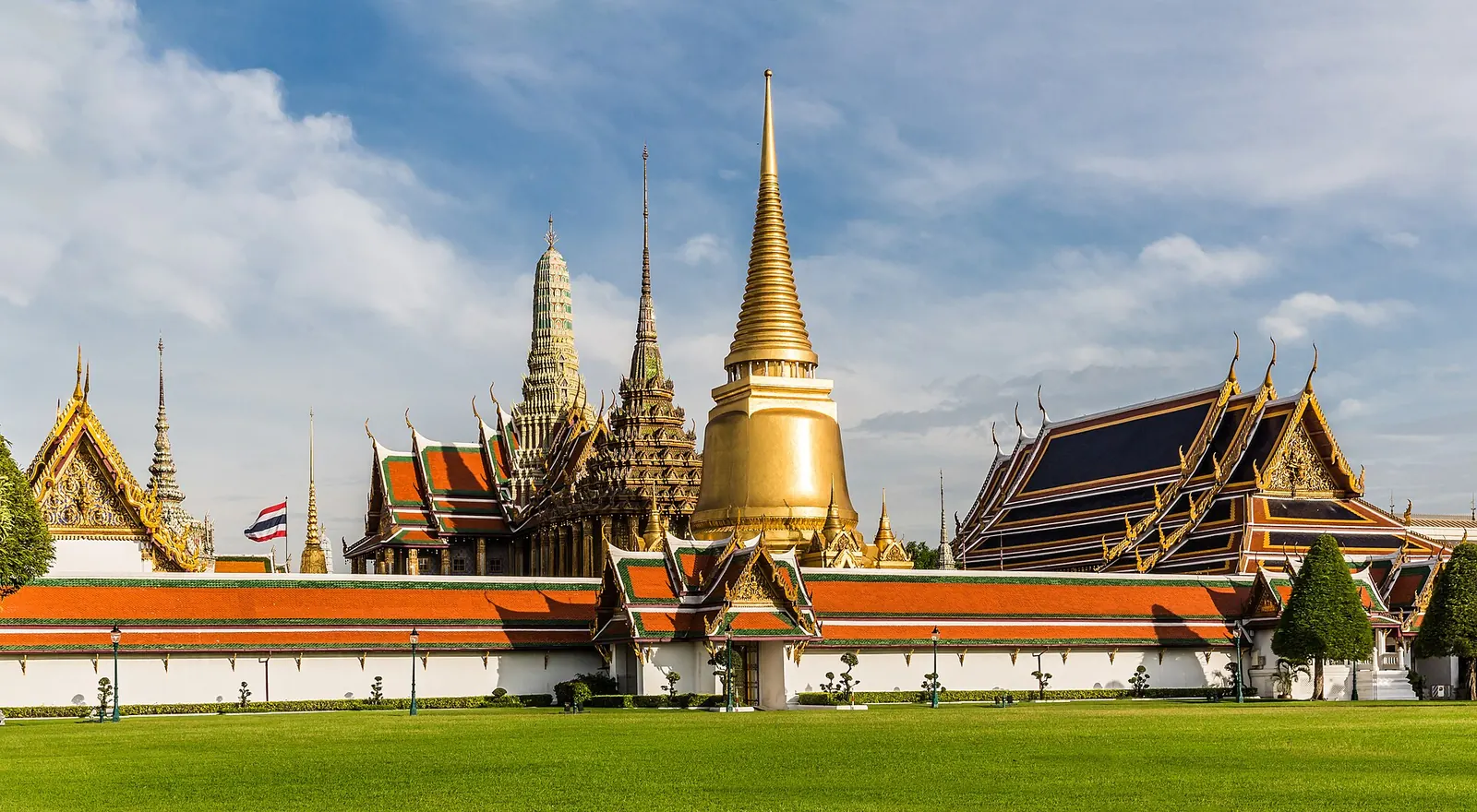
Bangkok temples number in the hundreds and most visitors see three, which is a fine start and a poor finish. The Grand Palace, Wat Pho and Wat Arun are famous for good reasons and sit within a ferry ride of each other; the next half-dozen are quieter, cheaper and sometimes better, and they are what you do on the second morning, the rainy afternoon or the day you decide that ฿500 was the only queue you were prepared to stand in. This guide ranks them with 2026 prices, the dress code, the order that avoids the worst of the heat and the one scam that starts outside the palace gate.
**The short version:** do the Grand Palace at 08:30 (฿500), Wat Pho next (฿300), then the ฿5 ferry to Wat Arun (฿200) and watch it light up at dusk from the other bank. Spend the second morning on Wat Saket, Wat Suthat and the Giant Swing (฿100 each) and a couple of free ones. Cover your shoulders and knees everywhere. Prices below are foreigner rates as of November 2026 and checked against our Thailand Price Index; Thais pay less or nothing, which is policy, not a scam. Background on the city is on the Bangkok province page.
In this guide8 sections
- Which Bangkok temples are worth your time? The prices and verdicts side by side
- The Grand Palace and Wat Phra Kaew: do it at opening
- Wat Pho and Wat Arun: the river pair
- Wat Saket, Wat Suthat and the Giant Swing: the second morning
- Wat Benchamabophit, Wat Paknam and the quieter temples worth a taxi
- Temple etiquette in Bangkok, once
- A two-morning Bangkok temple plan, with costs
- Bangkok temples: your questions, answered
Which Bangkok temples are worth your time? The prices and verdicts side by side
Hours and fees drift a little, and sources disagree on a few of them. Where they do, the table says so, and you should treat a figure as the thing to confirm at the gate.
| Temple | Foreigner price | Hours (roughly) | Time | Verdict |
|---|---|---|---|---|
| Grand Palace and Wat Phra Kaew | ฿500 | 08:30–16:30, last tickets 15:30 | 2–3 h | Do it, at opening |
| Wat Pho (Reclining Buddha) | ฿300, includes a bottle of water | 08:00–18:30 | 1–1.5 h | Do it |
| Wat Arun | ฿200 | 08:00–18:00 | 1 h | Do it, and watch from the far bank |
| Wat Saket (Golden Mount) | ฿100 to climb | 07:30–19:00 | 1 h | Do it, near sunset |
| Wat Suthat and the Giant Swing | ฿100 (swing is free) | check at the gate; listings range from late afternoon to 21:00 | 45 min | Do it, mid-morning |
| Wat Ratchanatdaram (Loha Prasat) | free or a token ฿20 | about 08:00–17:00 | 15 min | Do it; nobody is there |
| Wat Benchamabophit (Marble Temple) | ฿50–100 (sources differ) | about 06:00–18:00 | 45 min | Do it, at 06:00 for the alms round |
| Wat Traimit (Golden Buddha) | ฿40; museum extra | about 08:00–17:00 | 20 min | Fine; on the way into Chinatown |
| Wat Mangkon Kamalawat | free | daytime | 20 min | Do it, in Chinatown |
| Wat Paknam Phasi Charoen | free | about 08:00–18:00 | half a morning | Do it, if you have a spare morning |
| Erawan Shrine | free | all day | 10 min | Do it; not a temple, but unmissable |
The Grand Palace and Wat Phra Kaew: do it at opening
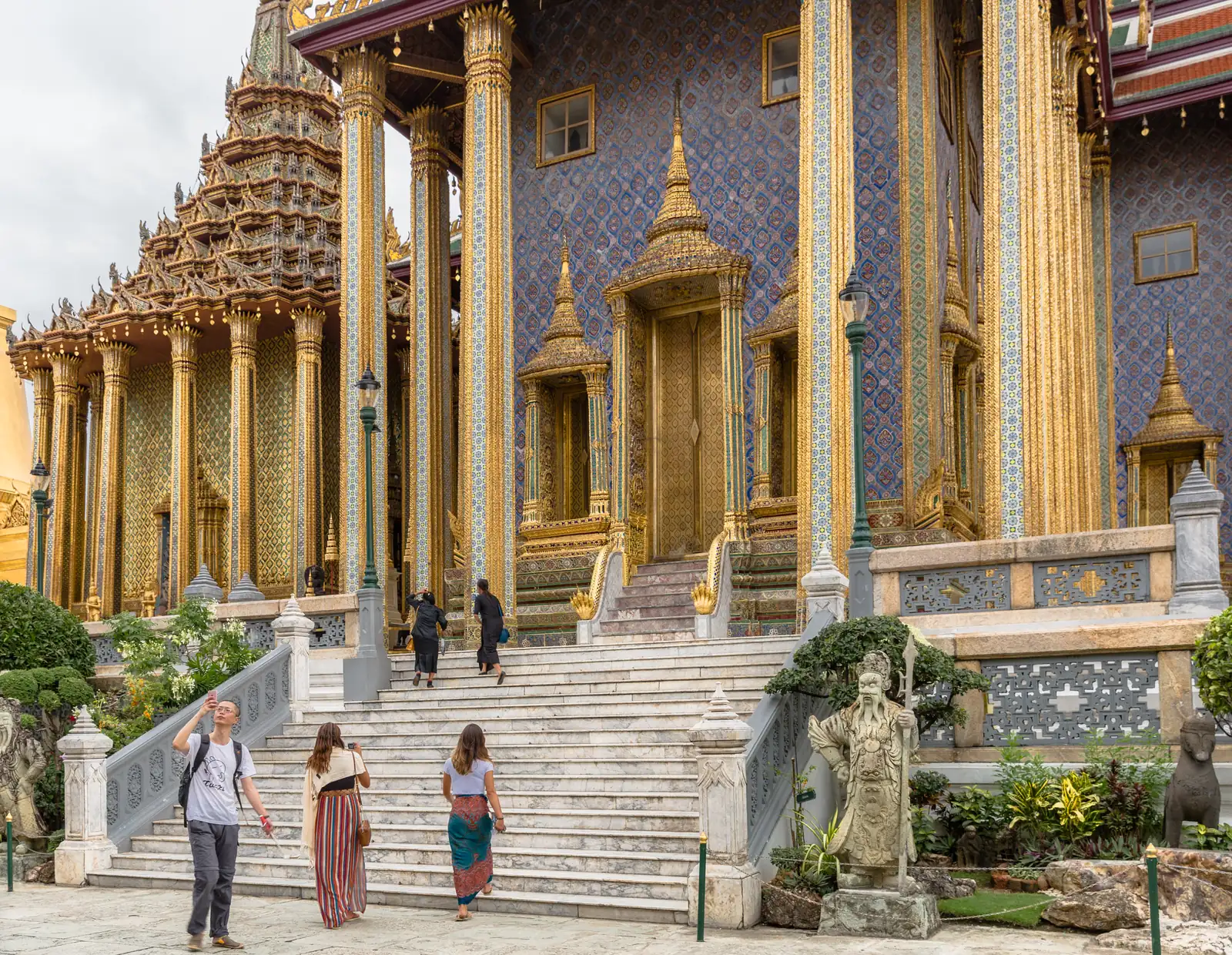
The ฿500 ticket is the most expensive in Thailand and still correct. The Temple of the Emerald Buddha is the most intricate acre the Thai state has ever built: the small jade statue sits high on its altar, and murals of the Ramakien run round the cloister walls (walk them anticlockwise). The ticket covers the palace grounds, Wat Phra Kaew and the Queen Sirikit Museum of Textiles, and the visitor entrance is on Na Phra Lan Road. Tickets stop at 15:30, but the right time is 08:30, before the tour groups and the heat arrive together. Ninety minutes of slow looking is the correct dose; out by 10:15 beats the bunching at the exit.
The dress code is enforced hardest here: shoulders and knees covered for everyone, nothing see-through, no ripped jeans, no leggings worn as trousers. Cover-ups are lent or sold at the gate (around ฿100–200 with a deposit), but carrying your own scarf saves the queue. Shoes off in the temple building, hat off, no photographs of the Emerald Buddha itself.
The honest warning is the one in our scams guide. On the pavement between Tha Chang pier and the gate, a well-dressed man with excellent English will tell you the palace is closed today for a Buddhist holiday or “cleaning”, but a tuk-tuk can take you to three other temples for ฿20. It is open. The ride ends at a jewellery shop, a tailor and a travel agent, each of which pays the driver. The sentence you need is “It’s open,” and you keep walking. If it genuinely is shut, a sign at the gate says so, not a man on the pavement.
Wat Pho and Wat Arun: the river pair
Wat Pho is five minutes south along the palace wall. The 46-metre Reclining Buddha is the headline, and the trick is the 108 bronze bowls behind it: change ฿20 for a cup of satang coins and drop one in each as you walk his length. Then the courtyards, with their stone Chinese giants and the four great chedis, which most people skip because they came for one photograph. Wat Pho is also the home of Thai massage, and the school inside still gives the real thing for roughly ฿480 an hour (we have seen ฿340 quoted for thirty minutes), queue at the pavilion, no booking. Do it now while your legs have only done one temple, or at 16:00 when they have done three; both are correct.
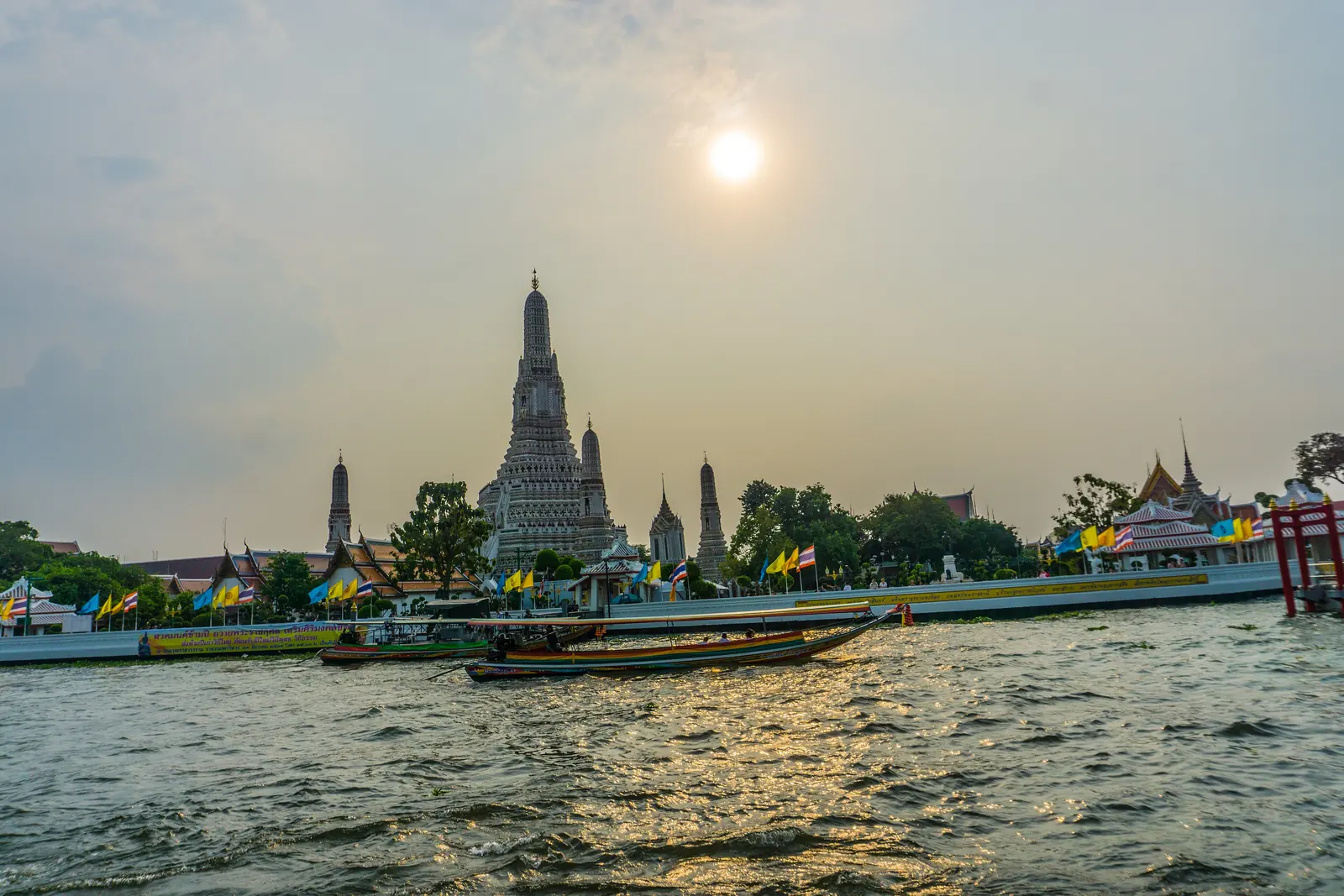
Cross the river by the ฿5 ferry from Tha Tien to Wat Arun. The entrance is ฿200 and the central prang is worth climbing slowly: the whole tower is tiled in broken Chinese porcelain, ballast from the junks that built Yaowarat. The name misleads, though. The Temple of Dawn faces east, so the light is on it in the afternoon, and it is built to be looked at from the other bank, where you should be at 17:30 with a ฿120–180 drink at one of the riverside bars facing it. Then board an express boat south at dusk (around ฿16). Our water taxi guide and the BTS and MRT guide explain how to get there without a ฿150–250 Grab in morning gridlock.
Wat Saket, Wat Suthat and the Giant Swing: the second morning
Wat Saket (the Golden Mount) is an artificial hill, a collapsed chedi from the 1800s that the city gave up on and let the trees take. The 344 steps spiral up through bells and bougainvillea gently enough that nobody arrives out of breath, and at the top you get the Old Town’s low roofs, the palace spires and the towers of Sukhumvit behind. It is ฿100 and opens from about 07:30, and the sunset climb is the version to do if you only do one. Ring the bells on the way down; everyone does. In Loy Krathong week a nine-day temple fair takes over the base, which is worth arranging a trip around.
Walk south down Dinso Road to the Giant Swing, the 21-metre red teak frame outside City Hall where, until 1935, Brahmin priests swung to snatch a bag of silver with their teeth, until enough of them died that the king stopped it. Behind it is Wat Suthat, one of the six royal temples of the first grade, with the tallest ordination hall in the city, murals that take an hour if you let them and an eight-metre Buddha cast in Sukhothai in the fourteenth century and floated down the river. The foreigner fee is now ฿100, up from the ฿20 it was for decades. Go mid-morning, when the light falls best in the cloister of gilded Buddhas.
Across Ratchadamnoen Klang is Wat Ratchanatdaram and its Loha Prasat, the “metal castle” of 37 black iron spires in tiers, a design that exists nowhere else since the original models fell down. It is free or a token fee, nearly empty and the most singular building in the Old Town. Ten minutes; the climb through the corridors is the point.
Wat Benchamabophit, Wat Paknam and the quieter temples worth a taxi
Wat Benchamabophit, the Marble Temple in Dusit, is built of Carrara marble with stained glass and a courtyard of 52 Buddha images in every regional style; it is on the back of the five-baht coin. Fees are quoted at ฿50 or ฿100 depending on the source, so check at the gate. Come at 06:00 for the monks receiving alms at the gate, which here is the reverse of everywhere else: the monks stand still and the donors come to them. You will have the place to yourself.
Wat Paknam Phasi Charoen is free and in Thonburi (BTS Wutthakat or MRT Bang Phai, then a ten-minute walk): a 69-metre seated bronze Buddha that appeared on the skyline in 2021, and behind it a white stupa whose top floor is a green-glass chedi under a painted cosmos ceiling that looks like nothing else in Buddhism. Bangkokers come on Sundays; foreigners mostly have not found it. It is the most worthwhile half-morning outside the Old Town.
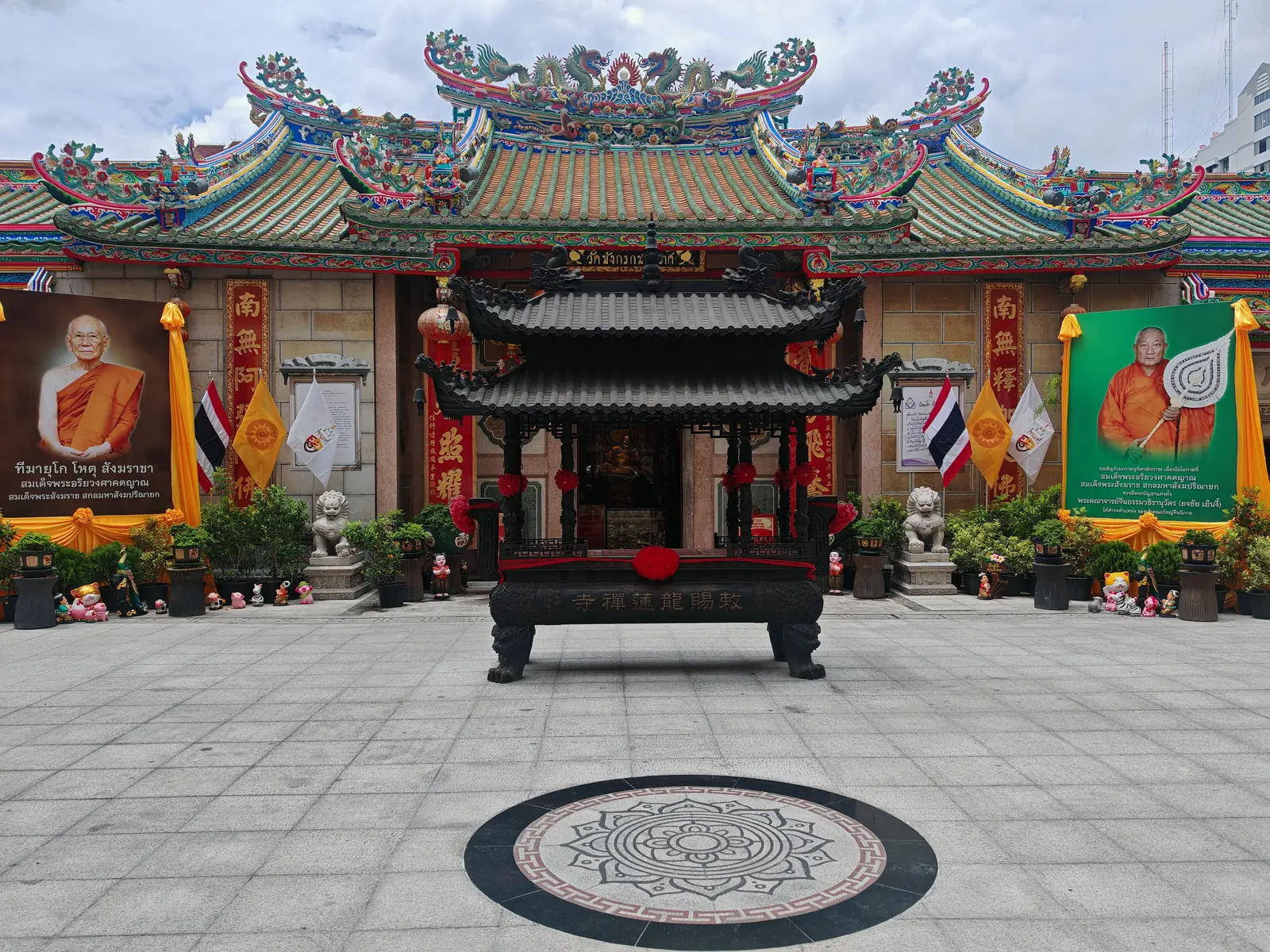
Wat Traimit holds the five-and-a-half-tonne solid-gold Buddha that hid under plaster for two centuries; it is ฿40 for the statue and about ฿100 more for the museum, and a natural fifteen-minute stop on the way into Chinatown. Wat Mangkon Kamalawat is the big Chinese temple on Charoen Krung in the middle of Yaowarat: incense by the armful, paper offerings, fortune sticks and a queue of Thai-Chinese Bangkok asking for luck. It is free, loudest and best at Chinese New Year, and we have the dates in our Chinese New Year 2027 guide.
The Erawan Shrine, free, at the Ratchaprasong intersection under the BTS at Chit Lom, is not a temple but a Hindu shrine to Brahma, built in 1956 to end a run of accidents on the hotel site behind it and now the busiest place of worship in the city: garlands ฿20–50, a resident troupe dancing thank-yous from ฿260 and up, office workers praying between the malls. Ten minutes at any time of day, and the best place to see that Bangkok’s Buddhism is wider than Buddhism.
Temple etiquette in Bangkok, once
Shoulders and knees covered, shoes off inside any building with a Buddha in it, hat off. Never point your feet at a Buddha image or a monk: sit mermaid-style or kneel. Women do not touch monks or hand them things directly. Do not climb on anything, do not pose with your back to a Buddha, and do not photograph people praying as if they were scenery. Give ฿20 at the donation box if you have used the place as a museum; it is what it costs to keep the roof on. The longer version is in our temple etiquette guide, and the rest of Thai customs are in the Thai culture and etiquette hub.
A two-morning Bangkok temple plan, with costs
**Morning one, the river:** BTS to Saphan Taksin, Sathorn pier, an orange-flag express boat (around ฿16) to Tha Chang. Grand Palace 08:30. Wat Pho 10:30. Lunch behind Tha Tien (a noodle bowl ฿50–70). Ferry to Wat Arun 13:30. A drink on the Tha Tien bank at 17:30. Tickets come to ฿1,000, boats to around ฿40 and a noodle lunch to about ฿80, so roughly ฿1,150 without extras and about ฿1,750 once you add a Wat Pho massage (฿480) and a river drink (฿150).
**Morning two, the Old Town:** Wat Saket 08:00, the Loha Prasat, the Giant Swing and Wat Suthat by 10:30, then Chinatown via Wat Traimit and Wat Mangkon, and dinner on Yaowarat. Around ฿300 in tickets. More itinerary is in our things to do in Bangkok and 3 days in Bangkok guides. Compare the north: Chiang Mai’s temples are smaller and less crowded, and the old capital of Ayutthaya is the day-trip alternative.
If you want to be on the river for sunrise, sala rattanakosin Bangkok, opposite Wat Arun, and Riva Surya Bangkok on the river near Khao San are the two Old Town riverside hotels on our verified list; our where to stay in Bangkok guide explains the areas. Guided temple morning and river-boat options are on GetYourGuide; a coach tour of the same circuit often costs ฿1,500–2,500 and gets you to the palace at eleven, which is the reason to go on foot. Our own Bangkok Field Guide has the full temple circuit at /field-guides/. For festival dates that close or crowd temples, such as Loy Krathong, Visakha Bucha and Songkran, see the festivals and public holidays calendar.
Bangkok temples: your questions, answered
Which temples in Bangkok are the most worth visiting?
The Grand Palace with Wat Phra Kaew, Wat Pho and Wat Arun are the big three and worth it, in that order of crowd. For something quieter, Wat Saket, Wat Suthat with the Giant Swing, the Loha Prasat and Wat Benchamabophit at 06:00 are the strongest second-morning choices, and Wat Mangkon and Wat Paknam are worth a taxi.
How much do Bangkok temples cost for foreigners?
As of November 2026 the Grand Palace is ฿500, Wat Pho ฿300 with a bottle of water, Wat Arun ฿200, Wat Saket and Wat Suthat ฿100 each, Wat Traimit ฿40 and Wat Benchamabophit ฿50 to ฿100 depending on the source. Wat Mangkon, Wat Paknam and the Erawan Shrine are free. Thais pay less or nothing.
What is the dress code for Bangkok temples?
Shoulders and knees covered for everyone, nothing see-through, no ripped jeans and no leggings worn as trousers. The Grand Palace enforces it hardest and lends or sells cover-ups at the gate. A light scarf in your bag solves the rest, and shoes come off inside any building holding a Buddha image.
Is the Grand Palace really closed when someone tells you it is?
No. A man outside the gate telling you it is closed for a holiday, and offering a cheap tuk-tuk tour, is the oldest scam in Bangkok. The ride ends at a jewellery shop or tailor that pays the driver. If it is closed for a genuine ceremony, there is an official sign at the gate.
How long do you need to see the Bangkok temples?
Two mornings. The first covers the Grand Palace, Wat Pho and Wat Arun by foot and ferry, about 6 to 7 hours with lunch. The second covers Wat Saket, the Giant Swing, Wat Suthat and Chinatown’s temples. Arrive at opening, because the heat and the tour groups arrive together by 11:00.
Plan · Book · Go
Book the trip
Some links in this guide are affiliate links. If you book through them we may earn a small commission at no extra cost to you — it helps keep Destination Thailand independent.