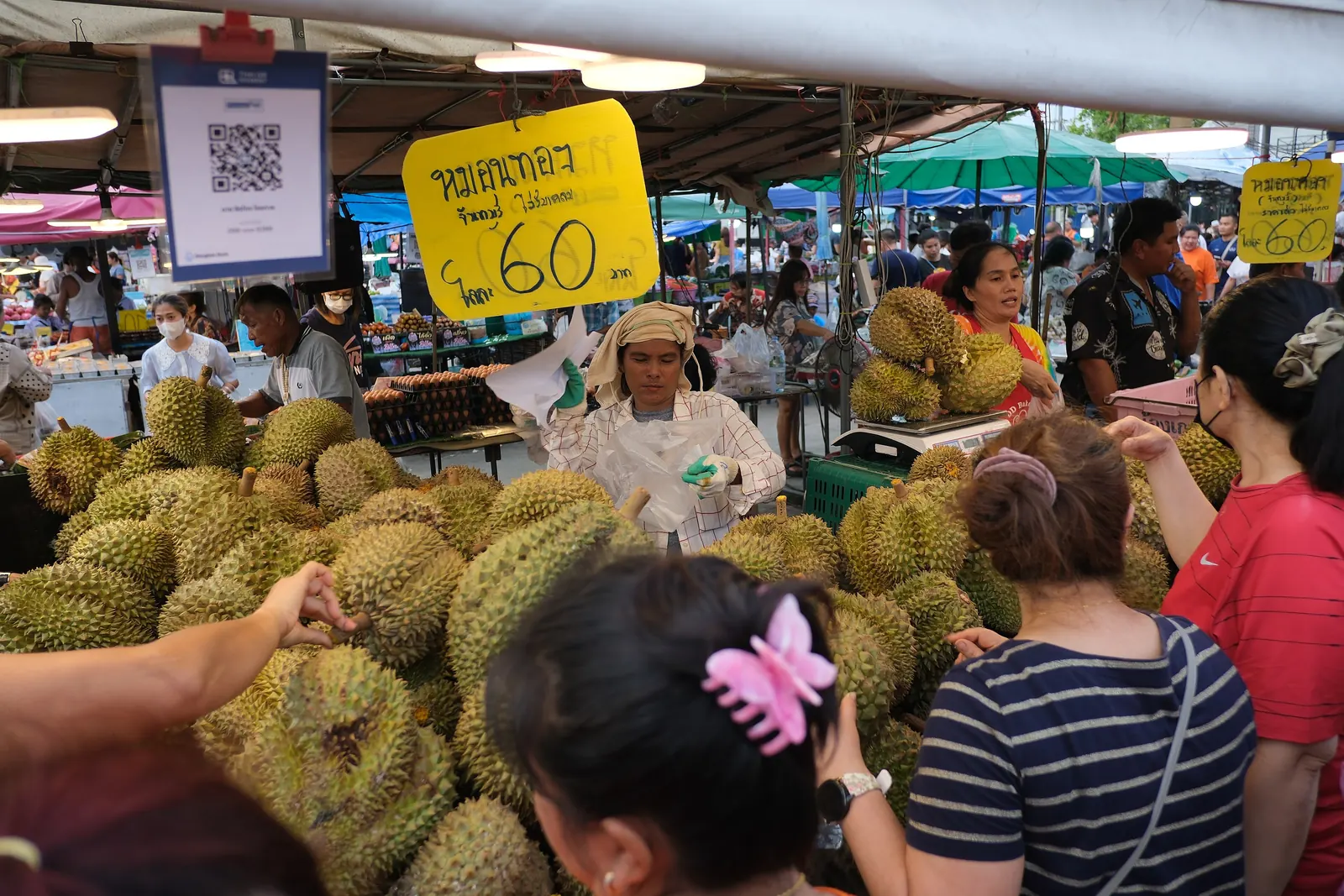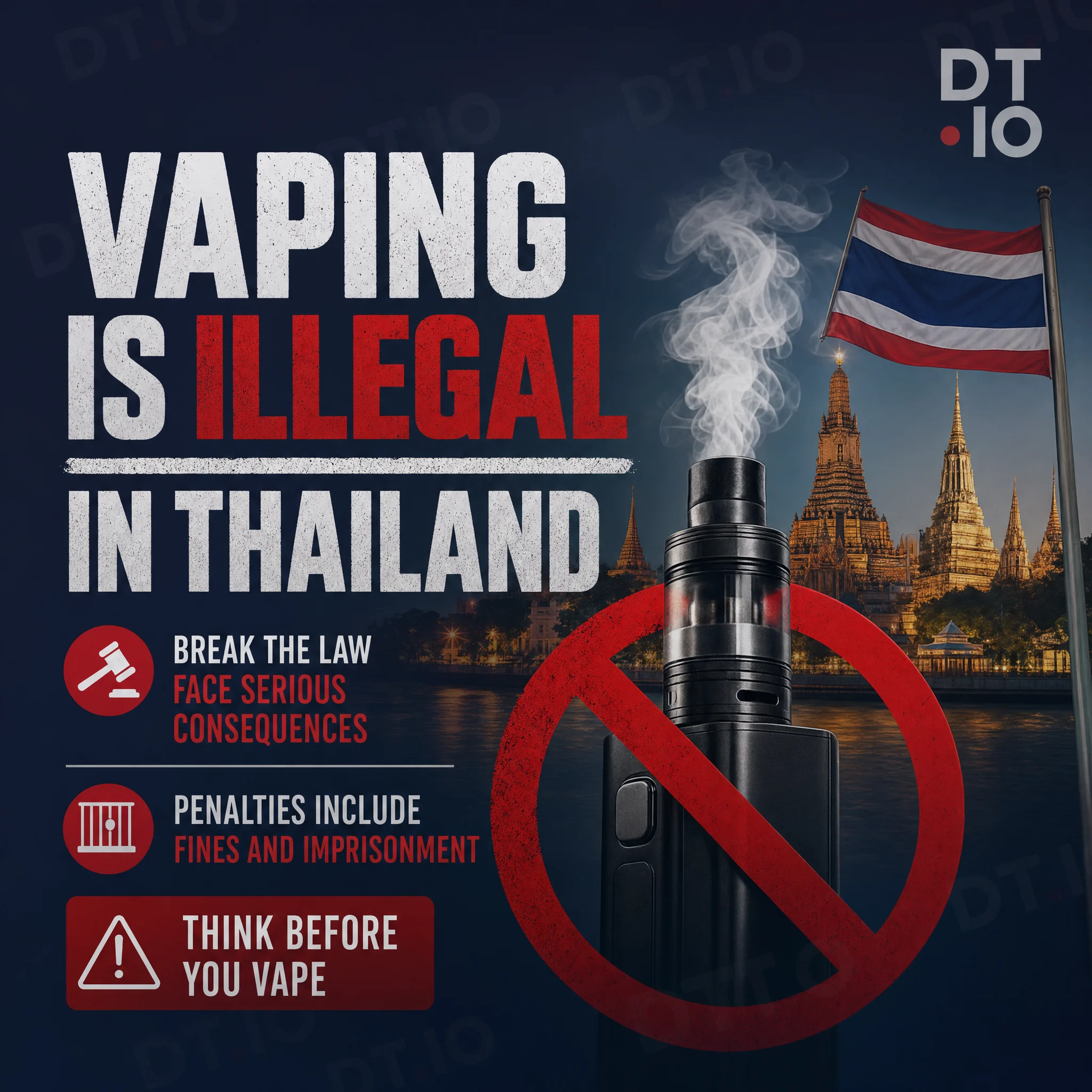
No — you cannot legally take your vape to Thailand in 2026; all e‑cigarettes, vape devices and heated tobacco products are banned, with typical tourist fines in the 20,000–30,000 THB range and possible jail time in serious cases.
Vaping in Thailand 2026: Can You Take Your Vape to Thailand?
By Apsara, your legal & visa guide
Important disclaimer: This article is for general information and travel planning only and does not constitute legal advice. Laws and enforcement can change quickly; always check current official guidance and consult your embassy or a qualified lawyer before you travel.
Snapshot: Vaping in Thailand Right Now
- Vaping has been effectively banned in Thailand since 2014 through a mix of import, customs and consumer‑protection laws.
- The ban covers import, sale, possession and use of all electronic smoking devices: nicotine vapes, cannabis vapes, CBD pens, disposables, mods, pods and tank systems.
- A nationwide crackdown ordered in early 2025 dramatically increased arrests, seizures and fines, and enforcement remains strict into 2026.
If you are planning a trip, the practical rule is brutally simple: leave the vape at home.
Is vaping legal in Thailand in 2026?
No. Vaping is illegal in Thailand in 2026. There is no “tourist exception,” no nicotine‑free loophole, and no allowance for personal‑use quantities.
Thailand treats e‑cigarettes and related products as prohibited contraband: you cannot legally import them, you cannot legally buy them, and you cannot legally possess or use them anywhere in the country.
Under orders issued in 2014, e‑cigarettes and similar devices are classified as prohibited imports, and later notifications under consumer and tobacco‑control laws prohibit domestic sale and public use.
What actually happens at the airport?
Customs screening on arrival
Major airports such as Suvarnabhumi (BKK), Don Mueang (DMK) and Phuket (HKT) now treat vape detection as a core part of customs screening.
Bags go through X‑ray, and customs officers can pull you aside if they see devices, cartridges or suspicious batteries; if a vape is found, it is confiscated and you can be fined on the spot.
Typical reported outcomes for tourists include:
- Confiscation of all devices and liquids.
- On‑the‑spot fines often in the 5,000–20,000 THB range at customs, rising to 20,000–30,000 THB in some high‑profile crackdowns.
- Formal documentation of the seizure and fine, and in some cases brief detention for processing.
Intensified enforcement since 2025
In a 30‑day national campaign ordered by the Prime Minister in early 2025, authorities arrested 690 people in 666 vape‑related cases and seized around 455,000 devices worth roughly 41 million THB.
Airports feature prominently in this crackdown, with reports of travellers being held for hours or even days over single devices, particularly when they could not pay fines immediately.
Transit passengers
Technically, the import ban applies even if you are just transiting through a Thai airport, because the device is still entering Thai territory.
In practice, enforcement against transit‑only passengers has been less common, but if your bag is scanned or inspected while changing terminals, the same confiscation and fine rules can apply.
Travel‑rules tie‑in: For a broader overview of what else can trigger fines at the airport in 2026 (duty‑free limits, prescription meds, drones and more), see your main Thailand 2026 travel rules guide.
The fines — and the informant‑reward twist
How fines are calculated
Thai law allows customs authorities to fine you up to four times the assessed value of prohibited goods, including vapes, plus applicable taxes.
In practice, travellers and local sources report:
- Street or tourist‑area stops: common “tea money” or formal fines of around 20,000–30,000 THB.
- Airport customs cases: fines ranging from about 5,000 THB up to 50,000 THB in some aggressively enforced cases.
In serious cases involving commercial quantities, import charges under the Customs Act allow for penalties up to 10 years’ imprisonment and fines up to 500,000 THB.
The citizen informant reward system
Since 2024–2025, Thai authorities have explicitly encouraged citizens to report vape use and sales by offering bounties of up to 60% of the fine imposed on offenders.
This means:
- A local who reports a vape seller or user could receive thousands of baht when a fine is issued.
- Police now stake out known street vape stalls and catch tourists immediately after purchase, maximising both fines and informant rewards.
The combination of stiff fines, airport focus and informant incentives makes Thailand one of the strictest anti‑vaping jurisdictions in the world in 2026.
What about IQOS and other heated tobacco devices?
Heat‑not‑burn devices such as IQOS, Glo and Ploom are treated exactly like vapes under Thai law.
Official and specialist guides emphasise that IQOS and similar devices are not allowed: importing, possessing or using them can lead to the same confiscation, fines and potential customs charges as any other electronic smoking device.
- IQOS Heets and sticks count as part of the banned category because they are designed to be used with an electronic heating device.
- Authorities do not distinguish between “traditional” e‑cigs, disposables, pod systems and heated‑tobacco devices; all fall under the ban.
If you are a heat‑not‑burn user, the safe rule is identical: do not bring IQOS or any similar device to Thailand.
If you’re already in Thailand with a vape
This is the uncomfortable scenario many visitors find themselves in: you arrived before you learned about the ban, and you have a device in your bag.
Thai law effectively assumes that any vape in your possession was imported illegally after the 2014 ban, because there is no legal channel to purchase or bring such devices into the country now.
From a risk‑management perspective:
- Carrying the device (even switched off, even in your hotel) still exposes you to seizure and fines if police or customs find it.
- Using it in public — on beaches, streets, outside bars or malls — dramatically increases your risk, especially in tourist hotspots like Sukhumvit (Bangkok), Patong (Phuket) and Walking Street (Pattaya).
The least‑bad options if you realise you have a device:
- Stop using it immediately and keep it out of sight until you can dispose of it safely outside Thailand.
- Do not sell or give it away locally; sale and distribution attract harsher penalties than personal possession.
Some travellers choose to declare prohibited items voluntarily at customs in the red channel, which can lead to lower penalties than having devices discovered in scans — but this is still a legal violation and may involve fines.
Customs tie‑in: For a wider list of what customs screens for (cigarette limits, prescription meds, controlled herbs), see our Thailand 2026 entry rules for the full customs and prohibited-items picture.
Nicotine alternatives that are legal in Thailand
If you rely on nicotine, there are legal, lower‑risk ways to manage cravings during your trip that do not involve vapes.
Common legal options include:
- Nicotine replacement therapy (NRT): patches, gum and lozenges are sold over the counter at major pharmacy chains such as Boots and Watsons, and in many hospitals.
- Traditional cigarettes: still legal but tightly regulated; you must respect smoking bans in enclosed public places, transport hubs and designated smoke‑free beaches or you can be fined.
- Herbal inhalers (“ya dom”): popular menthol or herbal nose inhalers that many locals use to manage the hand‑to‑mouth habit component of nicotine dependence.
If you are considering cannabis as an alternative, remember that from mid‑2025 Thailand re‑classified cannabis flower as a controlled medical herb, closed thousands of recreational shops and now requires medical prescriptions with strict quantity and age limits.
Cannabis vapes and high‑THC extracts remain fully illegal and are treated as narcotics; combining vapes and cannabis substantially increases legal risk.
Practical prep before you fly
Before you pack for Thailand in 2026 (and sort your visa and entry requirements), especially if you are a smoker or vaper, make the following checklist part of your routine.
- Radically clean your luggage. Check every backpack, cross‑body bag and tech pouch for “forgotten” disposables, pods, chargers and cartridges; X‑ray scanners will pick up devices surprisingly easily.
- Do not rely on checked baggage. Aviation safety rules already restrict lithium batteries in checked luggage, and customs can still act on device finds; placing vapes in checked bags does not make them legal.
- Plan a nicotine strategy. If you usually vape high‑nicotine liquids, speak with a doctor before travel about NRT or other harm‑reduction strategies for the duration of your trip.
- Educate your group. If you’re travelling with friends or family who vape, make sure everyone understands that “just one disposable” can turn into a 30,000 THB fine and a long day at the airport.
Visa‑rules tie‑in: If you’re combining this guide with visa‑run planning or long‑stay itineraries, cross‑link to your main Thailand visa guide so readers see both legal‑stay and legal‑substance issues in one itinerary.
FAQ: Vaping in Thailand 2026
Is vaping legal in Thailand in 2026?
No. Vaping is illegal nationwide in Thailand in 2026, covering import, sale, possession and use of all electronic smoking devices.
Can I take my vape to Thailand in 2026 if I promise not to use it?
No. The ban applies to bringing the device into the country, regardless of whether you plan to use it; customs can confiscate it and fine you even if it stays in your bag.
Are nicotine‑free vapes or CBD pens allowed?
No. Thai law does not distinguish between nicotine‑containing and nicotine‑free devices, or between CBD and THC cartridges — anything that functions as a vape is banned.
What happens if customs finds a vape in my luggage?
Customs officers will confiscate the device and may impose an immediate fine, often reported between 5,000 and 20,000 THB, with higher fines during crackdowns; in serious cases, you can face formal charges under the Customs Act.
Can I buy vapes in Thailand on the street?
Vapes are sold on the black market in tourist areas, but buying, possessing or using them is just as illegal as importing them; police regularly raid street stalls and fine tourists who have just bought devices.
Are IQOS and other heated tobacco products allowed?
No. IQOS, Glo, Ploom and similar heat‑not‑burn devices are banned under the same rules as vapes, with identical penalties for import, possession and use.
Do tourists really get arrested, or is it just fines?
Most tourist cases end in confiscation and fines, but there are documented incidents of multi‑day detention, formal arrest and prosecution, especially for larger quantities or during high‑profile campaign periods.
Does my embassy help if I’m caught vaping?
Embassies can provide consular assistance, ensure you have legal representation and monitor your treatment, but they cannot override Thai law or secure your release; you remain subject to local courts and penalties.
Are nicotine patches, gum and lozenges legal?
Yes. Nicotine replacement products are legal and widely available in Thai pharmacies and hospitals, and they are the safest way to manage nicotine dependence while complying with local law.
Again, this guide is not legal advice. It is a practical summary of current public information and traveller reports as of 2025–2026 to help you plan a safer, stress‑free trip to Thailand.
Related guides
- Thailand’s 2026 travel rules — what changed, what didn’t, and what to pack
- How to Extend a Tourist Visa or Visa-Free Stay in Thailand at Immigration
- Thailand Privilege Card vs DTV: the expensive velvet rope or the budget tourist bus?
Arriving in Thailand?
Some links below are affiliate links. If you book through them we may earn a small commission at no extra cost to you.
Sort your data before you land: grab a Thailand eSIM from Simbye (code DESTTHAI15 takes 15% off) — rules like these change, and you’ll want working data at the airport, not after it.