Nobody goes to Trat. They go through it. Every year, thousands of travellers roll off the Bangkok bus, get funnelled into a songthaew, and stare at their phones until the Koh Chang ferry swallows them whole. Total time spent in Trat, Thailand’s easternmost province: about forty-five minutes, most of it in a queue. A small injustice, because the province being speed-run is one of the most quietly likeable corners of the eastern seaboard.
Yes, the islands are the headline act, and they have earned it. Koh Kood is arguably the best island left in Thailand — a sentence I do not type lightly. But the mainland has its own case to make: a wooden old town with canal-side guesthouses and not one but two genuinely good night markets, a 200-year-old Muslim-Buddhist fishing village that still weaves palm-leaf hats, a black sand beach, and a ruby-mining backstory it shares with Chanthaburi next door. Our Trat province profile has the quick-reference version.
So here is the deal. Trat, Thailand’s great island gateway, is exactly that — use it. But give the mainland a night, maybe two. It will repay you in grilled squid and change from a ฿500 note.
What Trat really is
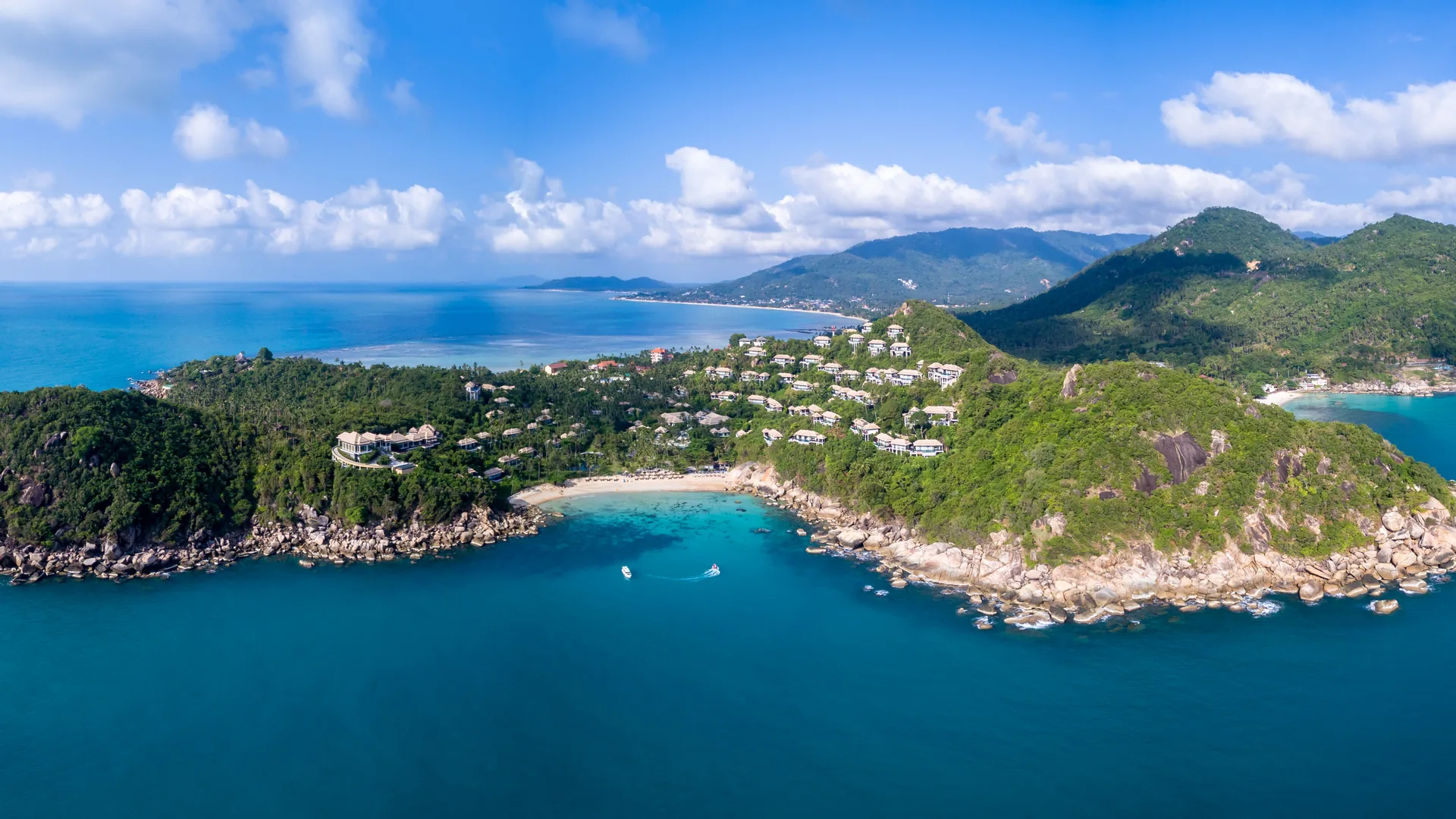
Trat is the last province on Thailand’s east coast, a thin wedge of orchards, mangroves and fishing jetties running down the Cambodian border until the country simply runs out at Hat Lek. Offshore, around fifty islands sit in and around Mu Ko Chang National Park, three of which — Koh Chang, Koh Mak and Koh Kood — carry the province’s entire international reputation on their backs.
The capital, also called Trat, is a small market town most guidebooks dismiss in a paragraph. Their mistake. France occupied Trat in the early 1900s before handing it back in a territorial swap, and the border hills at Bo Rai spent the 1970s and 80s giving up rubies alongside Chanthaburi’s gem barons. The rubies are gone; the shophouses they paid for are still here.
Why go to Trat
Because one province hands you three of Thailand’s best islands, each doing a different job — the crowd-pleaser, the quiet one, and the one you write home about. No other Thai province offers that spread from a single bus ticket.
And because the mainland is the east coast at its most honest: night markets where dinner costs ฿50, mangrove channels full of oyster farms, black sand, durian orchards, and almost nobody else with a backpack. If your Thailand is hill temples and cool-season mist, go north. Down here in Trat, Thailand happens at sea level — jetties, fruit and slow evenings — and that is a different pleasure, but a real one.
Getting to Trat, Thailand
There is no railway, so you are on rubber or wings. Buses leave Bangkok’s Ekkamai terminal through the morning and take five to five and a half hours; expect ฿250-300. Minivans from Ekkamai and Mo Chit do it slightly faster for similar money, driven by men who regard braking as an admission of defeat.
The civilised option is Bangkok Airways, which flies Bangkok to Trat in about an hour for anywhere between ฿2,500 and ฿4,500 one way. The airline owns the airport, an open-sided pavilion that is genuinely one of the nicest places in Thailand to collect a bag. From there it is about 40 minutes by shared minivan to the piers, for a few hundred baht.
The piers matter. Ao Thammachat runs the Koh Chang car ferry (30-45 minutes, about ฿80 a head). Laem Ngop sends speedboats to Koh Mak (45 minutes, around ฿450). Laem Sok, half an hour south, serves Koh Kood (about an hour by express boat, ฿350-500, usually with a town transfer). From Cambodia, the Hat Lek crossing opposite Koh Kong is about ninety minutes from town by minivan, roughly ฿120.
Where to stay
Accommodation in Trat, Thailand splits cleanly into mainland and island. In town, stay in the old quarter along and behind Thana Charoen Road, where wooden guesthouses back onto the canal. A clean fan room costs ฿300-500, air-con ฿600-800, and a handful of lovingly restored shophouse places charge ฿1,000-1,500 and are worth it. Everything is walkable to both night markets, which is the entire point.
On the islands the maths changes. Koh Chang runs the full spectrum: ฿400 backpacker huts around Lonely Beach, mid-range resorts at Klong Prao, and ฿4,000-plus pool villas. Koh Mak is mostly family-run bungalows at ฿800-2,500. Koh Kood starts near ฿700-1,000 for simple rooms around Klong Chao and climbs into five figures for the resorts that made its name.
What to eat in Trat
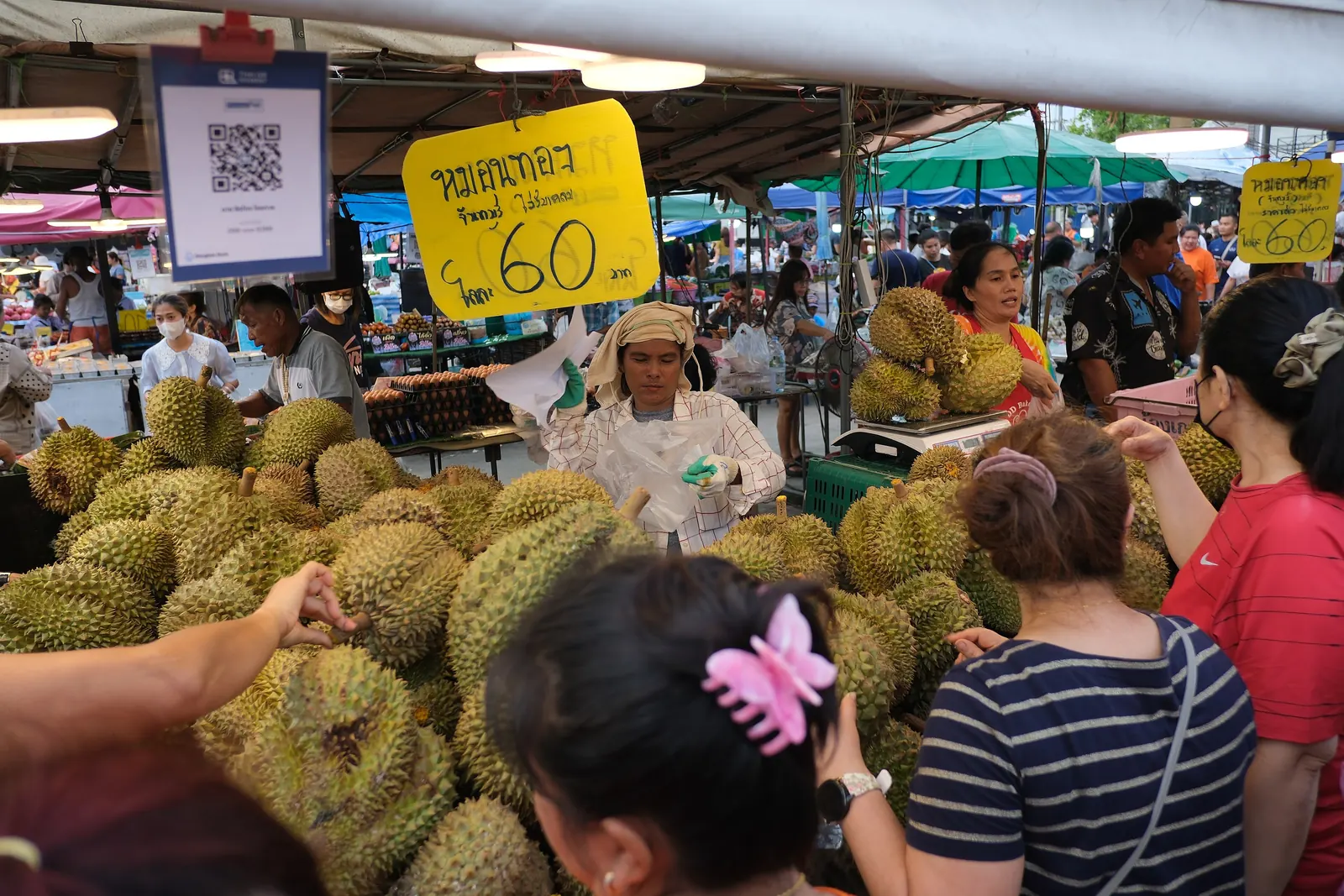
Seafood, obviously, but specifically the mangrove kind: oysters and cockles farmed in the channels off Ban Nam Chiao, blue crab, and grilled squid sold by the skewer. The row of seafood places near the Laem Ngop waterfront does big unfussy plates for ฿150-300, and in town both night markets will feed you properly for under ฿100 — noodle soups and moo ping at ฿40-60, seafood som tam a little more.
Trat also sits in the same orchard belt as Chanthaburi, so from roughly April to July the markets drown in durian, mangosteen and rambutan. Look for salak phlae, the small golden snake fruit the province is genuinely proud of — sweet-sour and sold by the bunch for pocket change.
Top things to do in Trat, Thailand
1. Take the boat to Koh Kood, arguably Thailand’s best island
There, I said it again. Koh Kood is what Samui was before the airport: clear water, white sand, a jungle interior with the Klong Chao waterfall you can swim beneath, and roads quiet enough that a scooter feels like freedom rather than survival. Boats leave from Laem Sok and take about an hour; stay three nights minimum, because a day trip to Koh Kood is like ordering a steak and eating the garnish.
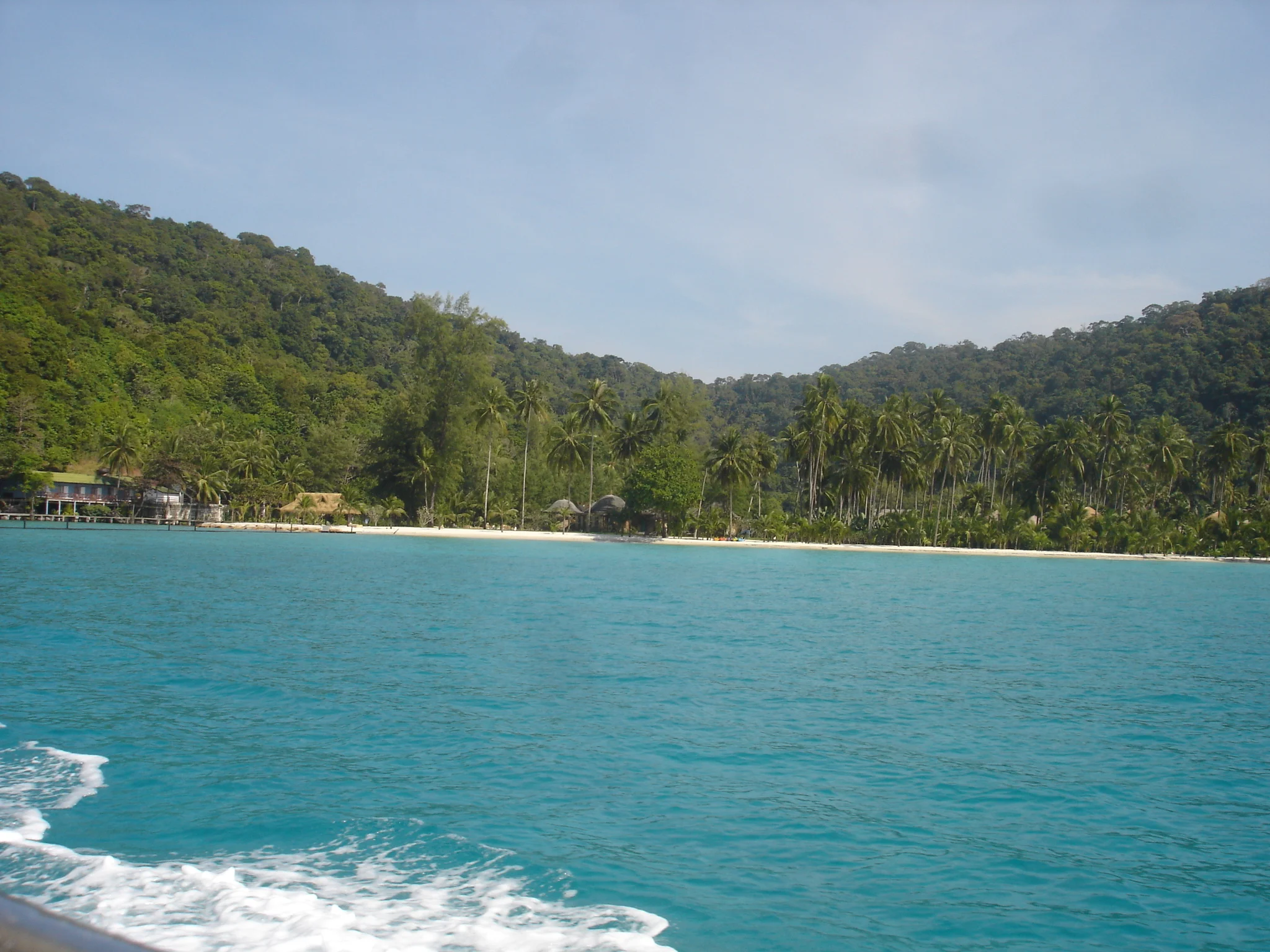
2. Cycle Koh Mak, the flat and quiet one
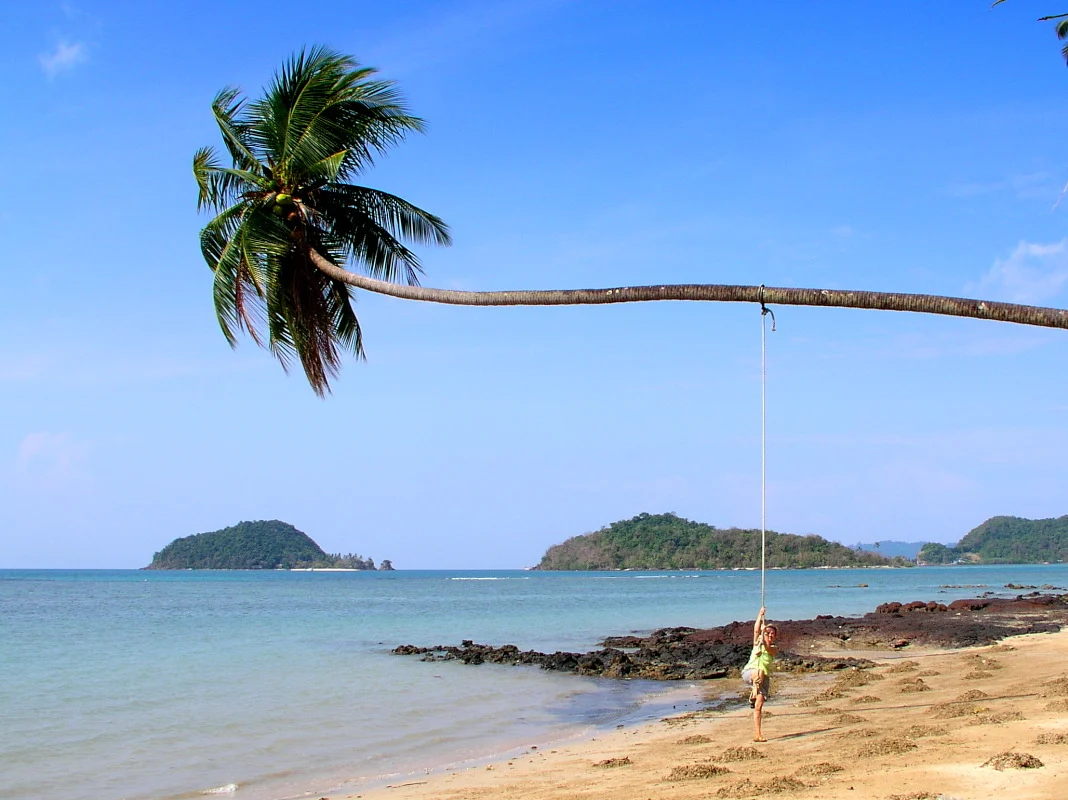
Koh Mak has been owned by a handful of related families for generations, and they have kept it deliberately low-key: no big chains, no jet skis, nothing above the palms. It is also almost entirely flat — a miracle in Thai island terms — so hire a bicycle for about ฿100 a day and cross the whole island between coconut plantations in under an hour. The speedboat from Laem Ngop takes about 45 minutes.
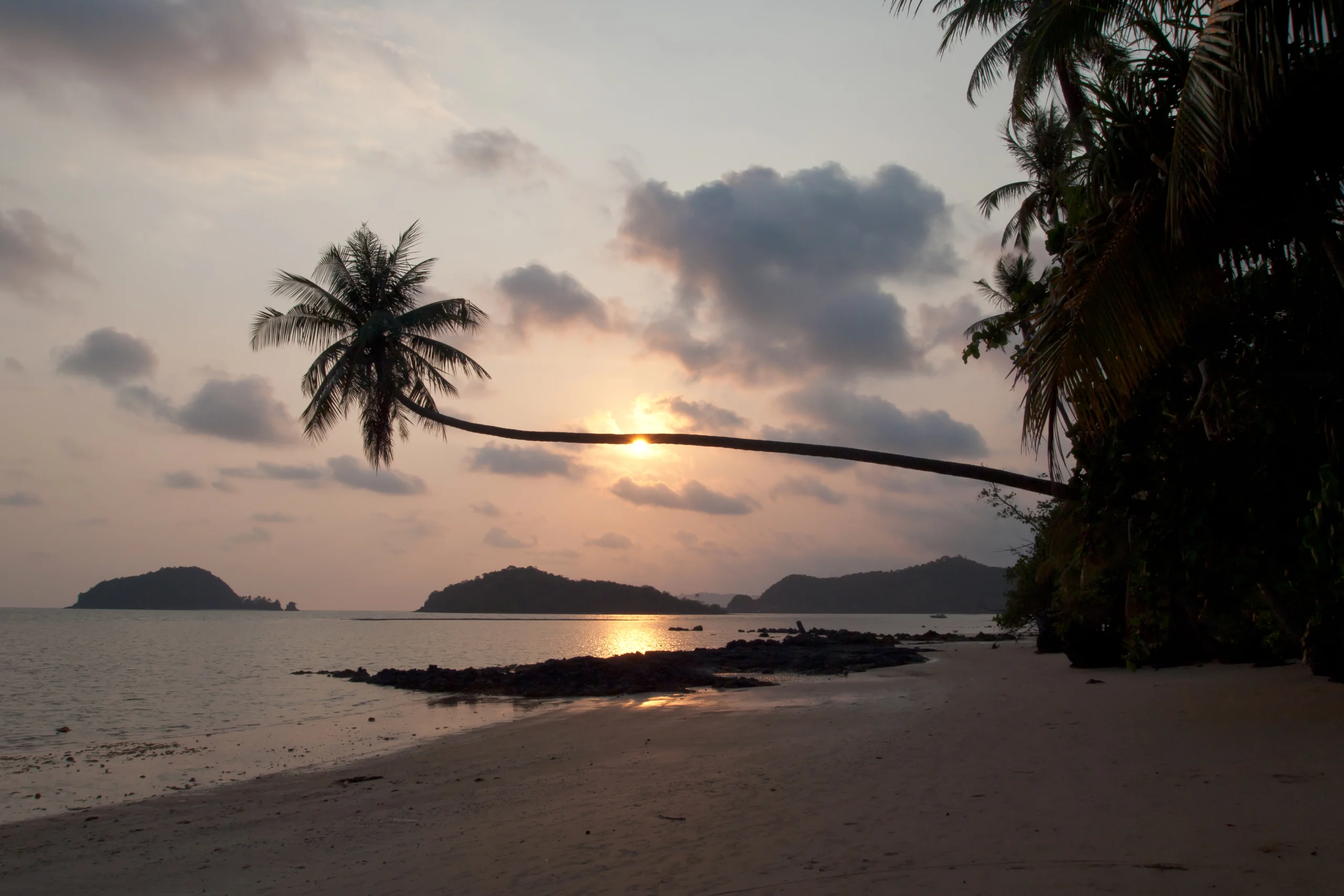
3. Do Koh Chang properly — interior and east coast
Thailand’s second-largest island gets dismissed as overdeveloped by people who never left the west-coast strip. The interior is proper rainforest with the Klong Plu waterfall (national park entry about ฿200 for foreigners), and the east coast is another world: mangrove villages around Salak Khok, fishing piers, and guesthouses that see a dozen visitors a week. With the car ferry running constantly, it is also the easiest island of the three to reach.
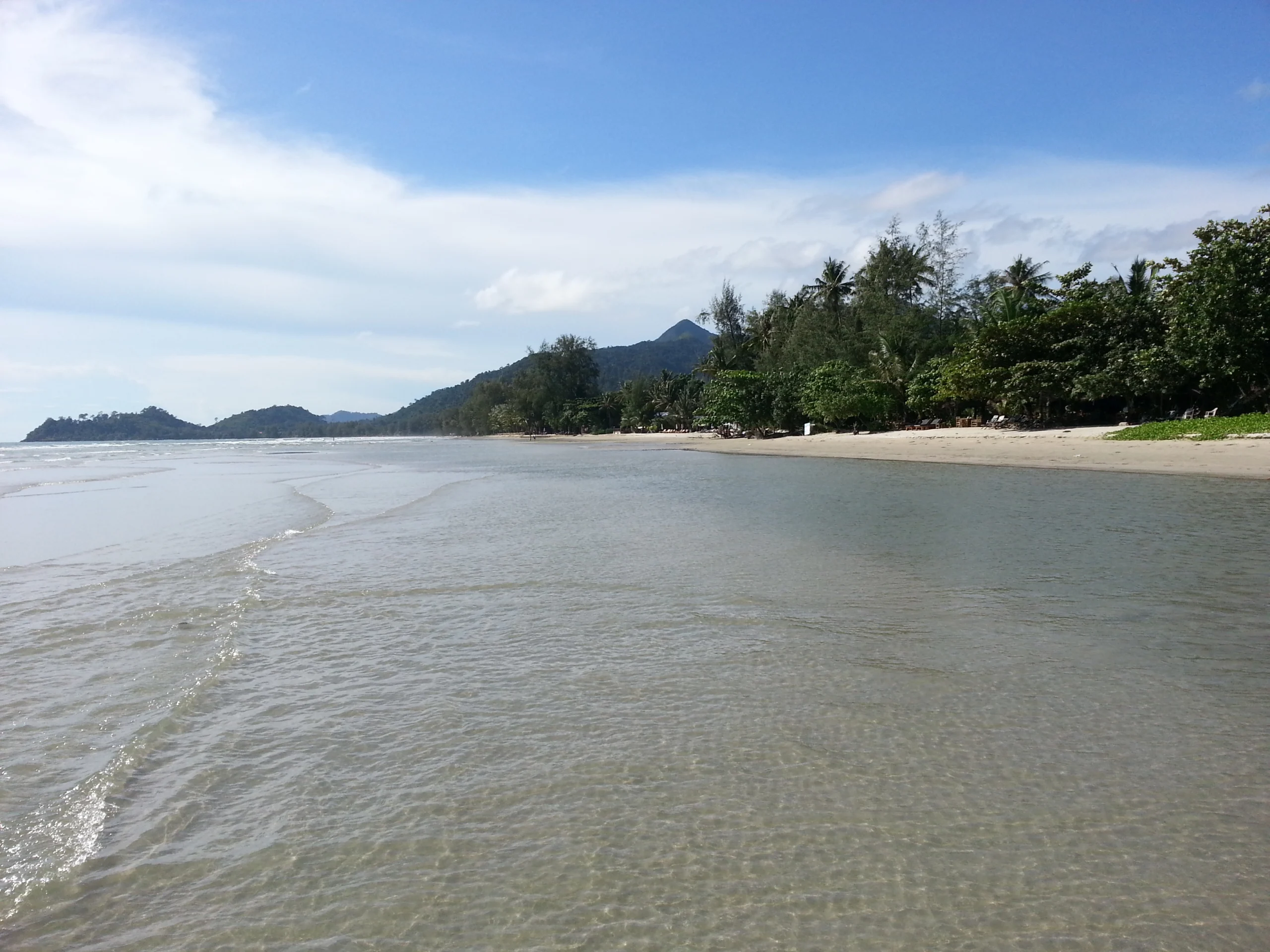
4. Give Trat old town an evening — and both night markets
The old quarter’s teak shophouses and canal lanes deserve an unhurried hour, and then dinner. Trat somehow supports two night markets within a short walk of each other, and you should eat at both. ฿150 covers dinner, dessert and a fresh juice, and you will be the only foreigner at half the stalls.
5. Spend a morning in Ban Nam Chiao fishing village
Fifteen minutes from town, Ban Nam Chiao is a 200-year-old community where the mosque and the Buddhist temple share one skyline and nobody thinks that is remarkable. The village is famous for ngob, the conical palm-leaf farmer hats, and the aunties will happily show you how they are folded. Take a boat trip through the mangrove channel past the oyster farms for a few hundred baht, or stay in a village homestay for ฿500-800 with meals. Community-run tourism that actually deserves the label.
6. Find the black sand beach at Ao Prao
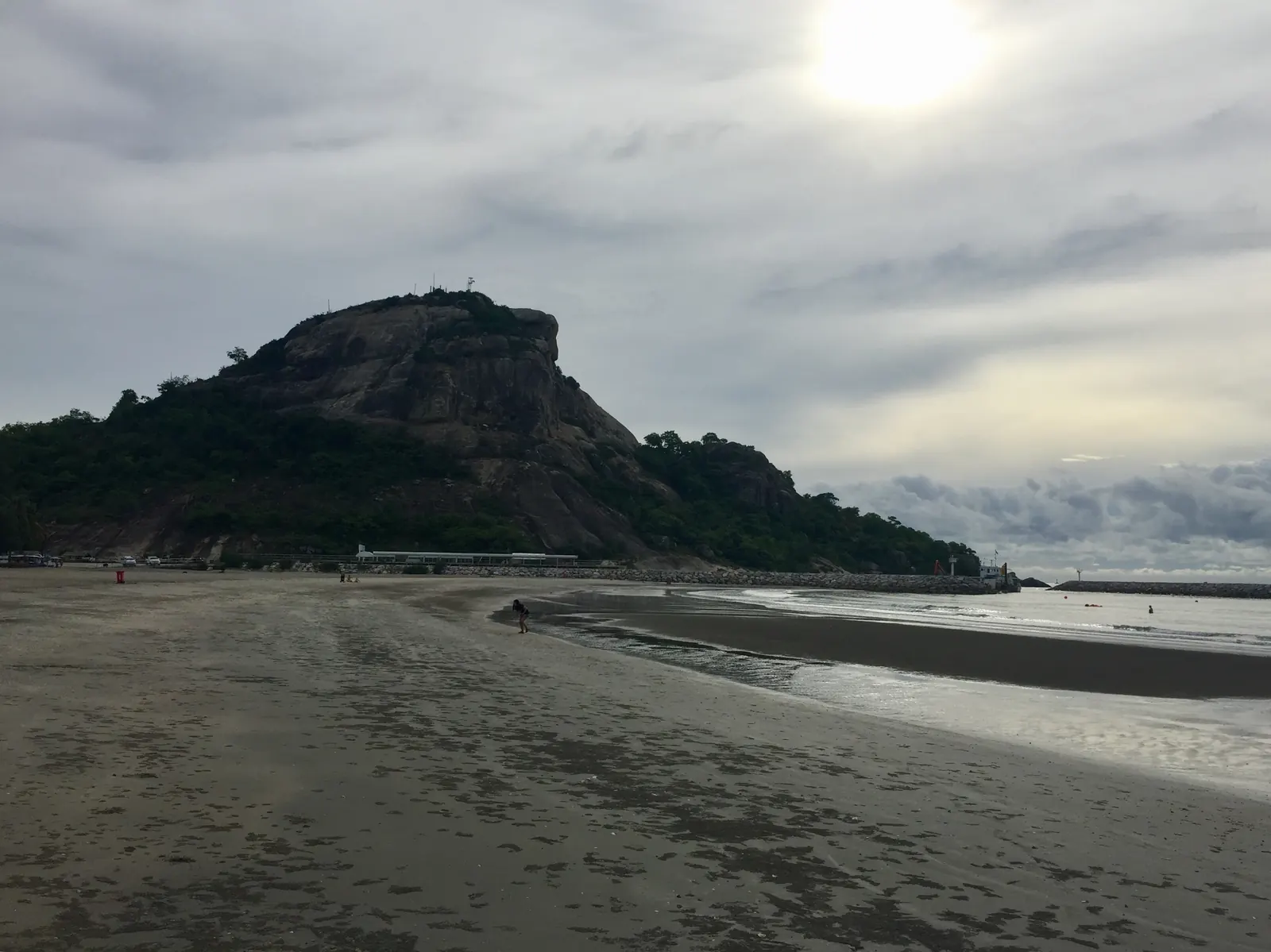
Trat’s oddest attraction is a beach the colour of wet charcoal at Ao Prao, where mineral-rich sediment has turned the sand black and locals bury themselves in it, swearing it eases aching joints. It is free, usually empty, and backed by mangrove boardwalks. Pair it with the gem country at Bo Rai if you have wheels — the market is a ghost of its 1980s ruby boom, but the drive explains where the province’s money came from.
What to skip
White Sand Beach on Koh Chang — or at least its main drag. Whatever was once lovely there is now a corridor of identikit resorts, souvenir stalls and restaurants with laminated photo menus at airport prices, on a beach you will share with jet skis and hawkers. A ฿250 pad thai with a sea view is still a ฿250 pad thai. Koh Chang is a big island; drive twenty minutes in any direction and it improves dramatically. Hat Lek, likewise, is a border post with casinos attached — get stamped and go.
Trat travel: practical info
The season in Trat, Thailand is straightforward: November to April is dry, calm and ideal. May to October is monsoon, and the east coast takes it seriously — some Koh Kood and Koh Mak resorts close, speedboats get cancelled, and green-season discounts exist for a reason. Koh Chang, served by the car ferry, runs year-round and is the safest wet-season bet.
Give the mainland one or two nights and the islands four to seven, depending on how many you hop. Onward, Chanthaburi is about an hour west by minivan for well under ฿100, Bangkok is five hours back the way you came, and Cambodia is ninety minutes east through Hat Lek. Trat works equally well as a first stop or a last one.
Planning the specifics? The Tourism Authority of Thailand’s official Trat page and its things-to-do list carry current ferry times and attraction details, and Wikipedia has the historical background.
FAQ
Is Trat, Thailand worth visiting, or just a transit stop?
Worth visiting — briefly, honestly. One or two nights in the old town gets you two night markets, Ban Nam Chiao and the black sand beach. If you only have ferry-connection time, fine, but you are skipping the cheapest good dinner on the east coast.
How do you get from Bangkok to Trat?
Bus or minivan from Ekkamai in five to five and a half hours for ฿250-300, or Bangkok Airways from Suvarnabhumi in about an hour for ฿2,500-4,500. There is no train. Heading straight to an island? Book a joint bus-and-boat ticket and let someone else worry about the piers.
Which island from Trat is best — Koh Chang, Koh Mak or Koh Kood?
Koh Kood for the best beaches and water, Koh Mak for flat, quiet cycling, Koh Chang for facilities, waterfalls and nightlife. With a week, do two: Koh Chang plus Koh Kood is the classic pairing, connected by inter-island boats in high season.
How many days do you need in Trat province?
A week covers it well: one night in Trat town, then five or six on the islands. With less time, pick a single island and stay put — the boats eat half-days at both ends.
Can you cross into Cambodia from Trat?
Yes. The Hat Lek border crossing sits opposite Koh Kong, about ninety minutes from Trat town by minivan for roughly ฿120. Allow time for the usual border-post patience test.
Related guides
- Koh Samet from Rayong: the east coast’s quick island fix
- Things to do in Pattaya beyond the bars
- A 7-day Andaman coast itinerary