Status: prices and rules re-verified 28 September 2026. Privilege tiers and fees read from thailandprivilege.co.th that day; DTV terms from the embassies’ e-Visa checklists, including the criminal-record and home-country rules in force since 31 August 2026. All figures are as of October 2026.
Update log — 28 Sep 2026: page rebuilt from a thin 2025 comparison; every fee, validity and work-rights line re-checked against official sources.
Thailand Elite visa vs DTV is the wrong fight, but it is the one everybody searches for, so let us have it properly. Thailand Privilege — the programme most people still call the Elite visa — sells five to twenty years of low-friction residence for ฿650,000 to ฿5,000,000. The Destination Thailand Visa gives a remote worker, a Muay Thai student or a hospital patient five years of 180-day stays for ฿10,000. One is a membership with a visa stapled to it; the other is a visa with nothing stapled to it at all. They answer different questions — how much is your time worth, and can you prove what you do for a living. The Privilege figures below were read off thailandprivilege.co.th on 28 September 2026; the DTV terms come from the embassy checklists we track in the Destination Thailand Visa guide and its document companion. Everything is as of October 2026.
Thailand Privilege vs DTV at a glance: the side-by-side table
| Feature | Thailand Privilege (Elite) | Destination Thailand Visa (DTV) |
|---|---|---|
| Price | ฿650,000 Bronze (5 yrs) · ฿900,000 Gold (5) · ฿1,500,000 Platinum (10) · ฿2,500,000 Diamond (15) · ฿5,000,000 Reserve (20, invitation only) | ฿10,000, charged locally (£300 / US$400 / €350), non-refundable |
| Validity | 5, 10, 15 or 20 years, multiple entry | 5 years, multiple entry |
| Stay per entry | One year, extended yearly in-country through the company | 180 days |
| Extensions | Annual, assisted, for the life of the membership | One per entry: +180 days for ฿1,900, then exit and re-enter |
| Work allowed | No — tourist-class visa, no work permit | Remote work for foreign employers and clients only; no Thai job, no work permit |
| Dependants | Add-on members at a per-head fee, tier-dependent (agents’ terms: not on Bronze or Gold) | Spouse and children under 20 get their own DTV (DTV3): own fee and, at most posts, own ฿500,000 |
| Minimum funds | None | ฿500,000 in the bank, three clean monthly statements |
| Processing | Weeks to months: Immigration background check, then you pay | 5–15 working days, after you pay |
| 90-day reporting | Still required; the company files it for you | Required after 90 consecutive days (TM.47); resets on exit |
| Re-entry | Multiple entry; escorted lane at Suvarnabhumi and Phuket | Multiple entry; staffed counters (no auto gates for visa holders); TDAC each time |
| Airport perks | Personal assistant, fast track, limousine by points (Gold and up) | None |
Per year, that is ฿130,000 for Bronze, ฿180,000 for Gold, ฿150,000 for Platinum, about ฿167,000 for Diamond and ฿250,000 for Reserve, against ฿2,000 a year for the DTV plus ฿1,900 per extension. Neither figure captures the thing that decides most people: whether you can show a ฿500,000 bank statement without wincing.
What the Thailand Privilege (Elite) visa buys you in 2026, tier by tier
Thailand Privilege Card Co., Ltd. is the Tourism Authority of Thailand’s membership company; the visa is a benefit of the membership. Members get a five-year Privilege Entry visa, renewed within the membership, each entry admitting you for a year and extended annually at immigration without leaving — a company liaison does the queueing. The pre-October-2023 Elite packages are listed as discontinued. As of 28 September 2026 the price list reads: Bronze ฿650,000, five years, no points; Gold ฿900,000, five years, 20 points a year; Platinum ฿1,500,000, ten years, 35 points; Diamond ฿2,500,000, fifteen years, 55 points; Reserve ฿5,000,000, twenty years, 120 points, invitation only. Points buy limousine transfers, golf, spa afternoons, hotel nights and an annual health check. Bronze has none, which makes it a visa in a nice envelope.
Two authorised agents say Bronze closes to new applications on 30 September 2026 and Gold becomes the entry tier. On the day we checked, Bronze was still on the company’s own price list and marked open, and we could not find that notice on thailandprivilege.co.th — ring the Member Contact Centre on +66 2 352 3000 (English, 24 hours) before you believe an agent or a website, including this one. Now the part the brochure skips: Privilege is a tourist-class entry visa with excellent manners. No work permit comes with it, nothing counts towards permanent residence, and the 90-day report does not vanish — the company files it for you, a service rather than an exemption. Announcements about a work-permit route for members surface periodically; as of October 2026 we could not verify one in force. Get it in writing.
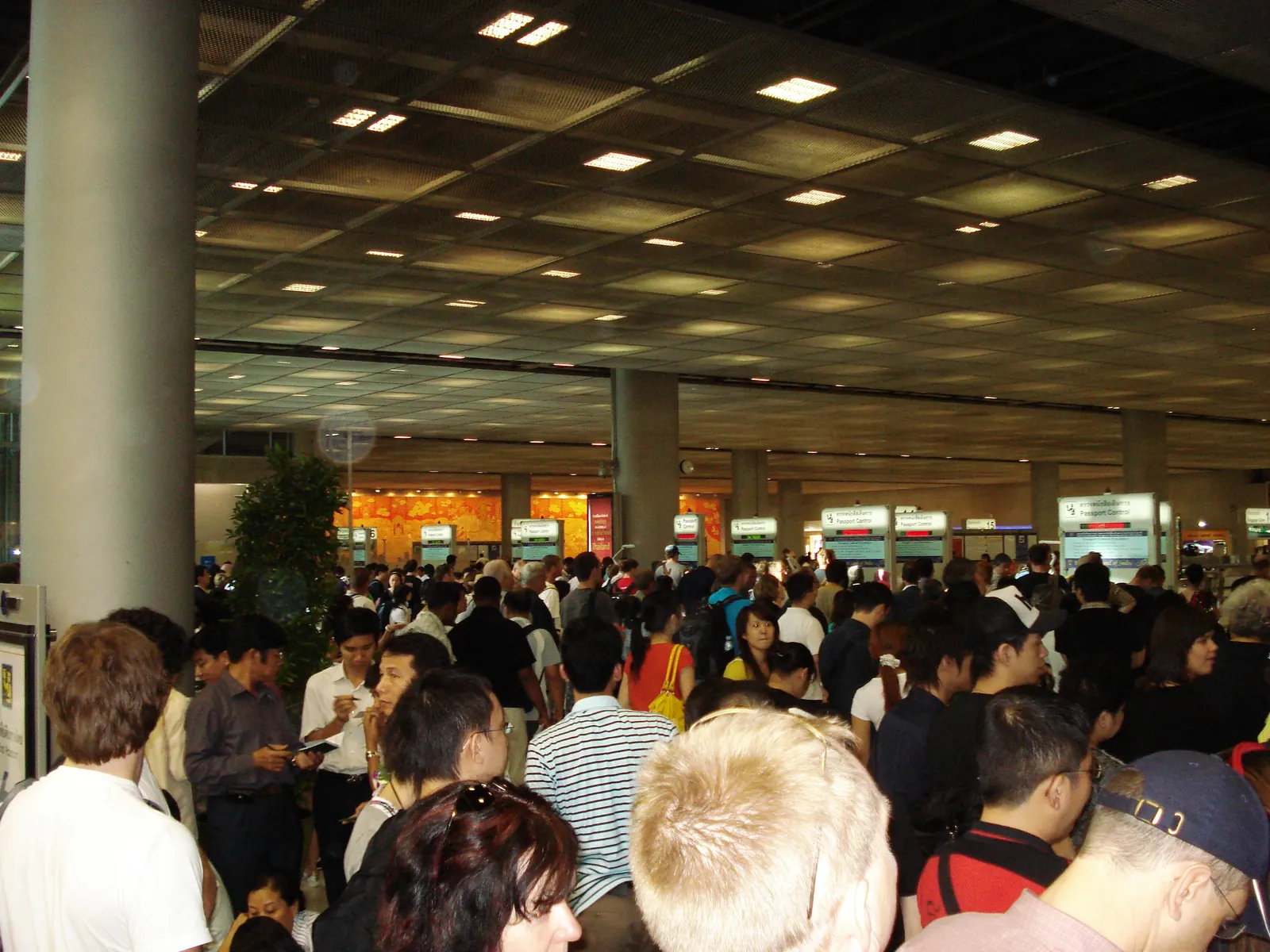
The airport is where the money shows. The Elite Personal Assistant meets you at Suvarnabhumi or Phuket — international flights only, booked 24 hours ahead — and walks you through a dedicated lane. Thailand’s arrival auto gates now take 33 nationalities, which sounds like the end of that argument until you read the conditions: visa-exempt entries only, so anyone on a visa, Privilege and DTV alike, still sees an officer. The queue the tourists skipped is the one residents still stand in. Verdict: worth it if ฿150,000–180,000 a year is genuinely noise to you, or you would rather hand ฿900,000 to a company than show ฿500,000 to an embassy. Skip it if you were planning to finance it.
What the DTV gives you for ฿10,000, and what it pointedly does not
The DTV launched on 15 July 2024 and is still the best long-stay deal Thailand has offered an ordinary person. The fee is ฿10,000, charged in local currency (£300 in London, US$400 in Washington, €350 in Helsinki) and non-refundable. It is valid five years, multiple entry, each landing stamped for 180 days; once per entry you can extend at immigration for ฿1,900 and another 180, then you leave and come back for a fresh stamp. You show ฿500,000 in the bank — three clean monthly statements at the strictest posts — and enter through one of three doors: DTV1 for remote workers and freelancers, DTV2 for Thai soft power (Muay Thai, cooking schools, sports, seminars, festivals, hospital treatment), DTV3 for a spouse and children under 20.
Three rules changed on 31 August 2026 and most guides have not caught up. Every applicant now uploads a criminal-record certificate issued within six months (a child under 16 can use a parent’s); proof of permanent residence replaces the old show-us-where-you-are document, so a hotel booking no longer does it; and you apply only through the embassy for the country you are a national or permanent resident of, which ends filing from a guesthouse in Vientiane. London published the notice; the other posts we checked mirror it. Read your own embassy’s checklist on the day you file.
What it does not do matters just as much. It is not a work visa: remote work for employers and clients outside Thailand is the whole permission, and invoicing a Bangkok client is an Immigration Act offence, not a grey area. No airport perks — DTV holders queue at the staffed counters — and no excuse from the TDAC before every entry or the 90-day report after 90 consecutive days. The extension is at the officer’s discretion, and “five years” is the life of the sticker, not one stay. Verdict: do it if you qualify. If the soft-power door is yours, take a drop-in class first — a Muay Thai session in Bangkok costs a few hundred baht and tells you whether you want six months of it, because the gym’s letter is the visa.

Where the LTR visa sits between them
The Long-Term Resident visa is the one both camps should check before choosing: ฿50,000 for ten years (five plus five), a once-a-year report instead of the 90-day one, airport fast track, multiple re-entry, a digital work permit and — for the wealthy categories — a tax exemption on foreign income brought into Thailand under Royal Decree 743. The bars are steep: US$1 million in assets plus US$500,000 invested in Thailand (Wealthy Global Citizen); US$80,000 a year in passive income, or US$40,000 plus US$250,000 invested (Wealthy Pensioner); US$80,000 a year from a listed employer or a private one with US$50 million of revenue over three years (Work-from-Thailand Professional); or US$80,000 in a targeted industry (Highly Skilled). All need US$50,000 of health cover or a US$100,000 deposit, maintained for the life of the visa. Clear any bar and it beats both visas here — thirteen times cheaper than Bronze, twice as long as the DTV, and the only one with a work permit and a tax perk. Apply at ltr.boi.go.th, whose front page warns about fake “authorised agencies”, which brings us to the money.
Which visa fits you: verdicts by profile
The remote worker under 40
DTV1, and it is not close. ฿10,000 buys five years; the ฿500,000 is a threshold, not a fee, and goes back to being your money the day after approval. Privilege Gold costs ninety DTV fees before the first limousine. The only upgrade worth a thought is the LTR’s Work-from-Thailand track, if your employer is listed or large and your salary clears US$80,000. Verdict: DTV. Worth it.
The retiree with money
Over 50, Thailand has purpose-built visas that cost almost nothing: the Non-O route with ฿800,000 parked in a Thai bank or ฿65,000 a month in pension, or the O-A from home with its ฿3,000,000 insurance mandate. A pension above US$80,000 unlocks the LTR Wealthy Pensioner, the sleeper pick. Privilege earns its place only when the ฿800,000-in-a-Thai-bank ritual offends you more than ฿150,000 a year does — then buy Platinum, ฿1,500,000 for ten years, not Gold. Verdict: Non-O or LTR first; Privilege Platinum if paperwork is what you are paying to avoid.
The family
DTV3 gives a spouse and each child under 20 their own five-year visa — a ฿10,000 fee each and, at most posts, their own ฿500,000 to show: a family of four is around ฿40,000 in fees and ฿2,000,000 in statements. Privilege charges per head, and by the agents’ published terms Bronze and Gold cannot add members at all, so a family starts at Platinum and adds relatives at a “Next Member” rate the company has promoted at ฿750,000 this year — north of ฿4,000,000 for four. Verdict: DTV3, unless money is no object, in which case why are you reading a comparison.
The frequent short visitor
Four or five trips a year of two or three weeks need no long-stay visa: visa-free entry is 30 days for 60 nationalities since 15 September 2026, air entries are uncapped, and repeat visitors on the list now use the auto gates for nothing. What Privilege sells this person is the limousine and the escort; a metered taxi from Suvarnabhumi to Sukhumvit is around ฿400–500. Verdict: skip both — unless your passport lost its exemption, in which case a DTV if you qualify and a 60-day tourist eVisa if not.
The person who wants to work in Thailand
Neither. A DTV holder invoicing a Bangkok client is committing an offence; a Privilege member doing the same is committing it in a nicer car. A Thai job means a Non-B visa and an employer-sponsored work permit, or the LTR’s professional tracks with their digital work permit — our visa guide by country has the route for every passport. Verdict: Non-B or LTR; do not buy a tourist-class visa and hope.
How to apply for each, how long it takes, and the agent-fee trap
Privilege: apply online or through an authorised agent with a colour passport copy (a year’s validity left), a photo on a white or blue background and the form. The company submits you to the Immigration Bureau for a background check — it has posted a notice about delays at exactly that step, so budget weeks. Approval brings an invoice, you pay the company, and the visa is affixed at an embassy or, more usually, on arrival at Suvarnabhumi or Phuket by the assistant, with 24 hours’ notice. The concierge then handles the annual extension and the 90-day filings.
DTV: from outside Thailand, in your country of nationality or permanent residence, entirely through thaievisa.go.th. Clean PDFs: passport, photo, proof of permanent residence, three months of statements closing above ฿500,000, the category evidence (a remote-work letter, a freelance portfolio with contracts and invoices, or an acceptance letter on letterhead), the criminal-record certificate, certified translations. Pay the local fee, wait five to fifteen working days, print the approval, file the TDAC within 72 hours of landing. A refundable first week — Bangkok on Agoda — doubles as accommodation evidence where a post still asks, and the hotel files your TM30. Sort a Thai eSIM before wheels-down; the Suvarnabhumi arrival guide covers the rest.
The agent-fee trap: Privilege agents are paid by the company, and the membership fee is invoiced by Thailand Privilege Card Co., Ltd., never by the agent — anyone quoting above the published list or asking you to wire the fee to their own account is not an agent. On the DTV side the trap is inverted: agencies charge around ฿20,000–60,000 to upload PDFs you could upload yourself, and “guaranteed approval” ends the conversation, because nobody can waive the criminal-record certificate or the ฿500,000, and a weak file loses its non-refundable fee whoever submits it. The one thing worth paying for is a certified translation, around ฿500–1,500 a page. Every official fee here sits, dated, on the Thailand Price Index.
The 180-day tax rule and health insurance: what neither brochure mentions
Spend more than 180 days in Thailand in a calendar year and you are a Thai tax resident, whatever the sticker says — and a Privilege member on a twelve-month stamp gets there sooner than a DTV holder living in 180-day chapters, because nothing ever tells them to leave. Residents owe Thai tax on Thai-source income and on foreign income brought into the country; since 1 January 2024 that includes income earned earlier and remitted later, with pre-2024 savings grandfathered. The exemption proposed in 2025 for money remitted in the year it is earned or the next had, as far as we can find, still not reached the Royal Gazette as of October 2026 — plan as if it does not exist. Double-tax agreements with more than sixty countries usually stop you paying twice, not filing a PND.90 by 31 March. Only the LTR changes the sum, and only for its wealthy categories. This is the map, not advice: buy two hours of a Thai accountant before the first big transfer, and read our note on moving money into Thailand.
Insurance is the other silence. Neither the DTV nor Privilege requires health cover in its published requirements — Privilege’s annual health check is a check-up bought with points, not a policy — while the O-A demands ฿3,000,000 of cover and the LTR US$50,000 or a US$100,000 deposit. Five uninsured years in the motorbike capital of the world is not a saving: buy an annual policy that covers riding, and time the first entry with our month-by-month guide, not the visa’s expiry date.
Privilege or DTV: your questions, answered
Is Thailand Privilege ever cheaper than the DTV?
No — on no tier and over no horizon. The DTV costs ฿10,000 for five years plus ฿1,900 per in-country extension; the cheapest Privilege tier is ฿650,000 for the same five years, and it may have closed to new applicants on 30 September 2026. Privilege is bought to avoid proving anything and to be met at the aircraft door, not to save money.
Can I work in Thailand on a Privilege visa or a DTV?
Not for a Thai employer or Thai clients, on either. Privilege is a tourist-class entry visa with no work permit; the DTV permits remote work for employers and clients outside Thailand only. Thai work without a permit breaches the Immigration Act on both. A Thai job needs a Non-B visa and a work permit; the LTR’s professional tracks include a digital one.
Can I switch from a DTV to Privilege, or back again?
Yes, in either direction, as fresh applications. Moving up to Privilege can be done from inside Thailand — the company arranges the visa affixation at immigration and your current permission to stay is superseded. Moving to a DTV means applying from outside Thailand, through the embassy for your country of nationality or permanent residence, criminal-record certificate included.
Do Privilege members still have to do 90-day reports and TM30?
Yes. The 90-day report applies to every foreigner staying 90 consecutive days, and the membership does not waive it — the company files it on your behalf, which turns a chore into a phone call. The TM30 is your landlord’s or hotel’s duty to register your address; keep the receipt, because immigration asks for it at extensions.
Which is better for a couple: two DTVs or one Privilege membership with an add-on?
On cost, two DTVs: ฿20,000 in fees and two sets of ฿500,000 statements, against Platinum at ฿1,500,000 plus an add-on member at the ฿750,000 promotional rate or more. Privilege only wins if one of you cannot produce the statement or a qualifying reason — a remote job, a course, a treatment — and the other can pay for both.
Related guides
- Destination Thailand Visa (DTV) 2026: The Complete Guide
- Thailand Retirement Visa (O-A): Costs & the 800k Baht Rule
- Thailand 90-Day Report & TM30: The Paperwork Explained
Book the trip
Some links in this guide are affiliate links. If you book through them we may earn a small commission at no extra cost to you — it helps keep Destination Thailand independent.
Hotels: a refundable first week in the capital is the sensible landing for either visa — compare on Agoda’s Bangkok page and pick the district with our where-to-stay guide. Tours/Boats: test the soft-power door before you build a visa on it — a Thai cooking class in Bangkok on GetYourGuide runs around ฿1,000–1,500 for a morning. Getting there: the first hop north is Bangkok to Chiang Mai on 12Go, with our transport guide on which seat to book. Not sure where the 180 days should go? The Where to Go in Thailand matcher scores all 77 provinces against what you actually want.